





























What is a compost aerator used for?
an indispensable tool for quality compost
Contents
Composting is an ecological method that transforms organic waste into a rich amendment for the soil, promoting healthy growth of plants in our gardens. At the heart of this process is aeration, a determining factor for the quality of the resulting compost. This is where the compost aerator comes in, a tool designed to make this crucial step easier. The compost aerator is an instrument that introduces air by mixing the compost, which facilitates the oxygenation necessary for the rapid and efficient decomposition of organic matter. From a practical point of view, an aerator simplifies compost maintenance, avoids the manual turning of the compost heap, which is often a physically demanding task, and improves the overall quality of the compost produced. Well-aerated compost is richer in nutrients and beneficial microorganisms, which translates into more fertile soil and more vigorous plants. In other words, the compost aerator is an indispensable tool!

The role of aeration in composting
Understanding the composting process
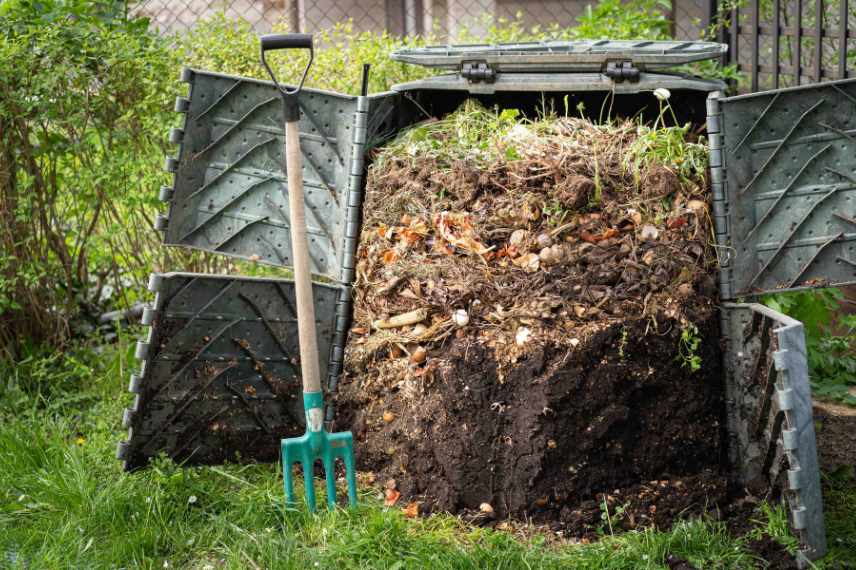
Composting is a biological process where organic waste such as fruit and vegetable scraps, dead leaves and lawn clippings is broken down by microorganisms under favourable conditions to transform into humus. This final product, compost, is a nutrient-rich soil amendment that improves soil structure and fertility. The process depends on four essential elements: organic matter, moisture, heat and oxygen. Oxygen, provided by aeration, is crucial, as it feeds the aerobic microorganisms responsible for the rapid, odourless decomposition of the waste.
The benefits of good aeration
Adequate aeration offers multiple benefits for composting. It speeds up the decomposition of organic matter by keeping microorganism populations active. This raises the temperature of the compost, which is beneficial because it helps destroy weed seeds and pathogenous agents. Additionally, good aeration prevents water saturation and compaction of the heap, conditions that can lead to slow, malodorous anaerobic decomposition. Well-oxygenated compost is also less likely to attract insects and rodents, which are drawn to the smells of decomposing waste.
Signs of poorly aerated compost
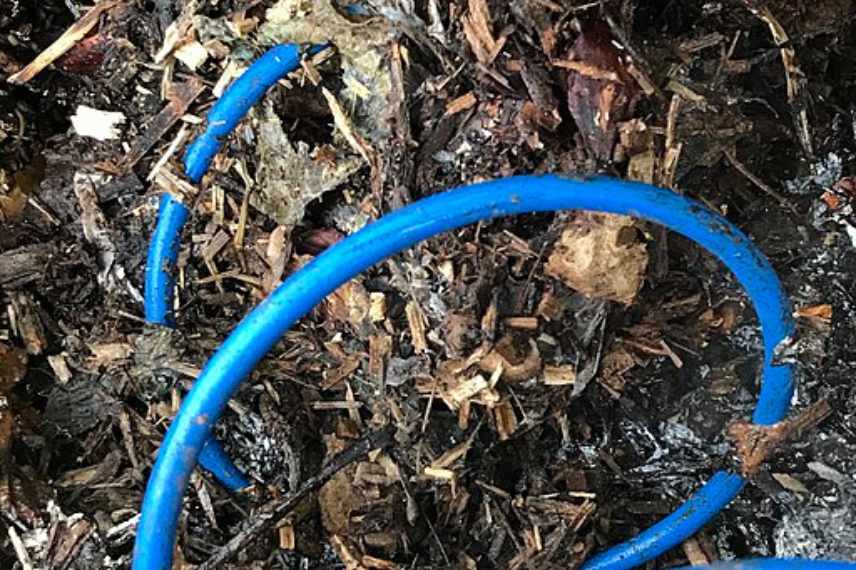
Several signs may indicate that compost is not sufficiently aerated. An unpleasant odour is the most obvious indicator: if the compost smells of ammonia or sulphur (similar to rotten eggs), this means the anaerobic process has taken over. Also, compost that does not heat up, even when new materials are added, may be suffering from a lack of oxygen. Another sign can be the appearance of a viscous substance or mould, indicating that the decomposition process is not proceeding correctly. Finally, if the compost attracts pests or large numbers of insects, this may also be a sign of poor aeration.
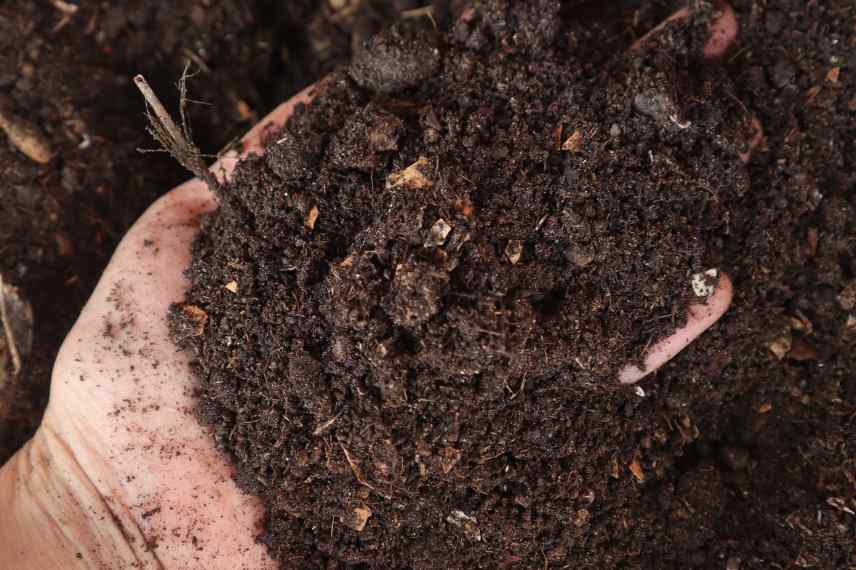
The quality of good compost also owes much to its aeration
The different types of compost aerators
Crank aerators
Crank aerators are tools that have a crank at their top end, connected to blades or fins at the bottom. The user inserts the aerator into the compost heap and turns the crank, which moves the blades and mixes the compost. This not only improves aeration but also helps to mix the materials, promoting even decomposition. They are particularly useful for large compost bins or compost heaps where reaching the core of the pile can be difficult.
Rod aerators
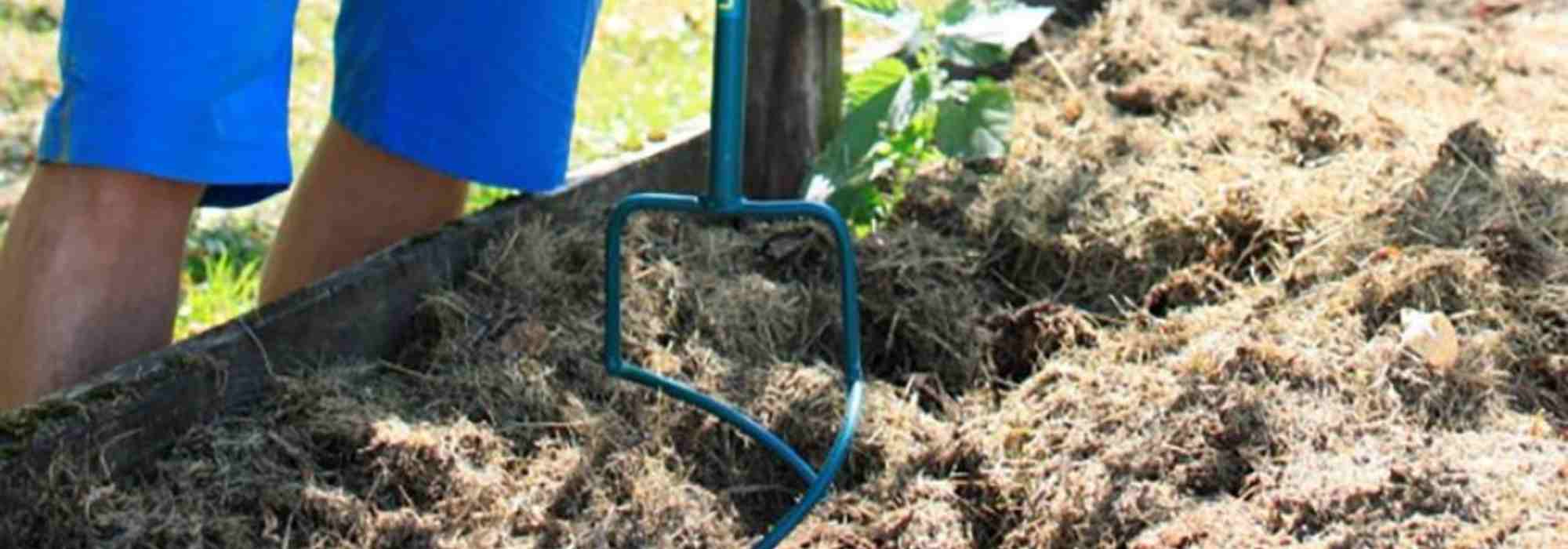
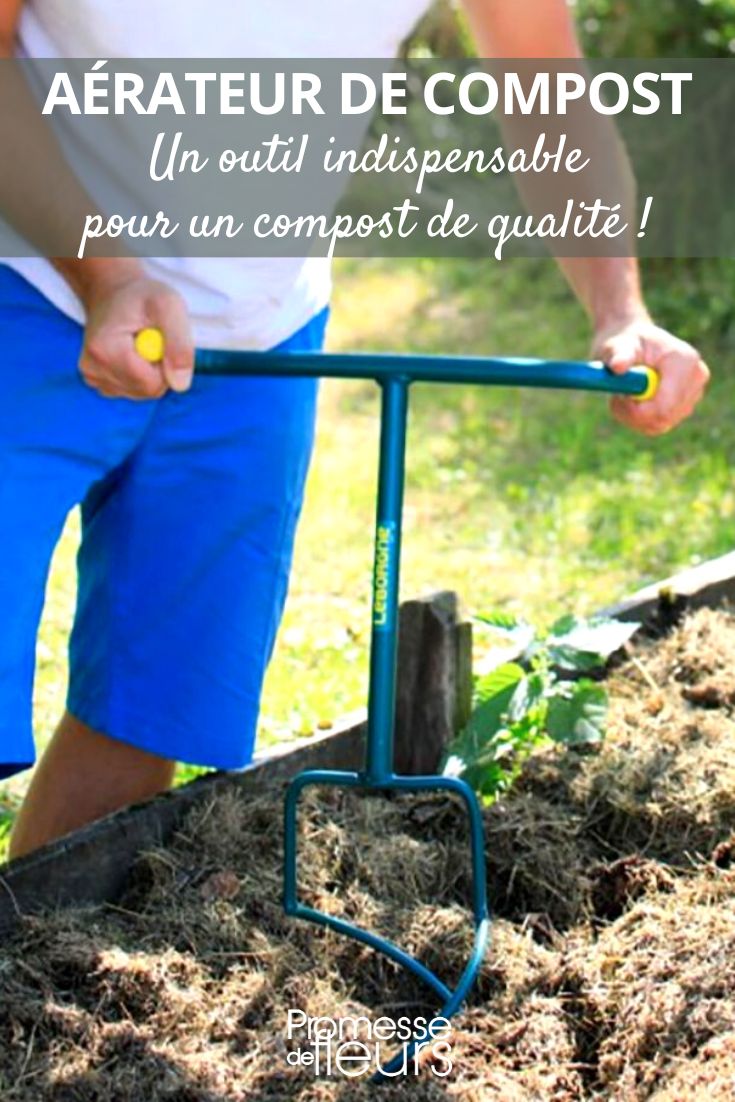
Rod aerators are typically the simplest and most straightforward in their design. They take the form of a long rod, often with a T-handle or a spiral handle at the top for a secure grip. The rod is inserted directly into the compost and moved to create channels that allow air to circulate. They are lightweight, easy to handle and are especially suitable for small to medium compost heaps.
Spiral aerators
Spiral aerators feature a rod with a helical end which, when driven into the compost, creates a spiralling motion that opens air channels. The spiral design is effective at penetrating even the most compact composts and allows good air circulation with minimal effort. This facilitates mixing and aeration without having to turn all the contents of the composter.
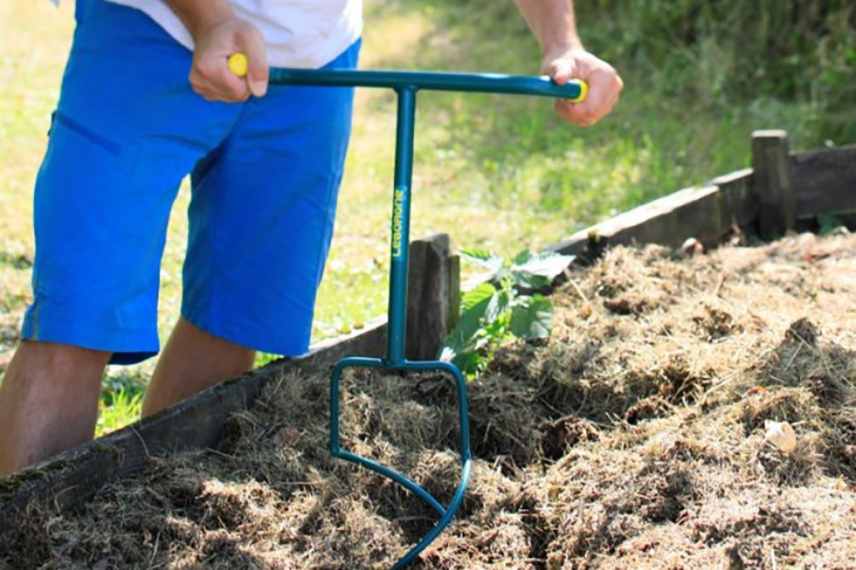
Naturovert spiral aerator
Comparison of models and usage tips
When comparing these different models, it is important to take into account the size and density of the compost heap, as well as how frequently the aerator will be used.
- For large volumes of compost, a crank aerator may be more suitable due to its ability to mix and aerate deeply.
- For medium-sized compost heaps, a rod aerator can offer the best compromise between efficiency and ease of use.
- Spiral aerators are particularly effective for composts that tend to become very compact, as the spiral cuts into the compost, allowing deep aeration without excessive physical effort.
In all cases, it is advisable to use the aerator regularly, depending on the composter’s fill level and moisture. A good rhythm can be aerating every two to four weeks, ensuring the compost retains moisture similar to a wrung-out sponge. When using any aerator, it is also recommended to wear gloves and appropriate clothing to avoid contact with decomposing materials.
A spiral aerator, Brass Compost type (© Bernard Dejean – Wikimedia Commons)
How to use a compost aerator
Recommended aeration frequency
Aeration should be incorporated as a regular step in the composting process. The ideal frequency of aeration depends on several factors such as the type of materials being composted, the climatic conditions and the size of the composter. As a general rule, a composter should be aerated every one to two weeks to maintain optimal microbial activity. However, if the compost appears dry or the decomposition process slows, aeration may be required more frequently.
Effective aeration techniques
To aerate effectively, start by inserting the compost aerator into the centre of the pile and push it in as deeply as possible. Then, depending on the aerator model, turn the crank or pull the rod upwards to move and aerate the organic material.
- With a crank aerator, make sure to turn the crank in both directions to thoroughly mix the compost.
- For rod or spiral aerators, it can be helpful to move the tool to several points around the centre of the pile to ensure even aeration.
Also be sure to move materials from the edges to the centre and vice versa so that the entire volume of compost is aerated evenly.
Safety measures to take
Always wear sturdy garden gloves to protect your hands from potentially sharp or irritating waste. If you are sensitive to allergens, it may be wise to wear a dust mask, particularly in dry climates where dust and spores can be kicked up into the air during aeration.
Avoid bending too far over the compost while aerating to prevent direct inhalation of the gases produced by decomposition. Finally, make sure to wash your hands and tools after use to remove bacteria and germs.
Maintenance of the compost aerator
Cleaning after use
To keep the compost aerator in good condition, it is crucial to clean it after each use. Remove compost residue from the blades or the shaft using a brush or a jet of water. Make sure to remove any organic debris that could build up and promote rust or the development of harmful bacteria. If the aerator is particularly dirty, use a soapy water solution to clean it, then rinse it with clean water.
Proper storage
Once cleaned, the compost aerator should be air-dried to prevent corrosion or mould. It should then be stored in a dry, sheltered place, such as a garden shed or a garage. Avoid damp areas where the metal could rust and where the wooden handle could warp or rot. If the tool has moving parts, ensure they are not compressed or bent when stored.
Periodic maintenance for durability
Periodic maintenance is essential to extend the lifespan of the compost aerator. Regularly check that moving parts are well-oiled to ensure smooth rotation and prevent seizing. Inspect screws, bolts and metal parts for any signs of rust or wear and treat or replace them if necessary. If the aerator has a wooden handle, treating it with a suitable oil or varnish can prevent deterioration and premature wear.
- Subscribe!
- Contents
Comments