





























What is sooty mould?
Identification and natural solutions
Contents
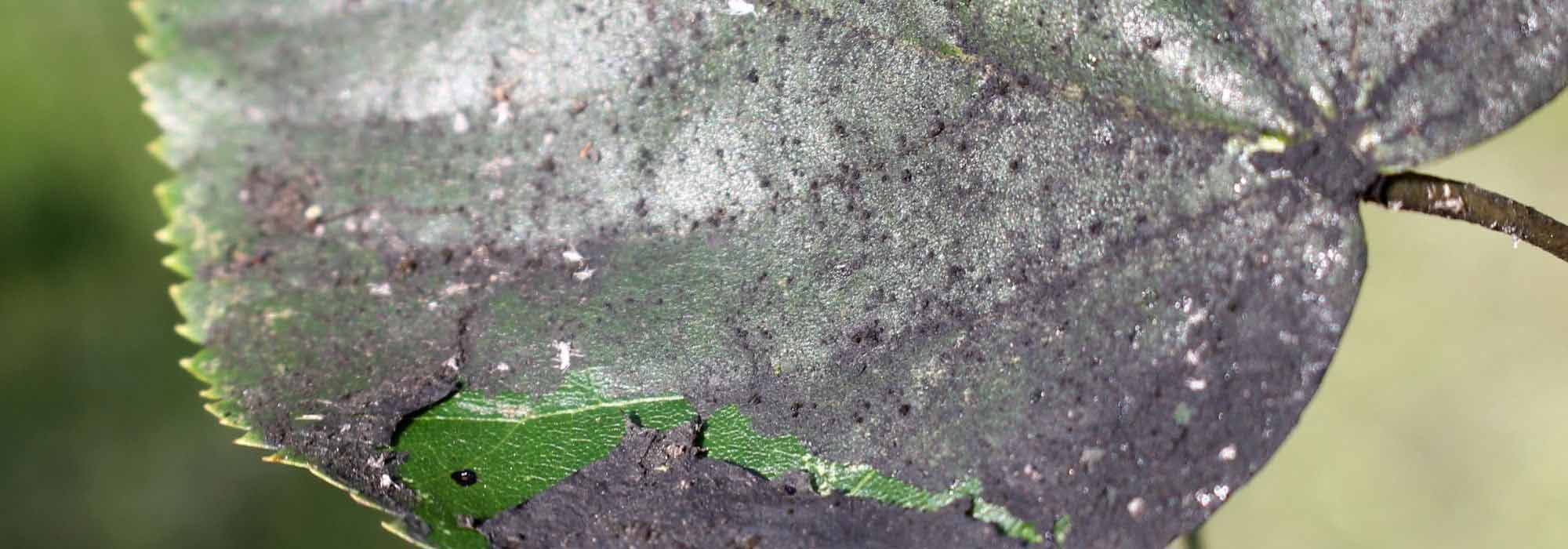
Particularly unsightly, sooty mould covers the foliage of certain plants from late spring. This black deposit stuck to the leaves is linked to the presence of certain insects on the plants. So, what exactly is sooty mould? Discover the biology of this fungus and natural solutions to get rid of it.
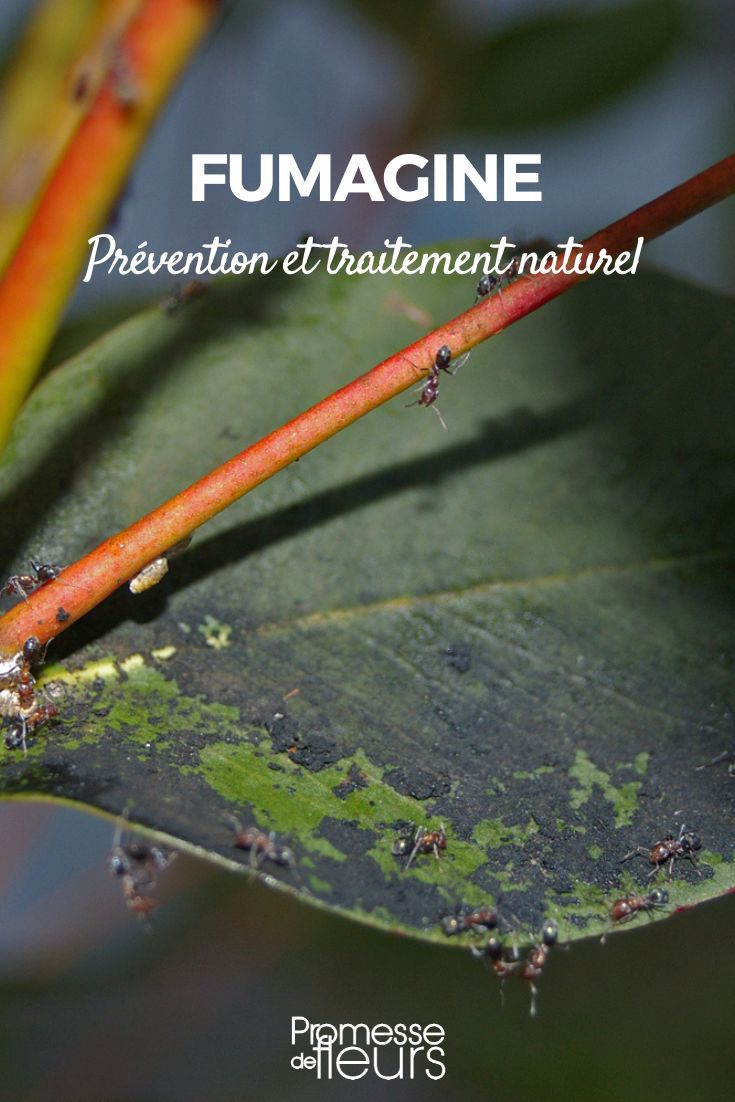
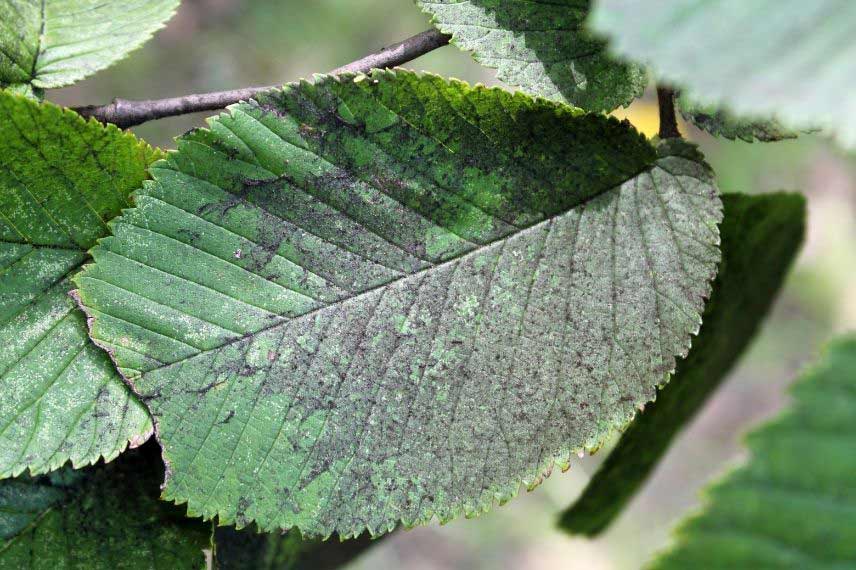 Easily recognisable, sooty mould appears as a sooty deposit on the surface of the leaves

Sooty mould: how does it appear?
In the garden, when a strong attack of aphids, psyllids, whiteflies, or certain mealybugs occurs, there is generally a slowdown in growth and deformation of the leaves, but that’s not all. We also see the development of sooty mould, a disease characterised by the appearance of a black, sticky substance on the leaves and fruits.
This black “dust” is caused by various non-parasitic fungi that actually develop on honeydew, a sugar-rich substance excreted by the aforementioned sap-sucking insects. They can also develop on sweet exudates spontaneously emitted by certain plants (citrus trees, Catalpa, etc.). This cryptogamic disease, named after “smoke” due to its soot-like appearance, is caused by black moulds.
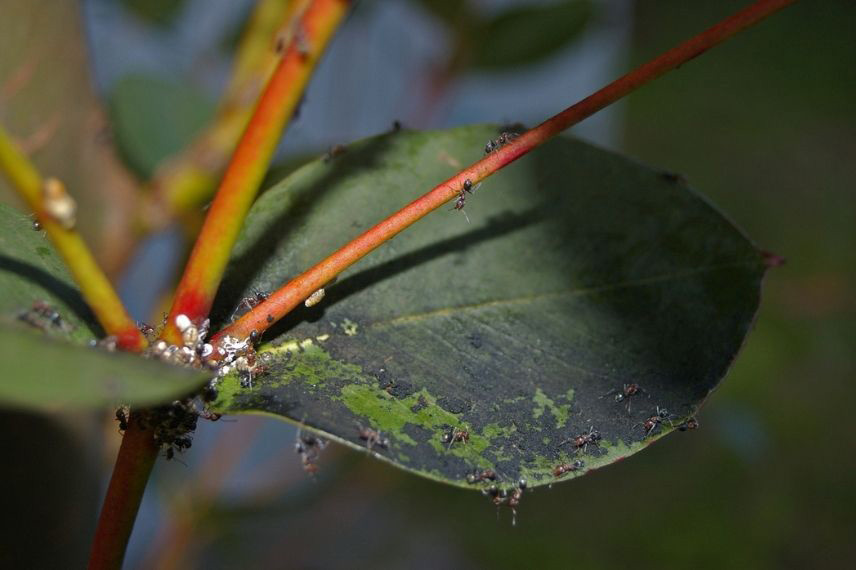
The development of sooty mould is linked to the presence of insects on the plants
Read also
How to get rid of psyllids?The damage caused
Sooty mould gradually develops and increases on the foliar surface of the affected plant. It does not directly parasitise the plant but derives its sustenance from honeydew.
It indiscriminately affects various species of plants, provided they are infested by sap-sucking insects or located beneath infested trees where honeydew can fall onto lower plants.
The effects of sooty mould on plants are of two main types:
- It inhibits photosynthesis by blocking light
- It prevents plant tissues from “breathing” and causes their asphyxiation.
The plant, already weakened by the insects, then slows its growth. Its aesthetic appearance is degraded, and the fruits of the affected plants show spores of mould that are harmful to health if consumed.
→ Note: like moulds, sooty mould can cause allergies in humans and pets
How to naturally get rid of sooty mould on plants?
This black film easily peels off by rubbing the leaves, with the fungus remaining outside the plant tissues without parasitising them.
We treat sooty mould:
- By combating harmful insects: sooty mould will then gradually disappear
- By practising pruning aimed at thinning the plants. Light and air circulation will counteract the spread of sooty mould fungi
- By regularly cleaning or showering the foliage of the most sensitive plants, particularly indoor plants to remove honeydew deposits
- Avoiding planting species that are highly susceptible to these insects: linden trees, citrus trees…
- Avoiding planting species that naturally produce exudates on which sooty mould will surely develop (Catalpa, citrus trees…)
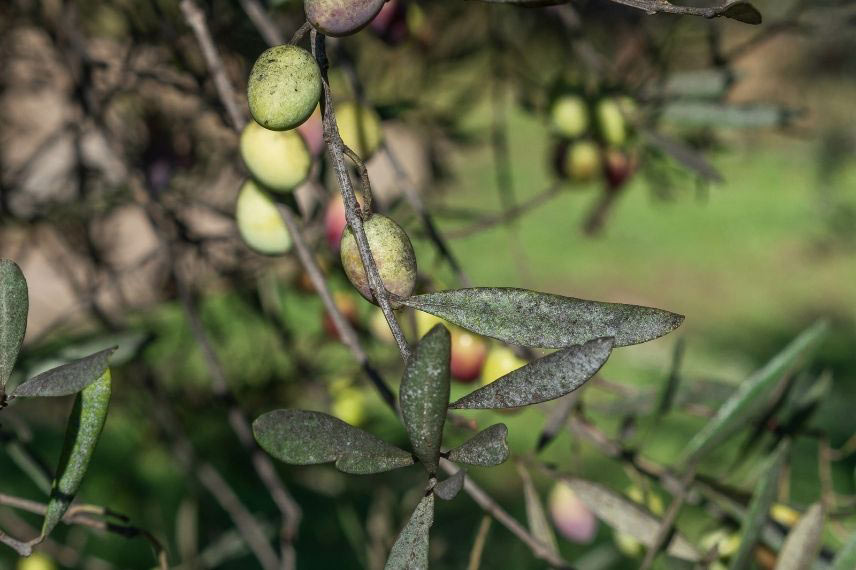
The sooty mould deposit can be removed by rubbing the leaves of infested plants

- Subscribe!
- Contents
Comments