





























What is syntropy?
Discover this approach, its advantages and disadvantages
Contents
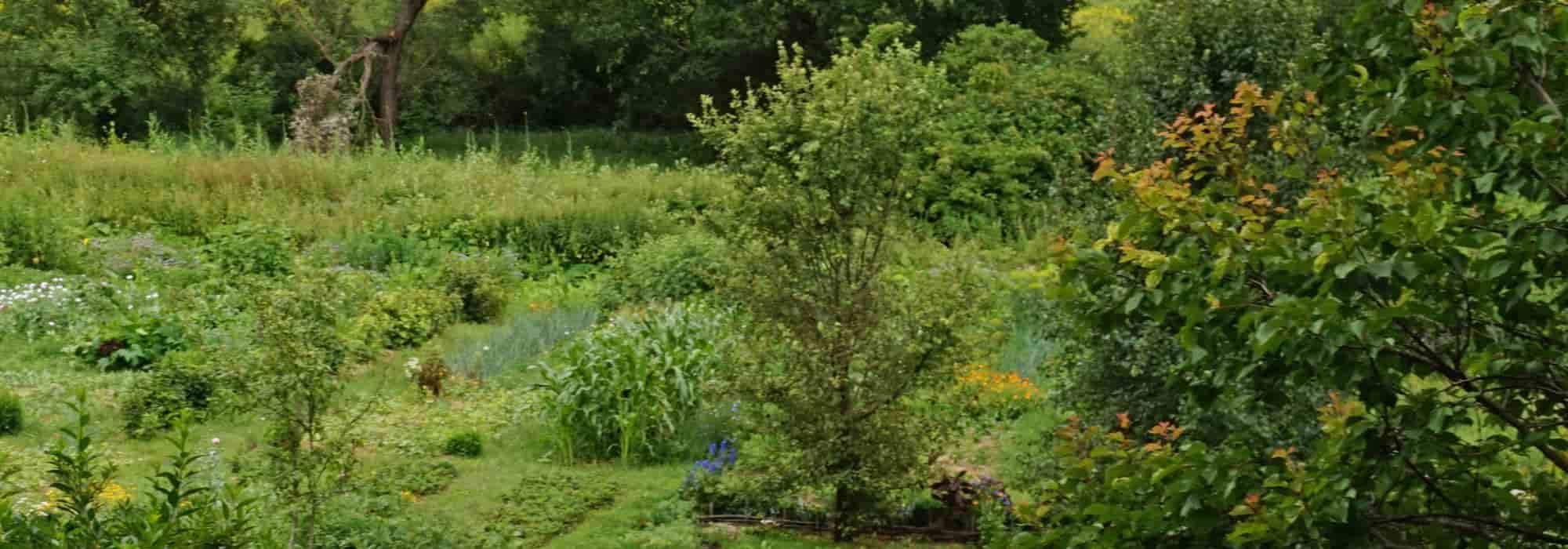
Have you ever heard of syntropy? Also called “syntropic agriculture”, this innovative and environmentally friendly method of cultivation appeared in Europe about ten years ago. In the line of permaculture, it is a revolution in the world of agroecology. Inspired by the natural principles of ecosystem regeneration, this approach was developed by Ernst Götsch, a Swiss agronomist who settled in Brazil in the 1980s. In France, interest in syntropic agriculture, or successional agroforestry, is growing, offering a promising alternative to conventional methods. Follow us to learn more about syntropy.

The origins of syntropic agriculture
Ernst Götsch and the birth of syntropy
The history of syntropic agriculture is inseparable from that of Ernst Götsch, a Swiss researcher who settled in Brazil in the 1980s. Faced with arid, degraded land, Götsch developed a cultivation method based on the principles of natural ecosystems and inspired by the forest. His approach aimed to restore soil fertility while producing abundantly. The results were so impressive that his method quickly spread, first in Brazil and then to other countries.
Growth in France
In France, syntropic agriculture is gradually gaining ground. Initiatives such as the Ferme des Mawagits in the Gers illustrate the growing interest in this approach. These sites are often pioneering and serve as educational platforms for disseminating agroecological practices. Joala Syntropie, founded by Anaëlle Théry, also plays a key role in France. Active since 2018, it offers training and resources adapted to the temperate climate. The absence of chemical fertilisers and the use of various plant species show how syntropy can be adapted to the French pedoclimatic context.
Read also
Permaculture: the technique of swalesPrinciples and workings of syntropic agriculture
Syntropic agriculture is based on creating a dense, complex cropping system. In practice, different plants are combined and planted very densely, while respecting their needs for light (emergent, high, medium and low strata). This organisation is therefore not based on plant height, as in forest gardens, but on their tolerance to light. This system mimics natural ecosystems, particularly forests, to create a balance between the different plants.
Crops are organised into different strata to optimise the use of space and promote high biological diversity. This arrangement allows for better use of light and soil resources, while creating a favourable habitat for a variety of animal and plant species.
Then comes the pruning of plants. It is strategically planned to stimulate their growth and accelerate ecological succession. This practice involves imitating natural disturbances(such as the fall of a tree in a forest), allowing continuous regeneration.
The plants thus pruned and shredded are placed directly on the soil, as mulch, in order to enrich the soil with organic matter, but also to improve its structure and fertility. The mulch also helps retain soil moisture, reducing the need for irrigation and promoting a microclimate favourable to the growth of plants.
In summary
If one had to summarise how syntropic agriculture works, one could say that it relies on creating a dense, complex cropping system that combines different plants according to their needs for light. The gardener plays a key role in pruning, mulching the soil and thereby accelerating plant succession. The goal is to achieve abundant production while maintaining the health and fertility of the soil.
Advantages and challenges of syntropic agriculture
Environmental and economic benefits
Syntropic agriculture offers many advantages, notably:
- Improved soil fertility: Thanks to the decomposition of the mulch and successive vegetation cycles, the soils gain organic matter and microbial biodiversity, which increases their long-term fertility.
- Reduced dependence on chemical inputs: No chemical fertiliser or pesticide is necessary, because the system creates its own regeneration cycles.
- Optimised water management: The mulch and crop density help reduce evaporation and improve water retention in the soil. This is particularly suitable for areas where water is a limited resource.
- Enhanced biodiversity: By integrating plants from different strata and encouraging the coexistence of varied species, syntropy creates a habitat favourable to fauna and flora, thus increasing the ecosystem’s resilience.
- Continuous and diversified production: Thanks to the organisation into strata and the cycles of
Challenges to overcome
Despite its many advantages, syntropic agriculture also presents challenges:
- A high level of technical expertise: Designing a syntropic system requires a good understanding of ecological cycles, vegetation successions and the specific needs of each plant.
- An initial investment of time and labour: Establishing a syntropic garden requires a significant effort to plan, plant and prune the crops.
- Adaptation to the local context: Although this method is universal in its approach, it requires adjustments depending on the climate, the soil and the local species.
- A scarcity of educational resources in French: Although the results obtained by Ernst Götsch in Brazil are promising, this cultivation method is still at the experimental stage in France, given how different the climate and plants are there. Some farmers have already been trying it for a few years and are helping to fill this gap, such as la ferme des Mawagits (Gers), JOALA Syntropie (Périgord Noir), la Baie Champêtre (Auvergne-Rhône-Alpes), Ecotones (Belgium), etc.
Syntropy and permaculture: complementarity and distinctions
Common Ground with Permaculture
Syntropic agriculture shares several principles with permaculture, notably the emphasis on biodiversity, sustainability, ensuring the soil is never bare and respect for natural cycles. Both approaches aim to create self-sufficient production systems that are respectful of the environment.
Specific Distinctions
While permaculture can incorporate various methods and techniques, syntropic agriculture focuses specifically on the stratification of dense plantings to maximise production and soil health.
Permaculture is also broader and encompasses aspects such as the design of eco-friendly buildings, water management, the development of sustainable communities and natural ecosystems within a holistic approach. However, syntropy can be practised within permaculture as a cultivation technique.
Syntropy in practice
Concrete examples in gardening
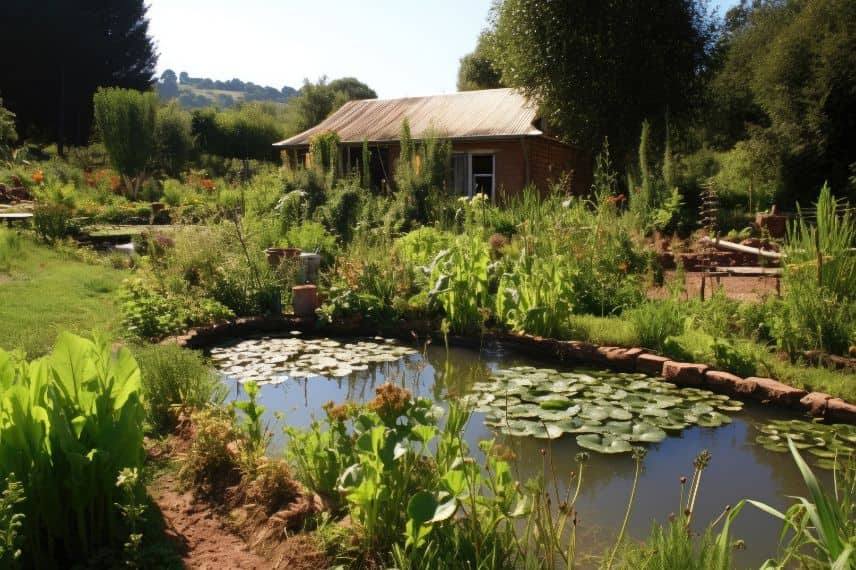
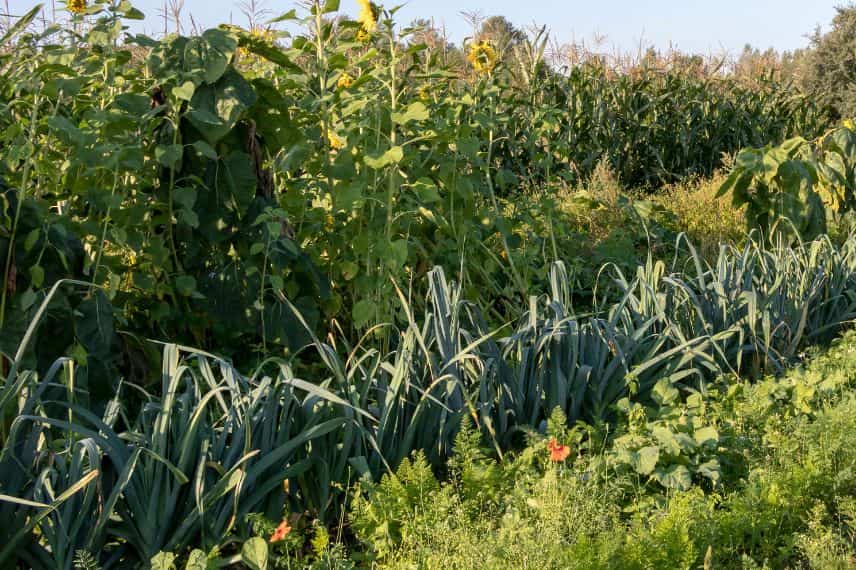
The application of syntropy in gardening manifests in various ways. For example, in their vegetable garden, a gardener could plant grapevines and sunflowers (upper stratum) with rows of lavender and rosemary (shrub stratum), interspersed with vegetables such as tomatoes or salad leaves, alternating with green fertilisers (herbaceous stratum). If the garden had enough space, one could also plant olive trees and almond trees (canopy). This combination promotes a balanced ecosystem where each plant contributes to the health of the others, while optimising the use of space.
Testimonials from gardeners
Gardeners across France are beginning to report the benefits of syntropic cultivation. They observe an increase in biodiversity, better plant health, and a reduction in water and fertiliser requirements. These testimonials highlight the effectiveness of syntropy in creating productive and ecological gardens.
For further reading
If this topic interests you, I recommend visiting the websites of Hub Agriculture Syntropique France and JOALA Syntropie. Two venues offering training, educational resources and an interactive map to locate gardens practising syntropic cultivation near you.
You can also read our articles on permaculture:
- Subscribe!
- Contents
Comments