





























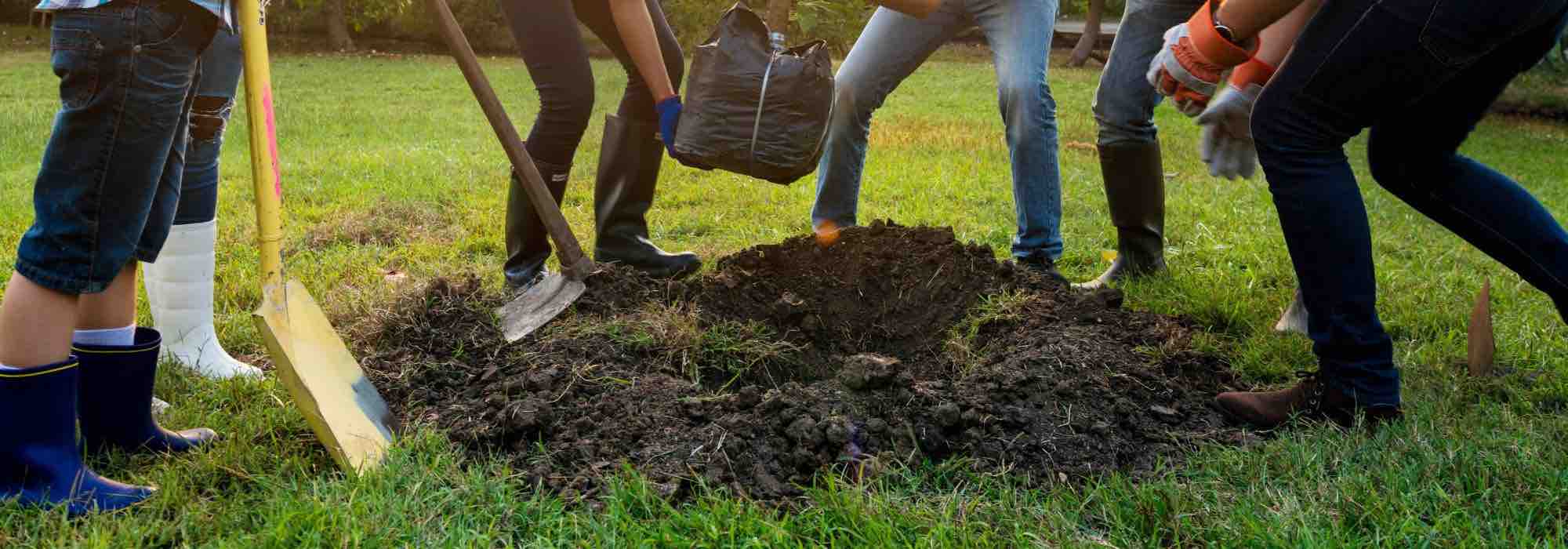
What is the best season to plant a tree?
Different factors to consider when planting at the best time
Contents
There are a thousand good reasons to plant a tree! Whether it’s to dress the space, create a living screen, provide shade, boost biodiversity, or even enjoy fruit, you’ll surely find a variety that suits your needs.
But to succeed in growing a tree and enjoy it for many years, a few factors must be taken into account. Among them, the chosen planting season is one of the keys to success. Discover in this article which seasons are ideal for planting a tree.

Autumn: the ideal season to plant a tree
Autumn is the most favourable season for planting. The saying “By St Catherine’s Day, all wood takes root” is well known among gardeners, for whom 25 November is a reference date. This period spans from mid-September to mid-November, depending on the region. It begins when the leaves start to fall and extends until the first frost.
Tree species to plant this season
Most trees can be planted in autumn:
- deciduous trees, which will begin to shed their leaves;
- evergreen trees, when hardy (cold resistant);
- hedge trees;
- trees flowering in spring;
- fruit trees;
- shade trees that prefer cool, moist soils;
- large conifers;
- trees in root-ball or bare-root form.
Autumn advantages
In autumn, temperatures begin to cool but remain mild. Rain returns, helping to soften and refresh the soil. Weather conditions are therefore ideal for tree establishment.
Many species will enter a period of dormancy. Their growth will be halted, but the root system will have time to acclimatise and develop. Trees do not require care immediately after planting. In spring, their awakening will usually occur.
Planting in autumn also gives the best chance of survival for trees prone to heat and drought. They will have several months to settle in before their first summer.
Finally, autumn is the most economical season for buying trees: bare roots are cheaper than trees sold in containers.
Autumn disadvantages
The season is not suitable for planting less hardy trees in regions with harsh winters. Plants will not have enough time to prepare before facing the cold, or will require enhanced protection (mulching, winter fleece, etc.).
If you live in a region prone to winter storms, autumn is a high‑risk season. Trees will not yet have had time to develop a stable root system, well anchored in the soil.
For more information: What to plant in autumn?

Prefer to carry out tree planting in autumn, but you don’t necessarily need to be six
Spring: an interesting season for some tree plantings
Spring is the second-most recommended season for planting trees. At this time, conditions are also conducive to plants resuming growth. The soil warms up, temperatures become mild, and the sun returns for several hours each day. It is also a wet season with regular rainfall in most of our regions.
Spring begins from the end of February and lasts until the end of May, depending on the region. It starts when the soil is no longer frozen and lasts until the first buds develop.
The species best suited to this season
In spring, plant trees that flower in summer and autumn.
This is also the ideal season for exotic and Mediterranean trees, as well as for all tender varieties: mimosas, olive trees, eucalyptus, palms, Callistemon viminalis, Banksia serrata, Albizia julibrissin, etc. Being more sensitive to cold when young, they will benefit from several months of establishment before facing their first winter.
The benefits of spring
The weather conditions, combining mildness and humidity, are favourable to trees resuming growth. Most plants come out of their dormant period and resume growth.
Soil preparation is often less time-consuming, since adventives (weeds) have disappeared during winter.
The drawbacks of spring
In some regions, be wary of late frosts, which can occur up to the Ice Saints in mid-May. This can therefore require considerable patience before planting.
Trees sensitive to heat and drought will not have had much time to acclimatise before experiencing their first summer, or even their first heatwave.
For more information: What to plant in spring?
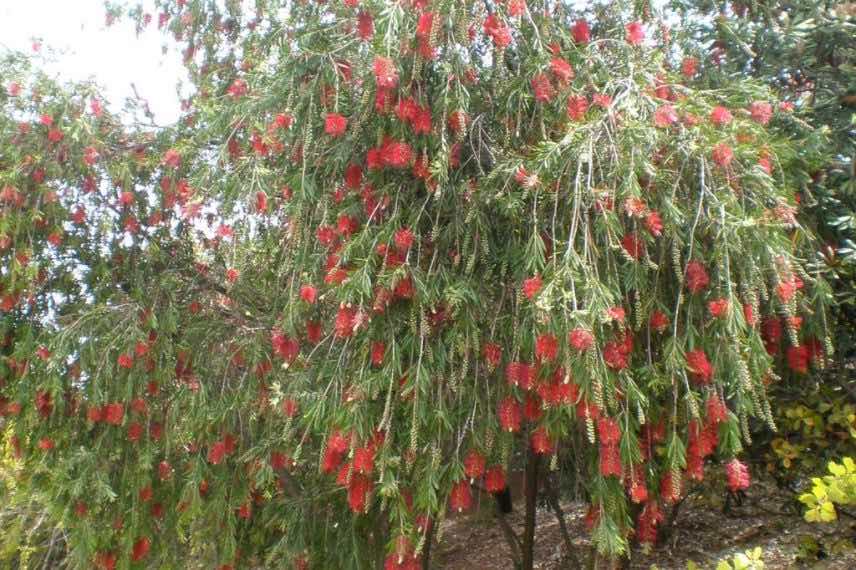
Callistemon viminalis is one of the species planted in spring
Other criteria for choosing the ideal planting period
To know when to plant a tree, several criteria will also come into play.
Weather conditions in your region
Climate characteristics of your region will help you determine the ideal time for planting a tree.
Timing will differ between regions with long, cold winters and those that enjoy moderate temperatures almost year-round. Gardeners often crudely divide France into two regions: north and south of the Loire. But for more precision, it is useful to rely on USDA zones, which divide the territory according to different climates (Mediterranean, oceanic, continental, mountainous…). There are eight distinct zones.
To keep it simple, the harsher the winters, the earlier autumn plantings can begin. Spring plantings will, for their part, be later (by about three weeks on average). Conversely, regions experiencing milder winters (around -8°C maximum) will be able to plant trees late in autumn and earlier in spring.
For more information: Climate zones and USDA zones in France

If your region is subject to severe winters and early frosts, plant in early autumn
Your soil type
Soil type also plays a role when choosing the planting period. A dense, clayey and sticky soil will present less favourable conditions for planting during the cold season. Water tends to stagnate there for longer, and roots may have difficulty developing. It is also a soil that takes longer to warm up in spring, which may necessitate a later planting.
Conversely, in light, well-drained soil, water drains away quickly. This is an advantage in winter, except during storms : a tree planted too early, which has not yet had time to develop its root system, may be much more unstable there. In spring, don’t wait too long to plant: the less rainy and cooler the season, the more watering will be required. The tree is likely to experience greater water stress.
The type of tree
Finally, take into account the characteristics of the chosen tree. Its hardiness, that is, its tolerance to negative temperatures, is an important point to know. A species sensitive to cold will preferably be planted in spring, so that it has enough time to establish before its first winter.
Conversely, a species sensitive to heat will preferably be planted in autumn, so as to be able to develop its root system before its first summer.
Finally, the tree’s vegetative cycle also comes into play. Trees with spring flowering will benefit from being planted in autumn, to hasten the production of flower buds. Those with autumn flowering will be planted in spring.
Read also
The best times to plantWhat is the best time to plant out a container-grown tree?
It is entirely possible to plant some trees in pots, especially when they are young. Spring and autumn are by far the most suitable times for planting. But in this case, it is possible to do so almost all year round. However, avoid temperature extremes.
We recommend always ensuring careful watering of your trees after planting in pots, especially in summer.
Further reading: discover our our selection of 7 trees to grow in pots on a terrace or balcony.
Further reading
To plant your tree, here are a few more interesting articles:
- How to position trees properly in a garden?
- Subscribe!
- Contents

Comments