





























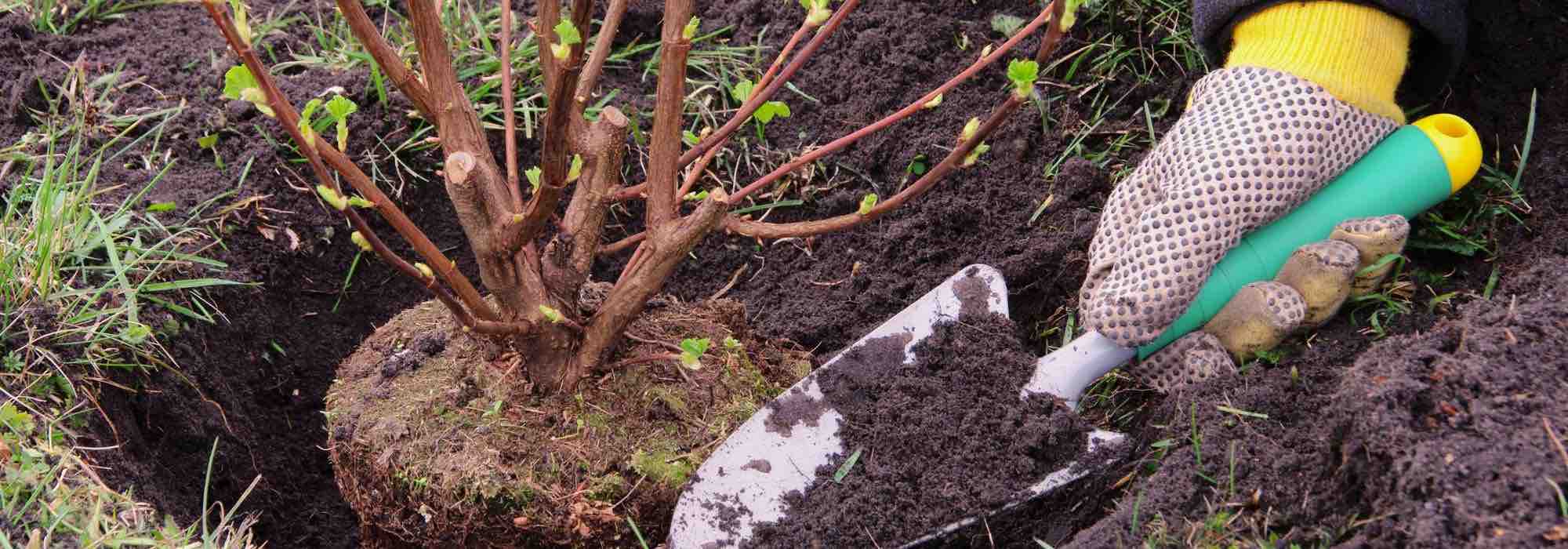
What is the best season to plant shrubs?
Criteria for choosing the best time to ensure your plants recover and stay healthy
Contents
When planning the layout of your garden, terrace or balcony, you have certainly chosen different shrubs. These plants will define, adorn and enliven your outdoor space, whether through their flowering, foliage, silhouette or fruiting. To give them the best chance of success, the planting season chosen is crucial. It is, in fact, one of the key factors that will help them establish and ensure a long lifespan for your plants.
So, let’s take a look together at the best seasons for planting our dear bushes.

The criteria to consider when planting a shrub
According to climate conditions
The choice of the ideal season to plant a shrub depends first and foremost on the climate constraints of your region.
- Are the seasons generally temperate all year round?
- Do you experience particularly cold winters?
- Conversely, are summers usually very dry and hot?
Our country is divided into several zones, known as climate zones and USDA zones, in which there are wide differences in temperatures and rainfall.
Specifically, mountainous regions will generally have to wait up to three additional weeks for a spring planting, but may hasten their autumn plantings. Conversely, coastal regions, particularly Mediterranean, may advance their spring plantings, but will need to delay their autumn plantings. Of course, with climate change, this calendar is evolving.
For more information, see our advice sheet: “Climate zones and USDA zones in France”
According to soil type
Planting window recommendations also vary depending on the nature of your soil.
If it is heavy clay soil, it tends to retain a lot of water, especially in winter. The roots of the shrubs will be more prone to rot and suffocation, and may struggle to establish themselves. Finally, the soil will take longer to warm up. The very start of autumn or the middle of spring will therefore be the most suitable times to plant a shrub.
On the contrary, if your soil is light, well-drained, or even permeable, it will therefore be preferable to carry out your plantings in mid-autumn or early spring, especially in mild climates. This will avoid the need for excessive watering at a time when rainfall is not yet optimal to ensure the plant’s establishment.
According to the type of packaging
When buying your shrubs, you will encounter different packaging types: the container (pot) or root-ball, bare roots or root-balls. Each packaging type has its own advantages and disadvantages. But more importantly, their choice can determine which season is the most suitable for planting.
Bare roots are shrubs taken from the soil during their dormancy, that is between autumn and winter. This specific packaging requires rapid planting, as there is no container to protect the roots. The ideal season will therefore be at purchase or reception, within a maximum of three to four days, to avoid any risk of desiccation. Bare roots are available to purchase between October–November and February–March. Planting will therefore logically take place in autumn or winter (outside freezing periods).
Root-balled shrubs are offered without additional packaging: the roots are surrounded by their adherent substrate in the form of a ball of soil, usually held by a net or a biodegradable fabric. Just like bare roots, shrubs in root-balls are taken from the soil during their dormancy, i.e., between October and March. Again, planting will take place quickly after purchase, in autumn or winter.
Container-grown shrubs are certainly the most widespread. In theory, these plants can be transplanted or repotted almost year-round, apart from extreme temperatures. Spring and autumn remain, however, the most suitable seasons. The weather naturally provides milder and more humid conditions that are more conducive to their establishment.
For more information, discover our advisory sheet: “Trees and shrubs: bare roots, root-balls or in pots?”
According to the type of shrubs
Depending on the shrub chosen, the planting period will need to be adjusted. Here are two criteria to consider:
- The hardiness (resistance to cold temperatures). This criterion should, of course, be matched to your climate conditions. A shrub sensitive to cold in a region with harsh winters will be planted in mid-spring, to give it time to establish.
- The vegetative cycle (flowering period, leaf drop, etc.). Winter-flowering shrubs, such as shrubs with winter flowering, like the Hamamelis or the Sarcococca, will be planted rather in early autumn to promote their rooting before winter.
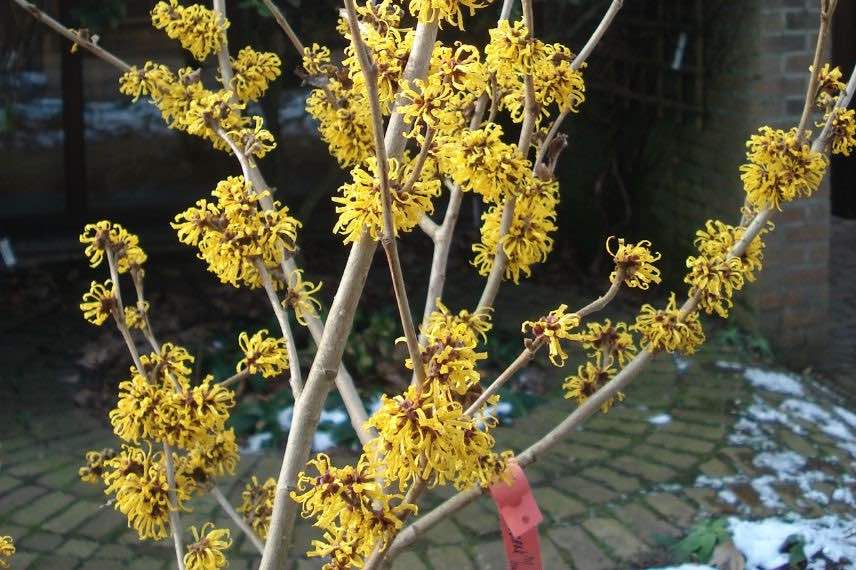
Hamamelis are best planted in early autumn
Read also
The best times to plantPlanting a shrub in spring
In the mildest parts of the south Loire, spring restart can begin as early as the end of February. Elsewhere, you generally have to wait until April, or even mid-May. This period begins at soil thaw and lasts until bud burst.
The most suitable species
The shrubs usually planted in spring are:
- varieties with summer- and autumn-flowering varieties;
- somewhat frost-prone varieties, which will take several months to establish before experiencing their first winter, such as exotic shrubs and Mediterranean shrubs.
Advantages
- This season combines gradually warming temperatures with fairly regular rainfall, providing good conditions for most plants to resume growth.
- The soil warms up gradually.
- It is the end of the dormancy period and the start of renewed growth in most species.
- The “weeds” (adventive weeds) have not yet emerged from their dormancy, making soil preparation before planting easier.
Disadvantages
- Spring is a period that can still be subject to late frosts in some regions. It is often advised to wait until the end of the Ice Saints, mid-May, to avoid any risk.
- Plants will rapidly develop their aerial parts, which can cause a disproportion with root growth in the event of climatic extremes (wind, heavy rainfall, storms…).
For more information, see our advice sheet: What to plant in spring?
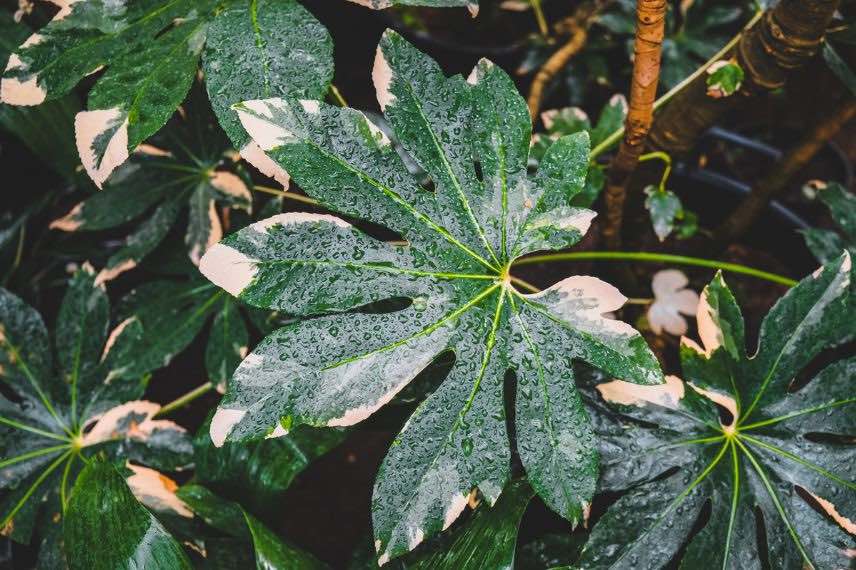
Fatsia japonica, like other exotic species, is best planted in spring
Planting a shrub in autumn
Autumn is generally considered the best time for planting plants in the garden. The date of 25 November is also associated with the saying “On St Catherine’s Day, all wood takes root”.
In the north of the Loire region, autumn can begin as early as mid-September. In southern regions, you usually have to wait at least until mid-October and up to mid-November. Planting begins when the first leaves fall and can continue until the first ground frost.
The most suitable species
The shrubs generally planted in autumn are:
- deciduous species, which will enter a period of dormancy;
- evergreen shrubs that are not frost-sensitive (hedge and windbreak shrubs such as the Photinia, the cherry laurel, the spindle, etc.) ;
- spring-flowering shrubs;
- all hardy varieties, which tolerate low temperatures well;
- varieties that tolerate excess water;
- ericaceous shrubs;
- roses;
- shade shrubs;
- shrubs in pots and bare-root shrubs.
Advantages
- At this season, temperatures cool, while remaining mild.
- Regular rainfall returns to the garden, promoting the rooting of shrubs.
- The soil is still warm enough.
- It is the dormancy period for most species, which will give them time to develop their root system and to ensure a good restart of growth when the brighter days return.
- Autumn-planted shrubs generally flower earlier in spring.
- Shrubs sensitive to heat and drought benefit from several seasons of root establishment before facing their first summer.
- No immediate maintenance is required.
- This season offers the cheapest shrubs, sold as bare roots.
Disadvantages
- The season poses risks for cold-sensitive plants that do not have time to acclimatise before winter’s rigours,
- Autumn can be more prone to extreme weather events, such as storms and floods.
For more information, see our advisory sheet: “What to plant in autumn?”
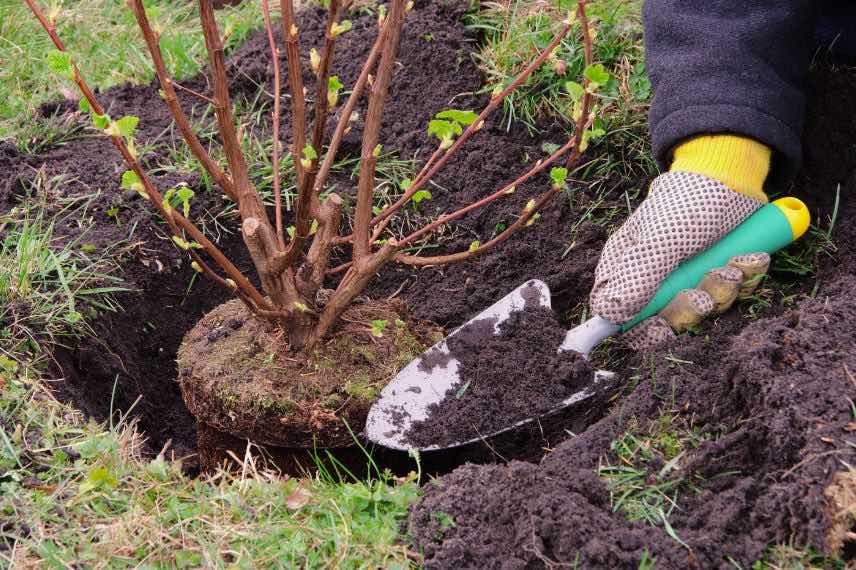
Most shrubs can be planted successfully in autumn
Planting in pots
Theoretically, planting a shrub in a pot can be done in any season, except during temperature extremes (heatwaves, frost).
Spring and autumn are still more favourable times for most shrubs.
Notes: shrubs kept in pots are always less hardy than those grown in the ground. Their root system is indeed less well protected. Be sure to take this into account if you choose to keep a shrub in a pot outdoors over winter.
A few tips for successfully planting your shrubs
Once you have found the ideal season for planting your shrub, consider the following points:
- Never plant vegetation during periods of extreme heat and drought. Soils are hard and difficult for both shrub roots and water to penetrate. Plants are likely to suffer water stress, even if you water.
- Do not plant plants during frost or snow. Here again, soils will be too hard for water to drain away.
- Avoid planting during storm and thunderstorm alerts, or when heavy soils are waterlogged.
- Choose a mild day for planting. Prefer overcast weather to strong midday sun.
- Prepare planting conditions: pre-cleaning of the area to be planted, root-dipping for bare-root plants, mulching, regular watering once planting has taken place, etc. Note that all shrubs, even those reputed to be drought-tolerant, need water in the months following planting.
- Subscribe!
- Contents
Comments