






























When to plant roses?
our tips for choosing the right planting season
Contents
Rosebushes, emblems of beauty and grace in our gardens, are often the pride of the gardener who planted them. But to obtain a healthy rose bush and a dazzling flowering, there is no secret: you must know how to plant at the right time of year! And choosing the right planting time is not a matter of personal preference on a calendar! Not at all! You must take the season, the weather and the planting location into account (in a pot on the terrace or planted in the ground?). The choice of packaging is also important: should you choose a rose bush to plant as bare roots, as a root ball or in a pot? Don’t worry, in this guide we’ll explore together the best season for planting your rose bushes, a promise of a future dazzling flowering!

Understanding the importance of seasonality in planting roses
Rose bushes, like many plants, follow an annual life cycle influenced by the seasons. They have a strong period of growth in spring, a flowering generally in late spring or early summer that can extend into early autumn for repeat-flowering varieties. From September-October, their deciduous or semi-evergreen foliage turns red and begins to fall. In late autumn, they gradually enter dormancy for the winter, waiting for milder days.
Autumn or winter planting (outside periods of frost), when the plant is in vegetative rest, reduces the stress caused by planting.
Similarly, in spring, the rose bush enters a period of strong growth, which allows it to establish itself actively before summer.
Conversely, planting during extreme periods, such as very hot summer months or periods of winter frost, can stress plants. They will then have to use all their energy to survive, to the detriment of their development, which can affect the future beauty of the rose bush. Have you perhaps already noticed that repeat-flowering rose bushes sometimes pause their flowering in mid-summer? This phenomenon is mainly due to summer heat and a lack of available water.
By planting at the right time, you synchronise your gardening efforts with this natural cycle, thus promoting better growth of your rose bushes, good rooting and abundant flowering.

Read also
8 perfect roses for potsWhen should you plant a rose bush in the ground?
Autumn, an ideal period
Autumn is considered the best time to plant roses in the ground. Why? The soil is still warm from summer, which promotes good rooting before winter arrives. Autumn rains also help plants establish themselves well.
Note: planting bare-root or rootball roses can extend from November to March in regions with an oceanic climate and provided there are no frosts during the planting week.
Advantages of autumn planting:
- Roses have time to develop a strong root system before winter frosts, making them more resilient.
- Roses will start to grow earlier in spring, which can lead to earlier and more abundant flowering.
Which rose form should you choose?
- For autumn planting, favour bare-root or rootball roses. Their roots can spread freely in the soil, which encourages deeper and firmer rooting.
- The moisture of this season improves contact between the roots and the garden soil, aiding better absorption of nutrients and water.
- The soil rootball that surrounds the roots of rootball roses helps protect the root system during planting, reducing stress and promoting a smooth transition.
- Prices are often more affordable for bare-root or rootball roses.
→ to find out more: “Bare-root roses in clumps: the perfect compromise” and “Roses: bare-root or potted?”

Rose in a rootball
Spring, the second period to favour
Planting in spring is the second best time to put your roses into the ground. Indeed, the milder temperatures of this season and the lengthening days stimulate the development of the plant. Rooting therefore happens naturally.
It is also the best planting period if your garden is in a region with harsh winters. Likewise, if your soil is clayey and tends to become waterlogged in autumn. In both cases, it is better to plant in spring.
However, take care to plant only once the risk of late frost has passed, to avoid cold damaging the young plants. Spring planting also requires particular attention to watering, as roses will need more water to compensate for rapid growth and potentially higher temperatures.
Advantages of spring planting:
- With rising temperatures, roses planted in spring benefit from a rapid start.
- For regions with harsh winters, you minimise the risk of cold damage.
- Spring generally offers good watering conditions, avoiding the excess moisture of autumn and the drought of summer.
Which rose form should you choose?
- In spring, choose potted roses. They are often already in active growth, which makes it easier for them to adapt to the garden.
- Potted roses are less prone to stress during transplanting, allowing a smooth transition into the garden soil.
- Sometimes sold in full bloom or about to flower, potted roses give quick satisfaction for the impatient gardener.

Planting a rose in spring
When to plant a rose in a pot?
Spring, the ideal season for potted roses
Spring is often the most favourable time to plant potted roses. The climatic conditions of this season favour a quick and effective start for container-grown plants. With the passing of the last frosts, the young plants in pots, more vulnerable to the cold than those in the ground, are now safe from these risks and can thrive without constraint.
Advantages of spring planting for potted roses:
- Milder temperatures and the lengthening of daylight stimulate the growth of potted roses.
- Already in an active growth phase, potted roses adapt more easily to their new environment on your balcony or terrace.
- Many potted roses are sold in full bloom or about to flower, offering visual satisfaction for the gardener.
Which rose packaging should you choose?
Choose a rose packaged in a pot that you will re-pot as soon as you buy it into a new, slightly larger pot with a suitable potting mix. Don’t forget to choose a pot with drainage holes to avoid excess moisture. Also provide a layer of clay pebbles at the bottom of the pot and a saucer to place underneath. Then position your potted rose where it will receive at least 6 hours of direct sunlight per day.

Planting in pots, possible (almost) all year round
The most favourable period for planting potted roses is spring, but you can also plant them almost all year round! Certainly, outside extreme periods (see next chapter) and if you pay sufficient attention to your rose, you should succeed in growing it in a pot without problems.
- Autumn is the second-best season for potting. Temperatures are moderate, which makes it easier for roses to establish without the risk of excessive heat or cold stress.
- If you plant in summer, make sure to do so early in the morning or late in the day to avoid the hottest temperatures. Plants can struggle to establish in very hot weather, so avoid planting during heatwaves. Then, be vigilant with watering! As soon as the top few centimetres of the potting compost dry out, water your rose early in the morning or late in the evening, always without drowning the potting mix.
- Winter planting is also possible, but this depends on the plant’s cold tolerance and the region where you are. Avoid transplanting during frosts or in regions with harsh winters. Bear in mind that a young potted rose is far more sensitive to cold than a specimen in the ground. Ideally, protect your young rose by moving it into an unheated greenhouse or conservatory or by covering it with horticultural fleece.
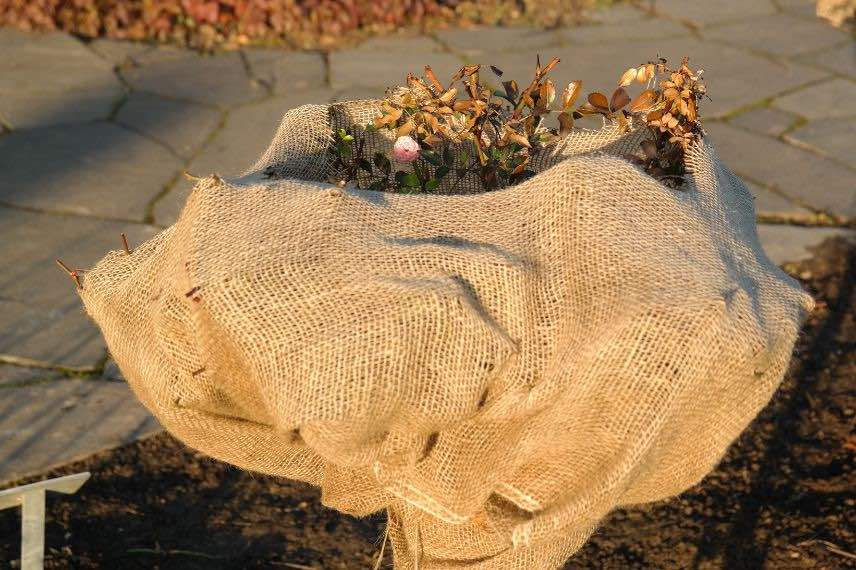
A standard rose protected from the cold
Read also
How to grow a rose bush in a pot?Seasons and weather conditions to avoid
Although rose bushes are known for their good hardiness, certain seasons and weather conditions can pose a risk to a young plant. Even though it often survives, its development can be affected, which could result in a less attractive and less floriferous rose over time. Here are the weather conditions to avoid as far as possible:
Avoid periods of severe frost
Winter frost periods are not the ideal time to plant rose bushes, particularly in regions where temperatures drop well below freezing for extended periods. Frozen soil can damage young plants and hinder the establishment of the roots. If you live in this type of region, favour planting in spring or protect your young rose bushes with a winter fleece and mulch.
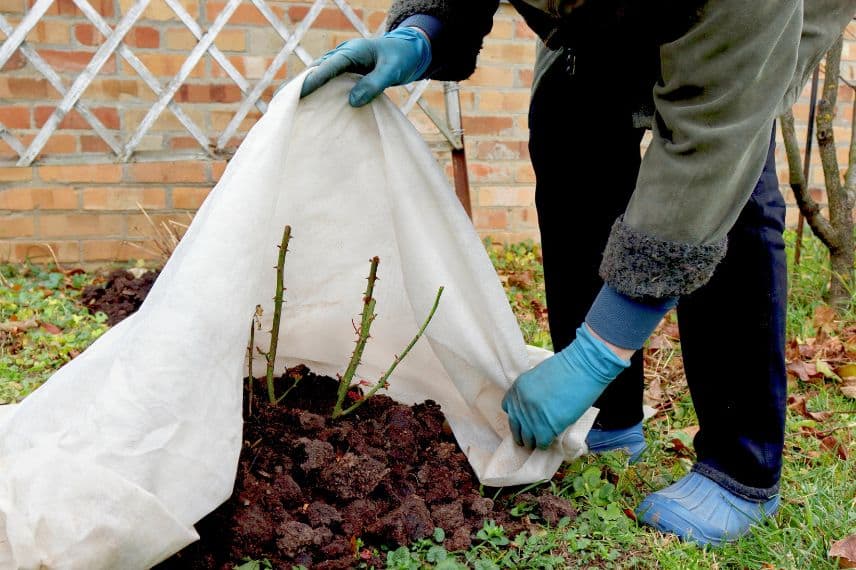
Summer heatwaves and drought, risky times
Planting roses during a drought or in summer during a heatwave can expose them to significant water stress. High temperatures accelerate the evaporation of water and can cause thermal shock to the plants, especially if they are not yet well established. It is better to wait and postpone planting until autumn.
Be cautious during periods of torrential rain
Although roses need a certain amount of water to develop, periods of heavy rain, particularly in spring or autumn, can saturate the soil. Especially in regions with clay soils. This can lead to poor soil aeration and encourage root rot. Again, check the weather for the week following planting.

Avoid strong and persistent winds
Strong winds, particularly in coastal or mountainous regions, can not only break the fragile branches of roses, but also quickly dry out the soil, increasing water requirements. In Brittany, for example, planting is preferred at the end of winter or in spring, to avoid autumn storms.
To learn more:
- Find the planting steps in our article : Roses: succeeding in planting in pots and in bare roots
- Discover our wide range of roses!
- Planting a rose in a very cold climate
- Succeed in growing climbing roses in pots
- Subscribe!
- Contents

Comments