


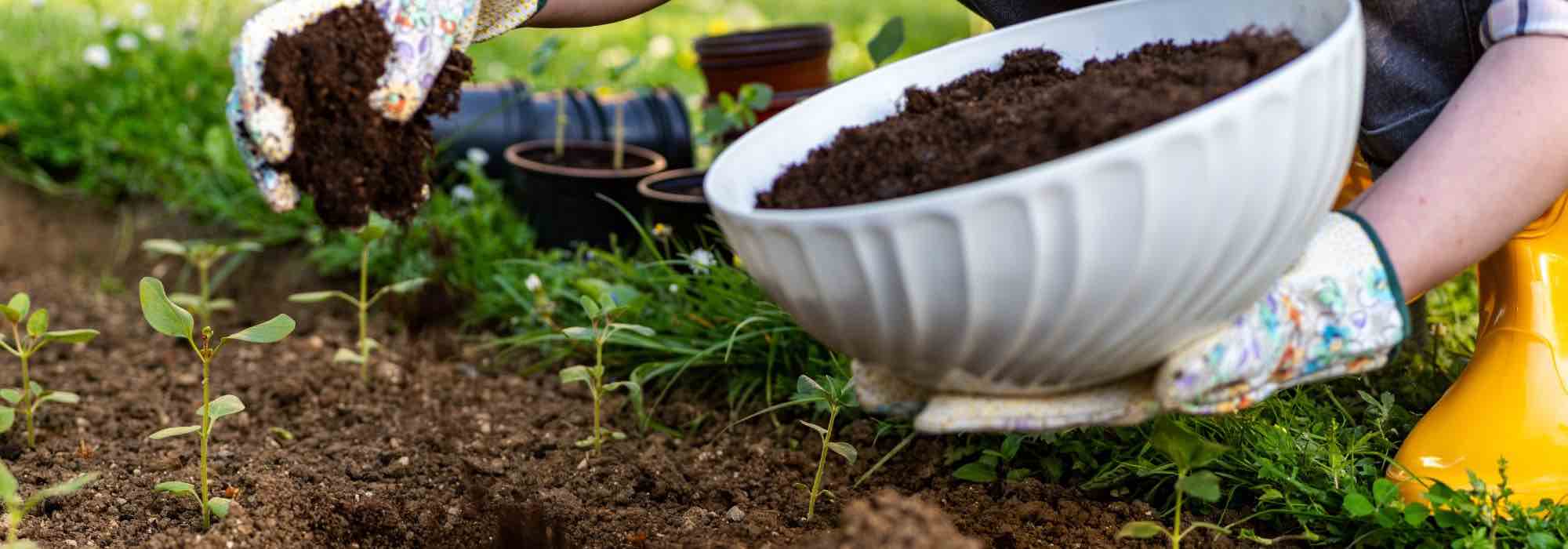
Which fertiliser should I choose for my perennial plants?
Our guide to growing beautiful young plants
Contents
When looking to promote the cultivation of your plants in the garden, it’s not always easy to navigate among the different products and labels. To effectively feed perennial plants, certain criteria must be taken into account.
So here are our tips for choosing the fertilisers suitable for perennials, which will boost the foliage, flowering, fruiting and growth of your plants.

A few handy vocabulary reminders: fertilisers and amendments
To grow well, plants, among other things, need nutrients drawn from the soil. If these are absent or not present in sufficient quantity, the plant will not grow properly. Its foliage, flowering, or fruiting will therefore be affected, as will their resistance to diseases and parasites. The soil naturally tends to become poorer over time, due to the plants that draw nutrients from it, but also leaching caused by rainfall and watering. With appropriate fertilisation, plants are stronger, more vigorous and more productive.
The amendment, for its part, consists in improving the soil structure in the long term. This can be to make it lighter, to promote water retention, to improve aeration, to stimulate the life of micro-organisms, to increase drainage, etc. It thus creates a more favourable environment for the development of plants. This includes lime, sand or clay, for example, which are mineral amendments. Manure and compost are also commonly included in this category and constitute organic amendments.
Read also
Garden fertiliser: how to choose it?The different types of fertilisers
To choose the right fertiliser, several factors must be taken into account:
- soil type (poor or naturally fertile, pH…) ;
- plant needs;
- growing conditions (in-ground or pot) ;
- your gardening approach (conventional, organic…)
To keep it simple, the main nutrients essential to plant metabolism are nitrogen (N), phosphorus (P) and potassium (K). These are macronutrients, which will be complemented by a small amount of micronutrients (notably trace elements).
Natural fertilisers, mineral fertilisers or chemical fertilisers
Fertilisers can be organic (derived from natural materials, plant or animal matter), mineral or synthetic (derived from mineral extraction or chemically manufactured).
Organic fertilisers generally have a longer-lasting effect and require less precision in dosing, as they present fewer risks of burning plant roots if over-applied. They are favoured in organic gardening or in permaculture practices, as they are considered less environmentally impactful. They can even be completely free and contribute to zero-waste gardening by reusing kitchen scraps that are composted, farm animal manures, urine, mowing and pruning wastes, wood ash, etc.
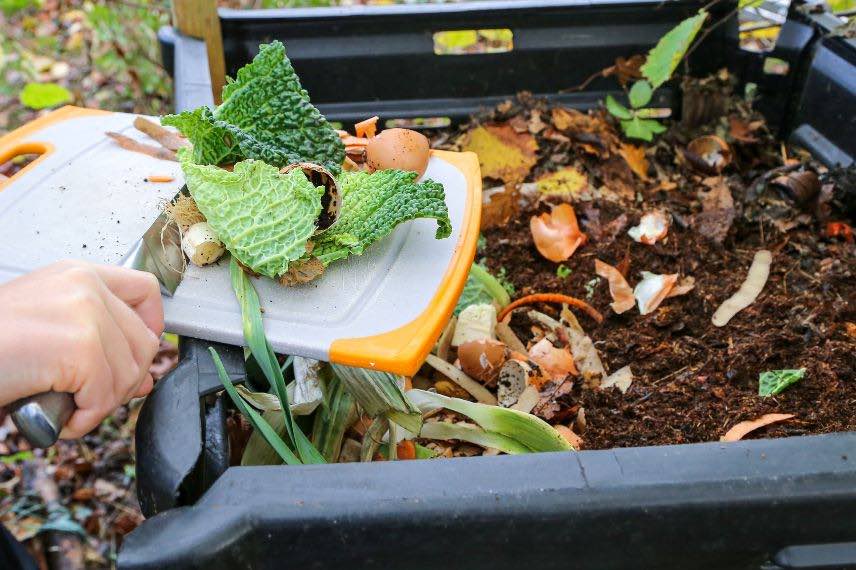
Compost offers only benefits, provided it is well decomposed.
Mineral or chemical fertilisers are often chosen to quickly address a deficiency. Their nutrient dosing is fairly precise. You will thus find on product packaging the designation NPK, each letter followed by a number expressed as %. An excess can nevertheless contribute to soil imbalance and lead to watercourse pollution (notably via nitrates). It is important to always follow the dosages indicated by manufacturers for this type of product. Under-dosing is always preferable to overdosing.
Boost fertilisers
Boost fertilisers are generally liquids to be diluted in the watering water, which diffuse quickly through the soil. But there are also solid products or even foliar sprays to be sprayed directly onto the plant foliage. This type of fertiliser is used at the start of new growth or precisely to give a little boost to a plant that is slow to wake up. It can, for example, be used to help spring-flowering perennials. They provide nutrients immediately, but for a short duration.
On the organic fertiliser side, dried blood also acts quickly within a few days, but for a short duration (a maximum of one month).
These are concentrated fertilisers, which may need to be renewed once during the growth period if the plant is a heavy feeder.
Slow-release fertilisers
These are fertilisers that gradually release nutrients over several weeks. It is therefore a long-term supply.
With mineral or chemical fertilisers, they often come in the form of granules to spread or sticks to mix into the growing medium. They are easy to use and versatile.
Most organic fertilisers have a slow action, as with manure, compost, plant waste, natural mulches or ground horn meal.
Universal fertilisers promoting overall plant health
If you have ordinary soil, or soil that is already fairly fertile, you won’t need to apply much fertiliser. You could then opt for a universal-type fertiliser, which provides the main nutrients in fairly balanced proportions. Their formulations are versatile, typically comprising roughly equal amounts of nitrogen, phosphorus and potassium. They are therefore suitable for all situations, handy if you have many different species and do not wish to invest in species-specific fertilisers for each.
You can also use a slow-release organic fertiliser at the start of growth, such as well-decomposed manure or well-rotted compost.
An application every two years is generally sufficient, especially if you also spread a mulch at the base of your perennials, which will also supply nutrients as it decomposes.
Most perennials with standard needs, regarded as easy to grow, will be happy with this type of fertiliser.
Finally, you can choose fertilisers that support the development of the root system. Rich in phosphorus, they help produce thriving perennials in both the vegetable garden and the ornamental garden.
Specific fertilisers to stimulate foliage
For perennials with ornamental foliage or perennials with coloured foliage, such as hostas, the heucheras or the ferns, nitrogen (N) inputs will be the most important. This is also the case for some aromatic perennials (excluding Mediterranean perennials that grow in poor soils). This nutrient indeed promotes all above-ground parts: the foliage, the stems, the colour. We therefore opt for a more targeted fertiliser. Nitrogen-rich fertilisers can be liquid or solid.
If you wish to opt for an organic fertiliser, you can use dried blood, which contains between 13 and 14% nitrogen. It will give the plant a boost and kick-start its growth. Its action is rapid, within a few days, but does not last. It is also an interesting fertiliser for poor soils that will favour soil biology activity. During the growing period, you can supplement with horn meal, which has a longer-lasting complementary effect. Other organic fertilisers are rich in nitrogen, such as urine or poultry manure.
Specialised fertilisers are also designed to correct a specific soil deficiency, in this case a lack of nitrogen. But remember that excess can be worse than a deficiency. In too large a quantity, nitrogen can weaken the plant by making its above-ground parts too tender and soft. They will then be less resistant to diseases and to adverse weather. Moreover, they will become more attractive to certain pests, such as aphids.
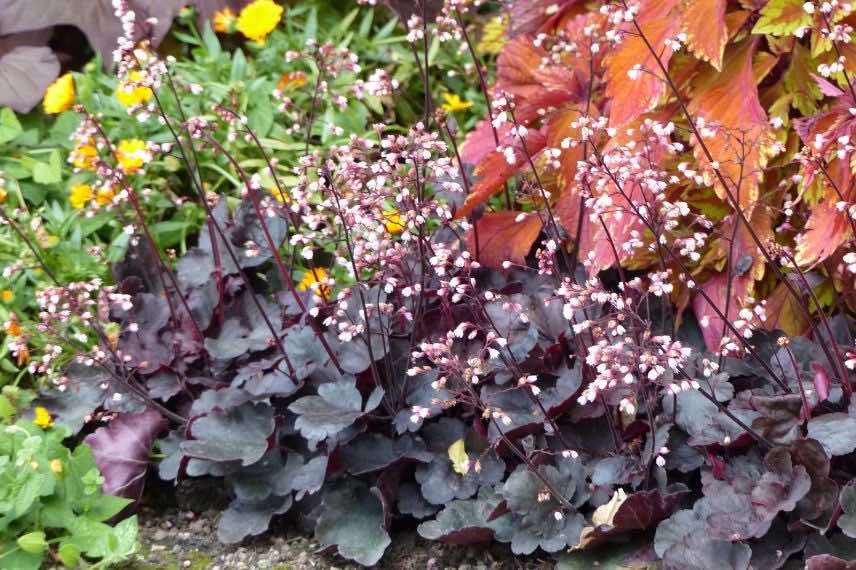
Foliage plants, and especially those with coloured foliage such as heucheras, need nitrogen-rich fertiliser.
Specialised fertilisers to support flowering and fruiting
When it comes to plants grown for their flowering, such as flowering perennials for borders and beds or for cut flowers, the addition of fertiliser will help increase the number of flowers and prolong their flowering period.
For this, it is important to choose potassium-rich fertilisers (K) to promote the development of flowers, but also of fruits. Phosphorus (P) will also be useful for the development of the root system and the plant’s overall resistance, especially if it is susceptible to diseases and pests.
In terms of organic fertilisers, seabird or bat guano is fairly complete. It consists of dried excrement that is rich in nitrogen, phosphorus, potassium and trace elements. Its action is rapid. Wood ashes are also rich in potash.
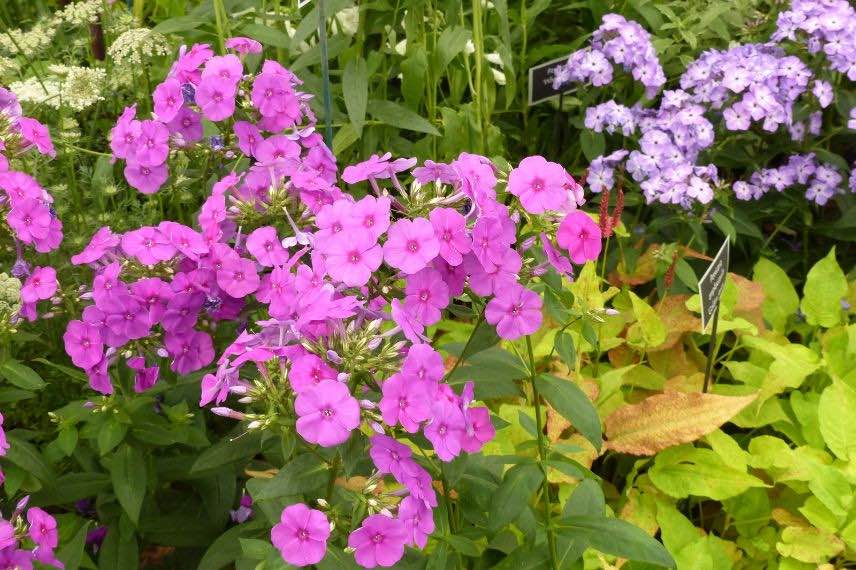
Flowering perennials, such as Phlox, enjoy potash
Plant-type-specific fertilisers
Finally, you will find fertilisers capable of meeting the precise and particular needs of certain perennials. For example, this includes fertilisers specifically designed for cacti and succulents (agaves, crassulas, saxifrages…) or fertilisers for aquatic plants.
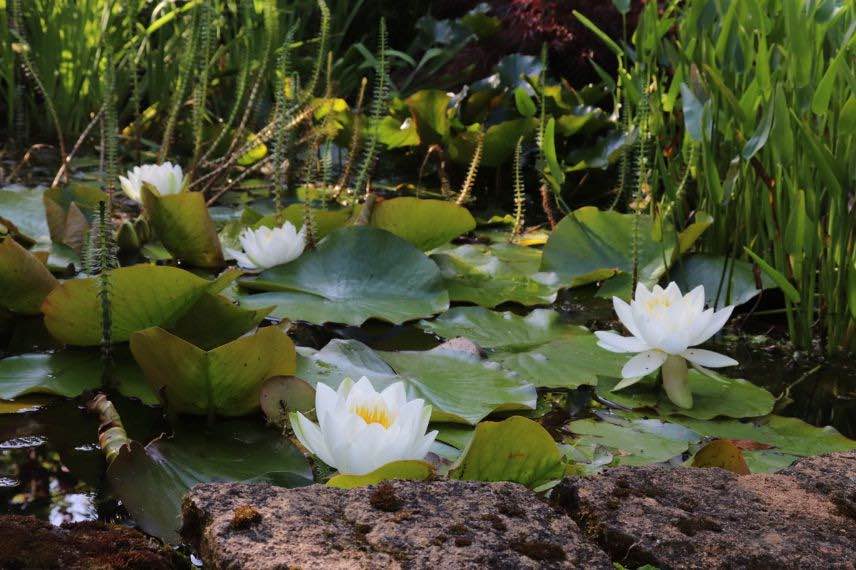
Plants from very specific environments such as aquatic ones have precise needs that should be studied.
Fertilisers for potted perennials
Plants grown in containers—whether in pots, window boxes, tubs or troughs—have access to a more limited substrate than plants grown in open soil. As a result, Nutrient reserves will be more limited, and the soil will degrade more quickly.
For this type of cultivation, fertiliser applications will therefore be more regular. They will usually occur at the start of new growth, then a second time during the growth period. Prefer fertilisers tailored to stimulate either flowering, such as special fertilisers for window boxes and pots, or foliage, such as fertilisers for indoor plants.
A slow-release fertiliser, with a balanced formulation, can also be suitable if your plant is not a heavy feeder. You could then opt for a fertiliser of the type ‘La belle bouse’ or add a handful of home-made compost each spring.
Note: if you have already carried out top-dressing (removal of the top few centimetres of substrate to replace with fresh soil or potting mix) or repotting, the fertiliser can be given in smaller quantities since new nutrients are already being supplied.
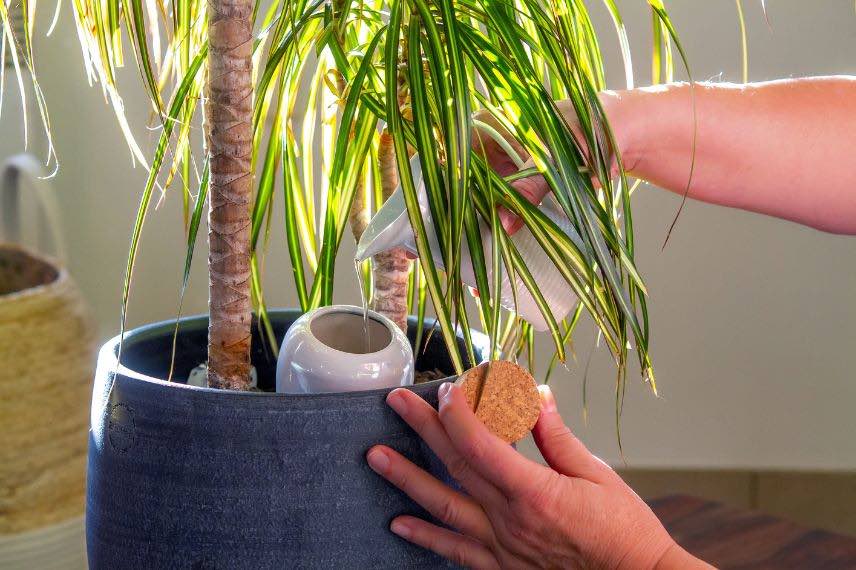
Potted plants are more dependent on fertiliser inputs to grow well
- Subscribe!
- Contents
Comments