





























Which Japanese maples can be grown in pots?
Our selection of Japanese maples for balconies and terraces
Contents
With their elegant palmate leaves that blush with vibrant colours as autumn arrives, the maples, Acer in Latin, rank among the most colourful and attractive trees and shrubs. Hardy and easy to grow, they can even, for the smallest of them—the Japanese maples—be grown in pots on a terrace or balcony.
Looking for outdoor plants that will make an impact near your home, or are you wondering which maple to plant in a pot? Discover our Acer selection to grow in pots to bring an Asian or zen touch to your terrace!

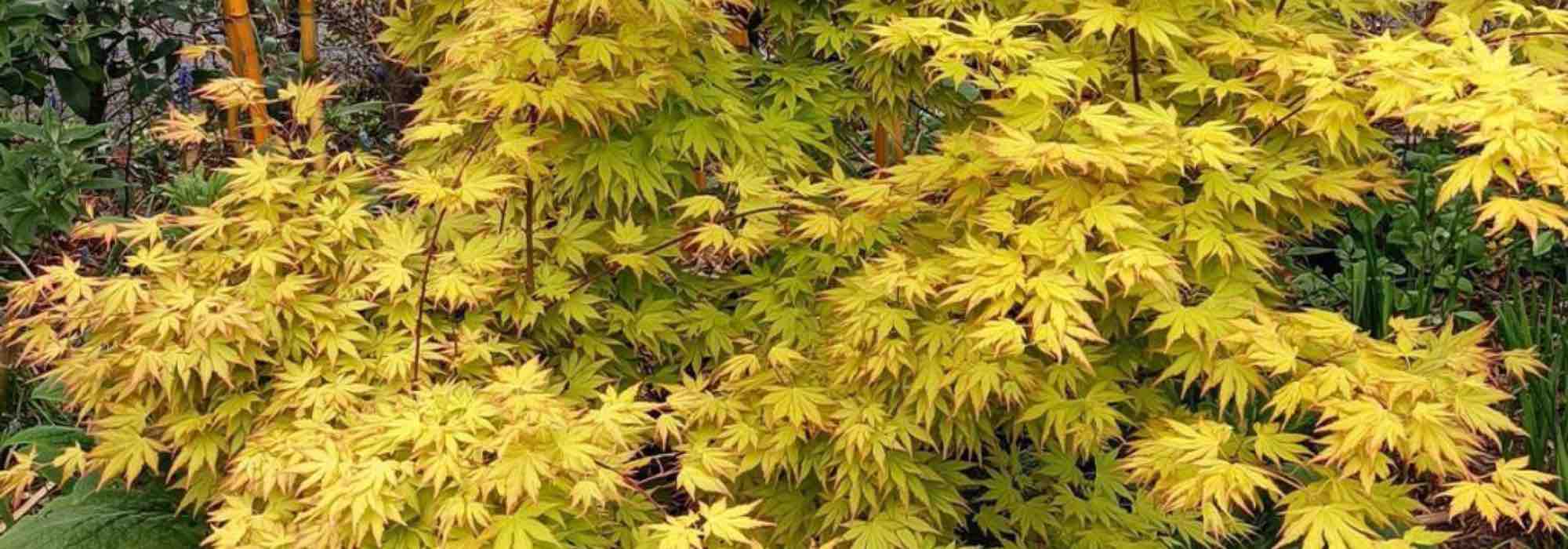
Acer palmatum 'Orange dream', with showy foliage
Acer palmatum ‘Orange Dream’ offers a real spectrum of colours across the seasons. This shrub which remains compact, has foliage that shifts from bright orange in spring to light green in summer and to golden yellow, which reverts to bright orange again in autumn. Its leaves of 5 to 10 cm long are palmately lobed, cut into 5 to 7 lobes and finely incised. They are adorned with discreet reddish flowers in April, followed by red-winged fruits from September. This maple forms a shrub with a bushy, rounded habit and reaches a height of 2 metres at maturity. Its foliage is deciduous.
Hardy to -23°C, this shrub prefers an acidic, cool, fertile, loose and well-drained growing medium. It settles in partial shade and sheltered from winds. The foliage dislikes extreme heat and the maple dislikes excessive moisture. In hot weather, it is advised to water the foliage and mulch the growing medium. It should be pruned in winter to balance its growth habit. It may be attacked by scale insects and Verticillium. Every three years, add organic matter to the growing medium.
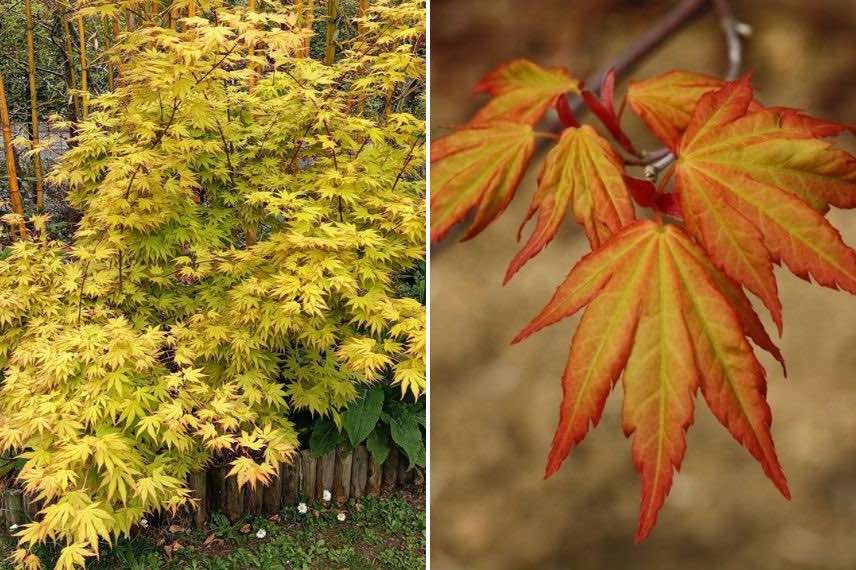
Acer palmatum 'Bloodgood', with stunning red foliage
From spring to autumn, the Acer palmatum ‘Bloodgood’ displays finely cut foliage with intense colours. Bright red in spring, it becomes purple in summer, then takes on hues of red and brown in autumn, before shedding. With its shimmering colours, this maple easily becomes a focal point on a terrace. It grows to a height of 2 metres at maturity and has a spreading habit. It bears bark that is brown to reddish. In May and June, subtle flowering appears, which later gives rise to small winged fruits.
This Japanese maple thrives in a large pot, in partial shade and in an acidic substrate such as heather soil, which you should keep moist and well-drained. Keep it sheltered from the wind and mulch the substrate. In hot weather, also water the foliage. This maple is pruned in winter and is also susceptible to scale insects and Verticillium.
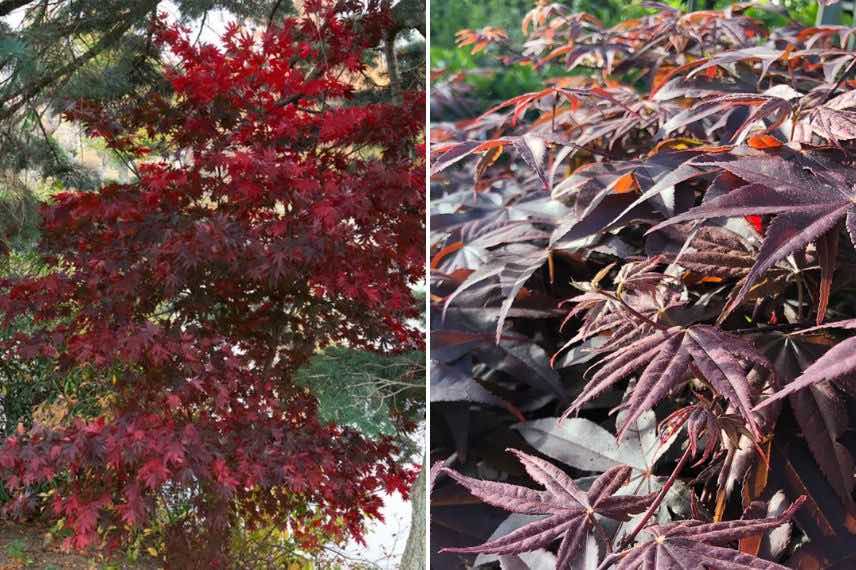
Acer palmatum 'Sangokaku' (Senkaki), with a splendid red bark
Acer palmatum ‘Sangokaku’ (Senkaki) has many qualities for pot culture. It offers a rounded habit, displays foliage with changing colours and is distinguished by the striking coral-red bark of its young shoots, which makes it very decorative in winter, while its leaves have fallen. The foliage, finely cut and elegant, also flames as well , passing from green tinted with yellow and salmon-pink in spring to green in summer, shading to red-pink-orange and yellow in autumn. A real spectacle of colour. In May and June, red and discreet flowers appear and sometimes produce a few winged fruits. Of medium size, this maple reaches a height of 3 metres at maturity, but its growth will be slower in a pot.
On a terrace, this Japanese maple is most striking, grown in a large pot with a clean or contemporary design. It can be placed in sun, in partial shade or in shade and is grown in a non-calcareous, cool, fertile, loose and well-drained substrate. Like other Japanese maples, it prefers shelter from winds and does not appreciate excess humidity. To help it flourish, give it an application of organic matter every three years, mulch the substrate and treat preventively against scale insects and Verticillium wilt.
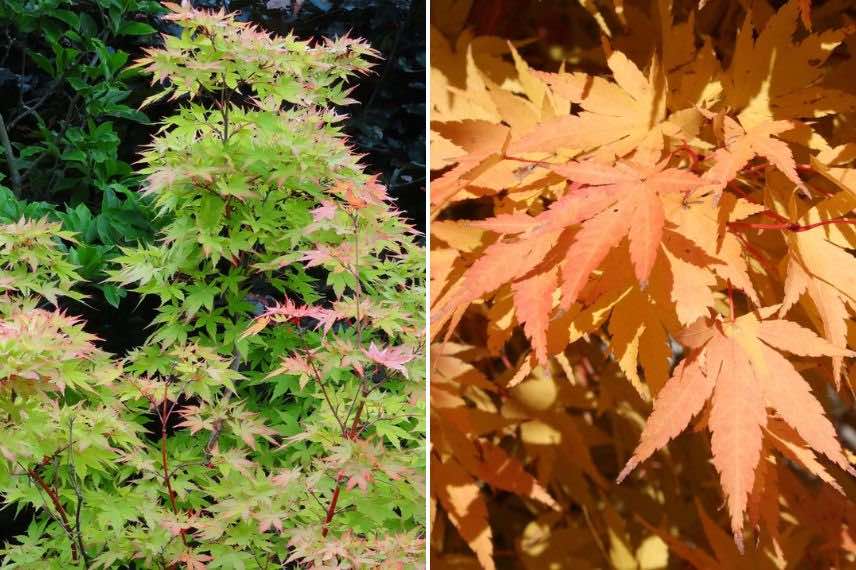
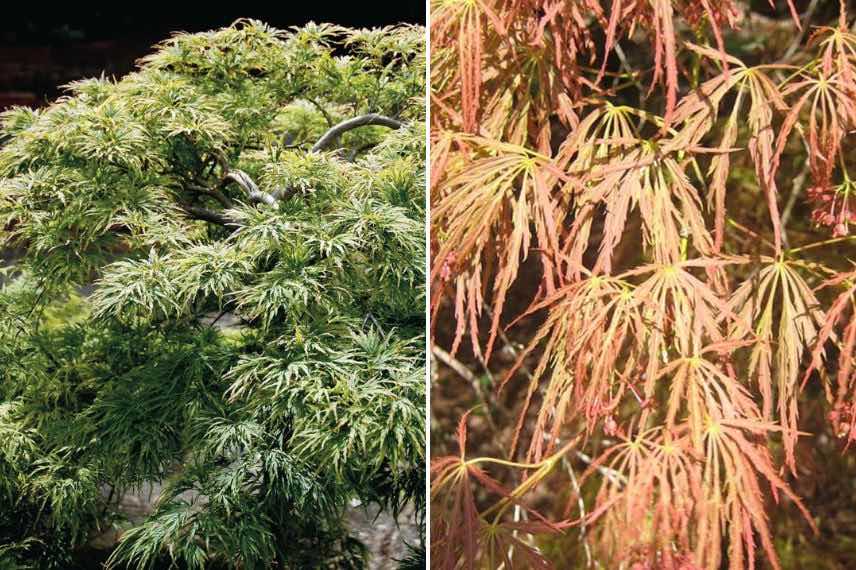
Acer palmatum 'Dissectum', finely dissected foliage
Compact and slow-growing, the Acer palmatum ‘Dissectum’ is one of the most suitable Japanese maples for growing in pots. Reaching a height of 1.6 metres at maturity, it features a graceful, spreading, flat-topped habit and fits easily on a balcony. It enchants with its lace-like, finely dissected foliage that is pale green in spring and in summer, before turning orange in autumn. In April and May, small reddish flowers appear, followed by red-winged samaras from September.
It prefers partial shade or shade, in a sheltered position, and thrives in fertile soil that remains moist but well-drained. Mulching the bed, regular but not excessive watering, fertilising every three years, winter pruning, and protection against scale insects and Verticillium wilt: it requires the same care as other Japanese maples.
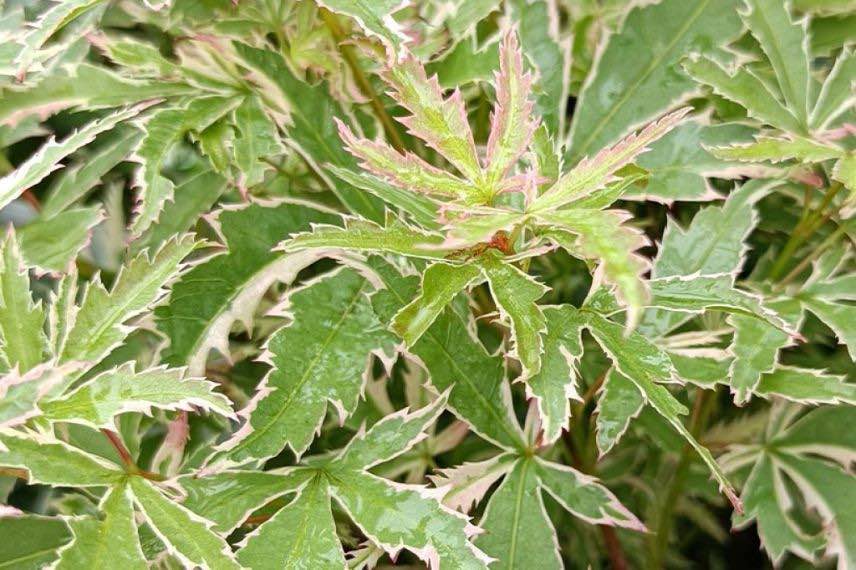
Acer palmatum 'Butterfly', variegated and luminous foliage
The Acer palmatum ‘Butterfly’ owes its distinctive character to its variegated, bright foliage, which brightens a shaded corner of the balcony. The leaves, finely cut, are pale green margined with pink in spring, then cream-edged in summer. Growing to a height of 2.5 metres at maturity, its habit is spreading and rounded. Small flowers appear in April and May, followed by the maple’s small fruits in September.
This maple should be planted in a large pot, in an acidic, cool and well-drained growing medium. Note that it does not tolerate lime or heavy, waterlogged substrate. As with other Japanese maples, place it in partial shade or shade, in a sheltered position from winds, and provide the usual care: mulching, misting the foliage during heatwaves, applying organic matter every three years, pruning in winter, and treatment against scale insects and Verticillium.
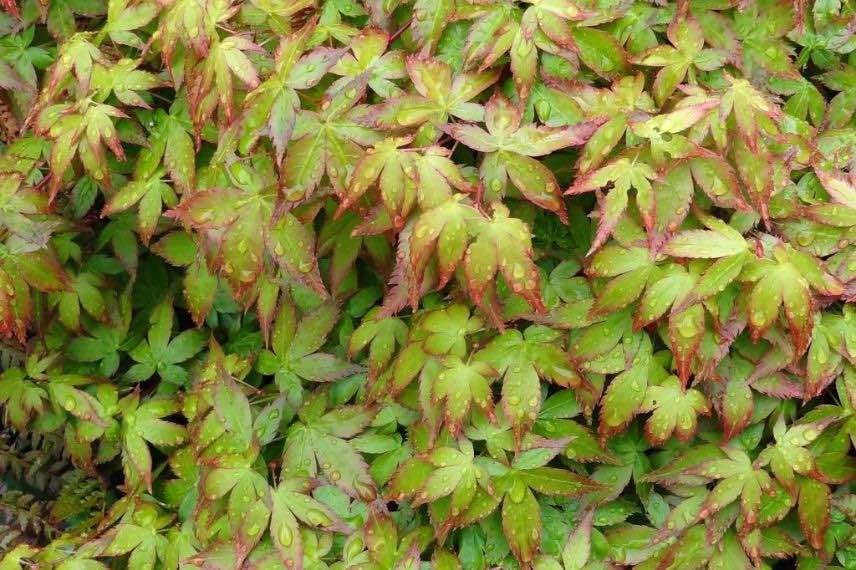
Acer palmatum 'Little Princess', a compact shrub
With its naturally rounded habit, its compact size and its small leaves reminiscent of colourful stars, Acer palmatum ‘Little Princess’ has everything to please. It forms a ball of abundant foliage measuring 1.5 metres at maturity. Its leaves, pale green with red-tipped points and red margins, turn to dark green, before colouring red-orange and then yellow in autumn. In May and June, it flowers, and in autumn, the winged fruits appear.
Grow it in full sun or partial shade, in a bright but sheltered position, and provide lime-free, cool, rich and well-drained soil. If planted in full sun, it’s best to mulch the soil to keep it cool. For the rest, it is cared for like other Japanese maples.
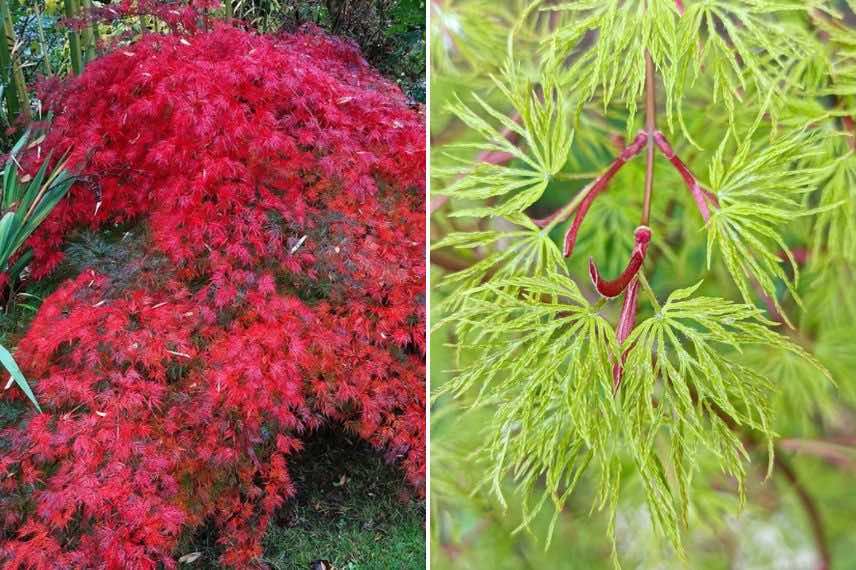
Acer palmatum 'Emerald Lace', graceful and easy to grow.
Acer palmatum ‘Emerald Lace’ displays lace-like foliage, an elegant and compact habit with a rounded crown and remains small in size. With a height of 1.7 metres at maturity, it is an excellent candidate for pot culture. The foliage, with a feathery appearance gives it a great deal of grace and offers a changing display throughout the seasons. From light, bright green in spring, it becomes emerald green in summer, then takes orange-red hues in autumn.
Grown in a large pot, it nicely enlivens a terrace or balcony in a Japanese or contemporary style. In addition to all these advantages, its great ease of cultivation should be noted, as it can tolerate sun, partial shade or full shade. The substrate should preferably be slightly acidic, cool, fertile and well-drained. Hardy, it only requires a few waterings spaced out during dry spells, which makes it less susceptible to diseases such as Verticillium wilt than other Japanese maples.
Further reading
Many other compact Japanese maples can be grown in pots, such as the striking Acer conspicuum ‘Red Flamingo’ or the snake-bark maple, the Acer palmatum ‘Beni Maiko’ or the Acer palmatum ‘Shaina’ with spectacular colours.
In addition, consult:
- our full range of maples
- our selection of dwarf Japanese maples
- our tips for growing a Japanese maple in pots.
- Subscribe!
- Contents
Comments