





























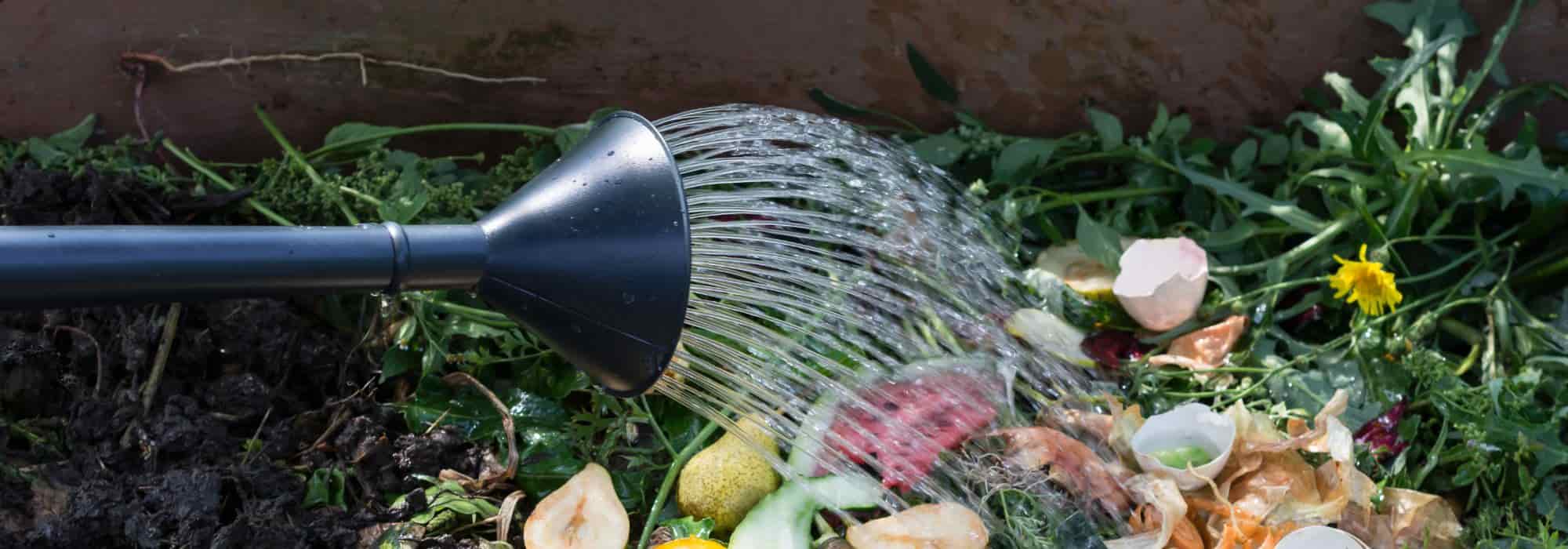
Why and how to water your compost?
Practical tips for successful composting
Contents
You’ve certainly got one, perhaps two, in your garden: a composter. Because, with composting, it’s about turning organic waste into a nutrient-rich soil amendment. But for this transformation to take place correctly, several conditions must be met: the addition of organic matter, good aeration, a balanced mix of brown and green materials… and moisture! This is where the question of watering comes in. Should you water the compost? If yes, when and how? Discover our tips for mastering compost watering and producing high-quality humus.

Why should you moisten compost?
Composting relies on the action of microorganisms (bacteria, fungi, earthworms, etc.) that break down organic matter into simpler compounds. These microorganisms, like any living being, need water to survive and multiply. A compost that is too dry slows down the decomposition process, as microorganisms become inactive, or even die in the absence of water.
Conversely, a compost that is too damp becomes compact and suffocating, since the excess water prevents air from circulating, which favours the proliferation of other little creatures: anaerobic bacteria (those that live without oxygen), responsible for bad odours.
Thus, moisture plays an important role in maintaining optimal biological activity within the compost. By keeping your compost heap sufficiently moist, you encourage microorganisms to carry out the decomposition more efficiently.
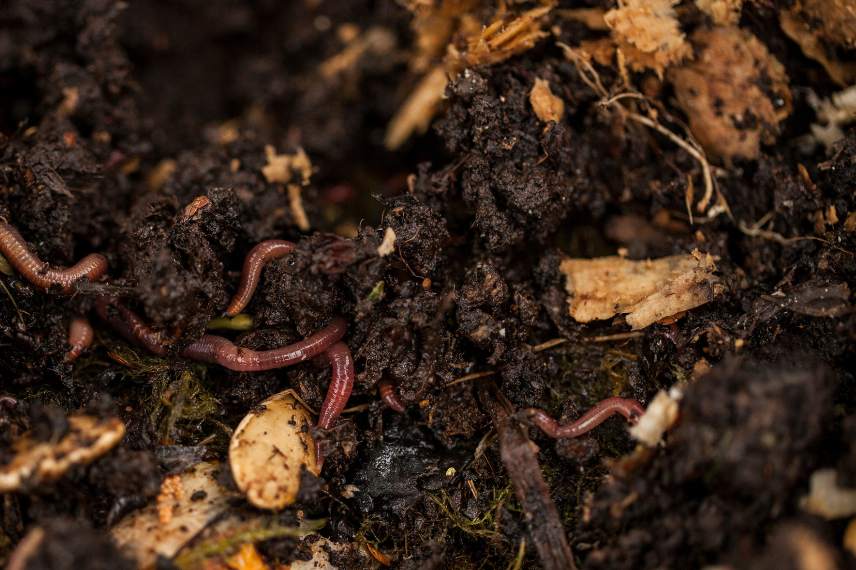
Microorganisms and earthworms need moisture to thrive and break down the compost
How can I tell if my compost is too dry?
The ideal moisture for compost is between 50% and 60%. But how can you tell if your compost needs watering without measuring its moisture with a dedicated device? A simple method is to judge its moisture by feel with your hand. To do this, take a handful of compost and squeeze it in your hand:
- If the compost leaves no trace of moisture: it is too dry and needs watering.
- If you feel the compost is damp, with no water running (like a damp sponge, but wrung out): then the compost has the right moisture level.
- If water runs between your fingers or if the handful of compost looks muddy: it is too wet.
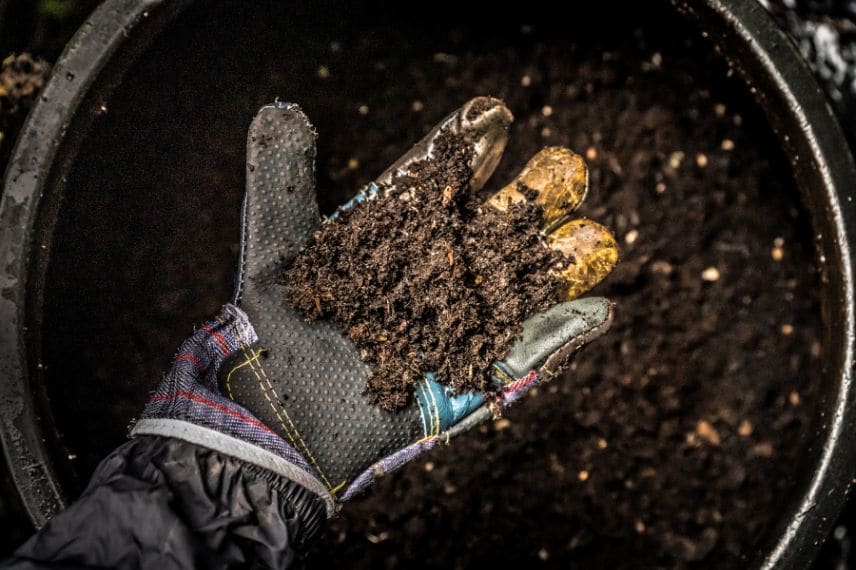
Squeeze the compost clump in your hand to test the moisture
What are the consequences of compost that is too dry or too wet?
A well-maintained compost will decompose in a few months and produces a rich, dark humus, ideal for improving the structure and fertility of your soil. But a poorly managed compost, whether too dry or too wet, can slow down the decomposition process and cause problems.
Too dry compost
If your compost is too dry, decomposition slows down, or even stops. You will find that organic matter takes a long time to break down. Dry compost is also less attractive to earthworms and other decomposers, as they need moisture to survive.
Too wet compost
A compost that is too wet poses further problems. Excess water prevents air from circulating properly in the heap, which promotes anaerobic fermentation (in the absence of oxygen). This fermentation produces malodorous gases, such as methane or ammonia, which can make composting unpleasant and ineffective. In addition, a waterlogged compost tends to slump, reducing the air spaces required by microorganisms.
Read also
How to hide a compost bin?When should you water the compost?
We often hear that you should check your compost heap one to two times a month, but moisture can vary depending on the seasons, regions, the type of materials you add to it, and how often you turn the heap.
However, there are a few periods that are more favourable:
- In summer or during a drought : During periods of high heat, evaporation can dry out your compost quickly. If you notice your compost is dry, don’t hesitate to water it lightly to compensate for this loss of moisture.
- After turning the heap : When you aerate your compost by turning it, you expose the deeper layers to the air, which can dry out certain areas. Watering before turning, if the compost seems too dry, helps distribute moisture evenly.
- When adding brown materials : Brown materials (dead leaves, cardboard, straw, etc.) are generally drier than green materials (peelings, grass clippings, etc.). It is therefore wise to add a little water when you add a large quantity of brown materials to prevent your compost from becoming too dry. The reverse is also possible: add brown materials when the compost becomes too damp.
- When adding green materials : Green materials (grass clippings, peels, etc.) are materials still full of water, which brings natural moisture to the compost. In this case, watering is often unnecessary.
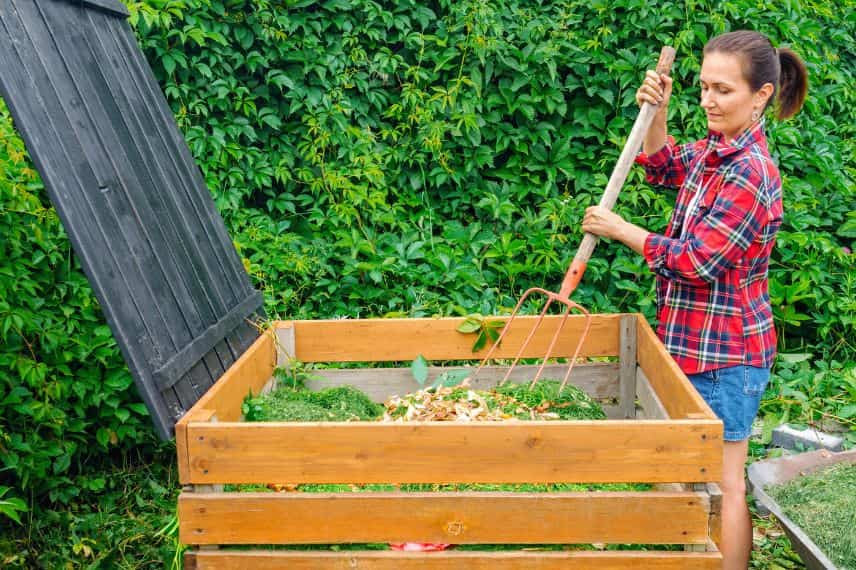
Turning the compost can dry out certain areas. However, the addition of green materials such as here (grass clippings) brings moisture naturally.
How to water compost correctly?
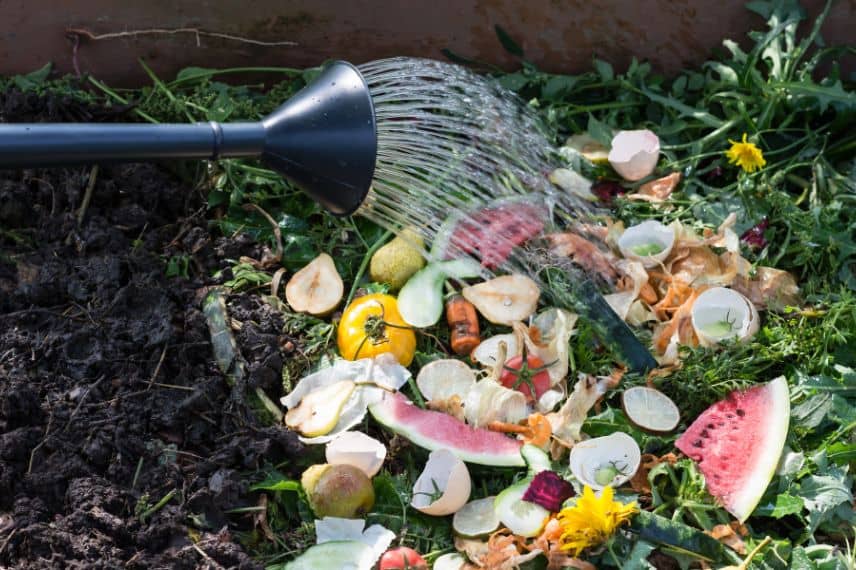
Watering the compost should be done sparingly. As noted above, excess water can harm decomposer microorganisms, particularly by creating poorly aerated zones. Here are some tips for watering your compost effectively:
- Use a watering can with a fine rose or a sprayer to water gently and distribute the water evenly, without waterlogging the compost.
- When watering your compost, favour rainwater, as it is soft, free from limescale and chlorine, which makes it ideal for the microorganisms and wildlife in the compost. If you don’t have access to rainwater, tap water can also be suitable, but only after allowing the water to stand for a few hours in the watering can, to remove the chlorine.
- If your compost is very dry, it’s best to water in several small applications rather than adding a large quantity of water at once. This allows better absorption and avoids the ‘too-wet’ effect in some areas.
- After adding water, it is advisable to mix the compost to distribute the moisture evenly and prevent some areas from becoming too dry or too damp.
How can you avoid compost becoming too wet?
If you find your compost is too damp, here are some tips to correct the situation:
- Brown materials, such as dead leaves, untreated cardboard, or straw, are dry and help to absorb excess moisture. By adding these materials in a thin layer, you can quickly rebalance the moisture in your compost.
- Turning the compost improves aeration and dries out overly damp areas. Take the opportunity to spread the overly damp materials and avoid the formation of pockets of water.
- If rainfall is frequent, cover your pile of compost with a tarpaulin or lid to prevent it from becoming waterlogged. Just ensure the compost can breathe to avoid depriving micro-organisms of oxygen.
- Subscribe!
- Contents
Comments