






























Why aren't my tulips flowering?
Reasons why your tulips fail to produce beautiful flowers
Contents
Tulips are easy to grow and offer a wide range of colours and shapes, from the hardy little botanical tulip to fringed, parrot or double tulips.
Why aren’t my tulips flowering? Damaged bulbs, planting or maintenance mistakes, unfavourable weather conditions, pest presence… discover various possible reasons for this flowering issue, and the solutions to remedy it, giving yourself every chance of enjoying beautiful tulips in spring.

Planting mistakes
Bulb selection
Before any planting, bulb selection is an essential step to successfully grow tulips. If the bulb you plant is damaged or diseased, you risk not getting any flower. A healthy bulb is firm and shows no signs of deep mould.
Solution:
Select undamaged bulbs that are not covered with white mould to give you the best chance of flowering as soon as the milder days arrive.
When to plant?
Tulip bulbs should be planted in September or October to allow them to establish themselves well before pushing up and flowering in the next spring. If you plant them at another time, such as in spring or summer, their flowering may be compromised.
Solution:
Stick to the planting window between September and November, or January at the latest.
Where to plant?
Tulips for flowering need sun exposure and well-drained, fertile soil. Make sure to give them everything they need to promote growth and thus flowering.
Planted in too much shade or in soil that is too dry, tulips may be small. Placed in soil that is too wet or heavy, the bulbs may rot.
Solution:
Choose a sunny site and well-drained, fertile soil.
How to plant them?
It is a matter of properly orienting the bud, with the tip pointing upwards and the roots downwards. Another important point: plant the bulb at the correct depth, burying it to a depth twice its height.
First, mix a little potting compost or compost into your garden soil to enrich it, or some sand if the ground is too heavy and not well-drained.
Firm the soil well to avoid air pockets and water moderately.
Between bulbs, maintain a planting distance of 10 cm.
Solution:
Follow good planting practices.
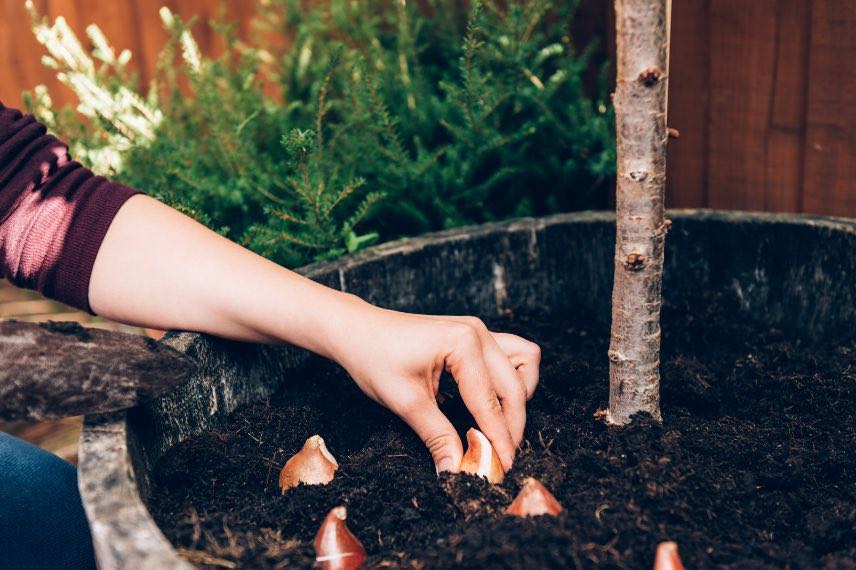
Plant the tulip bulbs the right way
Care mistakes
Watering
Tulips need little watering, except in spring drought and just after flowering, a period when they require water and fertiliser to replenish the bulb’s reserves. The proper regeneration of the bulb is indeed a key factor in achieving a beautiful display of your tulips.
However, keep in mind that excessive watering risks rotting the bulbs.
Solution:
Water the tulip moderately at the base after flowering to promote bulb regeneration.
Fertiliser
After flowering, between April and June depending on the species, the bulb needs to rebuild its reserves in order to flower again next year. It is able, thanks to water and its leaves, to rebuild its own reserves, but you can nevertheless provide fertiliser after flowering to help it. Preferably use a fertiliser low in nitrogen.
Solution:
Apply fertiliser after flowering.
Cutting faded flowers and leaves
Once the tulip flowers have faded, it is best to cut the stems to avoid exhausting the bulb. As for the faded leaves, if it is tempting to cut them as soon as they begin to wither, it is essential to wait until they are yellow and dry before removing them. Indeed, the bulb needs the leaves to rebuild its own reserves.
Solution:
Do not cut the leaves until they are yellow and dry.
Dividing the bulbs
Sometimes bulbils appear on the bulbs and they exhaust the bulb’s reserves because there are too many.
Solution:
Divide the bulbs and replant the bulbils elsewhere if you wish.
Bulb regeneration
To bloom, a tulip needs a bulb that has fully rebuilt its reserves. For this, the bulb requires a little water after flowering and its leaves until they are completely dry. If the bulb is not well regenerated, it will only produce leaves, or even nothing at all.
Solution:
Ensure the bulb’s regeneration is correct by providing water to the plant after flowering and by not cutting the leaves until they are completely dry.
Storage of bulbs
If digging up tulip bulbs and storing them during winter in a dry and cool place was widely practiced, today this is no longer considered useful. Bulbs can stay in the ground during the vegetative rest period. They should then not be watered. You can add mulch in autumn to protect the bulbs from frost during winter.
Crop rotation
Another potential issue that can compromise tulip flowering: bulbs that are too old and have become exhausted.
Solution:
Replace old bulbs with healthier ones.
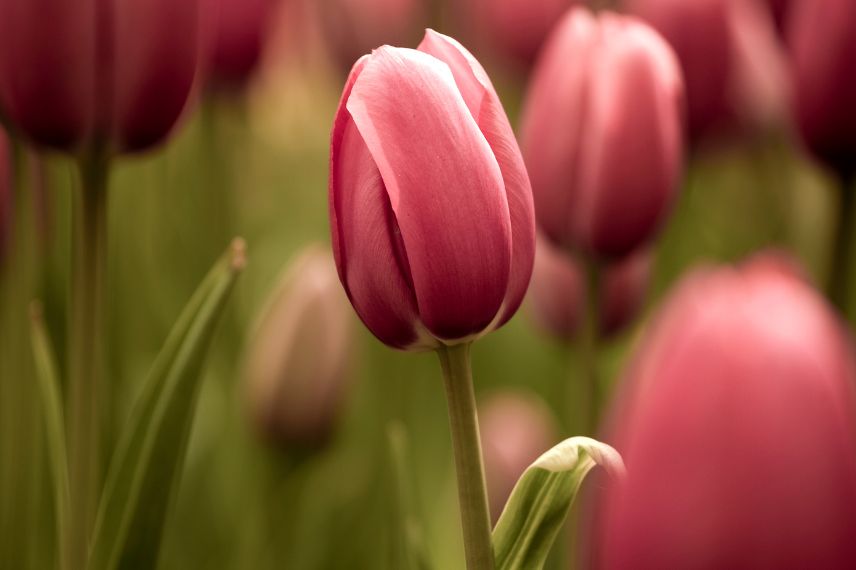
It would be a pity not to enjoy the tulips planted in your garden
Other possible reasons
Adverse weather conditions
Tulips require a period of cold to flower. If winter is not harsh enough, this can prevent your tulips from flowering well in the following spring.
Pests
If your tulips do not emerge from the soil, it is possible that the bulbs have been eaten by animals, such as rodents like voles or mice, or boar if you live near a forest.
Solution:
If you encounter this type of problem, you can protect your bulbs from rodents either by planting them in pots inaccessible to small creatures, or by covering them with a wire mesh.

Field mice eat tulip bulbs
Diseases
Tulips can also be affected by tulip fire, which is a cryptogamic disease caused by a fungus and therefore linked to excess moisture. It manifests as grey spots on the leaves and flowers, which damages their flowering.
Solution:
Pull out and destroy the affected plants and do not replant bulbs in the same place.
Further reading
Discover our comprehensive guide to growing and planting tulips, as well as our tips to encourage your tulips to rebloom and browse our complete range of tulips for inspiration.
- Subscribe!
- Contents

Comments