





























Why choosing flax mulch for your garden?
Advantages and disadvantages of flax mulch
Contents
Mulching soil, rather than leaving it bare, is an increasingly common practice. In gardening, mulching offers many benefits. It protects the soil and the plants from weather, heat or cold. It helps retain moisture in the growing medium and prevents weeds. It can also enrich the soil and add a decorative touch to the garden. You have a choice between different types of mulch, which can be organic, i.e., natural, or synthetic. Among natural mulches, flax mulch is increasingly used in the garden. Fine and light, insulating, and light-coloured, it offers many benefits. Discover in this care sheet the advantages and disadvantages of flax mulch and how to use it in your garden.

What is flax mulch?
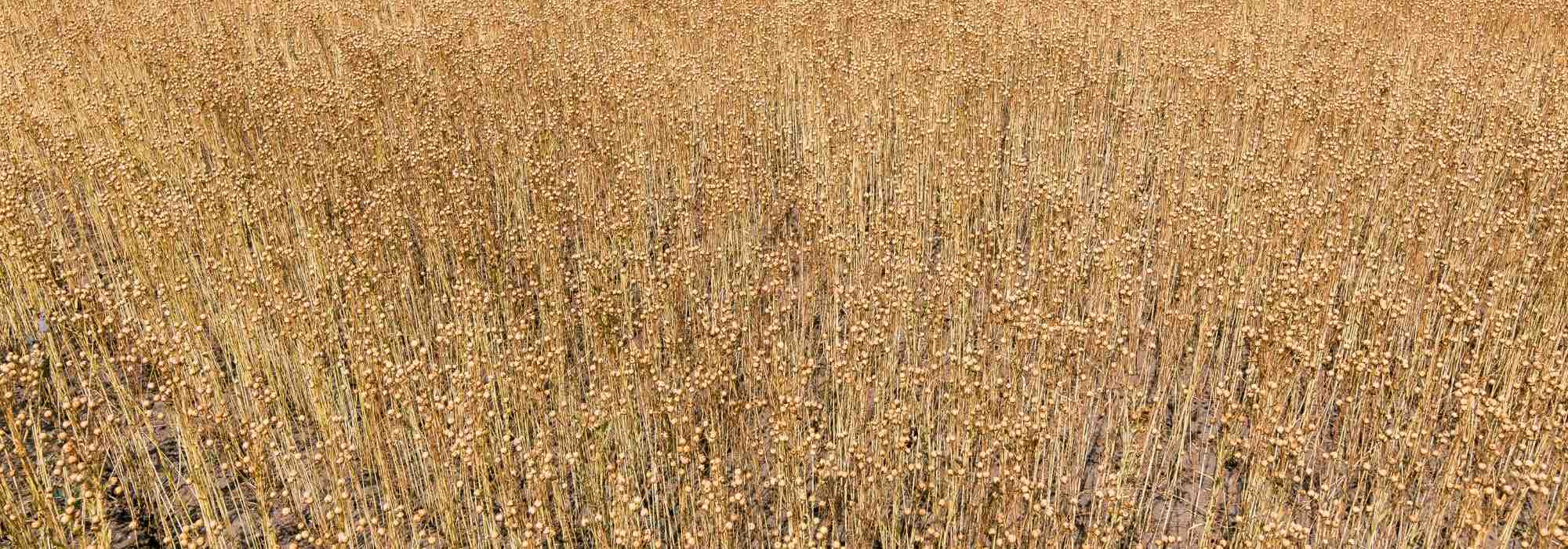
Flax is a herbaceous plant, either perennial or annual, with pretty blue flowers, which appear from May to August. Easy to grow, flax grows in full sun in well-drained soil.
It is mainly used for its fibres, which allow clothing and fabrics to be made, as well as for its oil and its seeds, which are rich in omega-3.
Flax mulch is the result of scutching, a process that involves separating the fibres from the seeds and flax stems, also known as anas. It is these twigs that give flax mulch.
Flax mulch can be bought in the form of large sacks at garden centres or online.
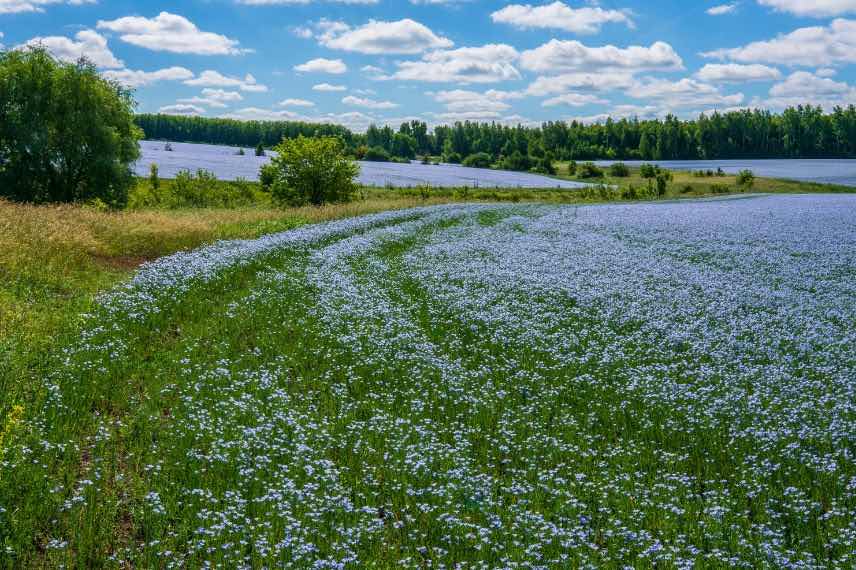
Many products come from flax, including mulch
Read also
Mulching: Why? how?The benefits of flax mulch
Like any mulch, flax mulch helps to :
- to protect the soil from the weather which can threaten it, such as wind, rain or heatwaves. The mulch insulates the soil and protects plants from heat as well as frost, enabling them to grow in more favourable conditions.
- to preserve moisture in the soil. It reduces evaporation of water, which consequently also reduces the need for watering. It also limits the problem of crusting, which, with repeated watering, creates a hard, compact layer of soil, preventing water infiltration into the soil and thus proper hydration of plants.
- to limit weed growth and thus competition with other plants. Mulch prevents light from reaching weed seeds and thus their germination. This also spares the gardener the task of weeding.
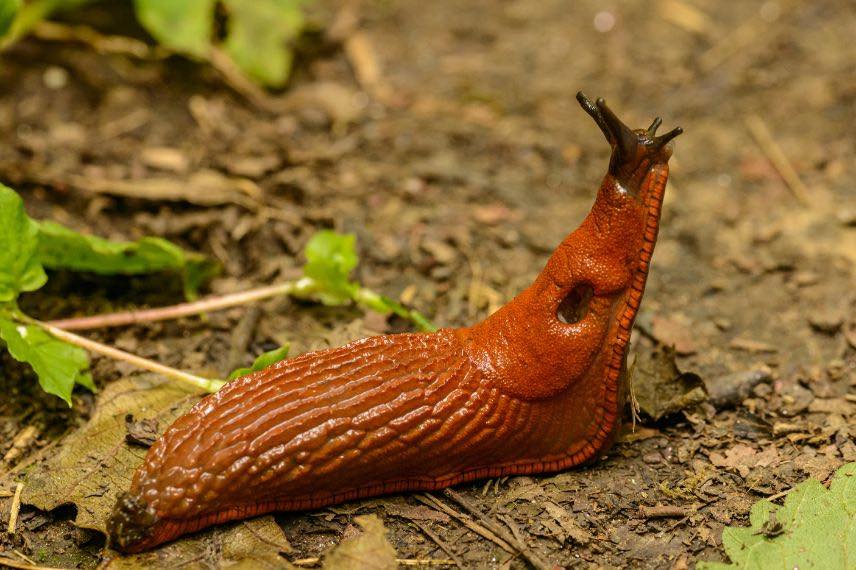
Slugs don’t like the texture of flax mulch
The flax mulch also has its own particular features:
- it is natural and biodegradable, therefore eco-friendly, ideal for organic gardening. It is produced from a plant that is easy to grow and does not require chemical treatment to thrive.
- it does not blow away and resists wind as well as rain run-off, from the first watering. When watered, the fine flakes interlock with one another and stay in place effectively.
- it lightens and enriches the soil as it degrades. It is a source of humus and rich in minerals, making it a good compost that promotes the growth of plants.
- it’s a neutral pH mulch which does not alter soil composition or acidify it
- it is not favoured by slugs, due to its fine, dry texture, and can serve as a natural deterrent against gastropods
- it is considered cheap and readily available. And for good reason: France is one of the largest flax producers in Europe.
- it is decorative. Fine flax flakes interlock from the first watering, which gives the impression of a woven carpet. Moreover, its light colour helps to create contrasts with plants with dark foliage.
- Consisting of flakes, it’s a lightweight material, which makes it easy to transport and store.
- it is the result of sorting operations and does not contain any seeds.
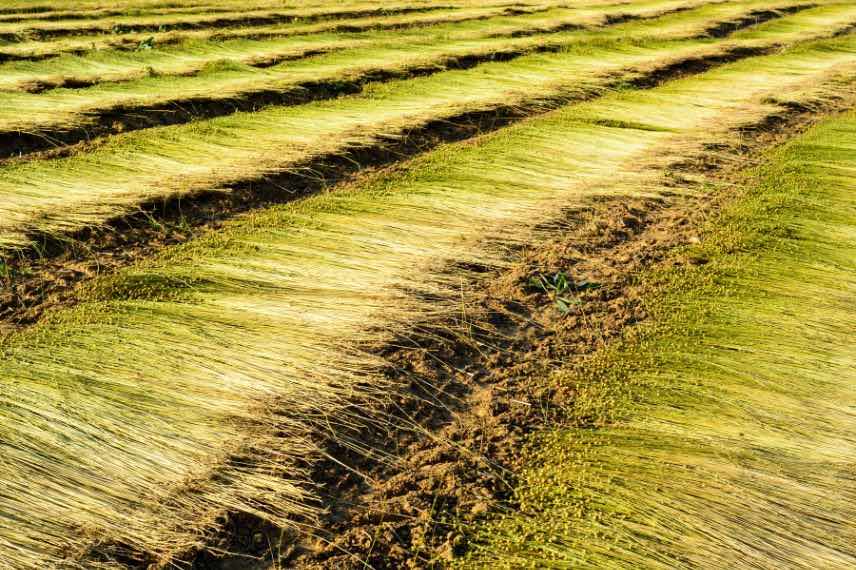
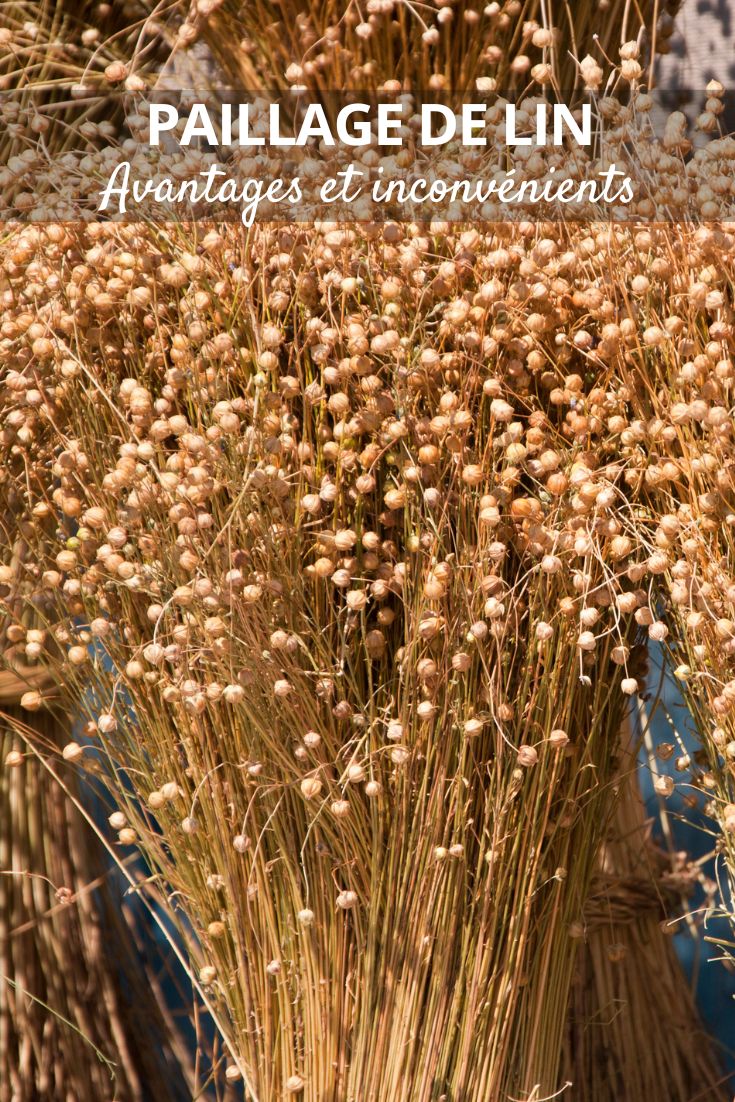
Flax fibres before sorting
Disadvantages of flax mulch
Flax mulch offers many advantages, but also some drawbacks:
- Flax pales are fine, and to stay in place on the soil they require a first watering that will seal them together and help them remain effective.
- As it is a natural mulch that degrades, you will need to renew it annually.
What are the uses?
Flax mulch is recommended for the vegetable garden and flower beds. Use it to protect your vegetables, flower beds and flower pots, while adding a decorative touch to your plantings.
It can be spread year-round, but it is preferable to use flax mulch in April or May, a period when the soil has warmed. Before using it, prepare the soil well by turning it over, weeding carefully and watering it.
Cover the soil with flax mulch to a depth of 5 to 7 cm.
Make an initial watering so that the flax flakes interlock with one another and the mulch stays in place.
Flax flakes can also be used as green manure to enrich the soil or to lighten soil that is too heavy.
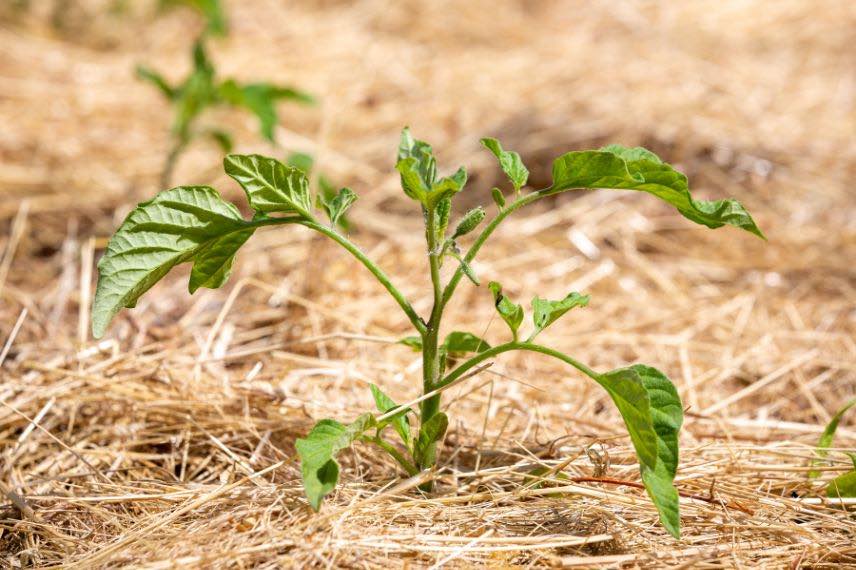
Vegetable crops really benefit from careful mulching
- Subscribe!
- Contents
Comments