





























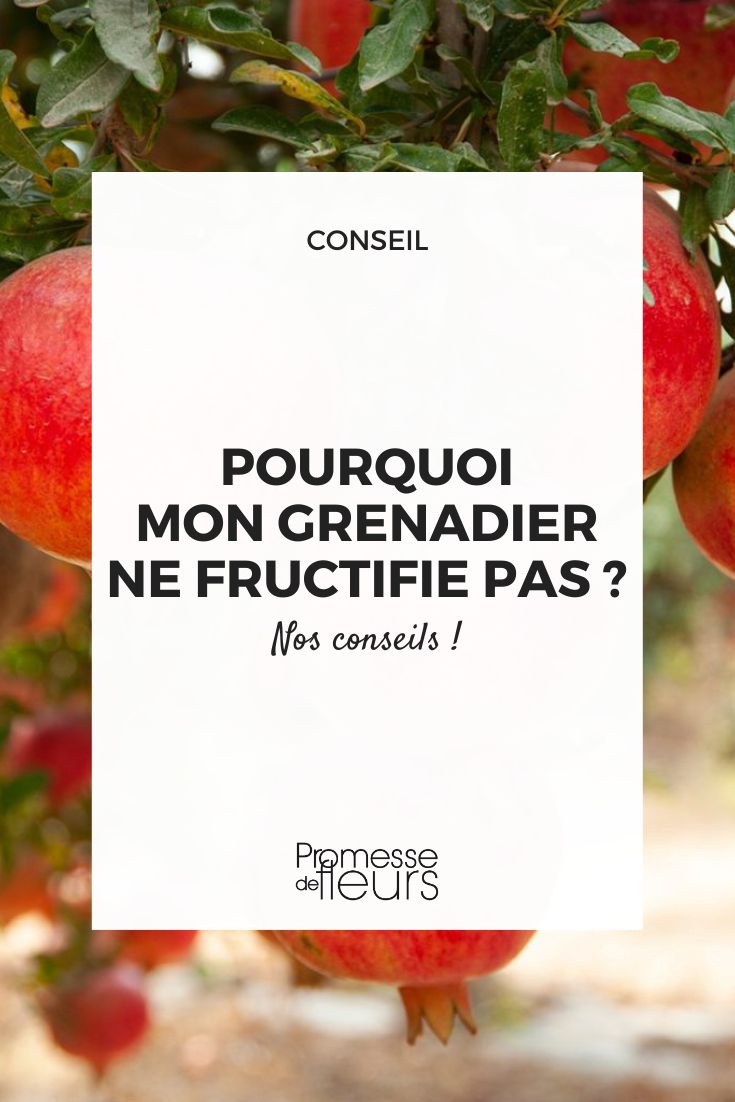
Why isn't my pomegranate tree producing fruit?
Tips to optimise fruiting of the pomegranate tree
Contents
The pomegranate tree, also called Punica granatum, is a tree or bush valued for its very decorative reddish-orange flowers, as well as for its large juicy and colourful fruits. The harvest generally takes place at the end of summer or in autumn, between September and November. However, it may happen that your tree refuses to bear fruit. This can be due to several factors, from the climate of your region to unsuitable growing conditions, as well as the health of the tree. Discover the reasons that may prevent your pomegranate tree from fruiting, as well as tips to optimise fruit production.

Flowering pomegranate or fruiting pomegranate?
There are two categories of pomegranate trees:
- the pomegranate trees that bear fruit, which produce fruit and are self-fertile, the male and female flowers fertilise each other,
- flowering pomegranate trees, which are sterile and grown for their ornamental qualities.
Only the first category is likely to bear fruit. It is therefore important to choose your pomegranate tree carefully if you want to obtain fruit.
You can choose from the different fruit-bearing pomegranate varieties such as :
- the pomegranate – Punica granatum ‘Mollar de Elche’ which is a very old variety, originating from Spain, known for its fruits of excellent eating quality, with a mild, sweet flavour and without pips. The fruits, 10 cm in diameter, are harvested from October to November. This tree, which reaches 4 metres in height when mature, is hardy down to – 10°C.
- the pomegranate – Punica granatum ‘Provence’, an old variety prized for its production of large red fruits, very juicy and sweet. The fruits are 12 cm in diameter. They contain many arils and can be consumed as juice. The harvest takes place from late September to November. It is hardy down to – 15°C.
- the pomegranate – Punica granatum ‘Fina Tendral’, which produces large fruits 14 cm in diameter, of very good eating quality and without pips. To produce fruit, it requires a long, hot summer. The harvest takes place between October and November. It is hardy down to – 15°C.
- the pomegranate – Punica granatum ‘Wonderful’, a vigorous variety grown in California for producing pomegranate juice. It produces 12 cm diameter fruits, without pips, which are harvested from late September to October. Rather cold-sensitive, it is hardy only to – 8 to – 10°C.
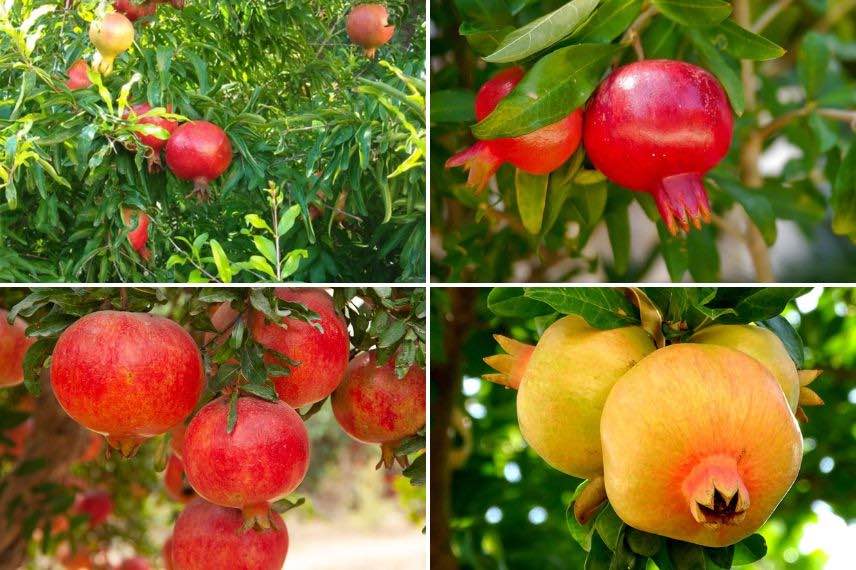
Clockwise: Punica granatum ‘Fina Tendral’, Punica granatum ‘Wonderful’, ‘Mollar de Elche’ and ‘Provence’
Read also
When and how to prune pomegranate?The importance of climate
The climate plays an essential role in the fruiting of the pomegranate tree. Originally from Persia, the pomegranate tree is cultivated in warm, dry regions, notably from northern Iran to northern India, in North Africa and around the Mediterranean. Indeed, preferring sun and warmth, the pomegranate tree needs a long, hot summer to produce pomegranates. Hardy down to – 15°C, it can be grown as far north as the Paris region provided it can be put under cover if necessary. However, insufficient exposure to sunlight can limit or even prevent fruit production. Moreover, temperatures that are too low, especially during flowering, can damage the flowers and reduce fruiting.
This is why in France, the fruits of the pomegranate tree generally only reach ripeness in the southernmost regions, namely around the Mediterranean and in Corsica. If you are in a colder or less sunny region, the conditions are likely to be unfavourable for the pomegranate tree’s fruiting.
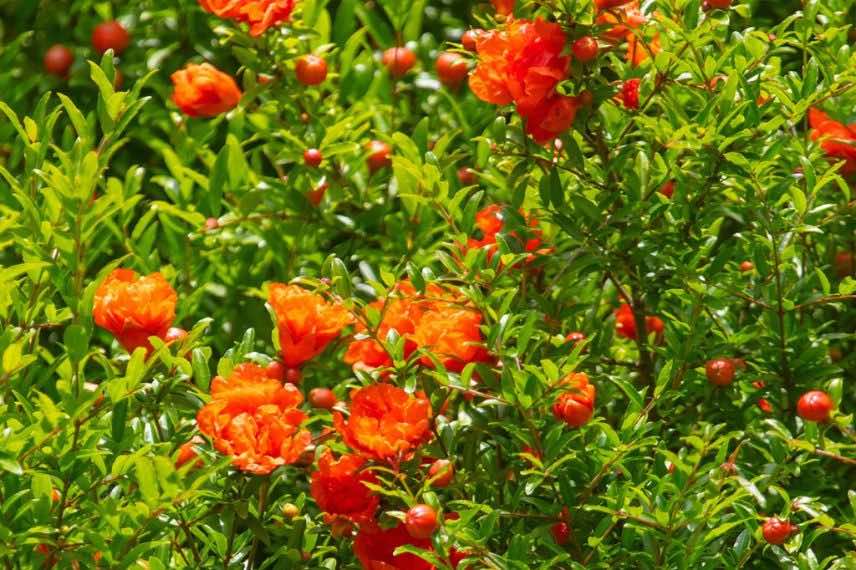
The pomegranate tree needs sun and warmth to flower and produce fruit
The age and health of the tree
Another important factor for a pomegranate tree to bear fruit is its age. Indeed, a pomegranate tree can only bear fruit from its 4th or 5th year.
For a fruit tree to be productive, it is also better that it is in good health. Diseases, pests and nutritional deficiencies can weaken it and thus inhibit its fruiting. It is therefore important to regularly check the health of your pomegranate tree, by examining the fruits, the leaves, the branches and the trunk for any signs of disease or pests.
In humid conditions, the pomegranate tree can in particular develop a fungal disease caused by the fungus Aspergillus castaneus. This disease attacks the fruits and makes them rot. To prevent this disease, pick up fruits that have fallen on the soil and allow the soil to dry well between waterings. It is also possible to treat with Bordeaux mixture in spring. Find out in our article what the other diseases and pests of the pomegranate tree are, which can affect its health.
Exposure and the soil
To get the best out of your pomegranate tree, plant it in full sun, sheltered from the wind and in well-drained soil. Although not demanding about soil types, the pomegranate tree does not tolerate clay or waterlogged soil, which can even be fatal.
Watering
Watering is another crucial factor for fruit production in pomegranate trees. They prefer regular but moderate watering, with good drainage to avoid waterlogging of the roots. Irregular or insufficient watering can stress the tree and affect its fruit production.
During the first two years, the pomegranate has however a significant need for water in order to establish itself properly.
Fertiliser application
Fertilisation plays an important role in the fruiting of the pomegranate tree. Poor soil lacking nutrients or an imbalance in fertilisation can negatively affect the tree’s ability to produce fruit. It is advisable to use a fertiliser high in nitrogen and phosphorus, which promotes flowering and fruiting.
Pruning
The fruits of the pomegranate tree appear on branches aged 2 to 3 years. When you prune your pomegranate tree, it is therefore important not to remove these productive branches.
You can remove dead or diseased branches and limit yourself to giving the tree a balanced shape that allows good air circulation to keep it healthy. Pruning of the pomegranate tree takes place after the leaves have fallen.
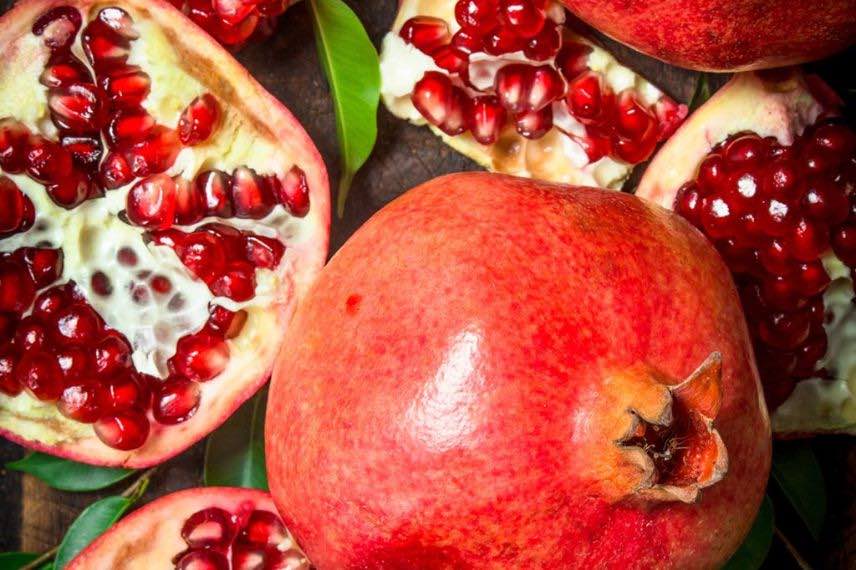
The long-awaited fruits of pomegranate trees
Further reading
Find all our growing and care advice in our complete guide dedicated to the pomegranate tree.
- Subscribe!
- Contents
Comments