





























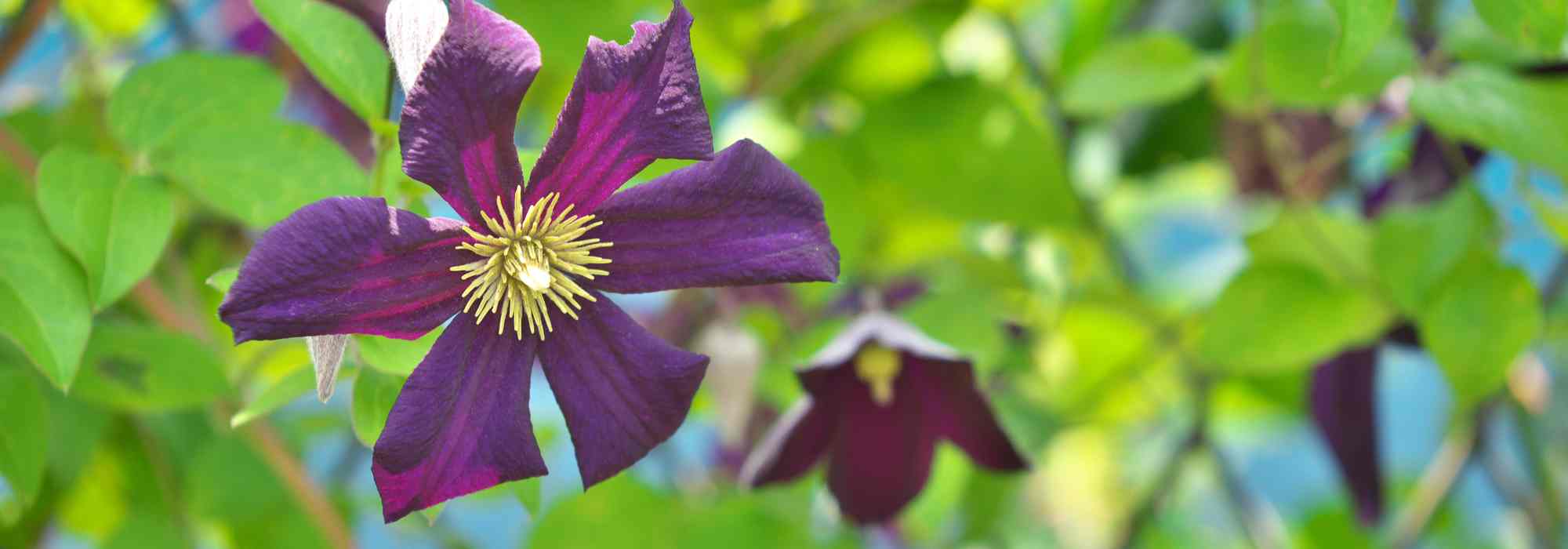
Why isn’t my Clematis flowering?
Our tips for getting your clematis to bloom
Contents
The countless varieties of clematis delight us as much with their colours as with the shape of their flowers and their unfailing elegance. Having a beautiful clematis, flowering well year after year, is one of a gardener’s proudest achievements. But sometimes these climbing clematis fail to flower or barely bear any flowers. Disappointment can then be considerable… So, why does a clematis fail to flower? What are the right steps to take to see it flowering abundantly? We explain everything you need to know about clematis to ensure magnificent flowering in the garden or in pots!

Clematis cultivation specifics
Whether evergreen or deciduous, it is important to understand its cultivation needs and ensure they are met. Because the fact that a plant does not bloom well often lies in unsuitable exposure, pruning or soil conditions. Clematis are numerous and varied, with more than 300 species recorded, native from southern Europe to China, not to mention the numerous varieties. But it can be said overall that they thrive and flower well under the following conditions:
- Soil: always well-drained, cool and rich in organic matter. Clematis fear drought as well as excessive humidity in winter.
- Exposure: climbing clematis require a sunny exposure, with plenty of light at the level of their flowers, but the roots and the base of the main stem must remain in the shade. This is a plant-specific trait, so it is necessary to protect the base of the plant, usually with a few low-growing plantings surrounding it. If most clematis can be planted in a south- or west-facing exposure, Clematis viticella, however, tolerates partial shade, which does not affect their flowering.
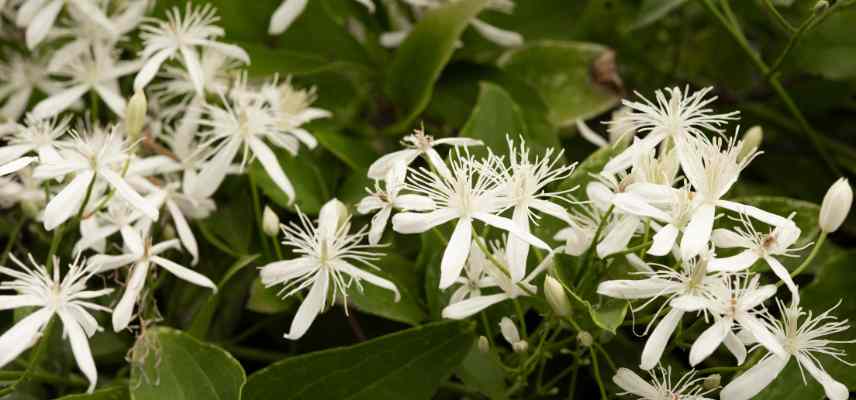
Clematis require a very particular exposure and a soil that is always well-draining
Read also
Clematis: planting, pruning and careMain reasons why a clematis doesn't flower
If your clematis is well planted according to these essential criteria for it, and its foliage and overall appearance look healthy, a lack of flowering is usually found in the following contexts:
-
Pruning at the wrong time
The reason a clematis does not flower often stems from pruning carried out ahead of its flowering season, and more specifically in the pruning period. To understand it, we need to review the pruning times for clematis, as these climbing plants are classified into three groups, each with its own specifics:
- clematis that flower on last year’s wood (group 1): these are clematis that flower early, in early spring, between March and early May (such as Montana clematis, Montana clematis, Alpina, macropetala, and evergreen clematis such as the Armandii). They have small flowers, in the hundreds: prune them just after flowering.
- clematis that flower on last year’s wood and on this year’s shoots (group 2): these are large-flowered clematis; they have two flowering periods, one in spring (May–June) and another from the end of summer to the end of September. The first flowering comes from last year’s wood, and they produce a second flowering from the spring shoots. Their pruning is therefore more delicate, as you must identify the different stems. We generally recommend a very light pruning in early spring to avoid compromising this sequence of flowering.
- clematis that flower on this year’s shoots (group 3): these are also large-flowered clematis, but they flower only once and for a long period in summer, from late June to late September. They are heavily pruned in late winter, and will have time to produce by summer their flowering shoots. Notably included in this category are Clematis ‘Jackmanii’ and the Clematis viticella.
Pruning a clematis at the wrong time can therefore cost it a flowering season. Knowing well the variety of a clematis and its flowering habit is therefore essential to know when to prune it appropriately.
→ Learn more about the different pruning techniques for clematis with: The pruning of summer-flowering clematis, How to prune and maintain clematis?, and What to prune in winter?
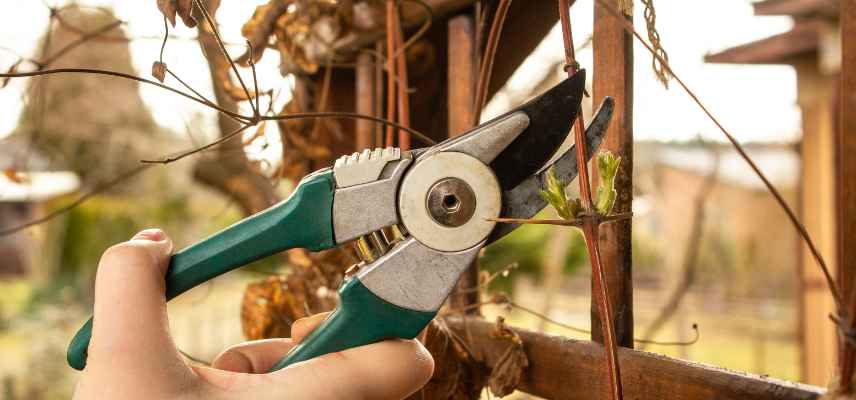
A pruning carried out at the wrong time of year often compromises a clematis’ flowering.
-
Inadequate exposure
There is a well-known saying for clematis: “feet in the shade, head in the sun.” Clematis are indeed climbing plants that need sun to flower well, while keeping the base of the plant shaded. It is therefore recommended to plant them with a base of perennials at their feet, or with groundcover with spreading roots, providing the beneficial shade.
-
Planting
Another factor that can affect a clematis’s flowering is the planting method. Here is the reasoning: you should always plant a clematis with the rootball horizontal, and this is no accident. It allows the plant to produce more stems when planted in a slanting position, and with more than one main stem you obtain more flowers.
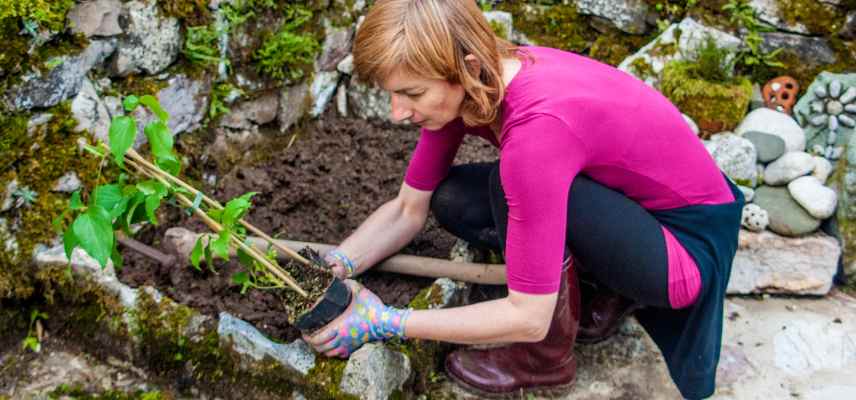
Planting a clematis with the rootball at an angle also yields more stems, hence more flowers
-
Poor soil quality
It may be that your clematis reluctant to bloom is planted in soil that does not suit it. All clematis require a soil that is well-drained, remains moist (hence the shaded base), and is loose. They do not tolerate soils with stagnant moisture or waterlogging, which should be corrected by excellent drainage. Conversely, soil that is too poor, or too acidic, can hinder flowering.
-
Watering problems
Too much watering is harmful to clematis, which dislikes excessive moisture at the base. A clematis needs regular watering for the first two years, and will normally cope if planted in soil that suits it. In drought, it requires watering; without it, flowering can abruptly cease. If planted at the base of a tree where the soil dries out, a clematis will also require slightly more watering.
-
Diseases or pests
Finally, and although rare in clematis, they can be affected by a fungus. This problem is mainly known as clematis wilt, caused by: Ascochyta clematidina. But in this case, it is the entire plant that withers suddenly, blackening along the length of the stems and at the leaves just before flowering. A visual check easily shows whether the problem stems from this fungus. Pruning the infected stems, or, if the clematis is broadly affected, pruning branches down to the point of necrosis above the roots, will allow new shoots to appear.
Some tips to encourage a Clematis to flower
Here are a few practical tips to favour a good flowering of clematis:
- Prune at the right time according to the type of clematis; this guarantees a good flowering, especially on ageing plants.
- In order to encourage the production of many stems as from the base on a clematis that has just been planted, prune your clematis at the end of the following winter, 30 cm from the soil. It will result more floriferous and stronger.
- Care for the soil by applying well-rotted farmyard manure, or compost each spring. You can also use a fertiliser in spring and summer, rich in phosphorus and potassium.
- Mulch round the base if you have not yet planted perennials, or install a large tile filled with mulch (to avoid the opposite effect, overheating!), which will help to keep the soil cool and moist, benefiting the clematis roots.
- Water regularly the plant, but not excessively to promote healthy growth and thus better flowering.
- Subscribe!
- Contents

Comments