





























Zero waste: what to do with branches in the garden?
Tips and advice to enhance your branches
Contents
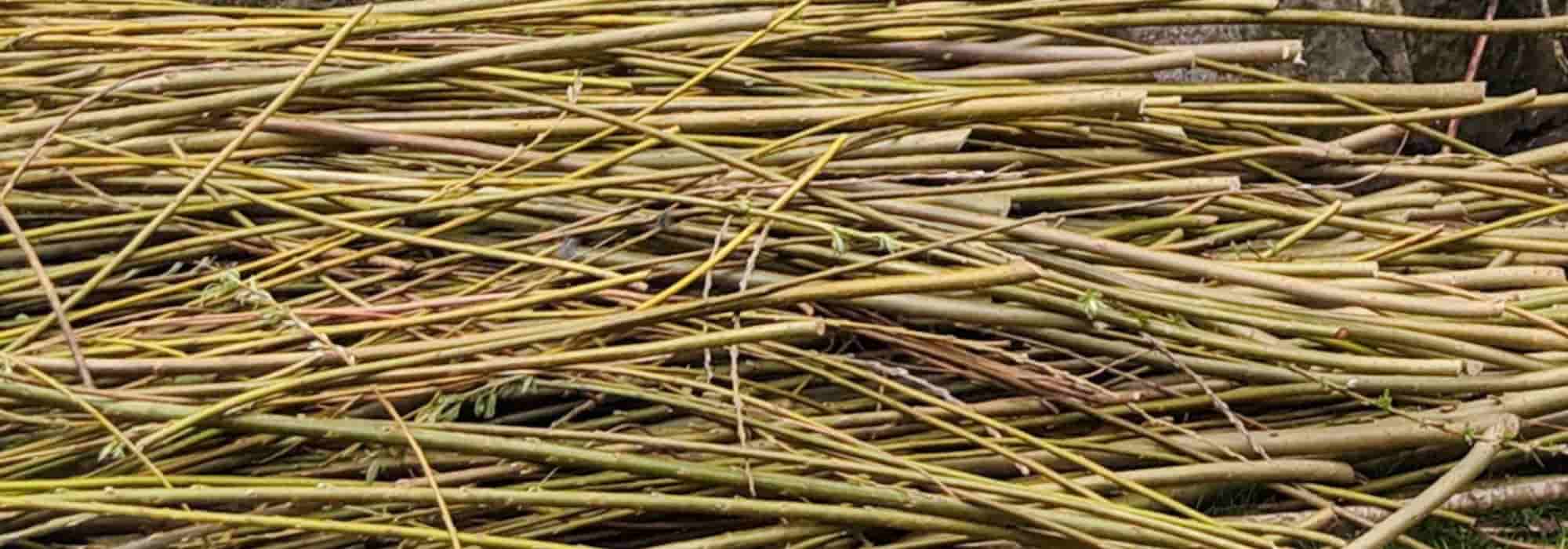
You have just pruned your trees and bushes in the garden, and now you’re unsure what to do with your branches and clippings. Should you throw them away? Burn them? Reuse them? However, these organic waste materials can be very useful in the garden and even enrich your soil! In fact, there are numerous ideas for repurposing them! From chipping to firewood, as well as hedges or biodiversity, discover what you can or cannot do with branches in the garden.

What is prohibited by law?
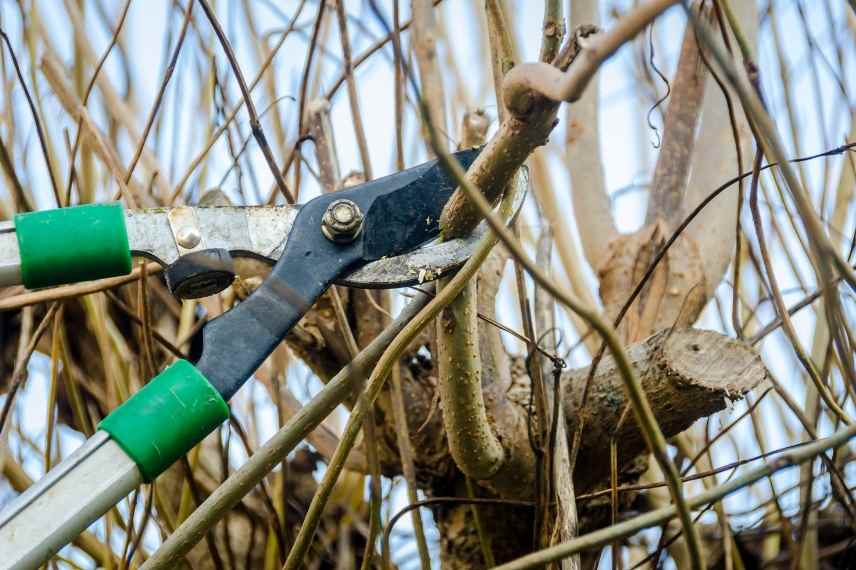
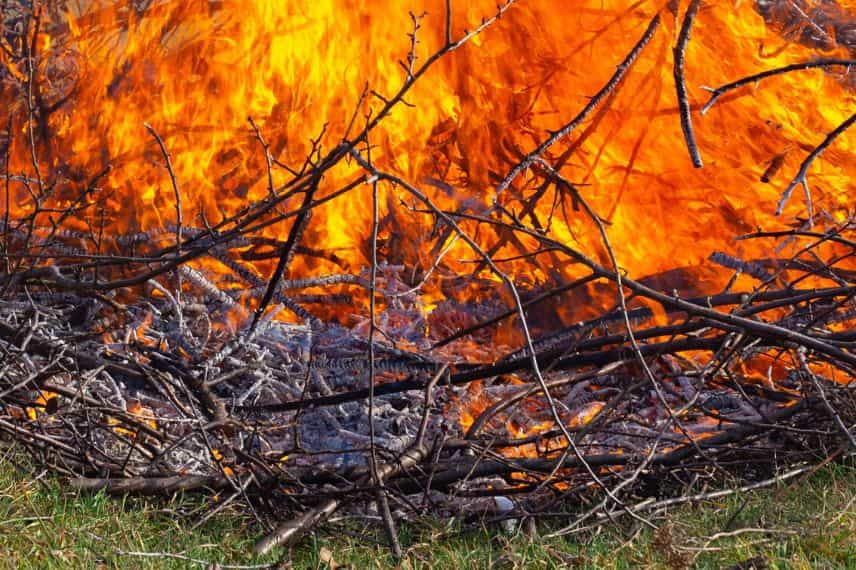
Did you know that it is illegal to burn your branches? Indeed, the law now prohibits the burning or incineration of green waste, such as grass clippings, fallen leaves, brambles, branch cuttings, dead plants, and so on. The aim of this law is to reduce pollution (fine particles, nitrogen oxides, carbon monoxide, and other harmful substances) that are dangerous to our health and ecosystems. Furthermore, this ban helps to limit the risks of accidental fires and the nuisance of smoke in the neighbourhood. Burning waste can pose serious health risks, and you could face a fine of €450 in France.
→ To learn more, check out our article: “Burning green waste: what does the law say?
Read also
How to store your wood for heating?Composting branches
Voluminous and bulky, branches cannot be composted as they are. Moreover, they are covered in resin and wax, which act as natural barriers to decomposing fungi. It is therefore imperative to shred your branches before composting them to break down this protection and thus accelerate the decomposition process.
How to shred branches?
Young and very thin branches (less than 1 to 2 cm in diameter) can be shredded using a lawnmower, while thicker branches (from 1.5 cm to 5 cm in diameter) should be processed with a shredder.
Note: If you do not wish to purchase a shredder, consider renting or borrowing one from your neighbours, your local council, or a landscaper.
Once shredded, the branches can be added to the compost, particularly the young shoots which contain nitrogen, numerous nutrients, and little lignin. Old branches also decompose in compost, but much more slowly, as they are, conversely, low in nitrogen and high in tannins and lignin. Remember to add nitrogen-rich green waste (grass clippings, etc.) to balance your compost, especially if you are adding these old branches.
Note: branches from resinous trees (Thuja, cypress, etc.) can be composted, but in small quantities (less than 20% of the compost volume).
Using branches for mulching
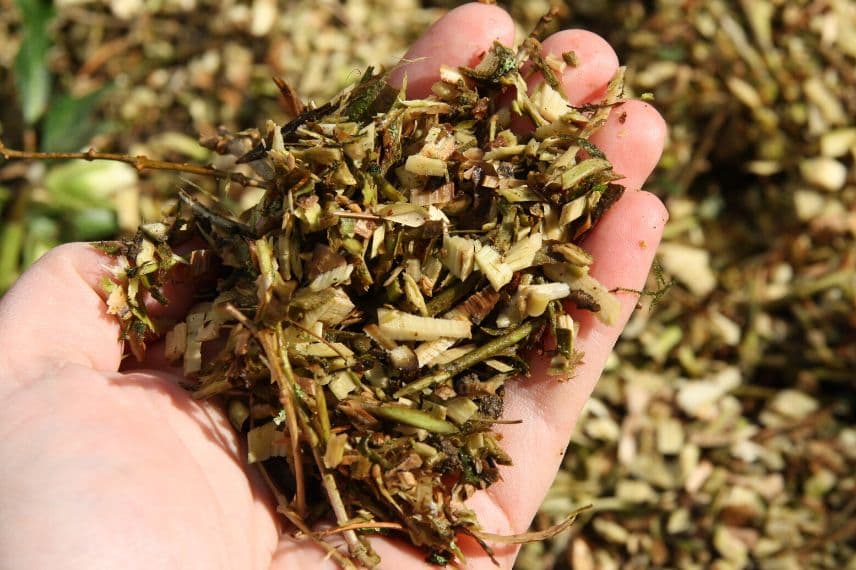
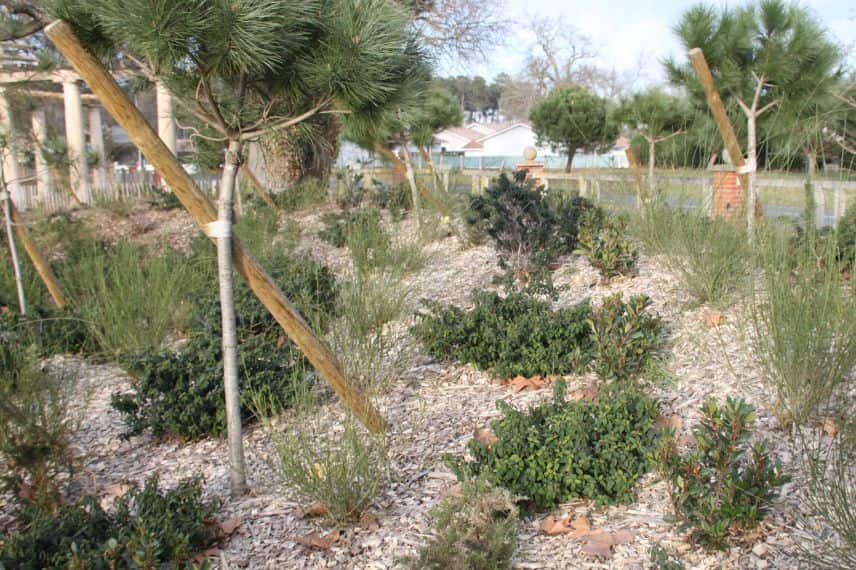
When shredded, young branches make an excellent mulch. Here, only young shoots will be used, which contain more nitrogen and less lignin than older branches. This young shredding is called RCW (ramial chipped wood) and it provides numerous nutrients: amino acids, proteins, minerals, cellulose, nitrogen, phosphorus, and potassium. RCW is used as mulch at the base of hedges, bushes, and trees, as well as in flower beds. If you wish to use it in the vegetable garden or near young plants, it will be necessary to add green shredding (green branches and leaves, etc.) to compensate for the nitrogen deficiency of the branches.
Note: Avoid using old branches, which are rich in lignin and poor in nitrogen, as they could cause nitrogen hunger and thus reduce the fertility of your soil. However, they are suitable for mulching pathways to limit the growth of unwanted herbs.
→ To learn more, consult our article: “RCW or Ramial Chipped Wood: what is it? How to use it in the garden?”
Firewood
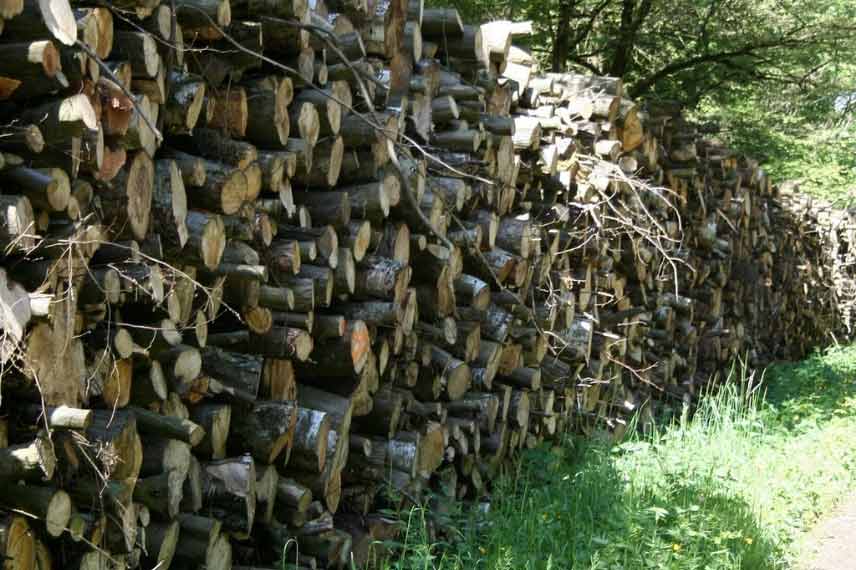
Your pruned branches can be used as firewood to fuel a fireplace, wood stove, or barbecue. This is a very good alternative for large branches that cannot be shredded due to their diameter. Cut them into logs using a chainsaw or a saw. Thinner branches can also be used to make small bundles for kindling. However, the wood will need to be stored to dry for several months (between 6 months to 2 years depending on the diameter and cutting period) before use, protected from rain or in a “Benje hedge”.
→ Find our article: How to store your firewood?
In a dry hedge or "Benje hedge
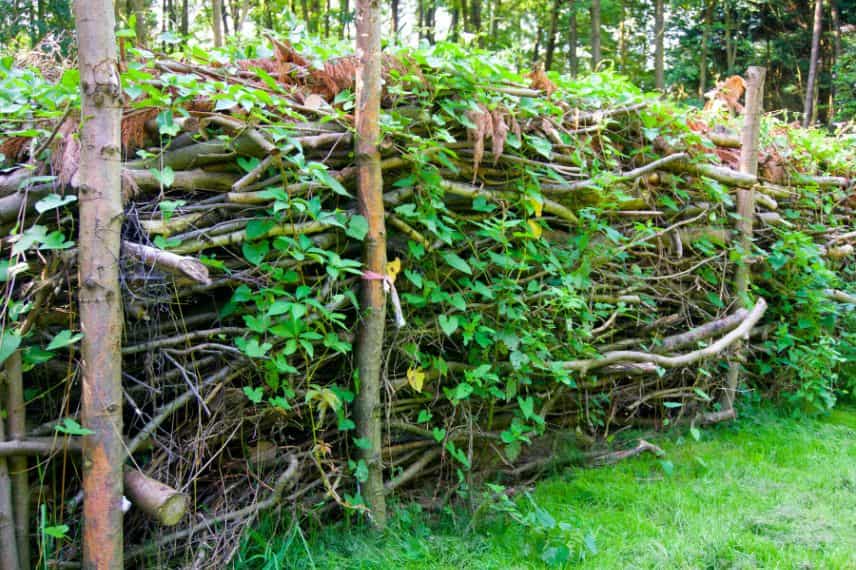
The dry hedge consists of horizontally stacking pruned branches. This type of hedge has been known for several centuries (if not longer!) and was particularly promoted by Hermann Benjes, an ecologist, which is why it is sometimes referred to as the “Benjes hedge”. One can simply arrange the branches in a wood pile or support them with wooden stakes or even carefully woven branches. They thus form a natural, ecological barrier, often measuring about one metre in height. This hedge then becomes a refuge for wildlife, particularly birds and small mammals, as well as insects that enjoy sheltering there. Dry hedges also help to delineate spaces while protecting part of the garden from winds. The branches stored in this way dry for several months before being used as firewood, but they can also be left to decompose over time. The decomposition of this wood also helps to restore an area into humus.
On the edge of the coppice
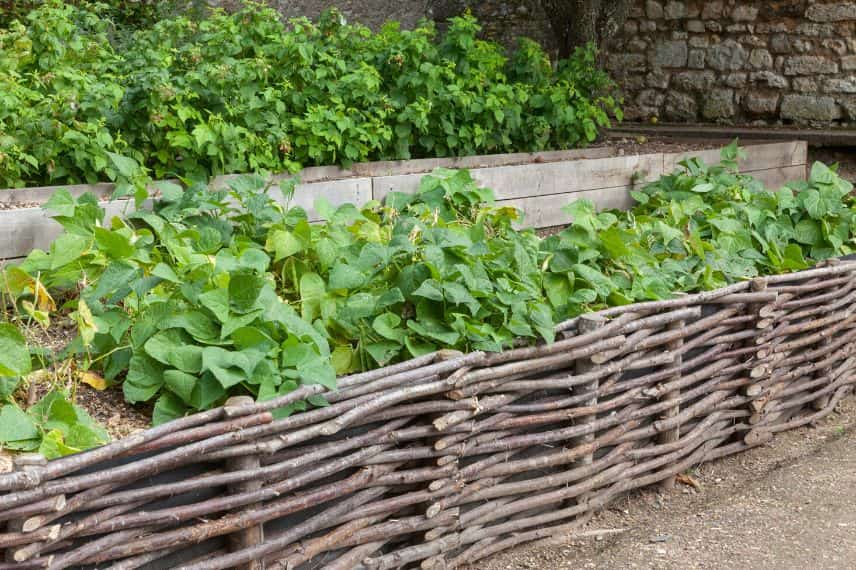
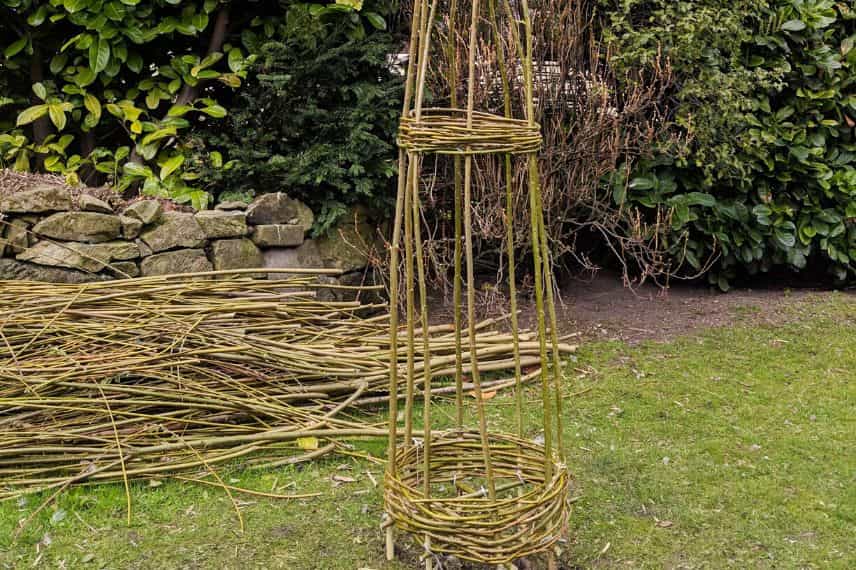
Used since the Middle Ages, pleached barriers are employed to delineate garden spaces, vegetable squares, and borders. To create these lovely woven borders, simply plant wooden stakes (preferably made of sweet chestnut or black locust for their excellent durability), spaced 30 to 60 cm apart. Next, you will “weave” the cut branches between these stakes: the branch is held horizontally, passing in front of the first stake, then behind the second, and so on. You alternate the branches, reversing the weave. The branching will be renewed as it decomposes. For weaving, hazel wood is generally used, but you can also use willow, although any kind of softwood branches from shrubs or trees can also be used.
→ my testimony: every year, I create woven borders for my flower beds using the freshly pruned (and thus still flexible) branches from my pear trees.
In stakes and supports
One almost always needs supports in the garden, especially in the vegetable patch, for instance to support our tomato plants or help a young fruit tree. Pruned branches make excellent supports, particularly when they are straight and have a diameter of at least 2 cm. One can even apply lime to the branch to limit the appearance of mould and deter insects. Very thick branches (over 5 cm in diameter) can also serve as stakes to define spaces or install a fence. Additionally, one can build supports for climbing plants and why not a bean teepee.
→ my testimony: a few years ago, I made a pen for my chickens using large birch branches that I had salvaged during the tree pruning in my community. The branches then served as stakes to secure chicken wire. It lasted three to four years without a hitch.
A pile of branches for wildlife
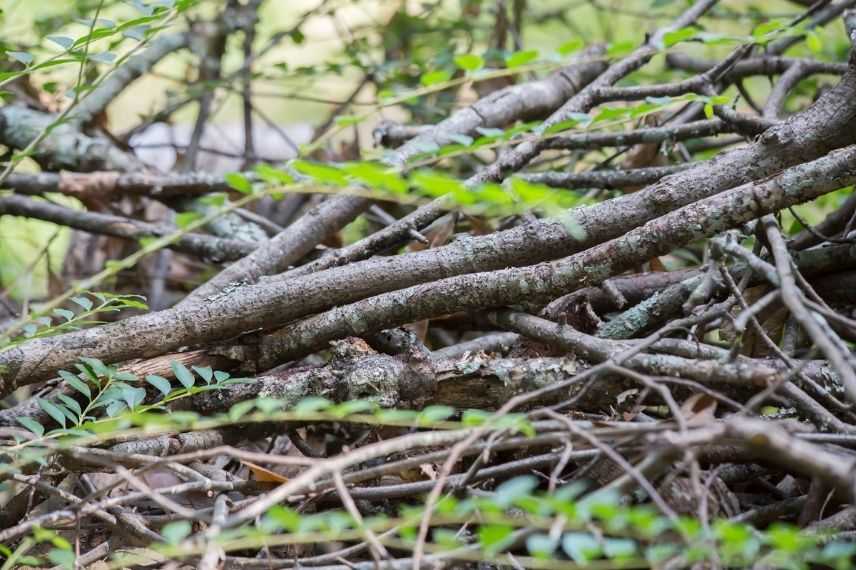
In a quiet corner of the garden, you can simply store a pile of branches or dead wood, which will then create a shelter for garden wildlife. This way, you can observe some birds, reptiles, amphibians, or even a hedgehog or a few small mammals. Some insects will also find refuge there, safe from predators. They will have as neighbours fungi and wood-boring insects (including the golden rose chafer) that will gradually decompose this nourishing pile of wood. The soft pithy branches of roses and brambles, as well as the hollow stems of bamboos, elders, or forsythias will be greatly appreciated as hiding places or refugia by solitary bees and wasps.
Pile of branches for garden wildlife
- Subscribe!
- Contents
Comments