





























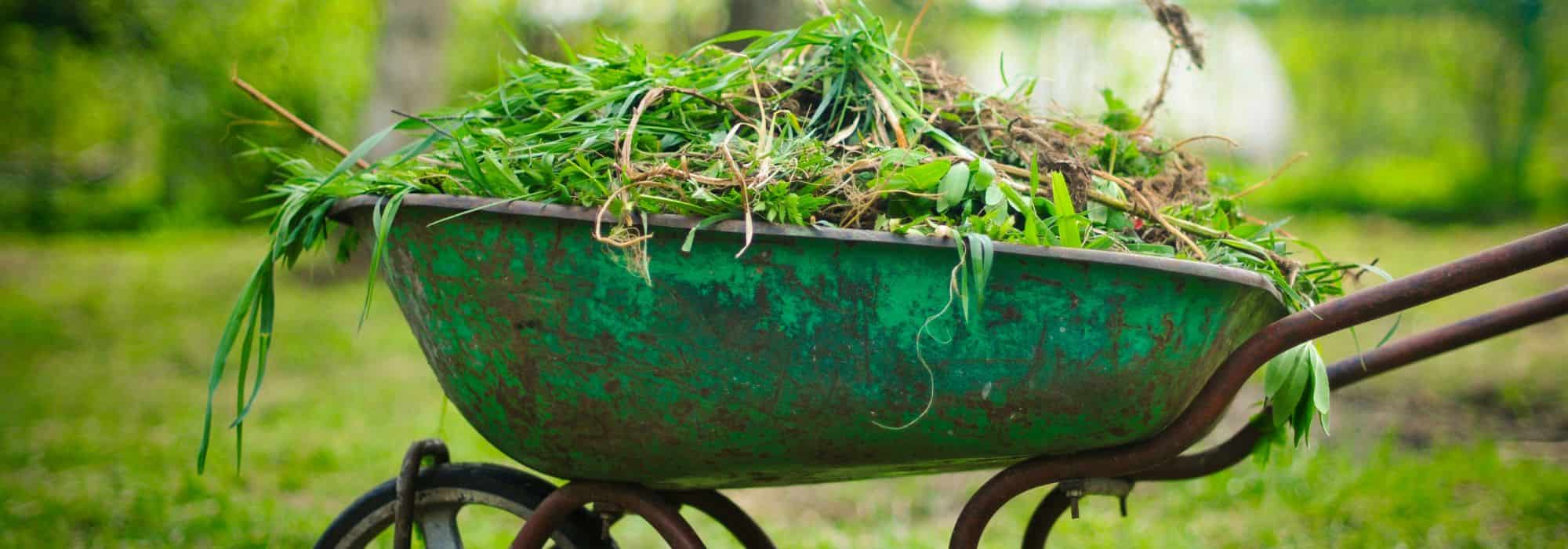
Zero waste: what to do with the pruning of perennials and cut flowers?
Tips and tricks for transforming them rather than throwing them away
Contents
At the height of summer or in autumn, the colourful flowerings and lush foliage of perennial plants or annuals give way to dried flowers and withered foliage. If you enjoy using your pruning shear to tidy up, you’ve probably asked yourself this question: what to do with this green waste? Definitely don’t throw it away! Because it is a goldmine for your garden. Discover our tips and tricks to transform your perennial prunings and cut flowers from the garden.

Mulching
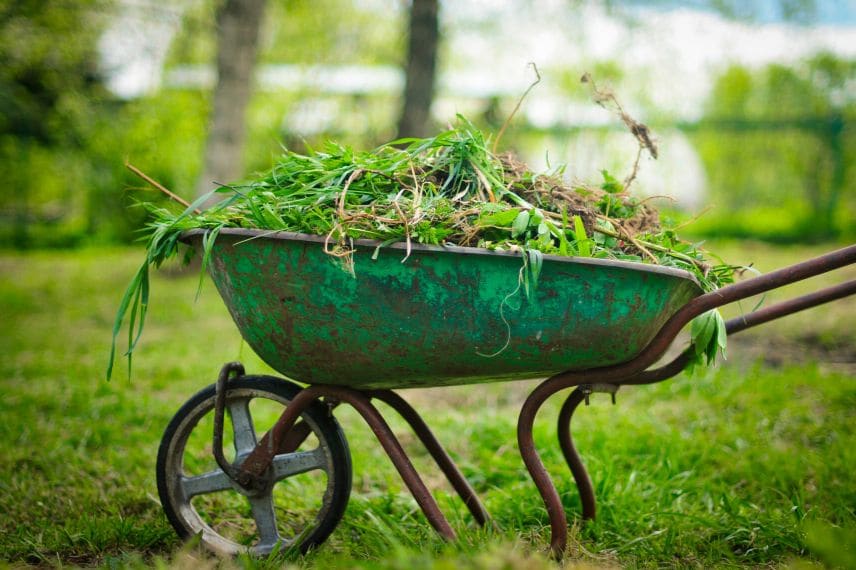
From spring to autumn, the pruning of perennial plants, dried flowers, and the young tender shoots of bushes or roses can be reused as mulch.
Step 1:
Cut and gather your stems, leaves, and flowers into a pile, taking care to mix different varieties to create a mulch rich in various nutrients, which can be spread throughout the garden.
Note: Avoid mulching a plant with only its own waste. For example, if you only have stems and leaves from roses for mulch, distribute this mulch around the base of other plants, such as a hedge of bushes or in the vegetable garden. This prevents the onset of diseases and, more importantly, the deficiency of certain nutrients in this monoculture.
You can use the flowers and dry stems of annuals and perennials, such as Achilleas, hydrangeas, Echinaceas, Rudbeckias, Weigelas, or even Centauries.
Also consider the leaves and stems of nettles, comfrey, or ferns, which are rich in nitrogen and highly valued by vegetable plants.
In the vegetable garden, the remains of vegetables and their foliage can also be incorporated into the mulch. For example, the leaves of beans, beets, the tops of carrots, or the first leaves of lettuces. Before incorporating them, check that the leaves and stems show no signs of disease, as is often the case with tomato or potato plants at the end of the season.
Even plants known to be toxic, such as the leaves of rhubarb, foxglove, or lily of the valley, can be used as mulch. Indeed, the toxins in their leaves break down quickly during decomposition. Don’t hesitate to wear gloves to protect yourself from the irritating saps of certain plant species.
Step 2:
Next, shred this pile into pieces by simply running the mower over your green waste. Then distribute this mulch around your hedges, in the vegetable garden, or in a flower bed. This green mulch, primarily composed of young shoots from the year, foliage, and flowers, will decompose quickly, usually within six months.
Tips:
- The large leaves of rhubarb, comfrey, or ferns can be placed directly on the ground as mulch, without necessarily going through the “shredding” stage.
- Be cautious with faded flowers that have gone to seed, as they may reseed when used as mulch. You risk ending up with some unwanted plants the following season, unless you intentionally want a beautiful display of annuals or biennials in a flower bed.
- You can integrate this “green mulch” with RCW mulch (Ramial Chipped Wood) to compensate for the lack of nitrogen in the wood. This mixture results in a much more durable and balanced mulch.
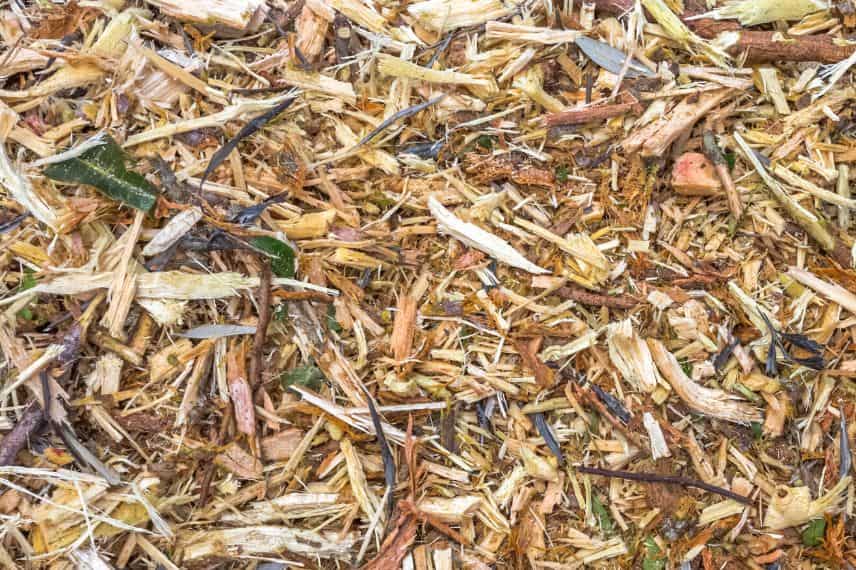
Add shredded perennial trimmings to RCW for a balanced and long-lasting mulch
Read also
Zero waste: banana peel in the gardenCompost
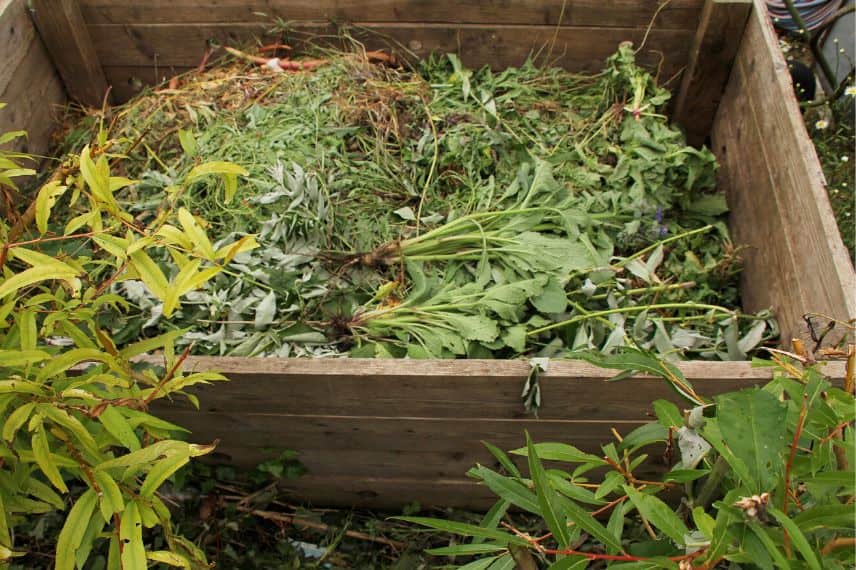
Twigs, leaves, and dried or pruned flowers are perfect for composting, as they have a good balance of carbon and nitrogen. Moreover, since they are still young and green, they contain few tannins, allowing them to decompose quickly. Vegetable scraps, including peels, foliage, and tops (such as radishes or carrots), can also be added to the compost.
Even when plants show signs of disease, such as the dreaded downy mildew, powdery mildew, or black spot on roses, they can still be added to the composter. Indeed, during decomposition, the bacteria and fungi present in the compost will completely destroy the pathogenic germs, as well as the toxins in certain toxic plants, such as Lily of the Valley or rhubarb.
You can directly incorporate whole perennials and wilted flowers or shred them (as for mulching) with your mower to facilitate and speed up decomposition.
Tender branches (less than 2 cm in diameter) will need to be shredded before composting. Indeed, they are covered with a protective resin that slows down decomposing fungi. Shredding helps break this protection and accelerates the decomposition process.
To welcome biodiversity
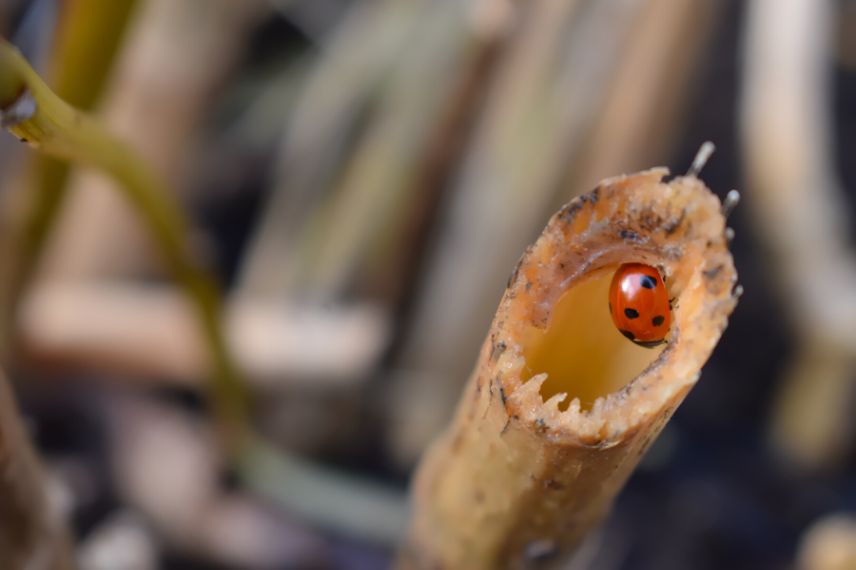
Sometimes, we stubbornly cut, prune, and tidy up, but is it really good for diversity? If you take the time to observe your garden, you will notice that some insects appreciate dead or dry plants, particularly for laying their eggs, feeding, or even overwintering. For example, hollow stems (bamboo, reed, or Althaea Officinalis) and pithy stems (elder, rose, raspberry…) attract solitary bees, caulicole bees, and even wild wasps to lay their eggs. Decomposing insects, such as slugs, snails, and soldier beetles, enjoy dead leaves, which are a source of food. Some birds and small mammals (squirrels, hedgehogs…) need twigs and dead leaves, in spring as well as autumn, to build their nests.
It is therefore important to leave a corner of the garden natural, if not a bit wild, to help wildlife thrive.
Note: the foliage of vegetable plants, such as cabbage leaves, salad leaves, carrot or parsnip tops and the flowers of sunflowers that have gone to seed, will be greatly appreciated by chickens and other poultry.
For further reading
- Read our tutorial on pruning perennial plants
- Subscribe!
- Contents
Comments