


It's being talked about more and more; it's THE star of simple and natural gardens for some time now. But what exactly is Alcalthaea?
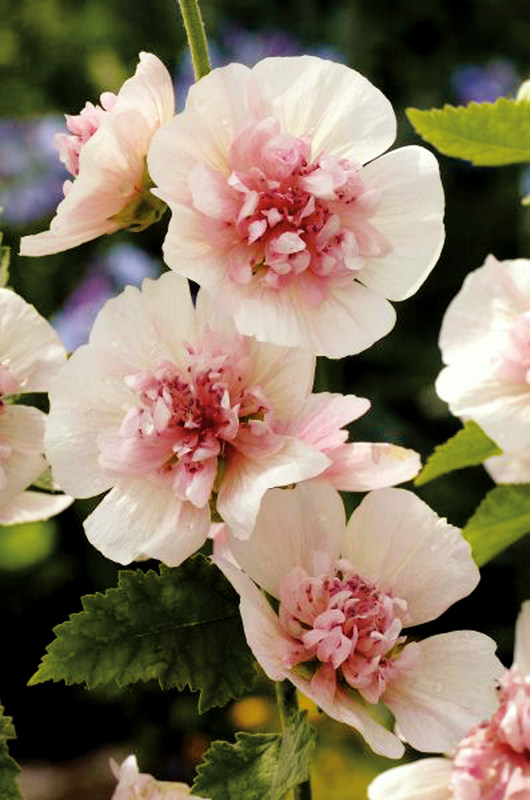 Flowering for a good part of the summer, this malvaceous plant is undoubtedly one of the best hybrids at the moment. Here is Alcalthaea 'Freedom' with its beautiful pale pink semi-double flowers and a frilled, light garnet centre.
Why such a strange name for a lavatera?
This plant from the malvaceae family, with its full name (x) Alcalthaea suffrutescens, is actually the result of an inter-generic cross between tree mallow (Althea) and hollyhock (Alcea), which gives Althaea x Alcea, named (x) Alcalthaea.
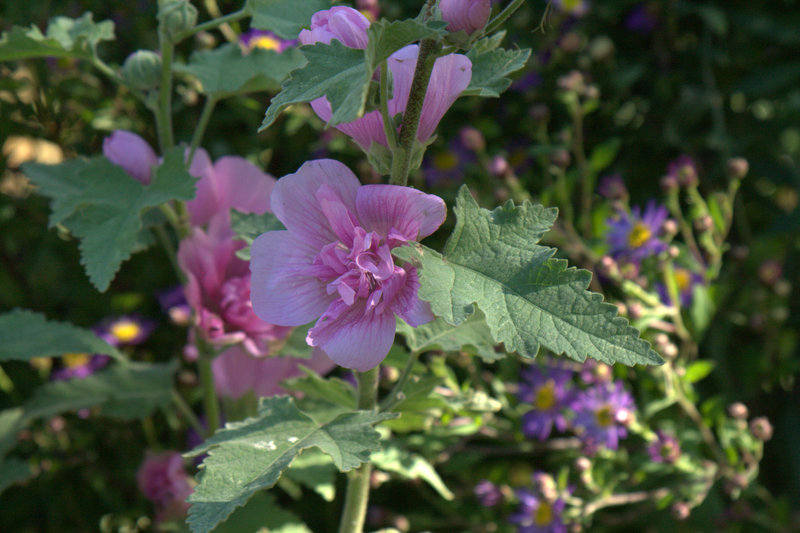
When observing the varieties closely, one can clearly distinguish the foliage, the bushy and ramified habit of Althea, and the vibrant colours of the hollyhock without the latter's drawbacks, namely rust-stained leaves. Currently, only three varieties are offered: 'Freedom' with pale pink flowers fading to light garnet, 'Parkrondell' with pink-mauve flowers with grey reflections, and 'Parkallee', my current favourite, with a rather indefinable colour, a mix of light apricot, fawn, and cream yellow with a crumpled bouquet of stamens and petals at the centre.
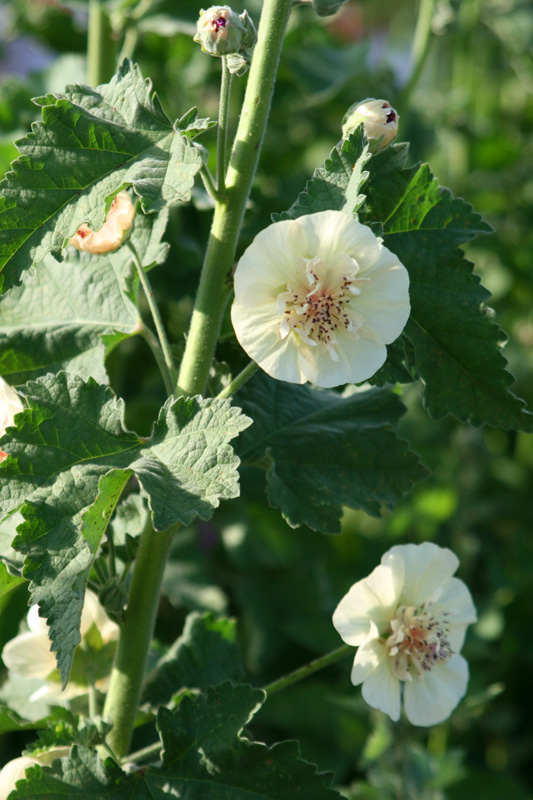 Superb double cream apricot flowering of Alcalthaea Parkallee.
Where to plant and for what use?
Like all malvaceous plants, Alcalthaea thrive in sunlight and light soils; they adapt very well to calcareous and poor lands and tolerate drought quite well... in the north! They resist many conditions: wind, frost, and a relative summer drought; in short, they grow everywhere except in shade, in heavy and wet soil.
These plants are very easy to use; they are less structuring than a hollyhock and take up significantly less space than a lavatera. Therefore, they can be used in a romantic garden with lychnis coronaria or yunnanensis, campanula 'Kent Bell', umbellifers, or simply with roses, or like me, in a grass garden with a natural style. I have been using them for a few years with grasses, and I have a real crush on Alcalthaea simply paired with Allium christophii or 'Globemaster' and pennisetum alopecuroides, which can also be replaced by Stipa tenuissima or Stipa barbata in mass. It's very simple, but it works well and for a long time.
If, like me, you have heavy clay soil, add a good third of sand and gravel at planting, and place the stump on a mound or slope. One last tip: after 2-3 years, Alcalthaea tend to have an upright habit; pinch them in May-June for a more compact, floriferous plant that will suffer less from summer drought in the south.

Comments