





























A stroll through gardens in spring reveals that one of the dominant colours at the end of winter is yellow. Neglected by gardeners, yellow-flowering plants are often overlooked; some consider them too bright, while others find them too gaudy. It is true that if misused, they can overshadow surrounding plants with their golden brilliance. However, at the end of winter, this issue is less pronounced as few plants are in bloom compared to other seasons, and yellow is a bright, sunny colour whose benefits are felt after long, dark months.
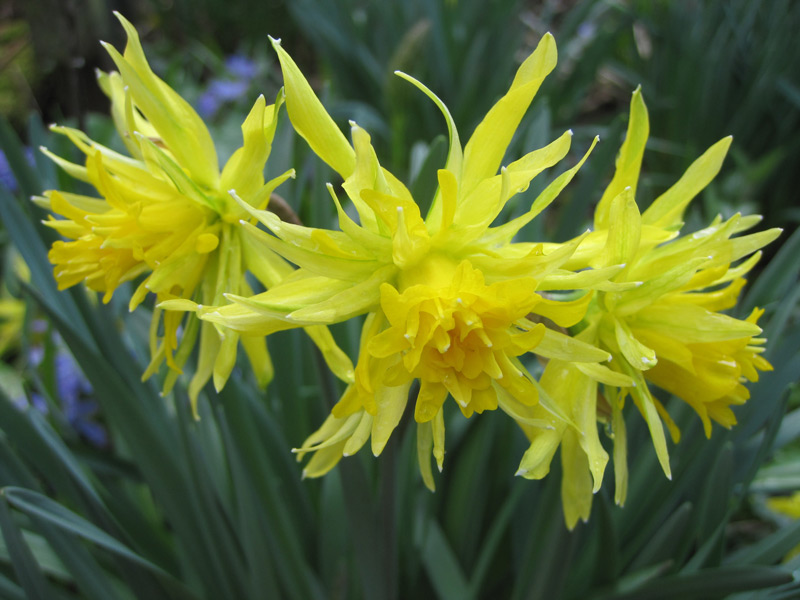
Narcissus 'Rip Van Winkle'
Daffodils are the royal bulbs that bloom between winter and spring; I have no intention of listing all the varieties of daffodils here, as there are dozens, if not hundreds, but they are the most emblematic yellow-flowering plants of spring.
At this time of year, it is easy to grow daffodils under large trees, as the foliage has not yet formed and the ground is still cool enough for the bulbs to thrive. Therefore, it is very simple to brighten up dark corners of the garden by planting spring-flowering bulbs in autumn, scattering them here and there at the base of trees.
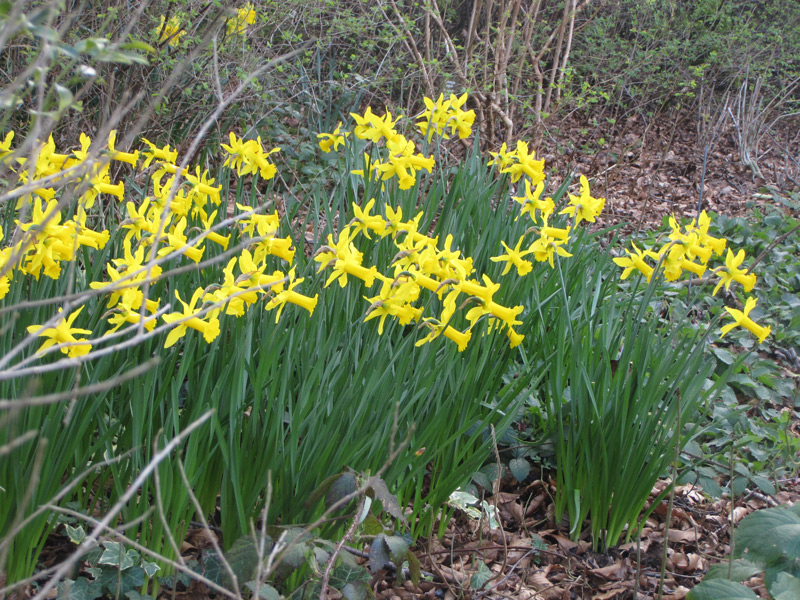
Narcissus 'February Gold' (One of the earliest varieties)
In terms of flowering, perennials are not to be outdone; the star of the moment among yellow flowers is the epimedium, known as the fairy flower. This small creeping groundcover with evergreen foliage produces lovely clusters of cream-yellow flowers.
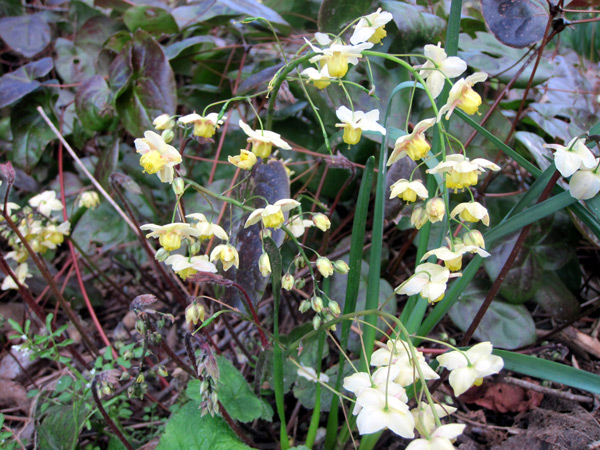
Epimedium (x) versicolor 'Sulphureum'
More intriguingly, Lysichiton americanus features large flower cups, known as spathes, in ochre yellow. This slow-growing perennial thrives on the banks of ponds. It is during this time of year that its golden flowers can be admired, as the perennials accompanying it in the bed are all in dormancy, allowing it the freedom to bloom without being overshadowed by other competitors.
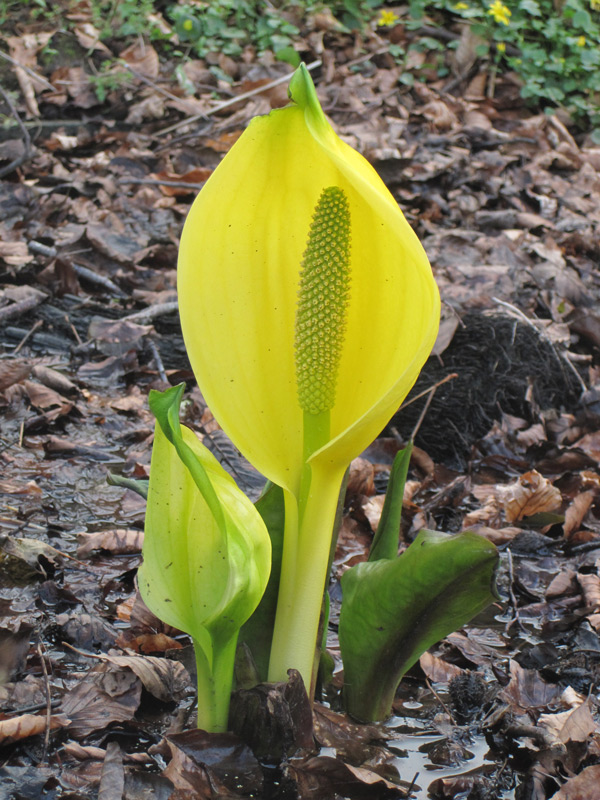
Lysichiton americanus
Among shrubs, yellow-flowering varieties are also plentiful at the end of winter. Aside from Kerrias, Hamamelis, and Cornus mas, the standout of the moment is Forsythia. Forsythia is an exuberant shrub that blooms profusely—some might say too much. It has the advantage, or disadvantage depending on your perspective, of flowering on bare branches, making its yellow flowers so prominent that it is the only thing visible in gardens. That said, it is an easy-to-grow shrub that thrives everywhere, and if well used, it can find its place in many gardens.
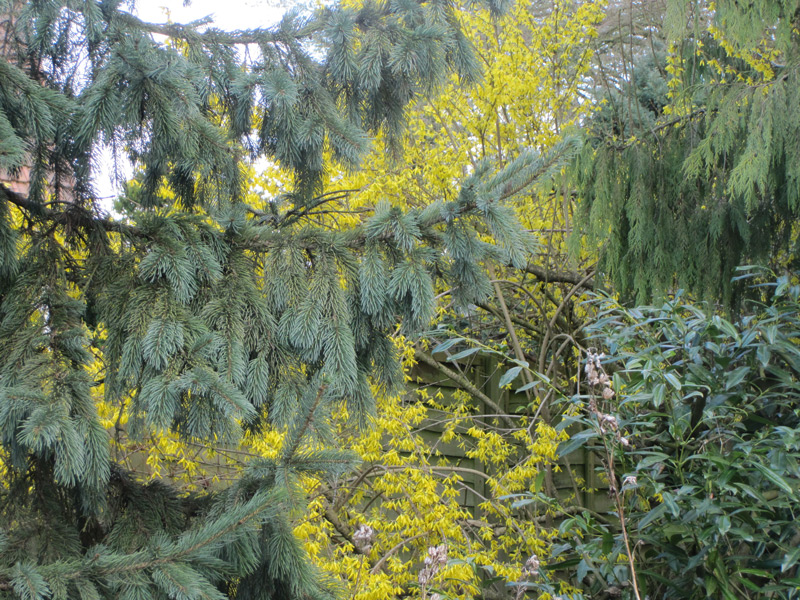
Forsythia (x) intermedia
Here, it is sandwiched between larger shrubs, and the intensity of its flowers is attenuated by the glaucous foliage of the Picea pungens planted in front. This creates a taller shrub seeking light, and a subtle contrast where the yellow of the Forsythia enlivens the bed dominated by the strong presence of the blue foliage of this conifer.
Perhaps this is the key to softening the strong presence of yellow flowers: contrast. Observing the colour spectrum, blue is opposite yellow, and this is the colour we will use to temper the vibrancy of yellow. Fortunately, spring offers plenty of blue flowers!
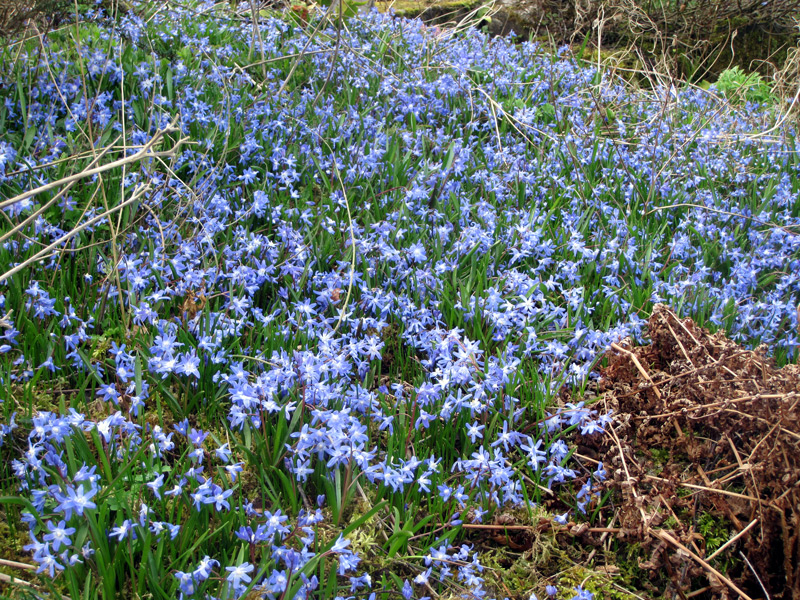
Chionodoxa sardensis
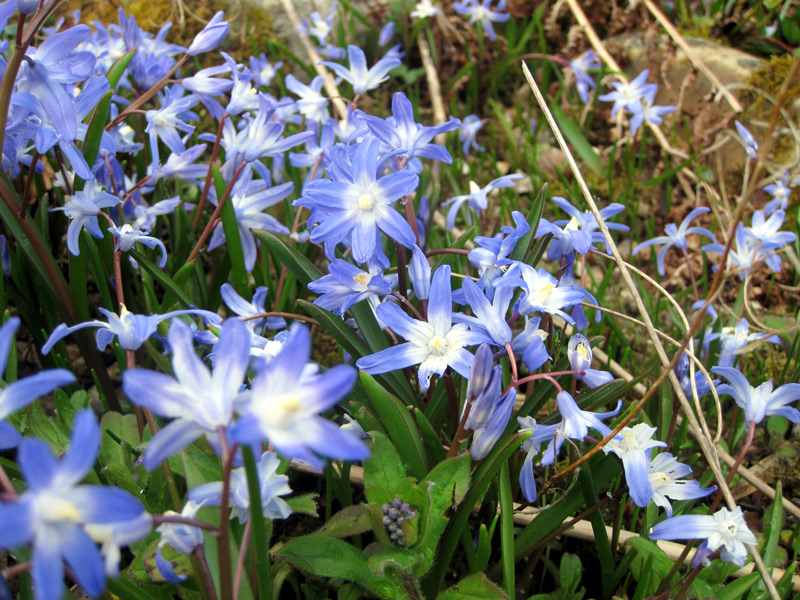
Chionodoxa sardensis (detail)
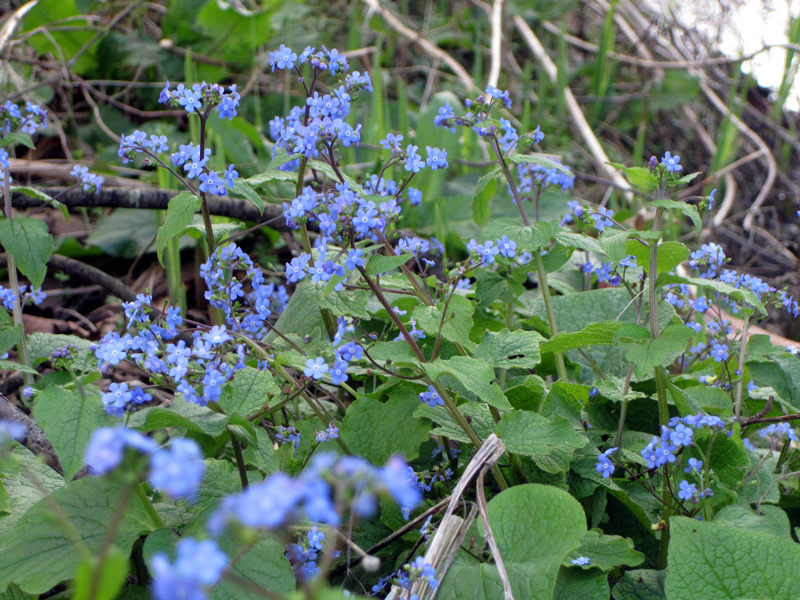
Brunnera macrophylla or Caucasian forget-me-not
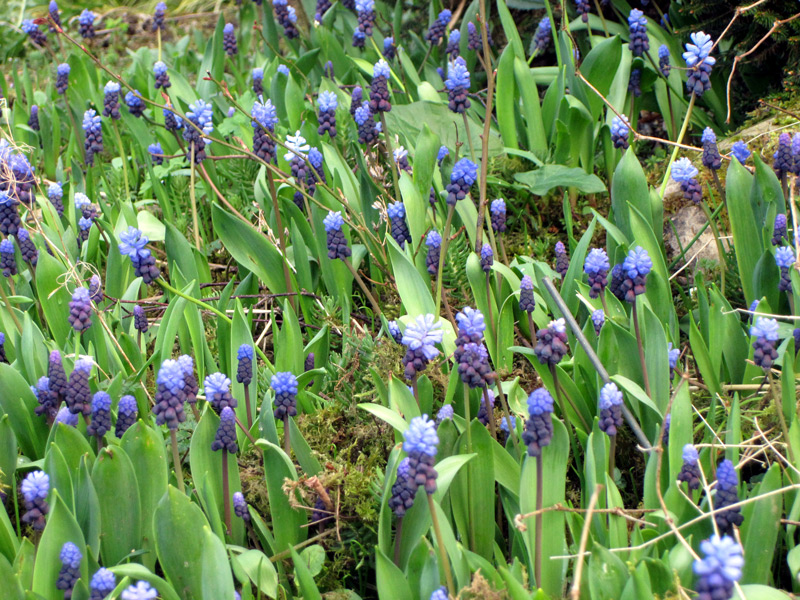
Muscari latifolium
Of course, this little slideshow is not exhaustive, but it highlights the current yellow and blue flowers. While the planting period for bulbous plants has already passed, that for perennials and shrubs is just beginning. Anticipate your plantings by leaving some empty spaces that you can fill with spring-flowering bulbs this autumn.

Comments