


“Do you keep weeds?”
This rhetorical question, which I hear all too often whenever I make the mistake of letting someone set foot in my garden, has the knack of getting on my nerves.
Firstly: well, I do what I want in my own home! (and I encourage you to do what you want in yours too...)
Secondly: “a weed” does not exist! At most, I can tolerate the term “adventive,” which is more appropriate. An adventive is simply a plant that the gardener or farmer considers to be out of place. For example: a beetroot in a potato field.
Thirdly: not only is this not the correct term, but moreover, these wildlings have numerous uses that I will outline in this article.
"What is a weed but a plant whose virtues have not yet been discovered?" Ralph Waldo Emerson
1) It’s good for your stomach!
Yes, you read that right! Some are edible and even excellent: plantains (Plantago major and Plantago lanceolata), ground ivy (Glechoma hederacea), hairy bittercress (Cardamine hirsuta), goutweed (Aegopodium podagraria), chickweed (Stellaria media), and even dandelions (Taraxacum sp.) or nettles (Urtica sp.).
However, be sure to do your research beforehand and carefully identify the wild plants in your garden. Don’t confuse Lily of the Valley with Wild Garlic or Ground Elder with Hemlock... There are plenty of books on ethnobotany (the study of the relationships between humans and plants), guided tours on the subject led by experts (well, not always...), not to mention some more knowledgeable people in your circle who can inform you... And yes! Snacking on what’s lying around is in vogue these days, so it’s a good time to study this particularly interesting subject. And in any case, if you have the slightest doubt, refrain from adding that quirky seedling to your salad.
Plants are like mushrooms; when you don’t know them...
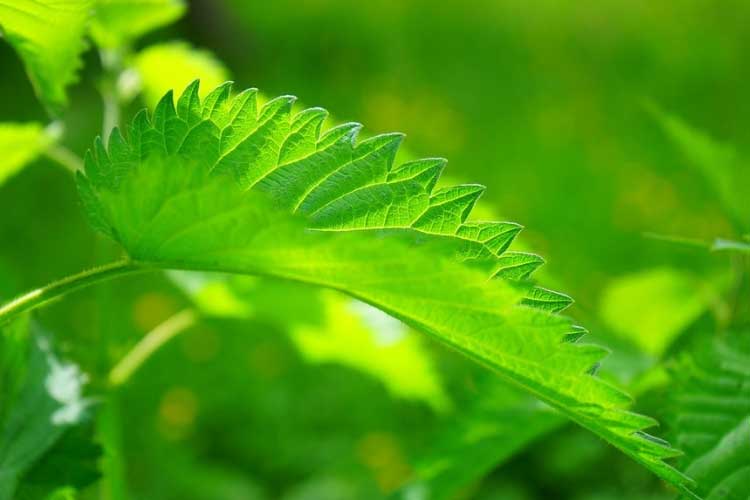 Nettle is the undisputed champion of useful wild plants (it’s even a compost activator!). Give it a little space in your garden...
2) It’s good for your health
The good old remedies from grandmothers... Well, great-grandmothers for those of my generation...
Many native plants were once used to make ointments, herbal teas, syrups, ... in short, all the remedies for minor ailments and discomforts that didn’t require a doctor’s visit. Here too, the bibliography on these medicinal plants is abundant, and I will only mention a few classic examples.
Raspberry leaf tea to help kick off winter and avoid colds, elderberry syrup for coughs, lady's mantle root for sore throats, ... And even plantain can help you make a "bump balm" to treat minor burns and cuts or soothe insect or nettle stings.
Once again, don’t embark on making potions, mixtures, or simple herbal teas if you’re not absolutely certain that the plant you’ve picked isn’t a deadly poison.
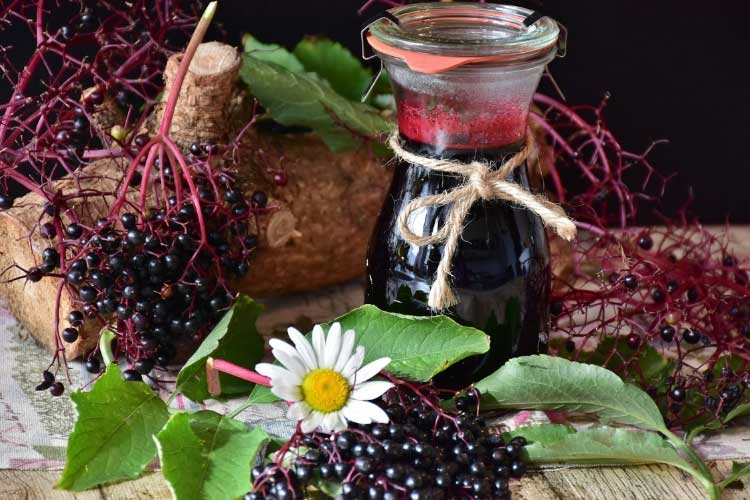 A little elderberry syrup. And off we go again...
3) It’s good for your soil
If a "weed" has grown somewhere in your garden, it’s because it had the opportunity. An empty spot in a flowerbed or border, and boom! Here comes a "weed." In reality, its role at that moment is to ensure that the soil doesn’t remain bare, thus helping to preserve your soil. A sort of occasional groundcover at little cost, in short.
Some are also bio-indicators and can reveal a lot of information about the quality of your soil: too much nitrogen, not enough nitrogen, lack of silica, overly compacted soil, ...
4) It’s good for biodiversity
Everyone wants butterflies in their garden! But everyone also forgets that before being this lovely flying insect, the butterfly was first a caterpillar. However, each butterfly species usually feeds only on a single plant species (for example: alder buckthorn for the Brimstone butterfly). Some plants are a bit like "restaurants" for caterpillars: nettles host about ten species (Red Admiral, Peacock, Small Tortoiseshell, ...), brambles nourish five or six, and grasses nicely complete the picture. But if you systematically pull out every epilobium that pokes through the ground, don’t expect to encounter that magnificent sphinx: the Sphinx of the Epilobium.
Most of our insects (especially pollinators) have co-evolved with a specific plant. If that plant is no longer present, the insect disappears... (and vice versa, by the way!) If that insect disappears, the entire delicate balance of the food chain is at risk. If the balance is disrupted, other species (micro-mammals, other insects, spiders, birds, ...) will also disappear from your garden, sometimes leading to significant consequences, particularly in the regulation of "pests." This is sadly what has happened in cultivated fields: a drop in biodiversity due to the systematic annihilation of everything that isn’t productive, leading to the proliferation of pests or diseases, hence chemical treatments, thus further reducing biodiversity, and so on... until death ensues... Fortunately, in recent years, improvements in farming practices have been credited to farmers.
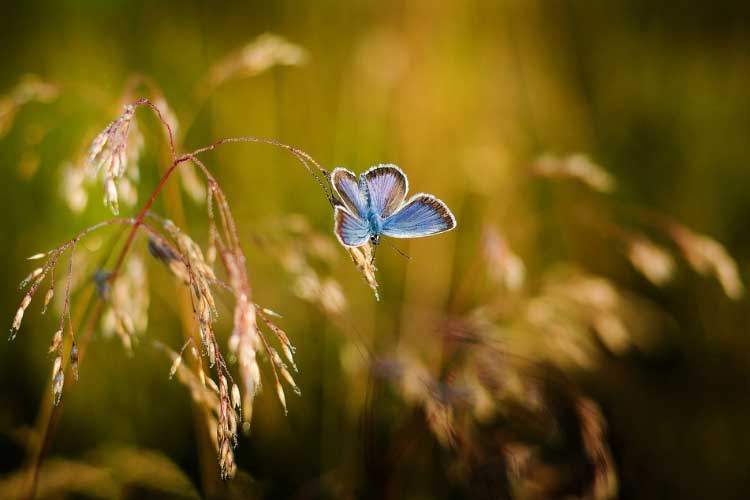 Many Blues are crazy about grasses...
5) It’s good for your plants
1+1 = 3
This formula is neither mine nor from a famous mathematician but from… Didier Willery, and even if I don’t share his unbridled love for variegated foliage, I must admit that I completely agree with this idea.
Plants do not live independently of one another. There are, as we now know, positive or negative biochemical interactions between them: this is what we call allelopathy. Moreover, roots help aerate the soil around other plants, and ectomycorrhizae (fungi living in symbiosis with most plants at their roots) contribute to providing the plant and those nearby with the nutrients necessary for their survival.
Recent research indicates that in addition to ectomycorrhizae, certain microscopic and symbiotic fungi called endomycorrhizae contribute to the production of biochemical and often aromatic substances. Substances that often repel plant pests such as aphids, caterpillars, ...
Examples among many others: lemon balm and Herb Robert.
6) It’s good for your back
Plants always grow too low to the ground… or maybe it’s you who are perched too high on your two legs. I’m still okay considering my compromised verticality... But if you stop pulling them out, you won’t have to bend down anymore. And the smart gardener avoids unnecessary effort.
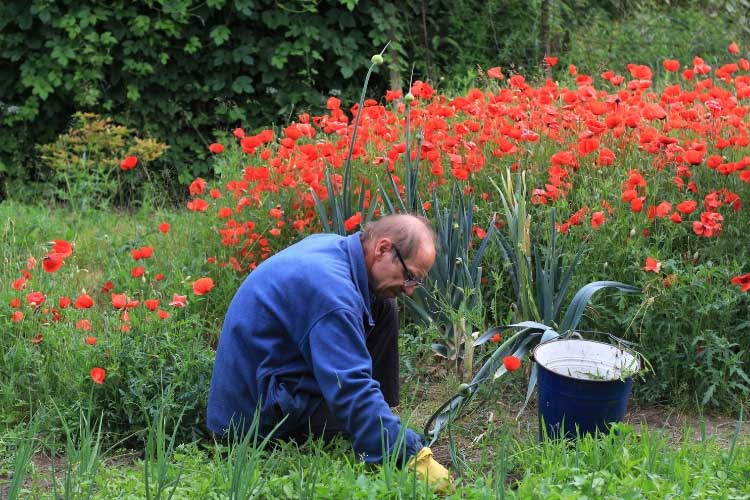 Yes, fighting against "weeds" hurts your back... and it usually doesn’t get better with time!
7) It’s good for your nerves
Still with a view to preserving your fragile health. Close your eyes and imagine for a moment a “weed” in your splendid rose bed. This one, a mullein, pops up between two roses like a beacon, marring a pale yellow blotch on this pastel pink sea, ultimately bland and lacking real contrast. Upon reflection, sitting cross-legged and levitating, you think it’s not so bad. This plant deserves to live too, and that little touch of colour ultimately adds something to your roses. All is well... Zen... (I too “zen a lot!”)
8) It’s good for your wallet
In addition to being bad for the planet, herbicides are expensive, and I won’t even mention the ultra-sophisticated tools (like an old fork) that are sold to supposedly weed without effort. Letting a few adventives grow won’t make you richer but won’t cost you anything either. Unless the bindweed you let climb on your young Cornus florida costing a small fortune, because some idiot in an article advised you to let the "weeds" grow, ultimately finished them off... (The management of Promesse de Fleurs will send you the contact details of this idiot for any potential reprisals).
9) It’s good for pretending to be a Piet Oudolf landscape designer
“Wow! But your flowering meadow is really beautiful. What mix did you sow and where did you buy the grasses?”
“Uh, I just haven’t mowed that spot for three months...”
And yes, against all odds, nature proves to be a much better landscaper than you or I. It has the knack of placing colours perfectly, in beautiful harmony. As if everything falls exactly in the right place.
Moreover, a plant that comes "by chance" to your garden will always be more resilient and healthy than those you planted with love and care. Yes, I know, nature is often cruel to the gardener...
"If you water it and it dies, it’s a plant. If you pull it out and it grows back, it’s a weed..."
If we add that they are completely free, then it’s even better, and I... Ah! I’m being told in my earpiece that I shouldn’t promote free plants because, after all... we sell plants and that’s not good for business. But that’s okay, we can just do like everyone else: sell weeds.
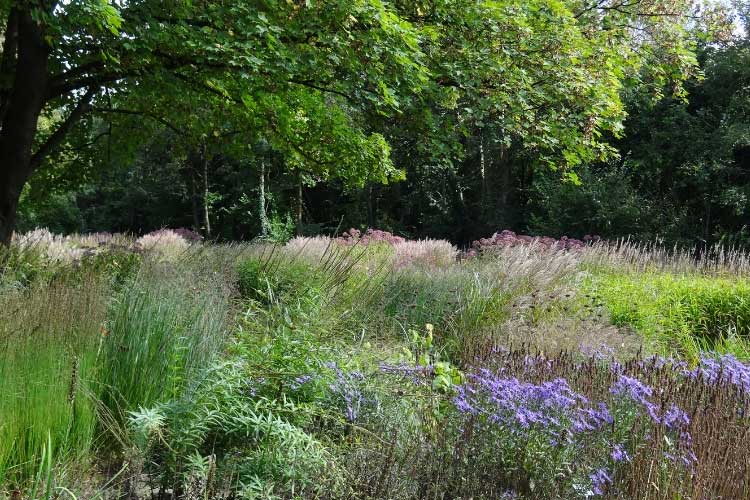 Okay, fine, this isn’t my place but Maximilianpark in Hamm... (Photo: Esther Westerveld)
10) It’s good for reclaiming the neighbouring land
Just a supposition… You let a few dandelions go to seed in your lawn. The seeds germinate the following year in the garden next door.
Your neighbour has a curious phobia of the colour yellow (I believe it’s called “xanthophobia”) due to an overdose of pastis last summer, and therefore cannot approach such a flower and intervene in its radical elimination.
He ultimately dares not go into his garden and quickly falls into depression. He loses his job as a vegan sausage seller, and Rex, his faithful companion, leaves him to pursue a career as a police dog in the movies. Distraught, your neighbour decides to abandon everything to live in the Tibetan monastery Saint-Bruce Lee in Sologne. He now goes by Bertrand Rinpoché and wanders in sandals and a saffron robe. The land is put up for sale. You can finally buy it to realise your dream: planting an arboretum dedicated solely to the genus Cornus.
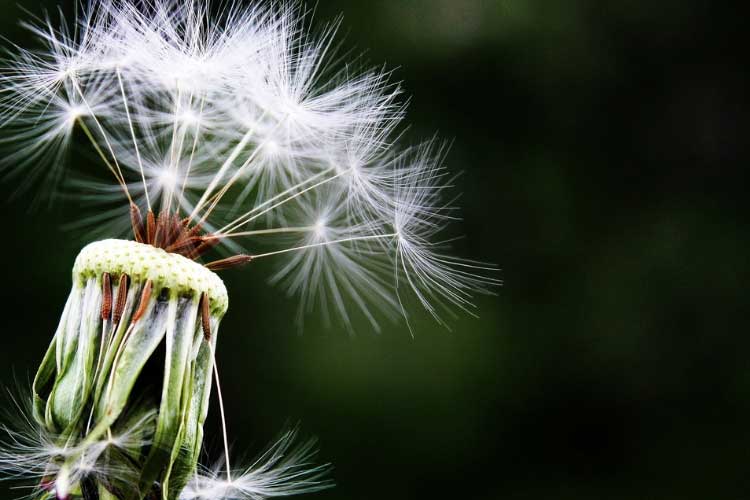 Ha ha! The neighbour's land is mine!
In conclusion...
It is urgent to completely rethink our relationship with plants. We’re not asking you to turn your little garden into an industrial wasteland or a nature reserve (although... if that appeals to you...) but “let go,” it will be excellent for your health as well as for (our) planet. It is humanly impossible to control everything in your garden, we would need an army of gardeners, and even then, nature will always win. So let that little flower live its life; after all, it might just repay you one day...
“A weed is a plant that has mastered all survival techniques except for the one of staying in line. In the garden as elsewhere, be a weed!”

Comments