





























The festive season often leaves its mark: a muddled complexion, an overloaded liver, and mysteriously shrunk clothes… It’s no wonder that Eating better is among the top 10 New Year’s resolutions. To achieve this, nothing beats "superfoods"! Here’s my little selection of "healthy" fruits and vegetables that are particularly good for your health, which you can grow in your garden; this will also allow you to get a bit of exercise 😉
1) Chia Seeds
Chia seeds come from an annual sage, Salvia hispanica, native to Mexico. Cultivated for thousands of years on the American continent, this tiny seed has only recently made its way onto our plates. Packed with numerous benefits, it is an excellent source of omega-3 and fibre. Additionally, it has the unique ability to thicken preparations by forming a mucilage when in contact with liquid, which increases the satiety effect of foods.
- How to use chia seeds?
Chia seeds have a mild flavour, although some find a pleasant nutty note. They can be sprinkled on salads, mixed into homemade bread, or added to yoghurts. Virginie makes an excellent pudding in the morning with almond milk and seasonal fruits. - How to grow chia seeds in the garden?
Chia grows easily in a mild climate, in good soil. Sowing takes place in spring, and the seeds are harvested in autumn. Be careful, this sage is not hardy!
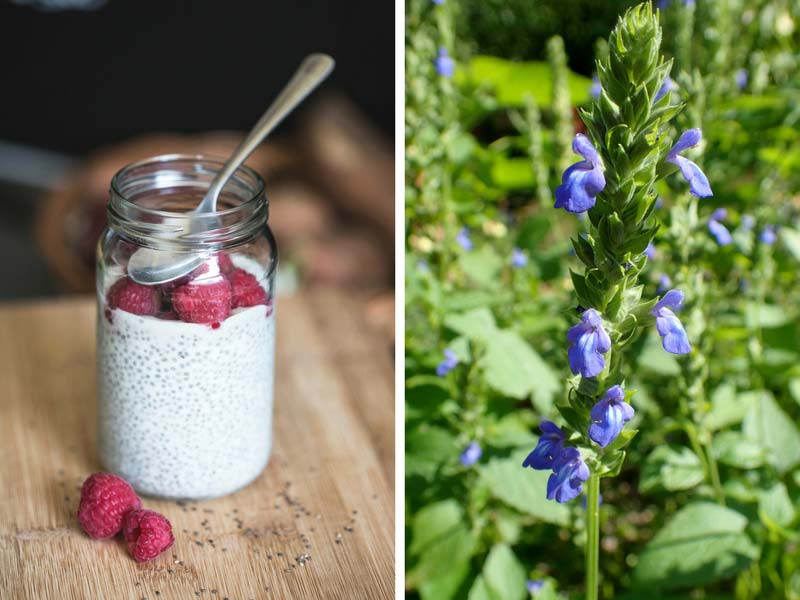 Chia seeds: a "superfood" from a sage, Salvia hispanica
2) Kale
A true trendy vegetable, kale has garnered a lot of attention in recent years. And if Americans are crazy about it, it’s because of its high content of fibre, iron, vitamins A, C, and K, as well as antioxidants. Excellent for eye health due to the lutein and zeaxanthin it contains. It is also a very good source of calcium.
- How to use kale?
Kale is best consumed raw to retain maximum vitamins. It can easily be juiced to "boost" a smoothie or juice. It can also be cooked, for example, in a gratin. But I won’t lie to you: kale leaves are quite tough! Before consuming, they should be softened after removing the central rib. To do this, look, it’s easy (it’s in English but you’ll understand quickly):
- Growing kale
This cabbage is grown like any curly cabbage. It requires rich soil but has the advantage of being very resistant to diseases and pests. To learn more, check out our advice sheet: "growing kale and curly cabbage in the vegetable garden."
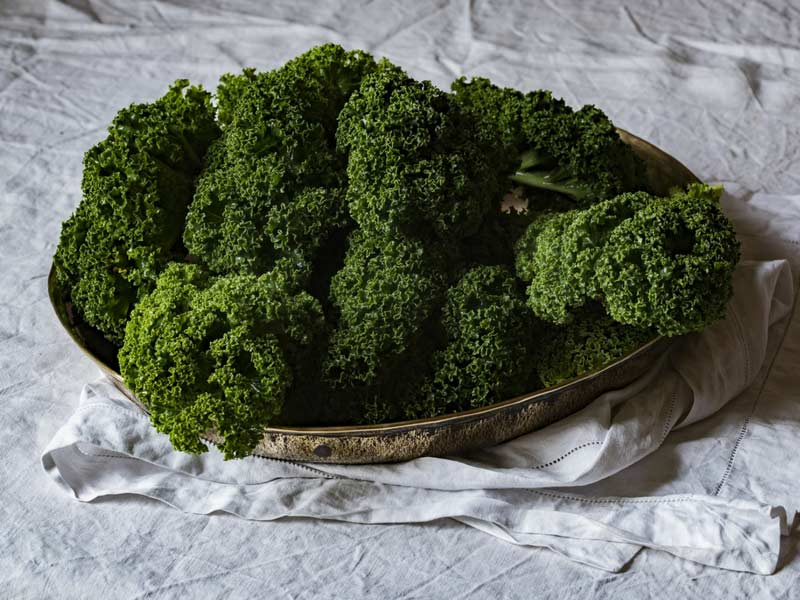 Kale, a "super cabbage" that loves massages
3) Flower Sprout
The Flower Sprout or Kalettes (BrusselKale for English speakers) is a promising newcomer. A hybrid of kale and Brussels sprouts, it produces, like Brussels sprouts, stems adorned with leaf buds. These mini-cabbages, serrated, dark green, and purple, are low in calories and very rich in vitamins C, K, and B6. The icing on the cake is that this cabbage also tastes good… Indeed, it is not bitter, and its sweet and mild flavour is accompanied by a pleasant nutty note. Original, it will also delight busy cooks as it cooks very quickly and retains a pleasant crunchy texture.
- Flower sprout in the kitchen
Quick to cook, it can be prepared in any way you like: steamed, quickly sautéed, or boiled in just 4 minutes… all with little to no smell. Versatile, it can serve as a side dish, but also as a base for many salads and, like kale, can be added to fruit juices. - Growing flower sprouts
In the vegetable garden, these small cabbages are grown just like Brussels sprouts. To learn more, follow our advice: "Growing Brussels sprouts"
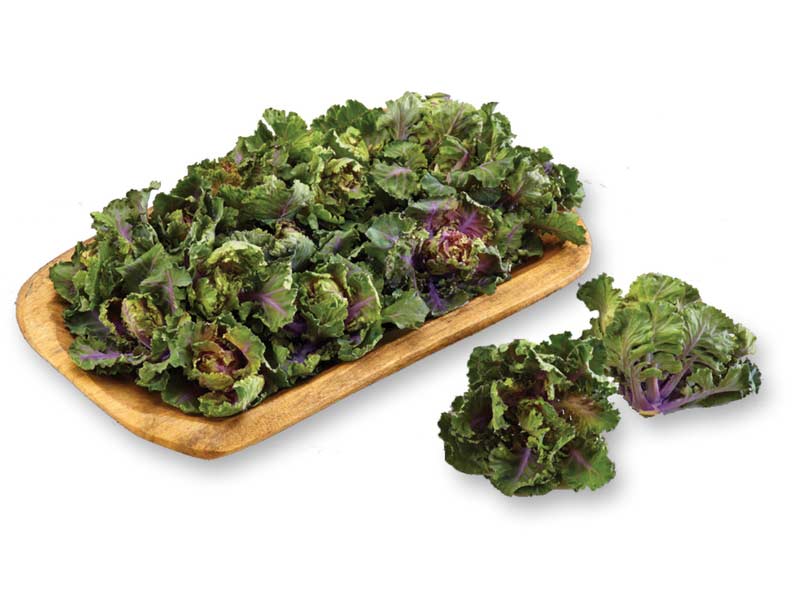 The Flower Sprout: half kale, half Brussels sprout - Photo: www.kalettes.com
4) Ginger
Exotic, ginger has long been known for its aphrodisiac effects. Popularised with the rise of sushi restaurants, it is now appreciated for its taste as well as its tonic, digestive, antibacterial, and antioxidant properties.
- Fresh ginger in the kitchen
The health benefits of ginger are numerous, but it is especially essential in Asian cuisine (in marinades, broths, or stir-fries to enhance a wok), as well as in traditional cooking. At home, I often use it in baking to add a kick to apple compotes. I also love it candied; its spicy flavour is perfect for a little boost during moments of fatigue. Finally, ginger can also be used in infusions with lemon as part of a detox cure. - Growing your own ginger:
Ginger is not complicated to grow, but it needs warmth. Unless you live in a tropical zone, it is best grown in a large pot, indoors or under a heated veranda.
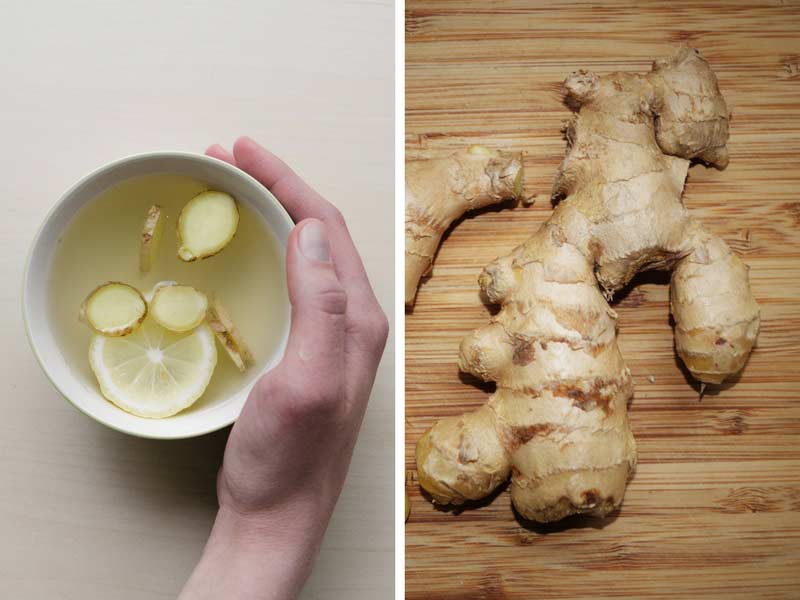 Ginger rhizome can be used in infusions as part of a detox cure
5) Goji
Goji berries come from an Asian bush, the Lycium. They are consumed fresh or dried. This small fruit has long been popular for its content of vitamins B, C, and E, but especially for its richness in antioxidants. However, its popularity has somewhat diminished following the discovery of batches, even certified organic, containing high levels of pesticides. All the more reason to grow them yourself!
- What to do with goji berries?
Fresh, goji berries can be added to homemade mueslis and granolas, yoghurts, fruit salads, or even juices. They can also add a sweet note to salads. Dried, they easily incorporate into cookies and other cakes. - Can you grow goji in your garden?
Yes, absolutely! Like many Asian shrubs, Lycium barbarum thrives in our climates. It is hardy and even tolerates lime. However, it is in the sunniest regions that it will fruit best. To learn all about growing these delicious berries, check out our advice sheet: "Cultivation, harvest, and drying of goji berries"
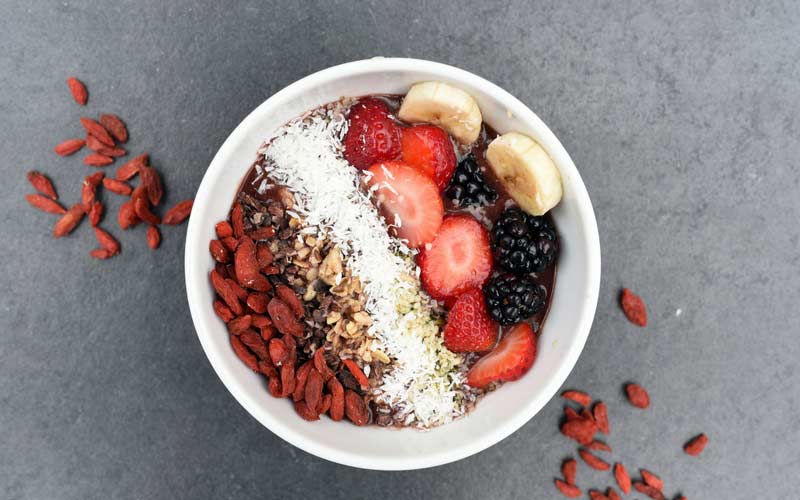 Goji berries lend themselves to many preparations. Add them to your mueslis daily
6) Black Radish
The black radish is one of those vegetables that can be a bit puzzling at first glance. Generally large, it has a black skin that covers a white, crunchy flesh, rich in potassium and magnesium. Slightly laxative and detoxifying, black radish aids digestion and "cleanses" the liver, but it is especially appreciated for its antibacterial properties. Rich in raphanine, it helps treat winter ailments like coughs.
- How to use black radish?
This radish is simply consumed raw, in thin slices or grated, in salads or on a slice of buttered bread. You can also choose to extract its juice, which, when mixed with sugar, makes an excellent syrup for a productive cough. The radish greens can also be prepared in soup. - How to grow black radish in the vegetable garden
This is a winter radish that is sown in summer. Its cultivation is not difficult, but due to its long root, it requires fairly deep and well-loosened soil.
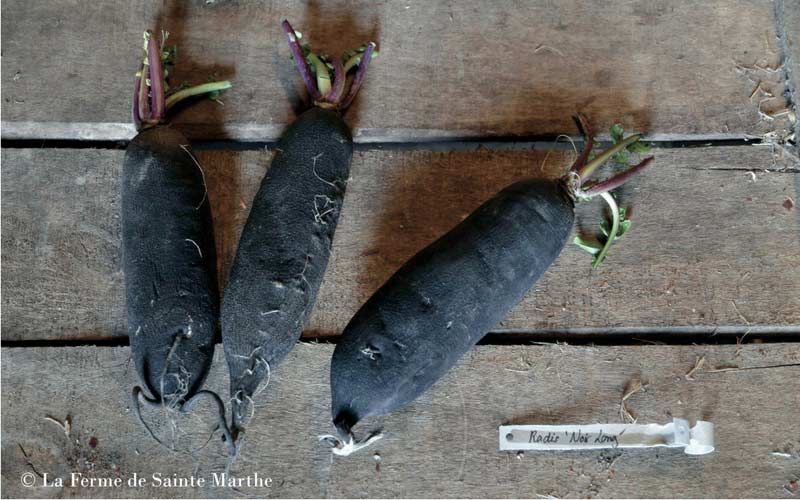 Long Winter Black Radish
7) Pumpkin Seeds
Pumpkin seeds are very rich in protein (between 20 and 25%), unsaturated fatty acids, vitamins, and minerals, including magnesium and iron. Often consumed as part of a vegetarian or vegan diet, they are also indicated for relieving urinary problems.
- How to incorporate pumpkin seeds into your diet?
Roasted, pumpkin seeds are perfect as a snack or nibble. Whole or crushed, they can be sprinkled on salads or incorporated into bread or cake mixtures. - How to produce your own pumpkin seeds:
All pumpkins are suitable, but to avoid the tedious peeling process, you should choose the Lady Godiva Pumpkin. This variety has the advantage of producing seeds without a shell. To succeed, proceed as with other pumpkins: give it a spacious area and plant it in rich soil or heavily enriched compost, even if it is not fully matured.
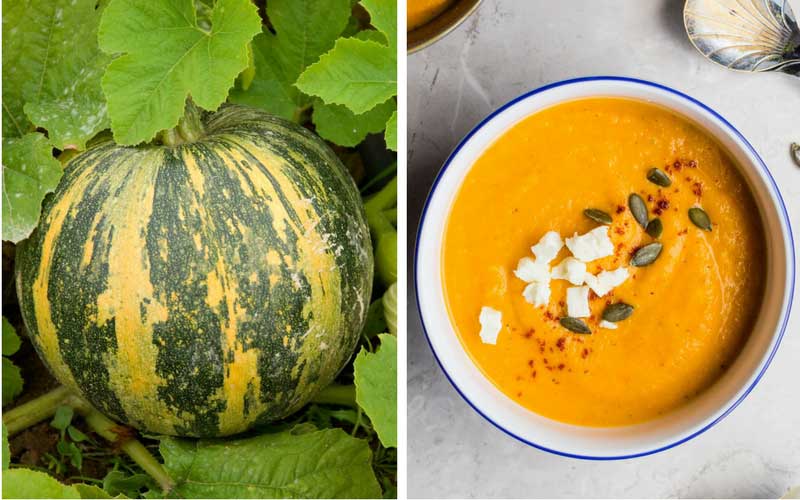 The Lady Godiva pumpkin (Photo: Ferme de Sainte Marthe), a perfect pumpkin for seed production. Its medium flesh is very suitable for soups.
And you, do you consume one or more of these "superfoods"? Let us know!

Comments