





























Monospecific hedges, such as those made of thuja, are often dull and not very beneficial to biodiversity. Nowadays, we prefer free, natural, and wild hedges. In this case, a variety of diverse shrubs will be planted: deciduous or evergreen, flowering shrubs, berry-producing shrubs, those with unique foliage or colourful bark... This way, they will be as beautiful as they are useful throughout the season. That was my vision for the long hedge bordering my garden. And then... I decided to plant dogwoods. Lots of dogwoods!
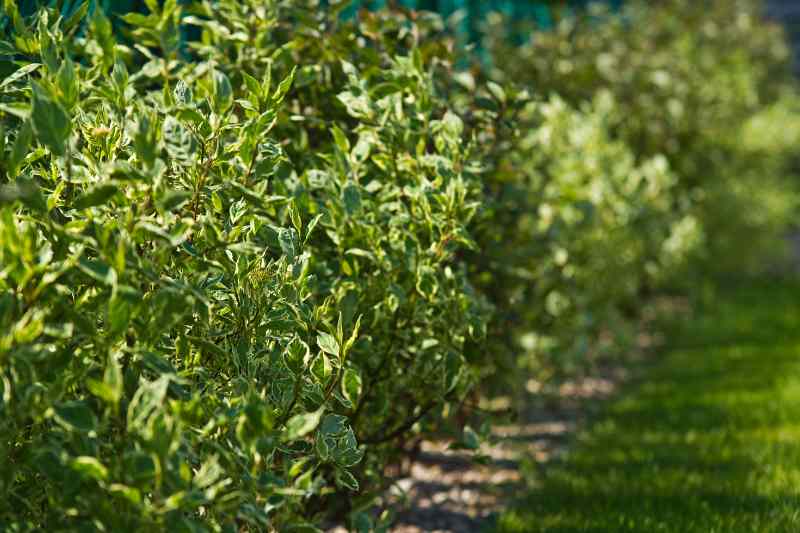
At first, it started gently
There was nothing in my garden, so I needed plants: trees, shrubs, perennials, bulbs. I first went to the local garden centre. As I wandered through the aisles, I finally entered the realm of shrubs. Organised alphabetically, I quickly came across the colourful dogwoods. I picked one, a Cornus alba 'Aurea' (I still remember it!), then a second of a different variety, a Cornus alba 'Sibirica', followed by yellow-stemmed dogwoods, Cornus sericea 'Flaviramea', then another, another, and yet another. In the end, I had two carts filled solely with these dogwoods. So much so that a lady approached me and asked a lot of questions about the store. I stammered that I wasn't part of the team and was quite unable to answer her. In reality, she thought I was an employee restocking the shelves...
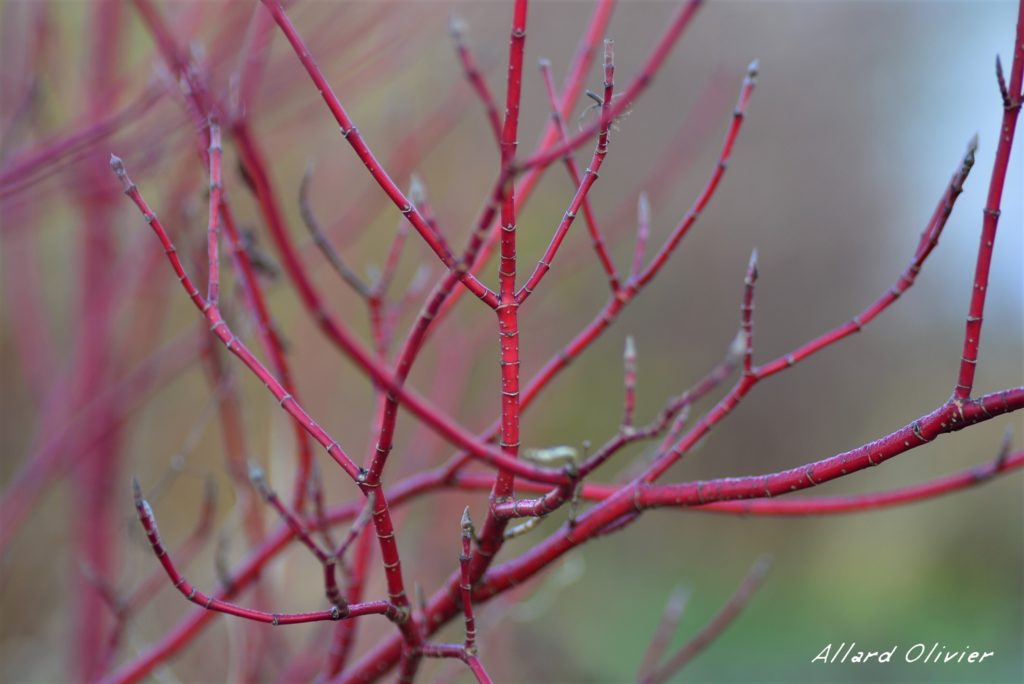
Lots of dogwoods...
The area to plant was a straight hedge of about thirty metres. It welcomed:
- some white dogwoods: Cornus alba 'Aurea', Cornus alba 'Sibirica', Cornus alba 'Bâton rouge', Cornus alba 'Elegantissima'
- some silky dogwoods: Cornus sericea 'Flaviramea' and Cornus sericea 'Cardinal'
- some blood dogwoods: Cornus sanguinea species type, Cornus sanguinea 'Anny's Winter Orange' and Cornus sanguinea 'Winter Beauty'
- and even two or three male dogwoods
Thus, I created a free hedge, beautiful in winter thanks to the colourful stems, lovely in spring due to the early flowering of the male dogwood, and stunning in autumn with the various foliage that takes on magnificent hues. The flowers nourish pollinators, and the fruits feed the birds (and the gardener in the case of the male dogwood). All these plants are deciduous, but it didn't matter; I was quite pleased with the result.
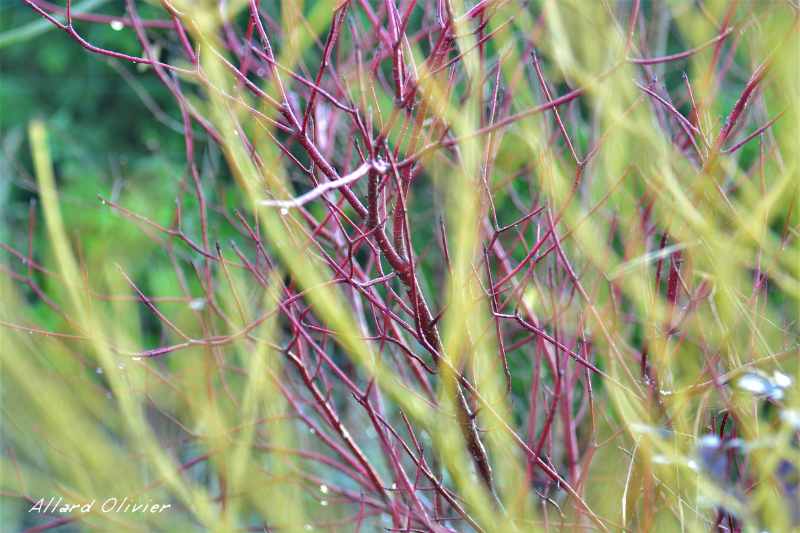
But not just that...
Later on, I succumbed to other shrubs, I must admit. I planted or allowed a good number of native species to grow, such as black elder, guelder rose, hazel, European spindle... And adopted other more "exotic" shrubs like a Callicarpa 'Profusion', a blood currant, cotoneasters, and a weigela. Over the years, the dogwood hedge has transformed into a simple free hedge. However, I do plan to repeat the experience in another area of the garden, but this time pushing the envelope further: a true dogwood hedge. An alignment of decorative-stemmed dogwoods, preferably of the same variety.
My tips
If you wish to create this type of hedge at home, I have a couple of things to share.
Firstly, create large patches of colour, especially in winter. By this, I mean only plant large groups of dogwoods with the same stem colour (or even foliage), as this will look more attractive in winter. You could even try an entire line made up solely of shrubs with the same stem colour: for example, a series of Cornus alba with red stems.
In my case, the hedge adjacent to the neighbouring plot had to be straight, but nothing prevents you from creating a hedge in a curve, crescent shape or making it undulate within a large lawn.
Last tip, avoid dogwoods that sucker too much, like the blood dogwood and some of its cultivars. Choose more "well-behaved" dogwoods, otherwise they will tend to stray from the alignment.
Also read
If you want to know everything about decorative-stemmed dogwoods, read these various articles and advice sheets:
- The most beautiful varieties of decorative-stemmed dogwoods: the 12 most beautiful
- How to pair decorative-stemmed dogwoods? Virginie shares her good advice.

Comments