





























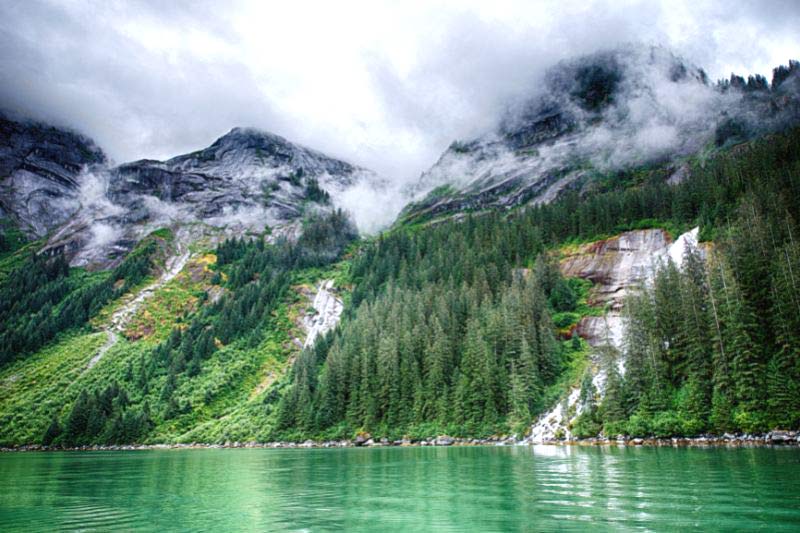
It is a little-known fact that climate change could lead to an expansion of global forests. Even today, the phenomenon is quite tangible all around the Arctic polar circle, in Norway or in Alaska, to the extent that some areas now have four times more trees than in the 1980s, and the gains in tree cover in these regions would exceed the losses lamented in others, such as in the Amazon. At first glance, this seems like good news... yet researchers tell us otherwise.
For the past thirty years, areas that were usually frozen and snow-covered have experienced a warmer climate, allowing forests to expand and replace the traditional low shrub layer. This vegetation was covered in snow for long months, which reflected solar radiation. However, this is no longer the case for the trees that have succeeded it. Thus, dark forest covers replace the snow and reduce reflectivity - what is known as albedo - causing the absorption rather than the reflection of some solar radiation. And of course, this solar energy is released into the atmosphere as heat...
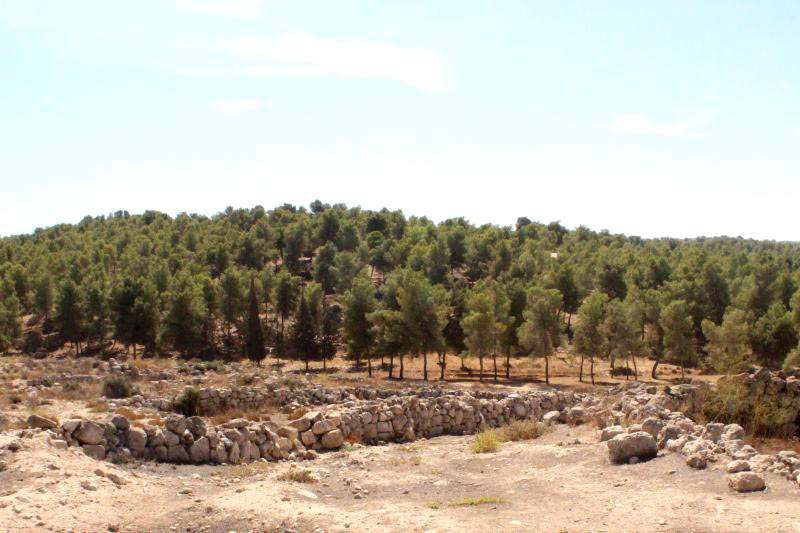
In some arid areas of subtropical regions, the same phenomenon of forest development is observed. It is the higher concentration of CO2 in the atmosphere that is to "blame". Indeed, trees in semi-arid forests need to open their stomata less to absorb this more available CO2. They therefore simultaneously reduce their water loss through evapotranspiration, leading to new and increased vegetation growth. However, in these arid regions, this natural vegetation, combined with reforestation campaigns, can also be very problematic, as trees again absorb solar heat and shade sandy or rocky soils that are naturally very reflective. This fact is scientifically measured notably through the Fluxnet network, which studies the processes of exchanges of CO2, water vapour, and energy between terrestrial ecosystems and the atmosphere.
Thus, a more wooded world may not contribute to slowing climate change, as we now know that forests create conditions that, in some ways, cool the planet, but paradoxically also warm it.
In fact, if the forecasts promising a more wooded future turn out to be correct, we do not yet know how beneficial these trees could be in slowing climate change. This is because we must weigh the fact that forests also release water vapour, which promotes cloud formation, and these contribute to cooling. The canopies of forests also create surfaces that swirl air currents and help dissipate heat in the lower atmosphere. Moreover, the increase in carbon dioxide levels in the atmosphere aids tree growth. The biomass created in the form of leaves and wood can thus trap more carbon and therefore slow warming.
So, what about it, you may ask? Warming or cooling? The answer cannot be black and white, and researchers tell us that it will depend on several factors such as the altitude and latitude of the affected areas, the nature of the soils, the growth rate of the trees, the age of the forest, etc. A young forest, for example, might initially warm the atmosphere due to its albedo effect, but its impact could become more "cooling" for the atmosphere as the trees age and store more carbon.
Humanity is thus once again faced with uncertainty. How new forests will affect the climate poses a scientific but also political issue, as large-scale re-vegetation and greening projects - less complicated to implement than global decarbonisation - should in the future evaluate the potential downsides of a modified albedo... at the risk of having them turn against us and our planet!


Comments