





























The mulching fabric or planting tarp has become, in just a few years, a staple in landscaping. Whether in public spaces or private gardens, it is rare for the soil not to be covered by it. Why? To help plants grow faster, with no maintenance, no weeding, and no watering.
What a great plan! But does the tarp really deliver on its promises? Should we use it? I won’t beat around the bush and, at the risk of upsetting all those whose gardens are equipped with it: the answer is no, and I’ll explain why.
Does mulching fabric promote plant growth?
When planting on a tarp, one generally observes good plant growth during the first two or three years. However, things gradually deteriorate afterwards. Indeed, the soil needs to be regularly amended to maintain its fertility. In a forest, this is a natural process that is child’s play: leaves fall from the trees, decompose, and create humus.
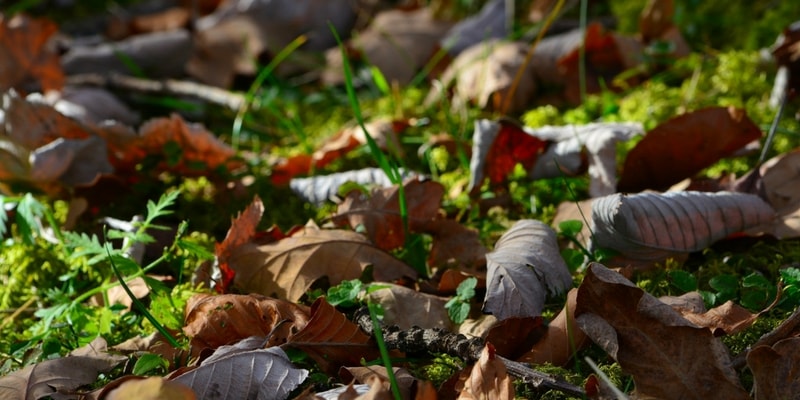 Forest soil maintains its own fertility: a process to replicate at the base of hedges
On soil covered with a tarp, this process is blocked as the fabric acts as a barrier to decomposing elements. This results in soil depletion, which ultimately leads to a lack of nutrients for the plants. In the medium to long term, the soil loses its vitality, and under strict conditions, trees and bushes become weakened. Some may fall ill... and die prematurely.
Regarding watering, yes, the tarp retains moisture, but not more than organic mulching... and possibly less, as rainwater tends to run off and infiltrates more slowly, depriving the soil of the benefits of a good downpour.
Is mulching fabric effective against "weeds"?
I experience this every day. In my street, two flower beds were planted at the same time: mine and the one belonging to the council. I mulched with pruning chippings, while they laid down a tarp.
In the first year, I had a bit of work, sure (they laughed...). But for the past two years, I hardly intervene, while the council’s green space team spends at least an hour a month on theirs (and now, I’m the one laughing!). Why? Simply because in my bed, weeding is easy: I just have to pull out the intruders by their roots. Meanwhile, my friends from the council struggle to extract those that infiltrate every little crevice.
Finally, observing what happens on the mulching fabric over the long term, one notices that quickly, the leaves that fall end up decomposing on the surface, forming a substrate ready to welcome any seed: while weeds may struggle to grow under the tarp, they easily find a way through and thrive on top of it!
The proof is in these images, mundane yet very telling:
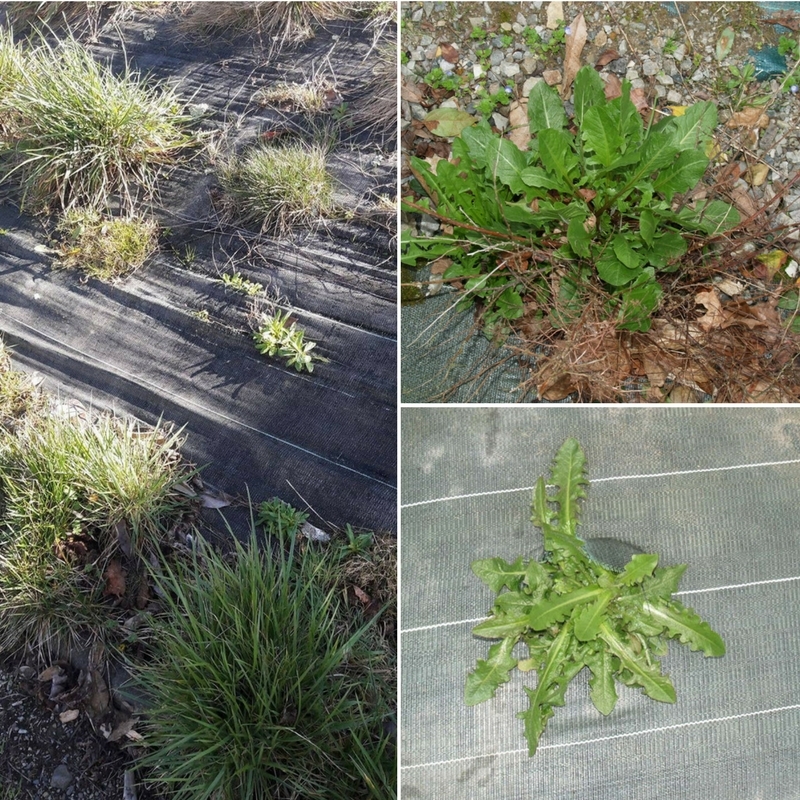 An unappealing aspect / substrate forming on the surface / a dead bush has left a gaping hole quickly occupied by an opportunistic dandelion!
On the implementation and aesthetics of planting tarps
Having experienced the installation of tarps, done properly, during a training course with a landscaper (the longest two weeks of my life), I can tell you: it’s particularly difficult. Despite my limited sewing skills, adapting it to the shape of the bed and ensuring the entire surface is covered is far from enjoyable. The worst part is certainly having to plant through it: you have to make a cross-shaped opening with a cutter, but it mustn’t be too large... You slide the root ball in, and it is impossible to check that the plant is in contact with the soil and at the right level!
Finally, for economic reasons, mulching fabrics are rarely covered with decorative mulch. And inevitably, it looks ugly... especially when it frays!
How to do without planting fabric?
When you have little time to devote to your garden and are not a big fan of weeding, what can you do? It’s quite simple: first, don’t skip the preparation: weed and carefully loosen the planting area by extracting as many roots as possible (you have the right to curse the couch grass!). Add a bit of compost, plant, water, and then mulch generously with a thick layer of organic mulch (commercial types like Fibralgo, bark for ericaceous plants, chippings, straw…). It will decompose slowly, fertilising the soil. After a year, renew the mulch if necessary, and once the plants are well established, you can, if you wish:
- plant groundcovers: they will form a lovely carpet at the base of trees or bushes,
- if it’s a trimmed hedge or perennials, leave the residues in place to maintain soil coverage,
- let spontaneous flora grow... In a natural garden, this is perfectly acceptable!
Thus, you won’t have more maintenance than if you had laid a tarp, and your plants will thrive.
Is biodegradable tarp a good alternative?
Mulching a very large area or a long hedge requires moving a large volume of mulch. If you’re not a fan of wheelbarrows, biodegradable mulching fabric is a good alternative. It is more expensive, but offers the advantage of being more aesthetically pleasing, more environmentally friendly, and above all, it decomposes naturally! Made from coconut fibre or jute, it allows for good plant growth. It is also, in combination with suitable perennial plants and groundcover bushes, a good solution for greening difficult areas like slopes.
In conclusion, know that if you have tarp in your garden, it’s never too late to do the right thing: don’t hesitate to remove it and install a nourishing mulch instead... your plants will thank you!

Comments