





























Hydrangeas are appreciated for their large spherical, flat, or conical inflorescences, often in shades of pink or blue. They have a beautiful presence in the garden, enlivening it with their colourful flowering, which generally lasts throughout the summer. However, despite the care you provide for your hydrangea, it may sometimes fail to bloom or bloom very little… even when it shows generous foliage and appears to be in good health. We explain why your hydrangea refuses to bloom and our tips to remedy the situation!
For everything you need to know about growing hydrangeas, feel free to check our complete guide “Hydrangeas: planting, pruning, and care”
1 - Because the exposure is not suitable
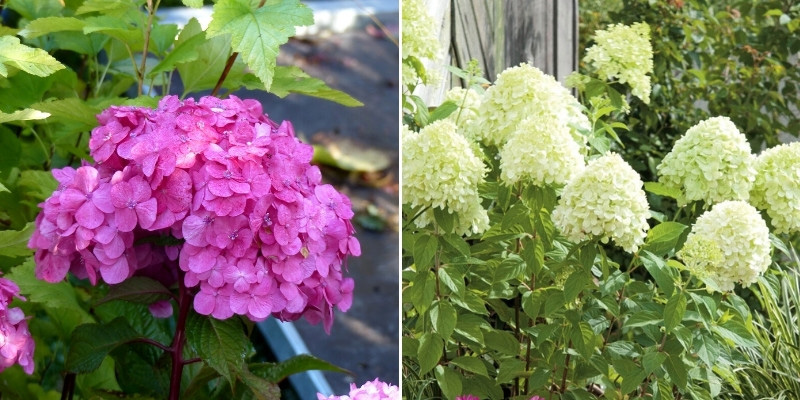
For it to thrive fully, it is important to grow hydrangeas in the right exposure! Too much shade or, conversely, too much sun can prevent them from blooming. Not all hydrangeas have the same sunlight requirements, and they can be divided into two groups:
- Hydrangea macrophylla and H. serrata, which prefer shade or partial shade
- Hydrangea paniculata and H. arborescens, which thrive in full sun
Thus, macrophylla and serrata hydrangeas should be sheltered from direct sunlight, at least during the hottest hours of the day. However, it is better to avoid dense and thick shade; a situation of partial shade or light shade, where they can enjoy morning sun and afternoon shade, will suit them perfectly. Paniculata hydrangeas, on the other hand, need sun: if you plant them in the shade, they will grow but will not bloom, or will bloom very little.
2 - Due to inappropriate pruning
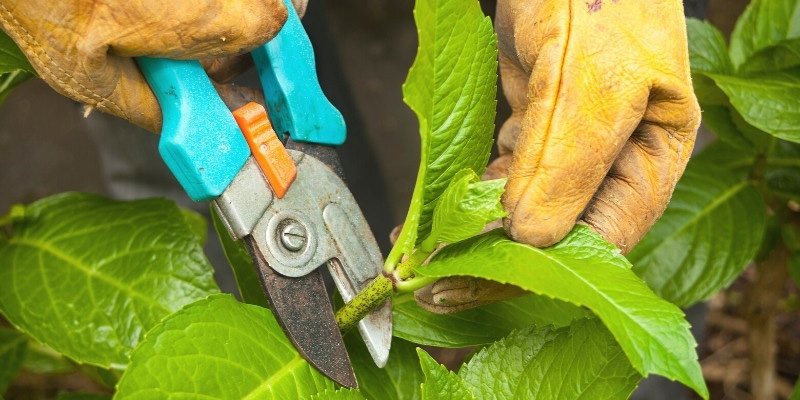
Macrophylla hydrangeas bloom on the wood of the previous year. Therefore, it is best to avoid pruning them, or to carry out only very light pruning, as cutting too short may compromise flowering by removing the flower buds located at the tips of the stems.
In general, macrophylla hydrangeas fare better when not pruned, or pruned very little. If you do wish to intervene, you can perform very light pruning in March-April, removing only dead wood, damaged branches, and faded inflorescences. Every two years, feel free to aerate the centre of the shrub by removing a few old weakened branches, cutting them close to the ground. On the branches you keep, do not cut back more than 30 cm.
Hydrangea serrata, H. aspera, H. quercifolia, and climbing hydrangeas should also be pruned very lightly, removing only dead or damaged branches, and can easily do without pruning.
Paniculata and arborescens hydrangeas are pruned more severely. For paniculata hydrangeas, pruning involves structuring the shrub by retaining a few main framework branches and eliminating small, weak, or poorly positioned branches. Also remove branches that grow inward to aerate the centre of the shrub. On the framework branches, prune to retain only 2 to 3 pairs of buds. Arborescens hydrangeas benefit from being cut back to 30-40 cm from the ground. This will help regenerate the shrub and encourage it to produce fewer but larger and more impressive inflorescences!
To learn more, check out our advice sheets “When to prune hydrangeas?” and “How to prune hydrangeas?”
3 - Due to poor fertilisation
When grown in poor soil without amendments, hydrangeas may lack the mineral elements needed to support their flowering. They will appreciate it if you apply some well-decomposed compost at their base in spring, which you can incorporate into the soil with light scratching. Be careful, however, as excess organic matter or nitrogenous fertilisers may promote vegetative growth and foliage at the expense of flowering. In other words, your hydrangeas will look beautiful and appear to be in good health, with lovely green leaves, but may bloom very little. If you do apply fertiliser, choose one rich in phosphorus to encourage flowering.
Discover our range of fertilisers for hydrangeas
4 - Due to a late frost
In spring, when hydrangeas have formed their buds and begin to restart, a late frost can catch them by surprise and burn their buds, damaging young leaves and destroying part or all of the future flowers.
As a preventive measure, to avoid frost damage, we recommend monitoring the weather forecasts and covering your hydrangeas with fleece when there is a risk of frost.
If it is too late and the frost has already caused damage, prune the damaged parts to leave only healthy shoots and buds. The hydrangea can then concentrate its energy on these healthy parts.
5 - Due to lack of water
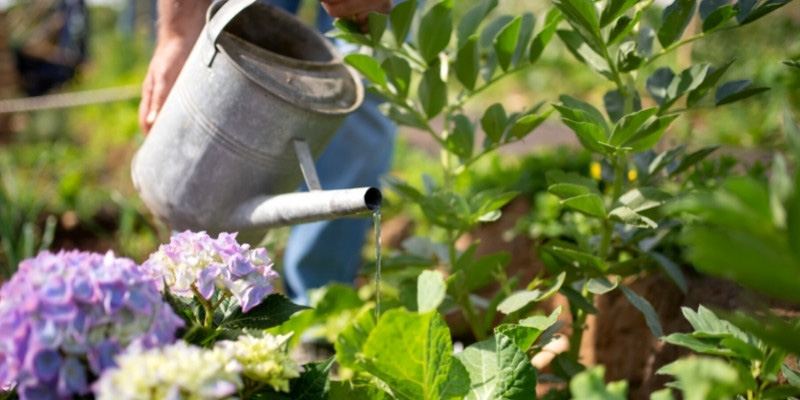
Hydrangeas do not tolerate drought well, and they must not lack water during the formation of flower buds; otherwise, these may dry out and never open. Hydrangeas need the soil to remain moist: do not hesitate to water them in summer and during any dry periods. Be particularly vigilant if you are growing them in a large pot or container: the substrate dries out much faster than in the ground. Feel free to apply a thick layer of organic mulch (straw, dead leaves, RCW…) at their base to help keep the soil moist for longer. The soil should not be waterlogged or remain constantly wet, as this could cause their roots to rot.
6 - Because it is too young
If your hydrangea was recently planted, it may need a few years to settle in. Rather than producing flowers, it invests its energy in developing its root system and adapting to its new growing conditions. Give it time, wait for it to form a nice leafy clump, and if the conditions suit it, your hydrangea will bloom without issue.
7 - Because it is sick
Diseases and pests impact flowering: a weakened hydrangea is likely to bloom little or not at all. Botrytis, in particular, can cause flowers and flower buds to rot. To prevent your hydrangea from getting sick, avoid excess moisture, water at the base of the plant without wetting the foliage, and ensure that air can circulate (by avoiding dense planting and lightly pruning the plant if necessary). If you notice it is affected by disease (presence of grey mould on the leaves), remove the damaged parts and spray a sulphur-based solution.
To learn how to identify and treat them, feel free to consult our advice sheet on diseases and pests of hydrangeas

Comments