





























It's winter. It's cold. And by cold, we mean temperatures that sometimes drop below 0°C. Yes, even in the South. This brings us to a strange physical phenomenon: water becomes solid. This is commonly referred to as frost. Surprisingly, winter returns every year, despite humanity's repeated attempts to warm the climate, and just as surprisingly, it catches many gardeners off guard, leading to the loss of some fragile plants left unattended.
So why has your plant suddenly decided to freeze without asking for your permission? We'll explain right away.
Why this happens to you?
Your neighbours never complain about winter. At most, they might grumble a bit when they have to clear snow from a tree or wait for a thaw to plant a tree, but that's about it. Besides, snow in the garden is great!
But for you, winter is synonymous with perpetual anxiety. You scrutinise the sky and your own professional weather station as soon as a cloud appears or one of your acquaintances suffers from their rheumatism. For most gardeners, a little frost is not a problem, but you know it will be much worse! You can sense the drama coming! Ah! What a tough life!
Why this specific plant?
That's true, why this plant in specific? All your other plants usually survive winter and frost perfectly well. And then bam! It's your favourite that takes a hit. The one your uncle from the Caribbean sent you via climate-controlled shipping, which you had to have airlifted into your garden. It cost you a small fortune and was your pride because no one (and for good reason!) had one in the neighbourhood. And now it’s gone overnight without even giving you a heads-up. All the others, planted right next to it, cost you a fraction of that and have survived without any trouble. Plus, you could swear they’re laughing...
Fate is cruel! But what on earth happened?
Why, after all?
Winter is a time for plants to change their rhythm
Deciduous shrubs enter dormancy when they lose their leaves. This is an adaptation to the difficulty of pumping water from the soil, as it has indeed become solid as soon as the temperature drops below freezing. So, to avoid losing too much water through evapotranspiration at the leaf level, what could be more effective than simply letting them fall to the ground? Conifers, with their needles, have found a clever way to reduce the surface area of their leaves, as well as making them thicker and waxy. But what about the other evergreens? They slow their rhythm, yes, but they do not enter dormancy.
Physiological effects during frost periods
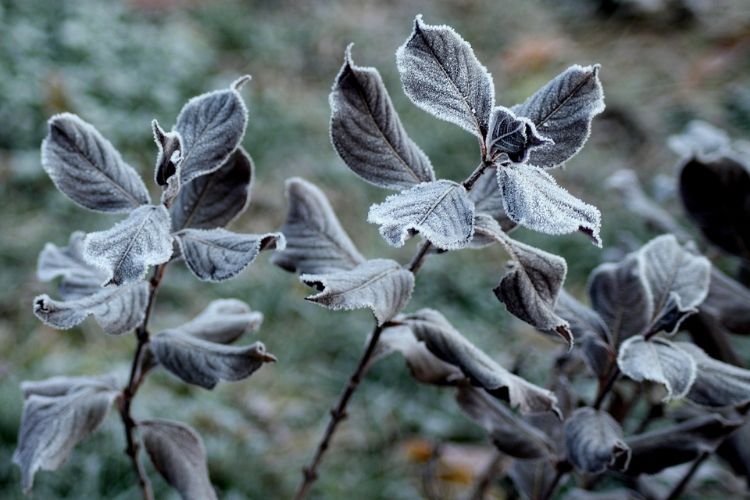
Most plants that can grow here are prepared for winter. They reduce their water content (by losing their leaves, for example) and increase their mineral salts and sugar content, which also raises the freezing point of water in their tissues. If it gets even colder, some of the water is expelled from the cells to the intercellular spaces. What remains in the cells will not freeze because there will be an even higher concentration of sugars and mineral salts. If it gets even colder, that’s the end of the anti-frost measures! Water becomes solid within the cells. Solid water takes up more volume than liquid water, and boom! Crash! The cell bursts like a glass bottle would when water freezes inside. This can be seen in various plant injuries during frost: leaves appear scorched, trunks are cracked, ... All of this can lead to the death of your plant.
What can be done about it?
- Choose resistant and suitable plants
If a plant is recognised as hardy down to -15°C, everything should be fine. Native plants from your region should also be prioritised.
- Consider hardiness zones... or not
To help with this, there are what are called hardiness zones. They give you an idea of temperature extremes but are not precise for your garden. It will depend on your soil, exposure, wind, the orientation of your garden, ...
- Look around you
If a type of plant has been growing in your neighbours' gardens for years without issue, it’s likely to thrive in yours too. Plus, it gives you a chance to chat with your neighbour about your favourite topic: gardening.
- Protect fragile plants
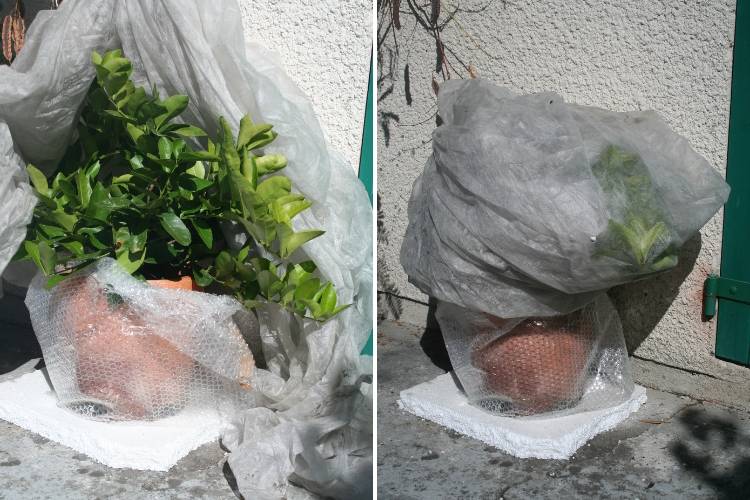
If you haven’t taken any of the three previous points into account (like the rest of us!), you’ll need to protect your plants with good organic or mineral mulch (as stones can warm up during the day and release heat at night). You can also wrap your plant in horticultural fleece, hessian, ... or even cardboard if that’s all you have on hand. We cover everything about protecting plants in winter in this article.
- Avoid standing water
It is crucial to avoid water remaining near the roots. To do this, do not water before a frost period and especially consider placing a drainage layer when planting a fragile plant: some gravel or a bit of sand. Or plant it on a small mound.
- Plant in the right place and at the right time
You know your garden better than anyone. So you know where the coldest spots are and vice versa, the warmest. Identify them and place your tender plants there! Also, avoid planting these precious ones in autumn: they won’t have time to develop a sufficient root system to survive winter without issues. Instead, plant in spring when the risk of frost has passed.
Despite everything, my plant has frozen! What should I do now?
Your plant seems to have frozen despite your precautions and other incantations... First, remove any protection you may have placed to let it breathe a bit. If a thaw occurs (lasting at least two weeks), water it well at the base with lukewarm water. You must avoid dehydration at all costs. And then... wait! Some plants that seem completely lost for good... eventually rise from their ashes like a phoenix as soon as spring arrives. Here’s a short article by Michaël on the subject.
Cold is not a bad thing!
It’s hard to lose a plant, especially a beautiful and rare one. But remember that all your other plants need the cold to bloom, germinate, or produce wood: this is called vernalisation. This cold period is essential for many plants to transition from the vegetative stage to the reproductive stage, thus developing their flowering.
So don’t grumble too much about winter! This cold period varies depending on the species and even varieties, and some need it more than others. That’s why some plants can only grow in the North.
In conclusion
"The right plant in the right place," said Beth Chatto.
And I would even add in the right climate and at the right time. It’s quite amusing to try more exotic things while protecting them well or finding them a microclimate. And it’s very rewarding to see that some thrive for many years. But inevitably, the fateful moment arrives when the temperature is truly too low for them to survive. At least you enjoyed them for a while. That’s what you need to tell yourself...
Also, don’t forget about planting times. Don’t attempt to plant a frost-sensitive plant when frosts are still a concern. The classic mistake of planting dahlias too early, for example...
In conclusion, if you still wish to try some exotics in your garden: consider placing a drainage layer at the bottom of the planting hole and plant your plant in a sheltered spot. And above all... let go. If your plant survives and thrives: great! If it dies: too bad for it! It will make room for a new adoption...

Comments