


The pruning of roses often raises questions. However, there is no need to be a highly experienced gardener to engage in it; it’s not rocket science. I am a proponent of letting go and gardening without stress—believe me, I know all about it!
First, let’s remember that the main pruning of roses is done at the end of winter or the beginning of spring. This is not what we are focusing on today. Instead, let’s talk about the small autumn pruning, which is not commonly practiced as it is not strictly necessary, but it does make the gardener's life easier in spring. Since that period is already quite busy, why not take advantage of it?
This autumn pruning simply involves a preliminary cleaning cut before the more severe spring pruning.
So, let me get straight to the point (of the rose!), this noble task is not recommended in very cold regions, and those with mild winters can perfectly do without it.
Also, know that enthusiasts are divided into two main camps: those who prune now, in November, just after the first autumn frosts when the roses have lost their last leaves and are entering dormancy, and those who prune at the beginning of winter.
-
THOSE WHO PRACTISE AUTUMN PRUNING
They don’t wait; they get straight to the point and recommend cutting one third of each branch in November.
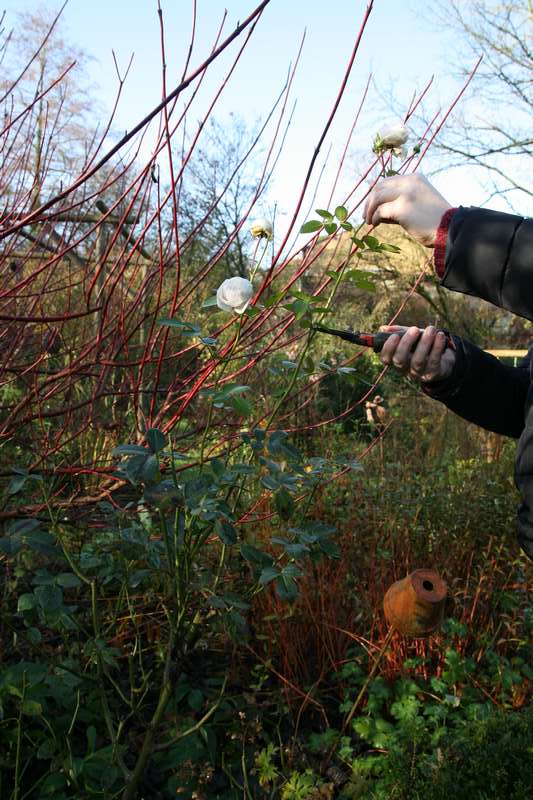
Cut 1/3 of all branches in autumn.
-
THOSE WHO PRACTISE CHRISTMAS PRUNING
These are the more tactical ones; they prefer to wait and enjoy the Christmas festivities before diving headfirst into their garden. This time, it is advisable to prune between Christmas and the end of January. As clever strategists, they plan to prune to 4 or 5 buds instead of 2 or 3, so that if a severe frost causes damage, they can cut back a bit more.
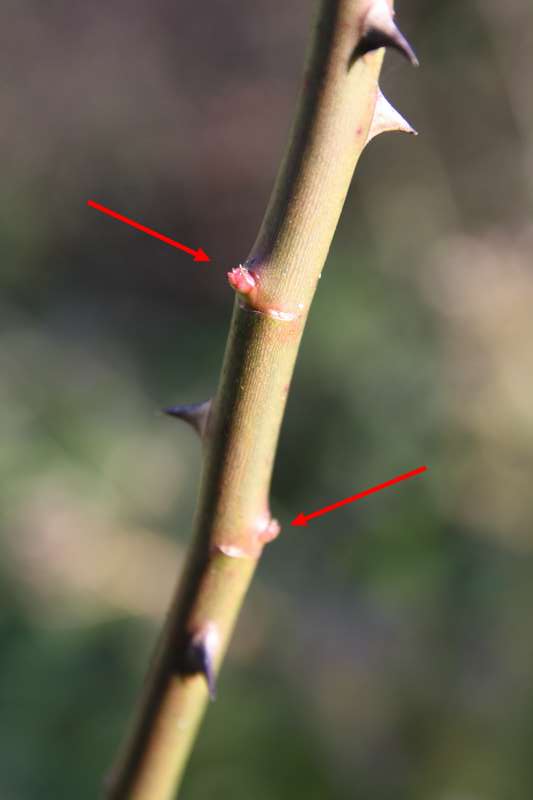
Count 4 or 5 buds and cut just above at an angle in winter.
-
IN BOTH CASES, HOW TO PROCEED?
Choose one of the two methods mentioned above, then take the opportunity to remove dead wood and broken branches damaged by the elements or friction, which are gateways to diseases. Cut as low as possible; this way, the rose is cleaner and more open.
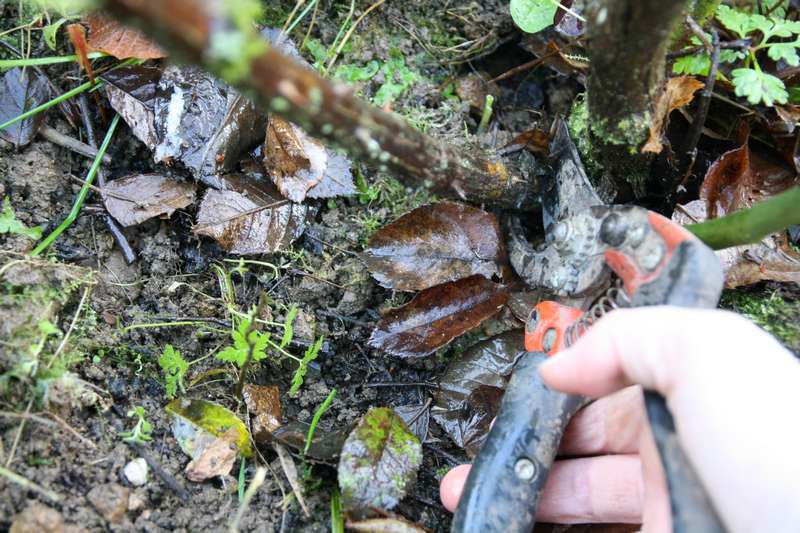
Cut dead branches as low as possible.
Don’t forget to collect fallen leaves as well, especially if they show black spots or powdery mildew.
Advantages:
- This helps prevent breakage in very windy or snowy gardens
- The spring pruning work is lightened
- Flowering is earlier
- There is less sap loss
Disadvantages:
- This approach should be avoided in very cold regions
Remember that cuts are always made a few millimetres above a bud. They are angled so that water does not pool on the cut (which encourages the onset of diseases) and slanted away from the bud, so that water does not run onto it.
Finally, in all cases, adjust the pruning period according to your climate!
-
THOSE WHO PRACTISE THE ART OF LETTING BE
Of course, you can also do nothing but do it well… It’s up to you!
-
THE CASE OF NON-REPEAT FLOWERING ROSES
This is the particular case of this old family of roses, namely the non-repeat flowering ones that are pruned just after their single flowering. For this, simply remove all the stems that have already bloomed, the old wood, and the dead wood. It couldn’t be simpler!
And you, which clan do you belong to?
For further reading, discover our advice sheet: pruning roses and Michael's video tips for pruning old roses as well as for pruning modern roses.

Comments