





























Oh dear... A topic on travelling plants. There are many that come to us from afar. How to choose?
I’ve got it! What if I told you about a tree that comes from the other side of the planet? A plant whose existence was even unknown until the end of the 20th century. A conifer so rare that the location of its discovery is still kept secret. Sit back comfortably, I’m going to tell you the fabulous story of the discovery of Wollemia nobilis or Wollemi Pine.
To live happily, let’s hide ourselves
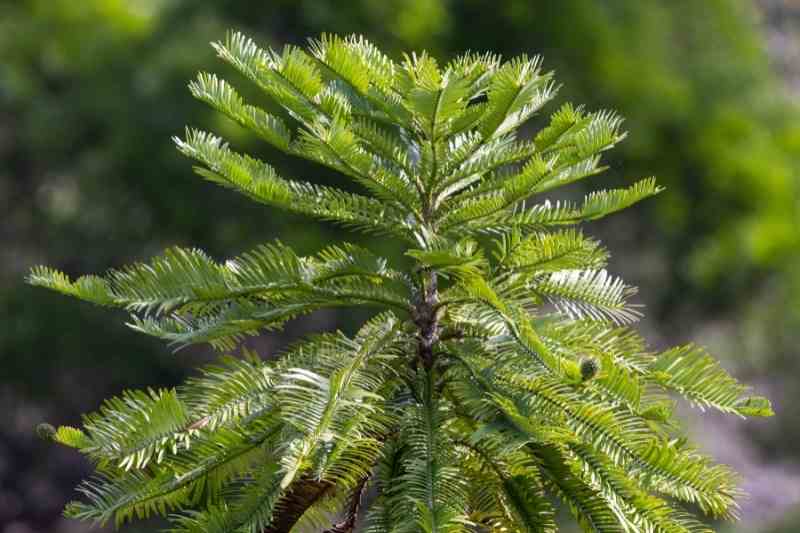
It all begins in 1994, when David Noble, an Australian park ranger, decides to take a stroll through Wollemi National Park, the second largest national park in New South Wales, Australia (200 km from Sydney). While wandering, David gets a bit lost and discovers a kind of canyon. This canyon, where "the hand of Man has never set foot", features a rather unique flora. So much so that a handful of trees catches his attention. A strange tree... with leaves vaguely resembling fern fronds and bark that reminds him of boiling chocolate.
Without hesitation, David Noble captures a young specimen to take to the botanists at the Royal Botanic Gardens in Sydney, hoping they might identify it. A hope that is soon dashed. They, somewhat off the mark (but who wouldn’t be faced with an unknown plant?), tell him it’s "probably a fern". They quickly change their tune when David Noble mentions trees over 40 metres tall.
It’s incredible! Is it a new species? Yes, undoubtedly. David Noble decides to organise an expedition to this secret valley. But he doesn’t go alone; he enlists the botanical expertise of Jan Allen and Wyn Jones from the Mount Tomah Botanic Gardens.
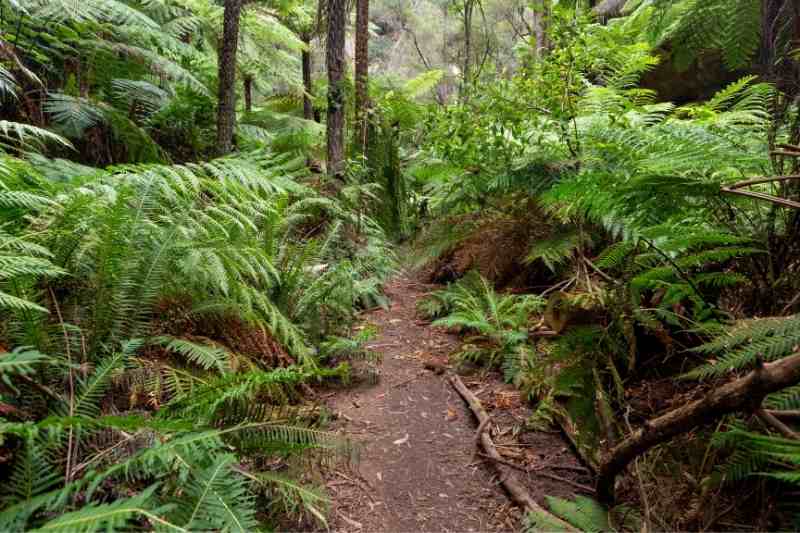
The expedition seems to be under the worst auspices. The weather is dreadful, and not only does David Noble struggle to find the lost canyon, but it takes all of pilot Bill’s skill to keep his "fan" in the air. Eventually, the helicopter lands safely, and its crew emerges unscathed in the midst of unknown trees.
The botanists are astonished. We are indeed facing an unrecorded species, hidden for millennia. A true living fossil. The botanists name the tree Wollemia nobilis: Wollemia for Wollemi Park and nobilis for the discoverer David Noble (by the way, there’s a small error in the terminology: the tree should be called Wollemia noblei to honour Noble; nobilis, however, means noble in Latin). For the record, the largest of the Wollemi Pines is named 'King Billy' in honour of the helicopter pilot who brought them safely through difficult weather conditions.
An astonishing tree that has yet to reveal all its secrets
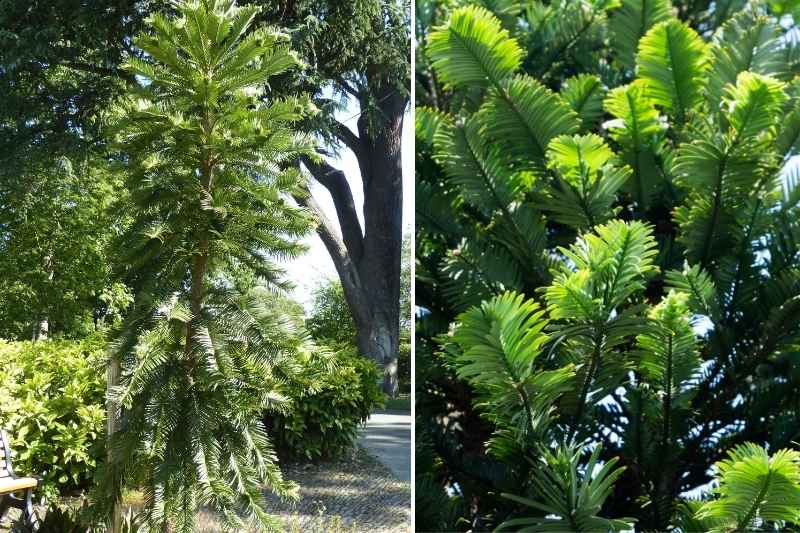
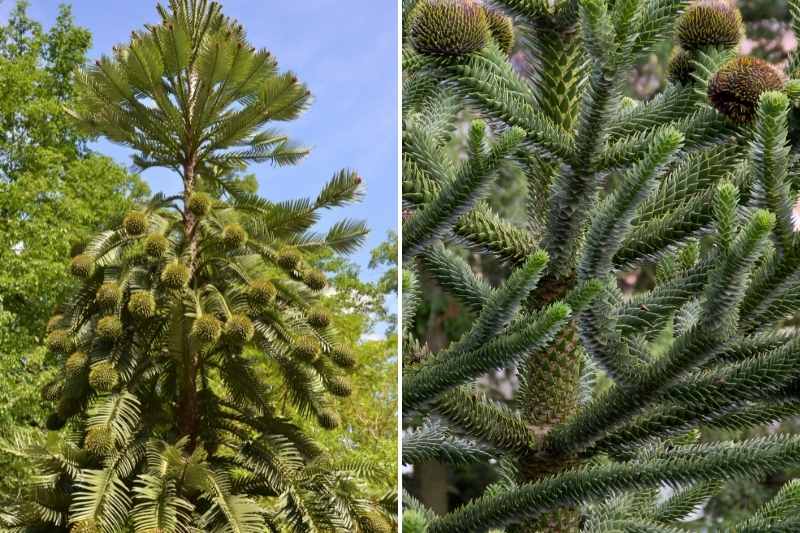
Since 1995, the Wollemi Pine has been the subject of intense research. Notably, DNA sequencing has determined a relationship with the botanical genera Agathis and Araucaria. The Wollemi Pine has thus been placed in the family Araucariaceae. Even though the oldest specimens seem to be over 1000 years old, botanists still lack the necessary perspective to fully understand Wollemia. Let’s not forget that it has only been studied and cultivated since the late 90s, just over twenty years. We know it can withstand frosts down to -12 °C and endure summers over 40 °C without flinching. But for the rest, it will take many years for Wollemia nobilis to reveal all its secrets.
A tree under close surveillance
The Australian authorities do not take Wollemia lightly. The precise location of the trees is still kept secret today: to prevent potential kidnappers of young trees (which happens more often than one might think for rare plants in the wild!), but also to avoid visitors bringing diseases, such as spores from a fungus, which could decimate the Wollemi Pines: Phytophthora cinnamomi. The bushfires of 2019-2020 also threatened the species. Fortunately, Australian firefighters managed to save them by creating a protective cordon around the site. Phew! More fear than harm. But the Wollemi Pines were in peril, if you’ll allow me the pun.
A rarity to adopt in the garden
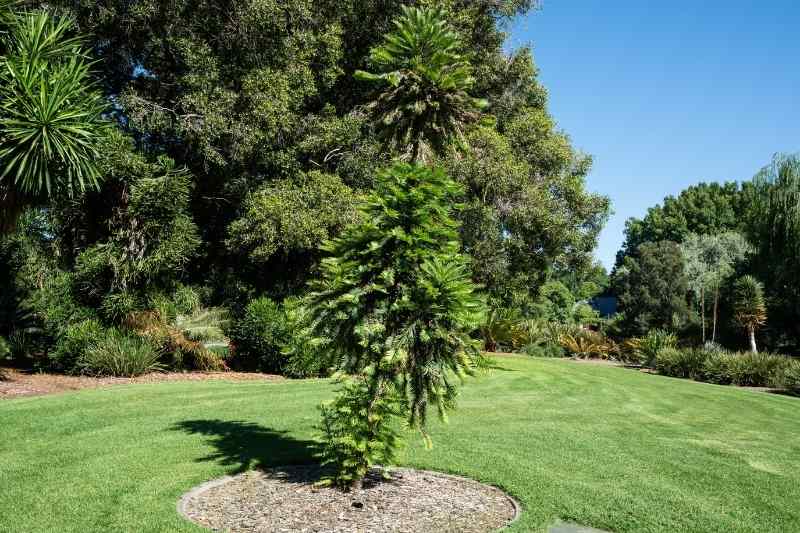
In 2006, in an effort to save the tree, it was propagated and sent to the world’s major botanical gardens for cultivation. You can admire it at the botanical garden in Paris, Monaco, Lille, Lyon… Twenty specimens have even been planted in the plant-themed park 'Terra Botanica'. But now, it is also possible to adopt one in your own garden. The Wollemi Pine requires a deep, humus-bearing, rather acidic soil that remains cool to moist. It demands a sheltered position from strong winds, sunny exposure, and a mild climate (hardiness -12 °C). In our gardens, the Wollemia can reach 20 m in height, but it can be pruned if necessary and even grown in a pot kept sheltered from frost. Due to its rarity, the Wollemi Pine is still quite expensive to purchase. However, you will take pride, in addition to adopting a living fossil dating back to the Jurassic, in preserving a species that was on the brink of extinction.

Comments