





























The unusual warmth we have been experiencing for the past few weeks has direct consequences on vegetation; while some plants are flowering earlier, others are still in bloom, as is currently the case with the Camellia sasanqua 'Yume'.
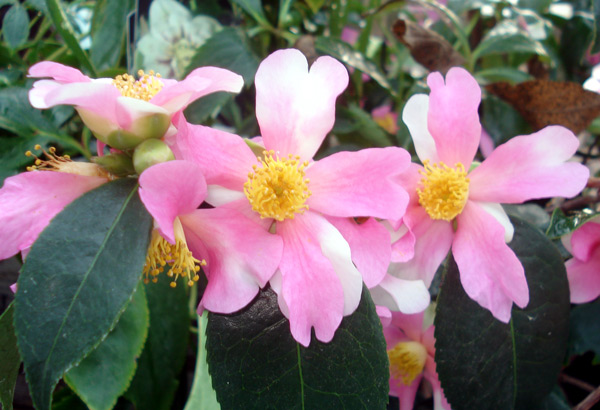
Camellia sasanqua Yume
For a shrub named autumn camellia, Camellia sasanqua 'Yume' can be quite surprising. Its flowering typically spans from October to December, but with this ongoing warmth, the flowers are holding on and blooming for an extra month.
This variety also rewards us with a pleasant fragrance, typical of Camellia sasanqua, and to enjoy the pun, what does the camellia smell like? The scent is a subtle blend of jasmine and lily, a true delight for the nose.
Camellias are fairly hardy evergreen shrubs. However, while they can withstand the cold, their flowers may sometimes abort, either due to lack of moisture or cold winds. To fully enjoy them in winter, here are some planting tips:
1- Exposure is not just important; it is crucial. The camellia is a woodland shrub, so it tolerates shade but copes less well with wind. It is essential to find a spot for it under large trees, at the edge of woodlands, or against a wall, sheltered from cold, drying winds.
2- The soil is also very important; it should be cool, meaning not drying out in summer but not waterlogged in winter. It must be rich in humus, slightly acidic or neutral, and fairly light; camellias do not like heavy soils, and no, camellias do not tolerate chalk!
If you are a fan of camellias and other ericaceous plants, there is a radical solution for growing these plants in chalky soil: dig a planting pit of at least 1m³ and replace the soil with a mix of potting soil, pumice, and heather soil. The shrubs can grow, and their roots will colonise the pit until they are strong enough to withstand the chalk. This method has proven effective in many gardens, particularly at Vasterival in Upper Normandy, a garden with chalky subsoil, renowned for its extensive collection of ericaceous shrubs.

Comments