





























Japanese maples are susceptible to a very common disease, verticilliosis. This disease is caused by a fungus, verticillium, which enters through the roots and blocks the sap channels. Deprived of sap, the tree declines, its branches dry out, and it dies. All Japanese maples are vulnerable to this fungus and there is currently no curative treatment available. How can you ensure healthy and thriving Japanese maples? We explain everything!
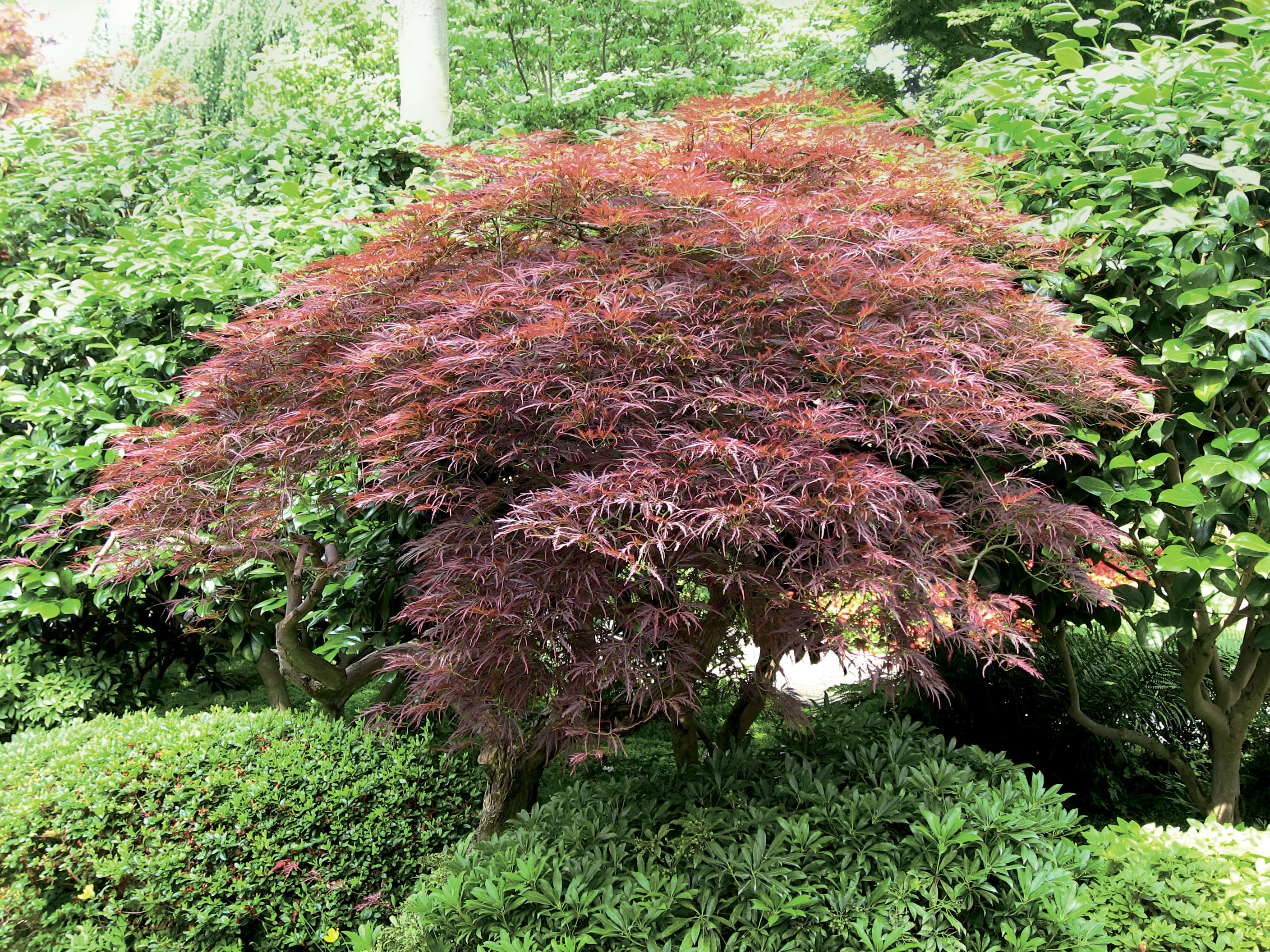
Acer palmatum 'Dissectum Garnet'
It all starts in the soil!
Verticillium thrives and develops in heavy, damp, and poorly draining soils, typically clay soils and those that collect rainwater. It is in this moist environment that the spores proliferate and the fungus extends its network. If you plant a young maple in this breeding ground, you can be sure its roots will be contaminated in just a few months.
Note: Verticillium is comparable in its mode of propagation and infection to phytophthora, another fungus that similarly parasitises many heather soil shrubs such as Rhododendrons, Kalmias, Daphnes... Just like verticillium, phytophthora spreads in heavy, damp soils.
Planting: a crucial step for the future
Before planting, ensure your soil is compatible with Japanese maple cultivation. Is your soil light, well-draining, and rich in humus? No problem, you can plant with confidence, but make sure the soil does not form a basin; prefer slightly elevated areas.
Is your soil heavy and clayey, yet you still want to plant a maple? First, choose an elevated or sloped location: a bank, a mound, a rock garden... to prevent rainwater from pooling at the base. Prepare a proper planting hole: dig a hole 50 to 80 cm deep and use a substrate made up of 1/3 topsoil, 1/3 pumice, and 1/3 leaf compost. Then plant the root ball of your maple at collar level and water!
Want to plant in a pot? Ensure the bottom of the pot has drainage holes, then place a 10 cm layer of clay balls at the bottom. Next, prepare a rich, well-draining substrate, made up of equal parts compost and pumice. Then plant your maple at collar level.
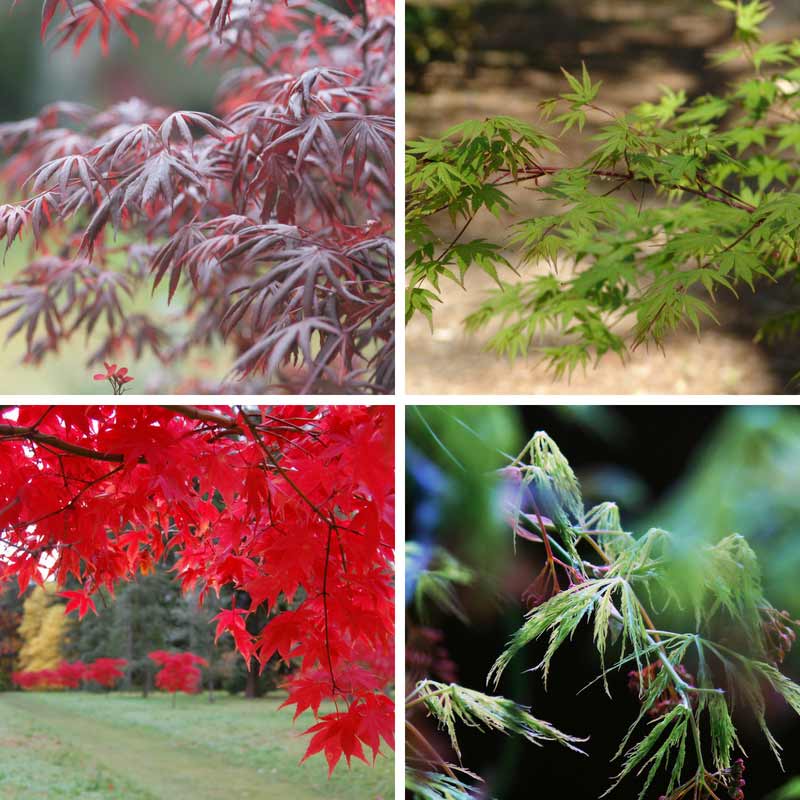
Acer palmatum Trompenburg (1 and 2), Acer palmatum Osakazuki, and Acer palmatum Dissectum
Water: not too much!
As you now know, verticillium develops in overly damp soil. Therefore, watering for young plants should be done sparingly and judiciously. In the ground, water at planting and then allow the soil to dry between waterings. It is in summer that the shrub requires water, not before or after. You can apply a mulch at the end of spring to keep the soil cool during summer and water once a week at most during hot spells. In pots, water once or twice a week during heatwaves, no more. Before watering, check the substrate; if your finger comes out wet, do not water and let the compost dry.
It is in summer, when the atmosphere dries out, that the foliage of maples suffers. And it is at this precise moment that one is tempted to water abundantly. Do not confuse lack of humidity in the air with lack of moisture in the soil. If the foliage dries and burns in summer, simply lightly water the foliage (in the evening or morning) and protect the shrub from the wind by planting some evergreens nearby.
Adult plants are more resilient but not immune
Even by following all these good planting guidelines, your shrub is not safe from a potential fungal attack. It is often after a few years of cultivation (generally 2-3 years but sometimes much longer) that the fungus reveals its presence.
How to spot it? In spring, when the shrub buds, one or more contaminated branches will develop erratically. Their buds will start to break later than the others and suddenly dry out, as if the shrub were lacking water. The branch will continue to dry out and then die, altering the silhouette of the shrub.
What to do? Nothing! Except to cut the dead branch in winter and then wait for regrowth. The shrub will thus fight against the fungus for several years and form new branches or regenerate the sapwood of its dead wood. Sometimes the fungus wins, especially if the growing conditions are poor. But often, the maple prevails and overcomes the fungus.
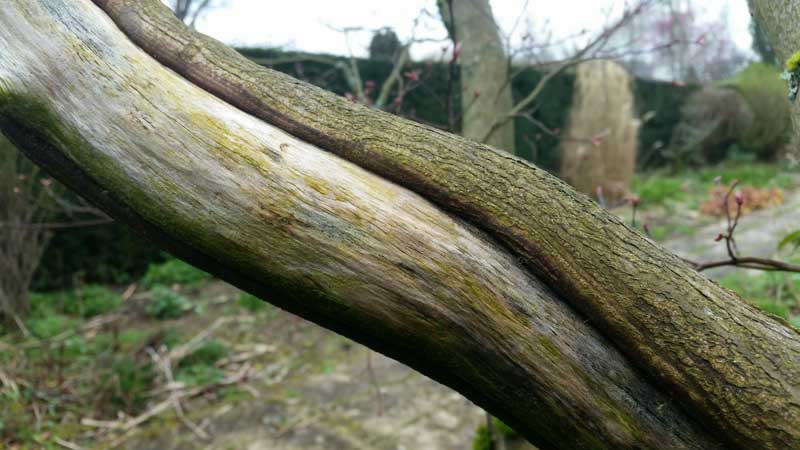 The sapwood of this adult branch is regenerating. In a few years, there will be no trace of the attack on this branch.
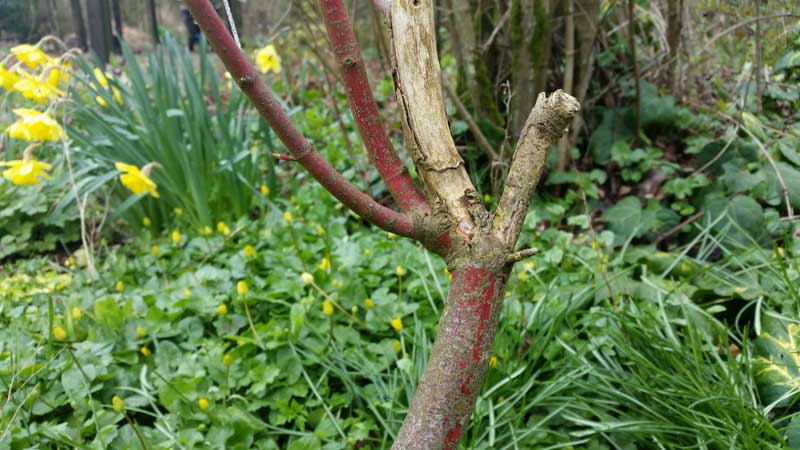 This young Orange Dream maple, planted in overly heavy soil, has been attacked on nearly all its branches. New branches have formed. It will be transplanted into lighter soil!
