





























Who has not noticed after several years of planting that the beneficial shade of the tree, once so small, became increasingly dense, while the nearby plants dwindled in favour of the tree in question?
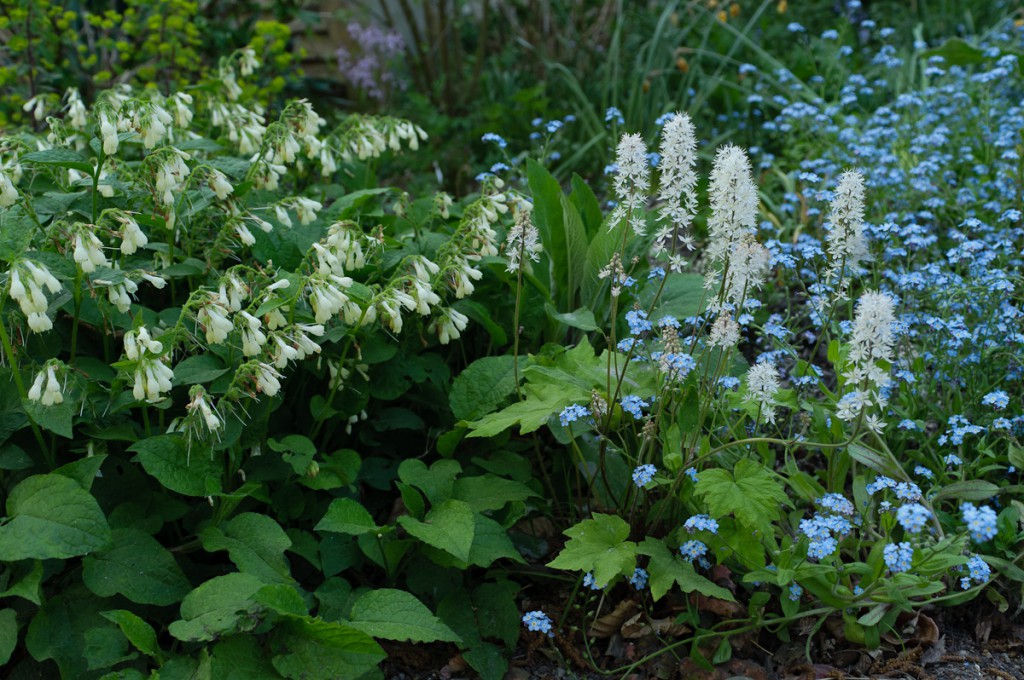
Tiarellas and large-flowered comfrey
While in winter, light and water penetrate at the base of trees, by early summer, the soil, colonised by roots, dries out and light only sporadically reaches it, a condition known as dry shade. Perennial plants have developed various strategies to thrive in these challenging conditions; Geranium macrorrhizum and large-flowered comfrey (Symphytum grandiflorum) anchor themselves in the soil with a few large roots, while their rhizomes spread out, exploring the surface and re-rooting whenever conditions are favourable. Acanthus mollis "vegetates" in summer and takes advantage of autumn and winter rains to flourish. The Podophyllum peltatum, on the other hand, boasts lush foliage in spring and enters dormancy in mid-summer when moisture becomes scarce.
In these challenging conditions, these plants will need water during the first year of planting to develop a robust root system. By the second year, they will require no further maintenance and will form beautiful carpets in the dry shade of trees.
