





























It's soon time for the first sowings in the vegetable garden. And in this year, rich in weather surprises, it is more than wise to protect them from the cold. Indeed, to harvest early peas, salads, carrots, and lovely radishes, you must not delay in sowing them. But, as you know, until the Ice Saints, frost can still bite, and cruelly! Here are all the solutions available to you to prevent the cold from annihilating all your hopes.
1) Growth or winter fleece
Fleeces come in different thicknesses. The heavier ones (60 g or even 90 g per m2) are mainly used in market gardening, in areas with very cold winters. For the amateur gardener, P17 (17 grams per m2), known as growth fleece, and P30, called winter fleece, are commonly found. The thermal protection varies, as you will have understood, depending on this weight. Their main action is to break the wind and attenuate the effects of heavy rain or hail. Being water-permeable and breathable, they help create a microclimate favourable to plant growth. However, they do not provide complete protection against frost, especially if it is severe. These fleeces are reusable, provided you choose good quality ones and take care of them!
The advantage of fleeces is their great ease of installation: simply cover the young sowings and hold them in place with, as you prefer, large stones, bags filled with sand, wooden boards…
2) Mini tunnels with forcing films or rigid ones
Alongside growth fleeces, there are forcing films. Made of plastic, varying in thickness, perforated or not, they help accelerate plant growth by creating not just a microclimate, but rather a greenhouse effect. They are generally placed on hoops to form small tunnels (known as “Nantes tunnels” or “caterpillars”). If you install them correctly, using proper metal market gardening hoops and string, you can easily lift the sides for ventilation and possible watering. As with fleeces, invest in quality films to use them for many years!
Another solution is to use rigid mini tunnels. They are well designed and some models even have a removable hatch on top for watering. Quick to set up, they are really practical… but a bit pricey.
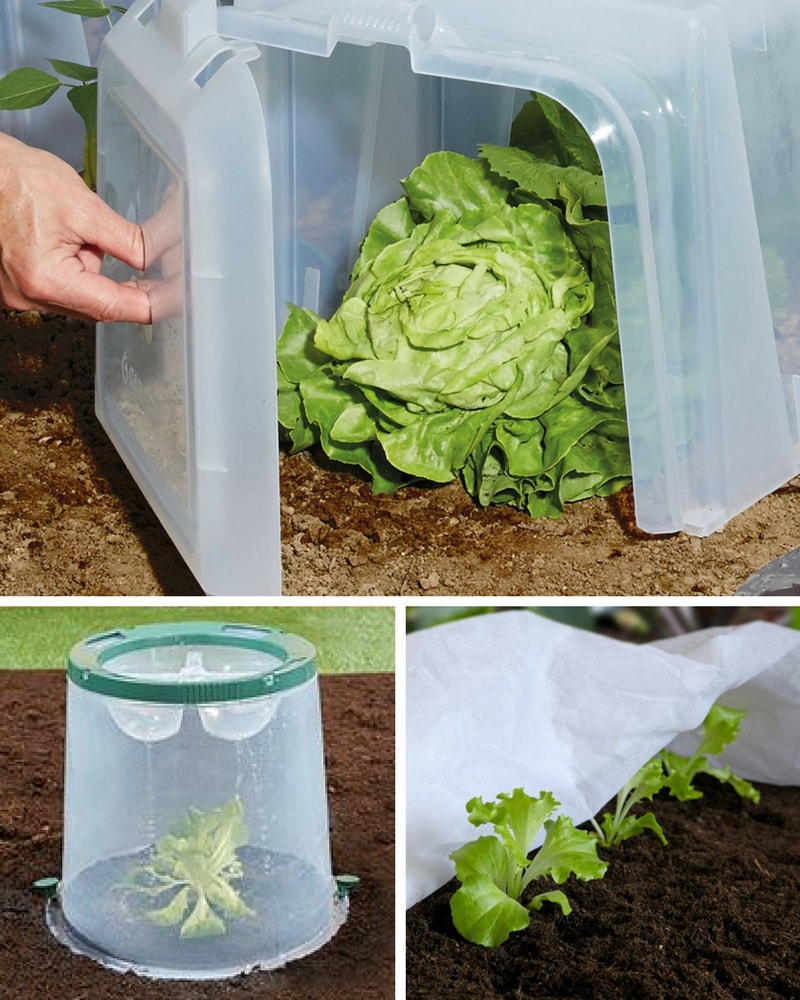
Different ways to protect your crops: rigid tunnel and bell (Photo: Garantia) and forcing fleece (Direct-Filet)
3) The cold frame
Generally made of a wooden box covered with a glass (or polycarbonate) pane, the cold frame is mainly intended for early sowings, which will be transplanted into the vegetable garden once spring is well established. However, nothing prevents you from growing your first radishes or salads in it. But be careful, as with tunnels, you will need to think about ventilating or even fully opening the frames on the first nice days!
4) Other types of protection: bells, mulching, and recycling!
The glass bells, so lovely, are now rare in vegetable gardens… and when found in stores, they are also very expensive. They have been replaced by plastic models which, for the best ones, have ventilation. They are quite suitable for protecting young plants, but not really for sowings. And as with frames, beware of overheating!
The protective effect of mulching is often underestimated. However, it exists, but it is more intended to shelter young plants rather than sowings. Dead leaves and straw spread in a thick layer often help prevent the effects of frost.
Finally, you can improvise many shelters with available materials: upturned crates, dressed or not with fleece and placed over the sowings at night, small tipis made of twigs… and if you use insect-proof fleeces in summer, know that they also provide good protection against wind in early spring! But, do not forget to remove them for vegetables whose flowers need to be pollinated to produce: no insects = no vegetables!

Comments