


Which of us has not encountered a wisteria with a trunk of ancient trees, its branches lifting the gate of an old garden or climbing the facade of an old house? You may have witnessed the grand spectacle of a specimen out of control, its vegetation racing from treetop to treetop atop tall trees, in what was undoubtedly once a garden. It seems as if this liana from the large family of legumes (Fabaceae) has been planted there for centuries. But that is not the case...
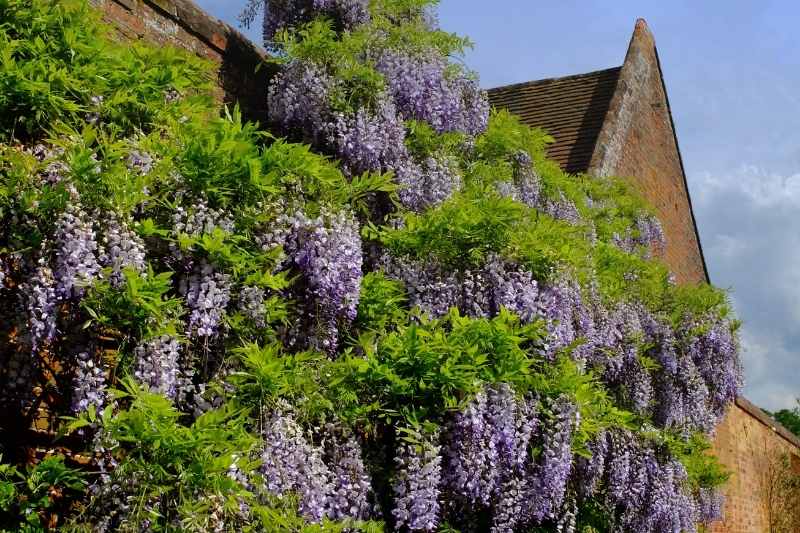
The queen of lianas
The first specimens of Chinese wisteria (Wisteria sinensis) were introduced to Europe in 1816 by a subject of Her Majesty, Captain Welbank. It is said that on a beautiful evening in May 1816, he was invited to dinner by a wealthy Chinese merchant from Canton. The dinner was served under a pergola covered with flowering wisterias, which the merchant referred to as “Zi Teng”, meaning “blue vine”. Dazzled, the captain asked his host for a few young plants. Shipped to Europe, the Chinese wisteria began a dazzling and brilliant career as a climbing plant. Indomitable and fragrant, wisteria was planted in both towns and countryside, in the parks of the finest estates as well as in the humblest country gardens.
While it is customary to say that clematis is the “Queen of Lianas”, wisteria undoubtedly deserves the title of Empress. Much less demanding and capricious, almost indestructible, Chinese wisteria withstands both cold and drought and knows neither pests nor diseases in our regions. According to one of our best specialists on this plant in France, “There is no soil too poor, no blazing sun, nor dry ground that can prevent it from flowering well!”.
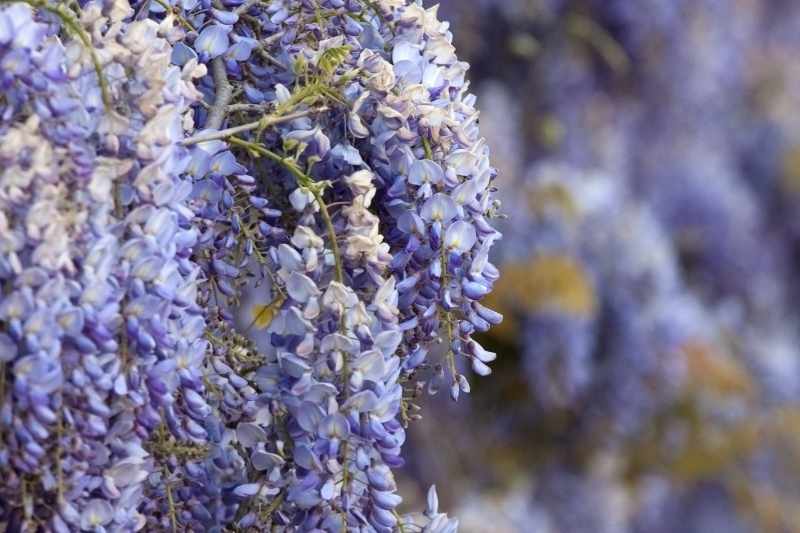
Native to the northeastern and southern provinces of China, particularly Sichuan, Wisteria sinensis can be found in forests at altitudes between 500 and 1,800 metres. This botanical species, along with its many varieties, possesses a vitality and adaptability that commands admiration. From the outset, it was artists and writers who became enthusiastic. In 1888, Van Gogh wrote, “Under these amethyst chandeliers, one could almost see Sarah Bernhardt dancing.” Claude Monet captured it on his canvases and planted it in abundance in his magnificent garden at Giverny. Edmond Rostand glorified it with the lyricism for which he is known. The writer Colette, unmatched in her ability to perceive and describe all living creatures, speaks of “mauve lake”, “reptilian spirit”, or even “flourishing and uncontrollable despot”. “I learned, by watching it, what its deadly power is, that a convincing beauty serves,” she says. And all is said: stems like boa constrictors and a fairy-like spring flowering, in a fragrant rain of incredible delicacy.
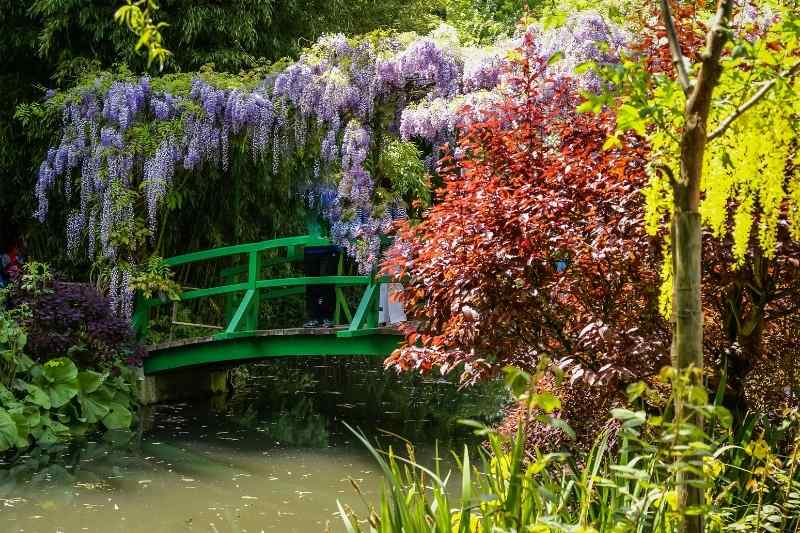
Wisteria in our gardens
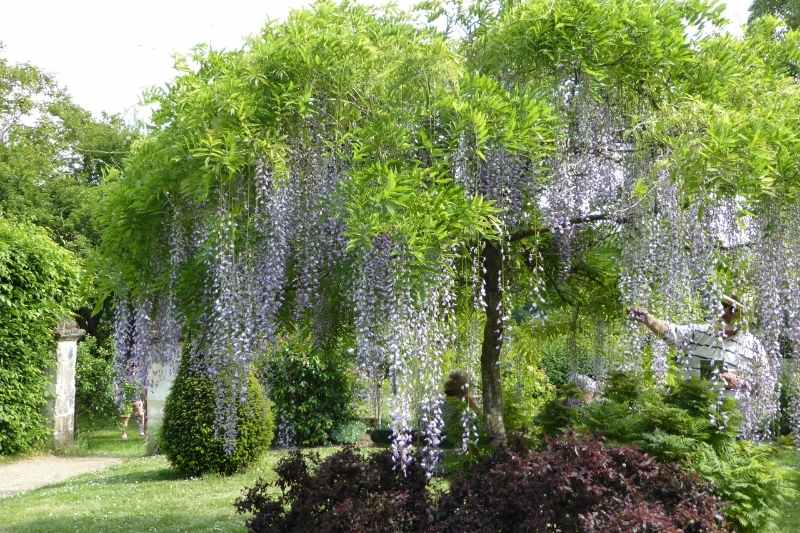
To accompany the Chinese wisteria, if you have space, consider, for example, the Virginia creeper Parthenocissus quinquefolia, equally robust, beautifully coloured scarlet in autumn. Or the hedgerow clematis, Clematis vitalba, covered in a creamy white cloud in summer. If space is limited, all hope of welcoming this wonder is not lost: shape your wisteria into a small tree through methodical pruning.
Did you know?
Botanists named wisterias Wisteria, after a professor of anatomy from Philadelphia, Caspar Wistar.
All climbing plants native to the Northern Hemisphere twist or curl counterclockwise, unlike those from the Southern Hemisphere. This phenomenon is induced by the rotation of the Earth. Why does Japanese wisteria, unlike Chinese wisteria, curl clockwise even though Japan is in the Northern Hemisphere? Because millions of years ago, Japan was located in the Southern Hemisphere. This piece of land slowly drifted north until it reached its current latitude.

Comments