Tah Tsai Rosette pak choi - Brassica rapa var. rosularis
Tah Tsai Rosette pak choi - Brassica rapa var. rosularis
Brassica rapa var. rosularis Tah Tsai
Rosette pak choi, tatsoi
Back-to-school special offer!
Get €10 off for every €50 you spend! And get up to €40 off on a single order.
How does it work?
1. Shop your favourites
Add your favourite plants to your basket. For every €50 you spend (excluding delivery charges, store credit and the plastic-free option), you’ll receive a €10 voucher.
€50 spent = €10 voucher
€100 spent = €20 voucher
€150 spent = €30 voucher
€200 spent = €40 voucher
2. Place your order
Once your basket reaches one of the spending thresholds, place your order. You can even choose your delivery date!
3. Receive your voucher
As soon as your order has been shipped, you’ll receive an email containing your personal voucher code and its value.
4. Use it on your next order
Your voucher is valid for 90 days from the date you receive it. It can be used once only, on a new order worth at least the value of the voucher, excluding delivery charges.
Please note: Vouchers can be combined with other offers, but cannot be split or refunded.
Home or relay delivery (depending on size and destination)
Important: You may be charged customs duties by your country’s customs authorities upon delivery.
Schedule delivery date,
and select date in basket
This plant carries a 6 months recovery warranty
More information
We guarantee the quality of our plants for a full growing cycle, and will replace at our expense any plant that fails to recover under normal climatic and planting conditions.
Description
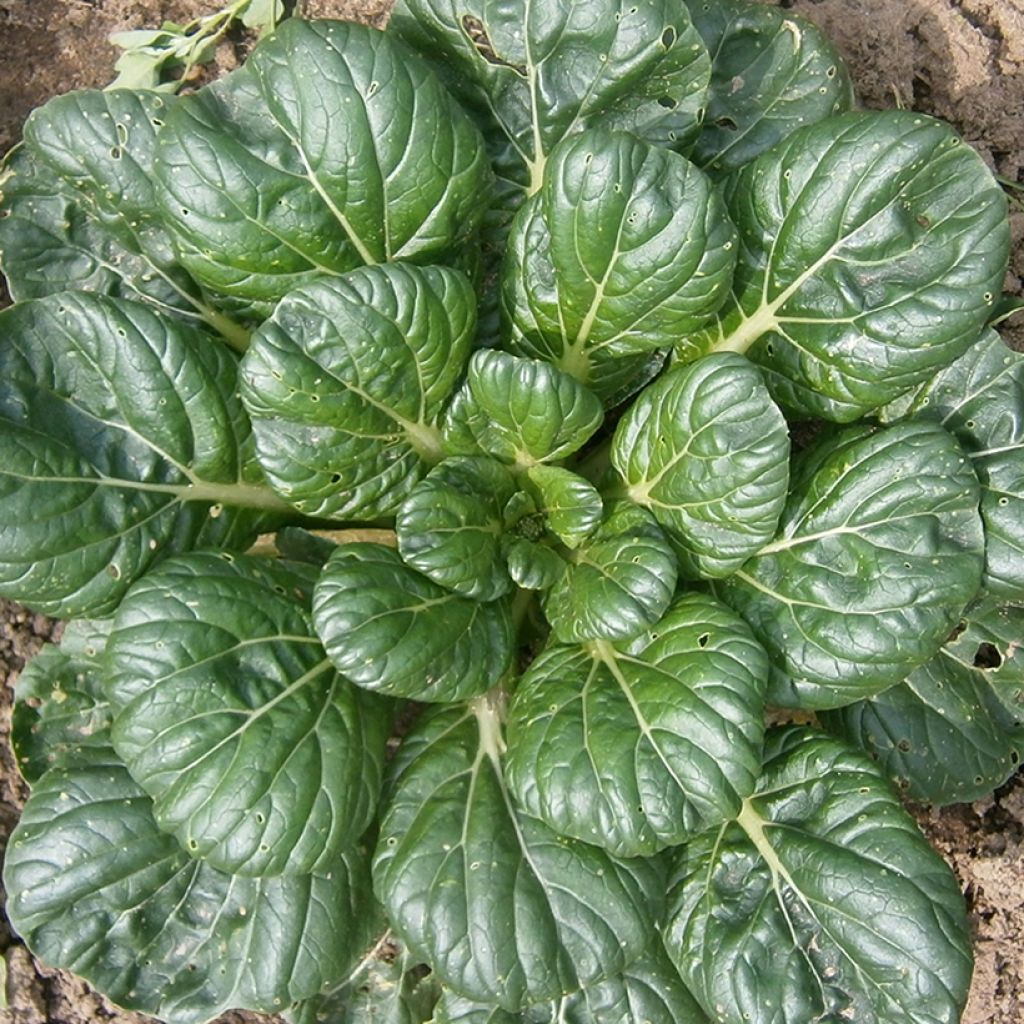
The Tatsoi (Tah Tsai) Chinese cabbage is a Asian cabbage for full winter, prized for its tight rosettes of dark green leaves, very tender and crunchy. Compact and fast-growing, it easily fills vegetable beds when most summer vegetables have disappeared. Easy to grow, this Chinese cabbage is suitable for all amateur gardeners who enjoy tasty greens for autumn and winter dishes. Its mild, slightly peppery flavour makes it an excellent leaf vegetable for mixed salads, stir-fries and Asian soups.
Botanically, Tatsoi belongs to the species Brassica rapa, in the Brassicaceae family, the large family of cabbages, turnips, rapeseed and mustards. This species, known by names such as cultivated turnip, field cabbage or Chinese cabbage depending on the form, is native to a wide Eurasian zone.
It is a biennial plant grown as an annual for its foliage: it forms its rosette in the first year, then, if left in place, it bolts and flowers the following spring. Tatsoi is an ancient variety, cultivated for centuries in East Asia, likely in China as early as the 6th century, before spreading to Korea and then Japan. It is a traditional, more or less stable type, now available in a few selections such as the 'Spoon' or 'Green Coin' forms.
The plant develops a very low rosette, often flat against the ground, which naturally protects the heart from cold and wind. A well-grown rosette reaches 15 to 20 cm in height and 25 to 30 cm in diameter. The leaves, numerous, thick and glossy, are spoon-shaped, more or less blistered, of an intense dark green with prominent veins. Measuring 10 to 15 cm long, they are borne on a short petiole, white to pale green, somewhat fleshy. Young leaves can be harvested from 30 days after sowing, and the entire rosette between 40 and 50 days. Tatsoi self-seeds easily if plants are left to flower and set seed. In the second year or at the end of the crop, an upright flower stalk develops from the centre of the rosette. It bears clusters of small yellow flowers typical of crucifers, with four cross-shaped petals, about 1 to 1.5 cm in diameter, very popular with insects. It is a hardy vegetable: well-established foliage can withstand temperatures down to –7 °C, or even lower under a cloche or a light blanket of snow. In some regions of China and Japan, the rosette was traditionally harvested from under the snow.
In the kitchen, this cabbage can be eaten both raw and cooked: in salads, quickly stir-fried, in soups or gratins.
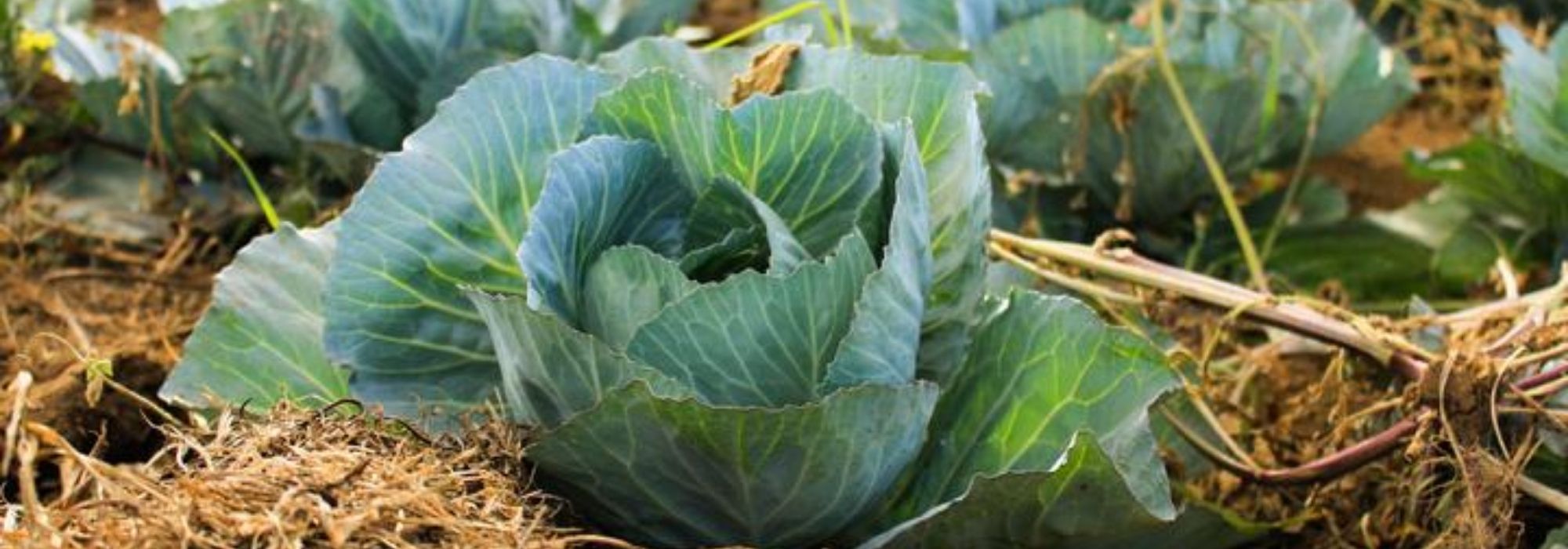
In the vegetable garden, growing Rosette Cabbage is a little more delicate than classic cabbages, as it requires more warmth, but it shares the same requirements: deep soil, excellent manure and regular moisture. It is planted in full sun. Not very hardy, Chinese Cabbages are vegetables for late summer and early winter only.
Harvest: The leaves of rosette cabbage are harvested as needed.
Storage: They keep in the refrigerator for a few days.
The Gardener's Tip: To limit watering, we advise you, once the young plants are well established, to mulch the soil with thin successive layers of grass clippings, if possible mixed with dead leaves. This protection, which helps the soil retain moisture, also reduces weeding.
In the garden, Tatsoi is a versatile small leaf cabbage. It finds a place in a family vegetable plot, a kitchen garden, a square-foot garden, an urban garden or balcony, or a market garden micro-farm. It is planted at the edge of beds, between taller crops, or as a filler after summer harvests. It grows very well under cloches, cold frames or fleece, but also in large pots and containers on a terrace. It can be combined with other autumn and winter salads to create colourful mesclun mixes: for example with Oak Leaf Lettuce 'Eluarde', with its red-bronze leaves, Mizuna early and a Chinese cabbage Pé-tsaï such as ‘Granaat’.
Harvest
Plant habit
Foliage
Botanical data
Brassica
rapa var. rosularis
Tah Tsai
Brassicaceae
Rosette pak choi, tatsoi
Cultivar or hybrid, East Asia
Biennial
Planting and care
Sowing:
The germination temperature for Chinese Cabbage Tatsoi (Tah Tsai) is around 20°C and takes approximately 14 days.
Sow from March to September, adjusting slightly according to the region and cultivation method. In spring (March-April under cover, April-May in open ground), sowings yield harvests in late spring and early summer. In summer (June-July), it is better to reserve sowings for regions with a cool climate or a partially shaded exposure, to avoid too rapid bolting.
The most favourable period remains late summer and early autumn: sowings carried out from August to September allow for autumn and then winter harvests, under fleece or a tunnel in cold regions. In a mild climate, one can even attempt sowings until October.
You can proceed by direct sowing in situ or prepare young plants which will later be installed in the garden in their final position.
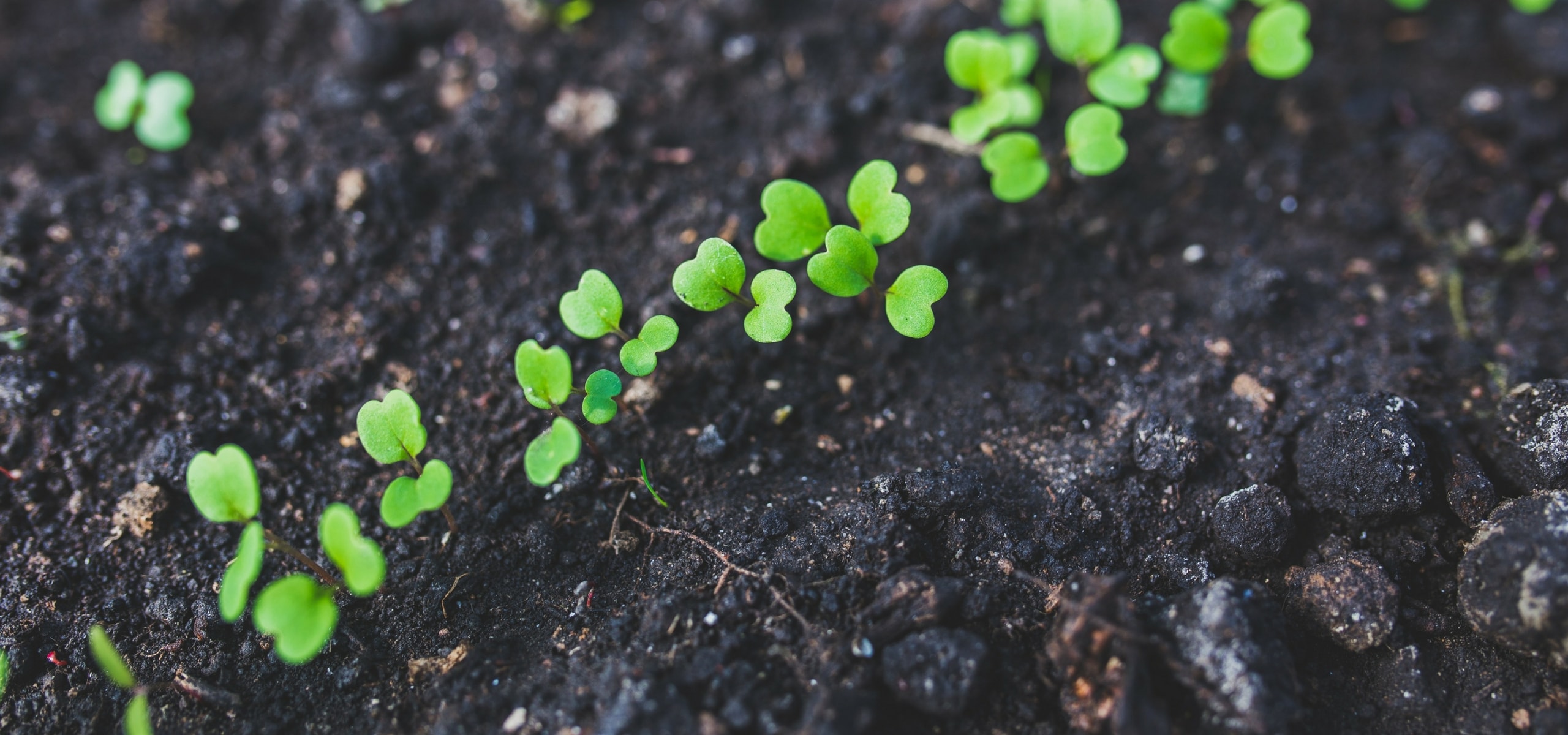
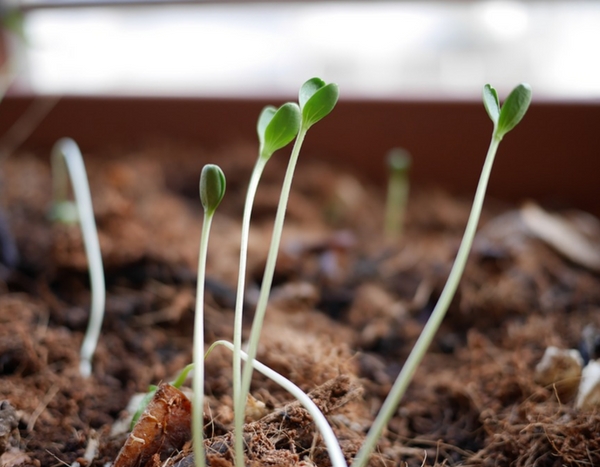
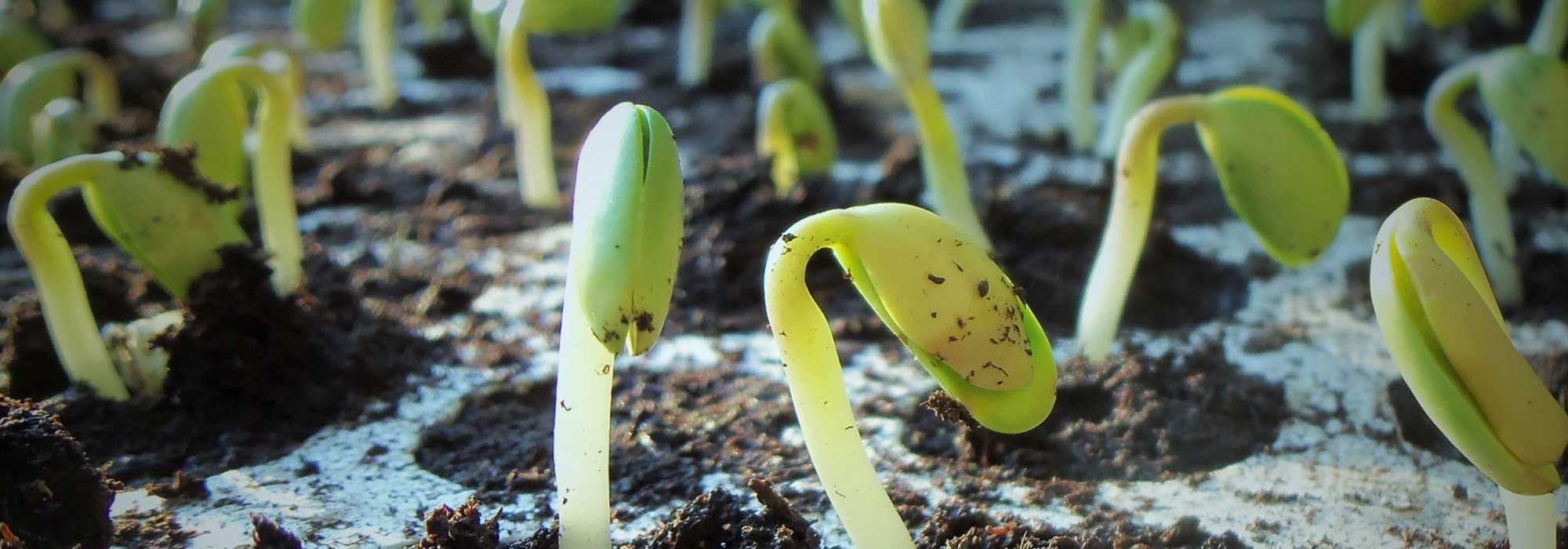
Preparation of young plants: Under cover or in a nursery bed in the garden for the rest of the year (following the recommended sowing period), sow the seeds at a depth of 1 to 2 cm in good sowing compost or very fine soil. Cover lightly with compost and remember to keep the substrate moist but not waterlogged.
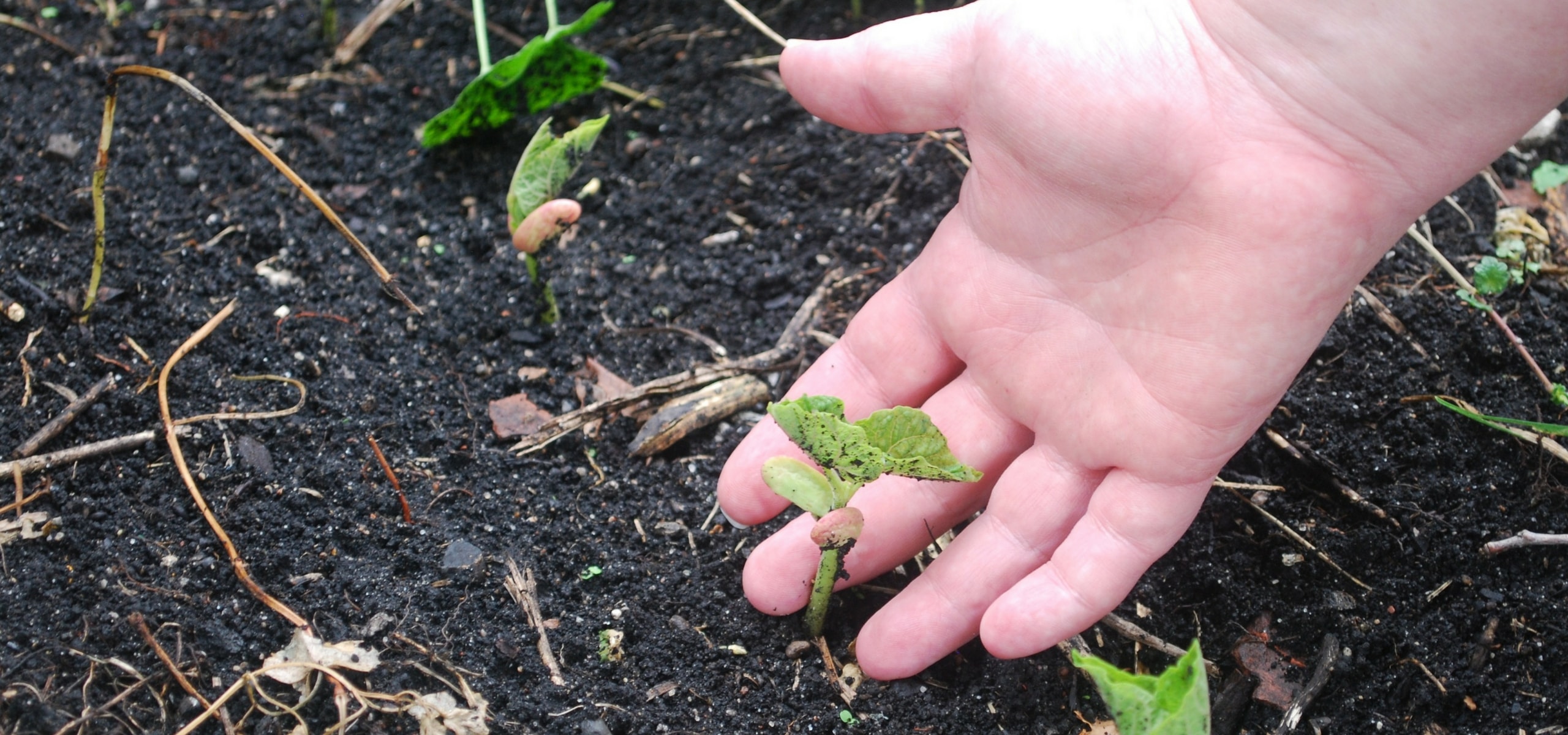
When the young plants appear strong enough to be handled, prick them out into pots if necessary before transplanting them to the garden, when no more frost is to be feared. During planting, respect the recommended spacings for direct sowing.
Direct sowing: In properly amended and finely worked soil, draw furrows one or two centimetres deep, spaced 40 centimetres apart. Sow the seeds and cover them with a thin layer of fine soil. When the seedlings are well developed, proceed to thinning, keeping only one young plant every 40 cm or so.
Cultivation:
Chinese Cabbage is cultivated in full sun. It is a greedy vegetable, requiring well-manured soil, rich in nitrogen and potash. It is advisable to make, preferably in autumn, a generous application of mature compost (about 3/4 kg per m2), by raking it in to a depth of 5 cm, after having, as for any vegetable crop, thoroughly loosened the soil. It is not very tolerant regarding soil pH, which should be between 5.6 and 6.5. In acidic soil, care must be taken to gradually raise this pH by making calcium applications in the form of Dolomite or Lime.
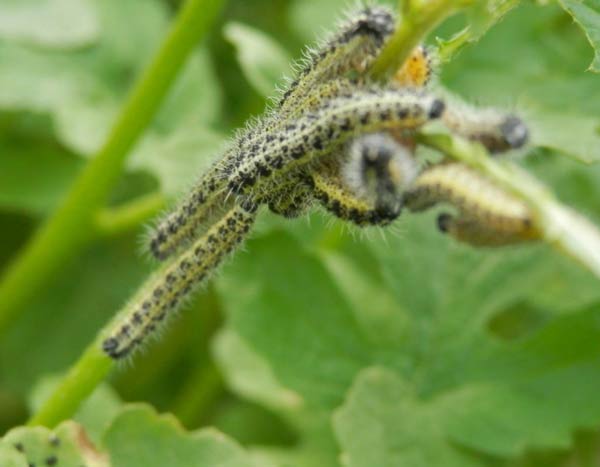
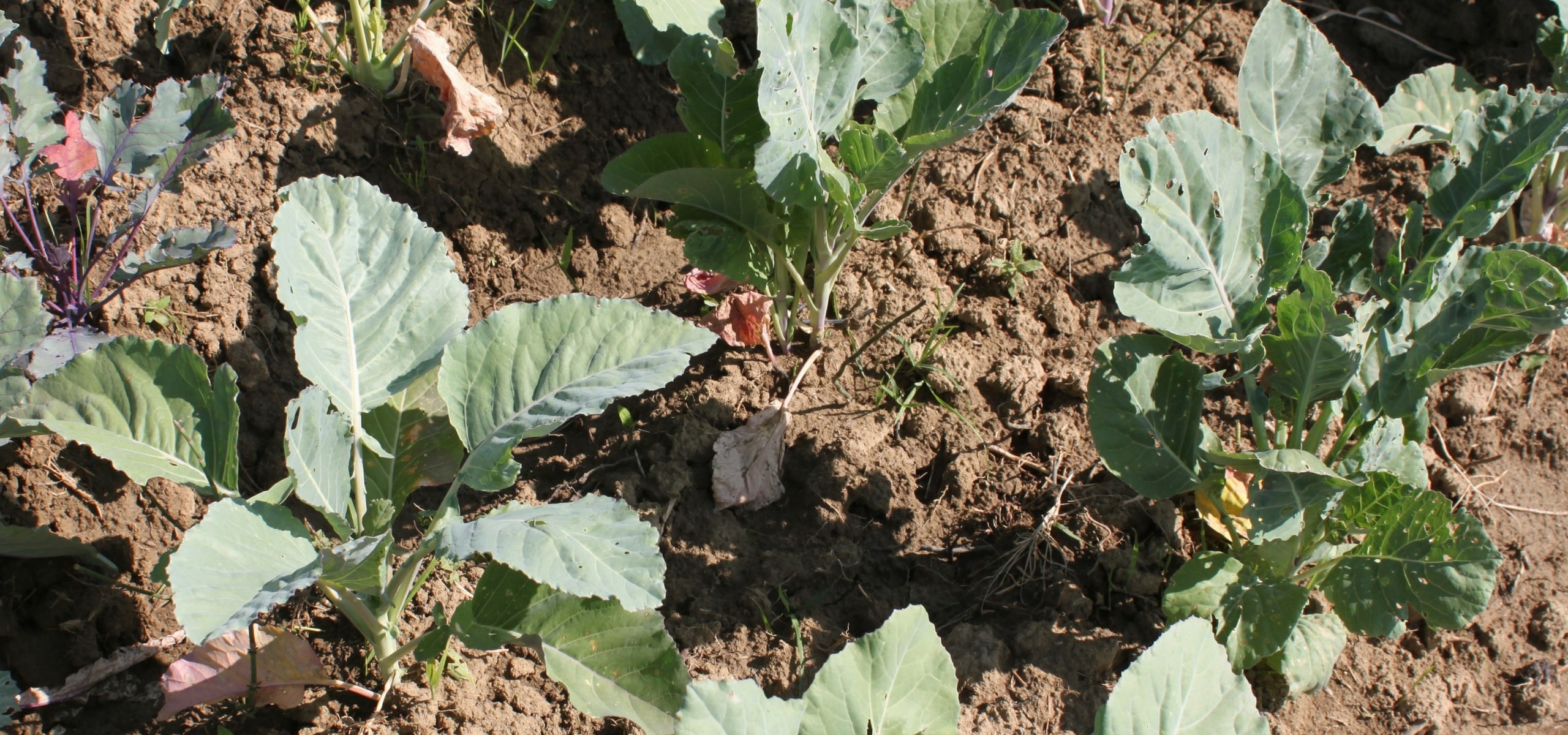
Beware of pests such as the Cabbage White butterfly or Flea Beetles and plan to install an insect-proof mesh.
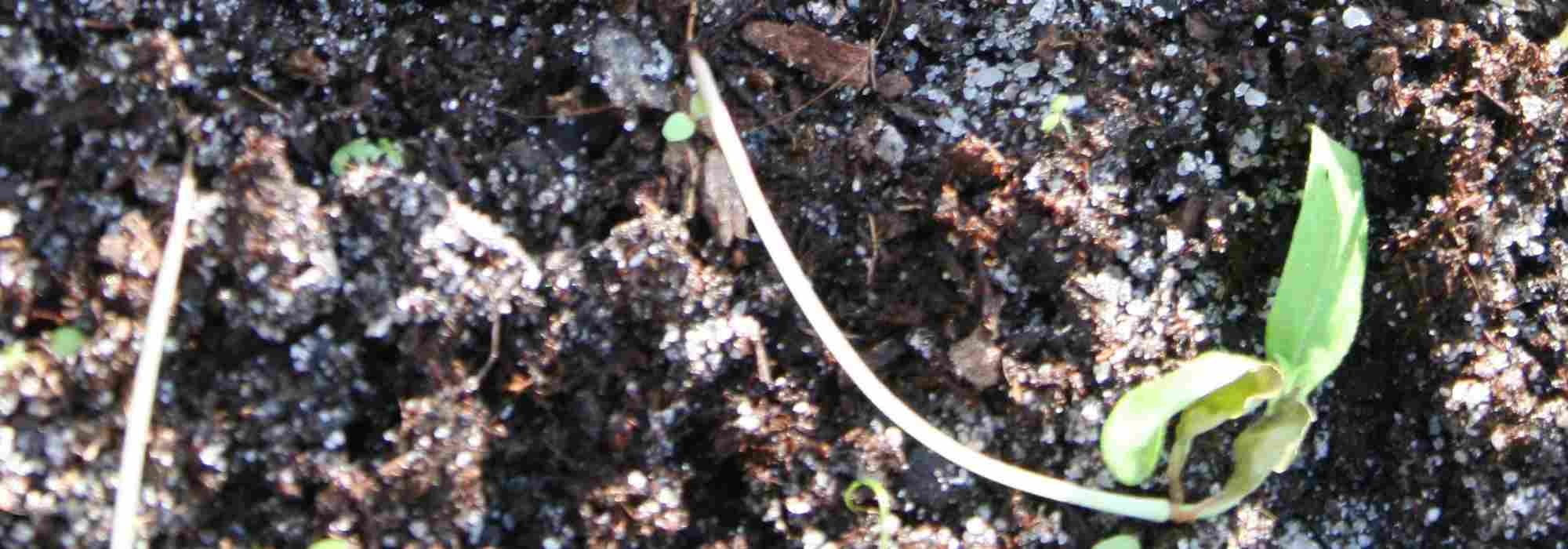
Seedlings
Care
Intended location
Planting & care advice
-
-
-
-
-
-
-
-
This item has not been reviewed yet - be the first to leave a review about it.
Recently viewed products
Haven't found what you were looking for?
Hardiness is the lowest winter temperature a plant can endure without suffering serious damage or even dying. However, hardiness is affected by location (a sheltered area, such as a patio), protection (winter cover) and soil type (hardiness is improved by well-drained soil).

The flowering period indicated on our website applies to countries and regions located in USDA zone 8 (France, the United Kingdom, Ireland, the Netherlands, etc.)
It will vary according to where you live:- In zones 9 to 10 (Italy, Spain, Greece, etc.), flowering will occur about 2 to 4 weeks earlier.
- In zones 6 to 7 (Germany, Poland, Slovenia, and lower mountainous regions), flowering will be delayed by 2 to 3 weeks.
- In zone 5 (Central Europe, Scandinavia), blooming will be delayed by 3 to 5 weeks.
In temperate climates, pruning of spring-flowering shrubs (forsythia, spireas, etc.) should be done just after flowering.
Pruning of summer-flowering shrubs (Indian Lilac, Perovskia, etc.) can be done in winter or spring.
In cold regions as well as with frost-sensitive plants, avoid pruning too early when severe frosts may still occur.
The planting period indicated on our website applies to countries and regions located in USDA zone 8 (France, United Kingdom, Ireland, Netherlands).
It will vary according to where you live:
- In Mediterranean zones (Marseille, Madrid, Milan, etc.), autumn and winter are the best planting periods.
- In continental zones (Strasbourg, Munich, Vienna, etc.), delay planting by 2 to 3 weeks in spring and bring it forward by 2 to 4 weeks in autumn.
- In mountainous regions (the Alps, Pyrenees, Carpathians, etc.), it is best to plant in late spring (May-June) or late summer (August-September).
The harvesting period indicated on our website applies to countries and regions in USDA zone 8 (France, England, Ireland, the Netherlands).
In colder areas (Scandinavia, Poland, Austria...) fruit and vegetable harvests are likely to be delayed by 3-4 weeks.
In warmer areas (Italy, Spain, Greece, etc.), harvesting will probably take place earlier, depending on weather conditions.
The sowing periods indicated on our website apply to countries and regions within USDA Zone 8 (France, UK, Ireland, Netherlands).
In colder areas (Scandinavia, Poland, Austria...), delay any outdoor sowing by 3-4 weeks, or sow under glass.
In warmer climes (Italy, Spain, Greece, etc.), bring outdoor sowing forward by a few weeks.
Shipping country and language
Your country of residence may be:
Your country of residence is:
For a better user experience on our website, you can select:
Your shipping country:
-
 Austria
-
 Belgium
-
 Bosnia & Herzegovina
-
 Bulgaria
-
 Croatia
-
 Cyprus
-
 Czechia
-
 Denmark
-
 Estonia
-
 Finland
-
 France
-
 Germany
-
 Greece
-
 Hungary
-
 Iceland
-
 Ireland
-
 Italy
Italy
-
 Latvia
-
 Liechtenstein
-
 Lithuania
-
 Luxembourg
-
 Malta
Malta
-
 Netherlands
-
 Poland
-
 Portugal
-
 Romania
-
 Serbia
-
 Slovakia
-
 Slovenia
-
 Spain
Spain
-
 Sweden
-
 Switzerland
Language:
-
French
-
 English
-
Spanish
-
Italian
-
German
-
Portuguese
-
Dutch
-
Finnish
My Account
Hello
My wish lists
My cart
Log in / Register
Existing customer?
This form is protected by reCAPTCHA - the Google Privacy Policy and Terms of Service apply.
New customer?
Create an account to track your orders, access our customer service and, if you wish, make the most of our upcoming offers.