Celery Roem van Zwijndrecht organic seeds - Apium graveolens
Celery Roem van Zwijndrecht organic seeds - Apium graveolens
Apium graveolens var. rapaceum Roem van Zwijndrecht
Celery
Back-to-school special offer!
Get €10 off for every €50 you spend! And get up to €40 off on a single order.
How does it work?
1. Shop your favourites
Add your favourite plants to your basket. For every €50 you spend (excluding delivery charges, store credit and the plastic-free option), you’ll receive a €10 voucher.
€50 spent = €10 voucher
€100 spent = €20 voucher
€150 spent = €30 voucher
€200 spent = €40 voucher
2. Place your order
Once your basket reaches one of the spending thresholds, place your order. You can even choose your delivery date!
3. Receive your voucher
As soon as your order has been shipped, you’ll receive an email containing your personal voucher code and its value.
4. Use it on your next order
Your voucher is valid for 90 days from the date you receive it. It can be used once only, on a new order worth at least the value of the voucher, excluding delivery charges.
Please note: Vouchers can be combined with other offers, but cannot be split or refunded.
Home or relay delivery (depending on size and destination)
Important: You may be charged customs duties by your country’s customs authorities upon delivery.
Schedule delivery date
and select date in basket
This plant carries a 6 months recovery warranty
More information
We guarantee the quality of our plants for a full growing cycle, and will replace at our expense any plant that fails to recover under normal climatic and planting conditions.
Description
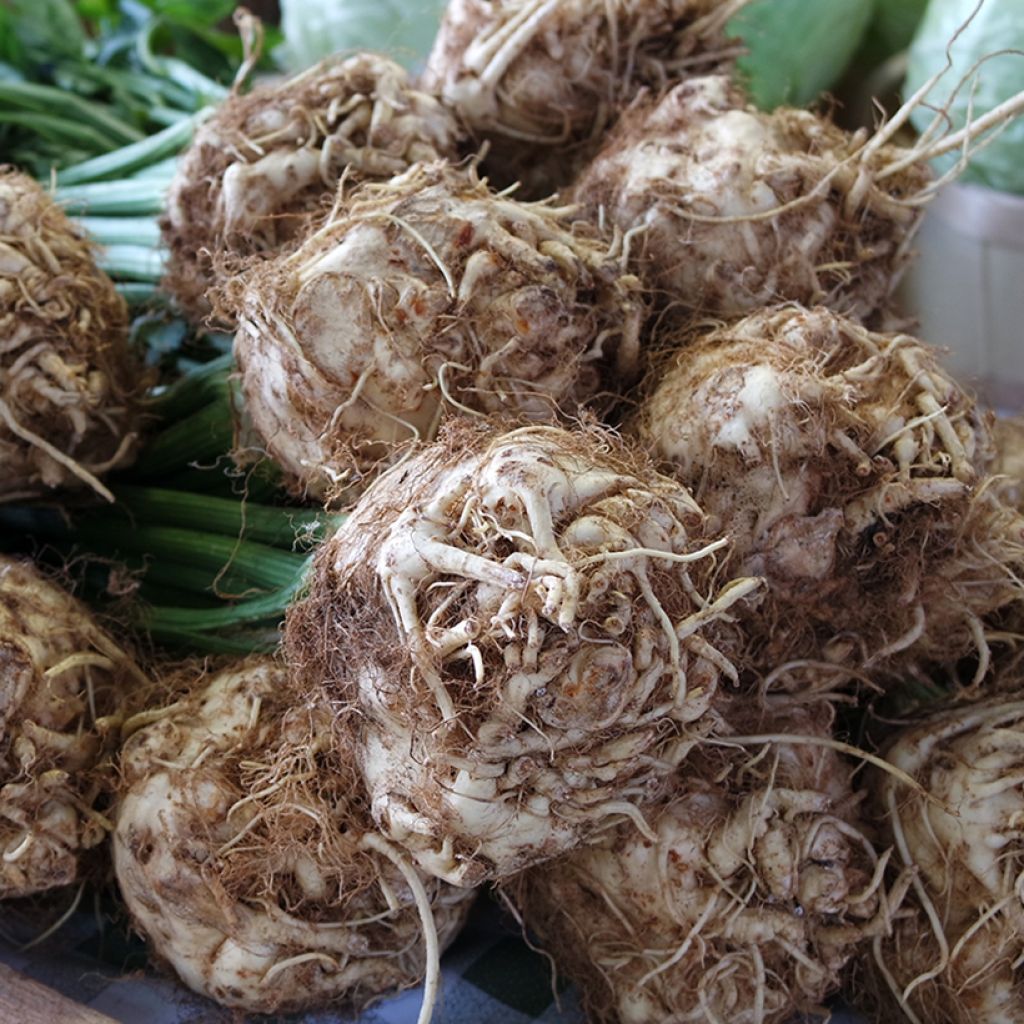
'Roem van Zwijndrecht' is a traditional celeriac, widely cultivated in the Netherlands, prized for its small, regular bulbs and its pronounced aroma. This variety, available here as organic seeds, produces more modest roots than giant types like the 'Giant of Prague', but with a fine, concentrated flavour, very well-suited to everyday cooking. The plant forms a leafy clump, which can be planted in the kitchen garden or in a raised bed. Its primary use remains the production of roots with white, firm flesh, ideal for winter soups, purées, and rémoulades.
Celeriac belongs to the Apiaceae family. The botanical species is Apium graveolens, whose main common names are celery, celeriac, turnip-rooted celery, knob celery, or even pot-bellied celery. It is a salt-loving plant of marshes and salty shores, found on the coasts of Europe, North Africa, and as far as Western Asia, which, through selection, gave rise to the vegetable forms of celery, leaf celery, and celeriac.
Celeriac is a biennial plant: in the first year, it forms a rosette of leaves and the tuberised root; in the second year, if not harvested, the stem elongates and bears umbels of small greenish-white, nectar-rich flowers, pollinated by insects, followed by small dry fruits (seeds) that separate into two achenes.
'Roem van Zwijndrecht' (Dutch commercial synonym Zwijndrechtsche, sometimes translated into English as 'Glory of Zwijndrecht') is classified as a heritage variety in the Netherlands. It is listed in old root vegetable catalogues before 1943 and is still distributed by several organic seed companies. It is a non-hybrid variety, with reproducible seeds, provided there is isolation from other celery types. This cultivar is distinguished by its particularly leafy habit, its good resistance to running to seed, and the rarity of 'hollow hearts' in the roots.
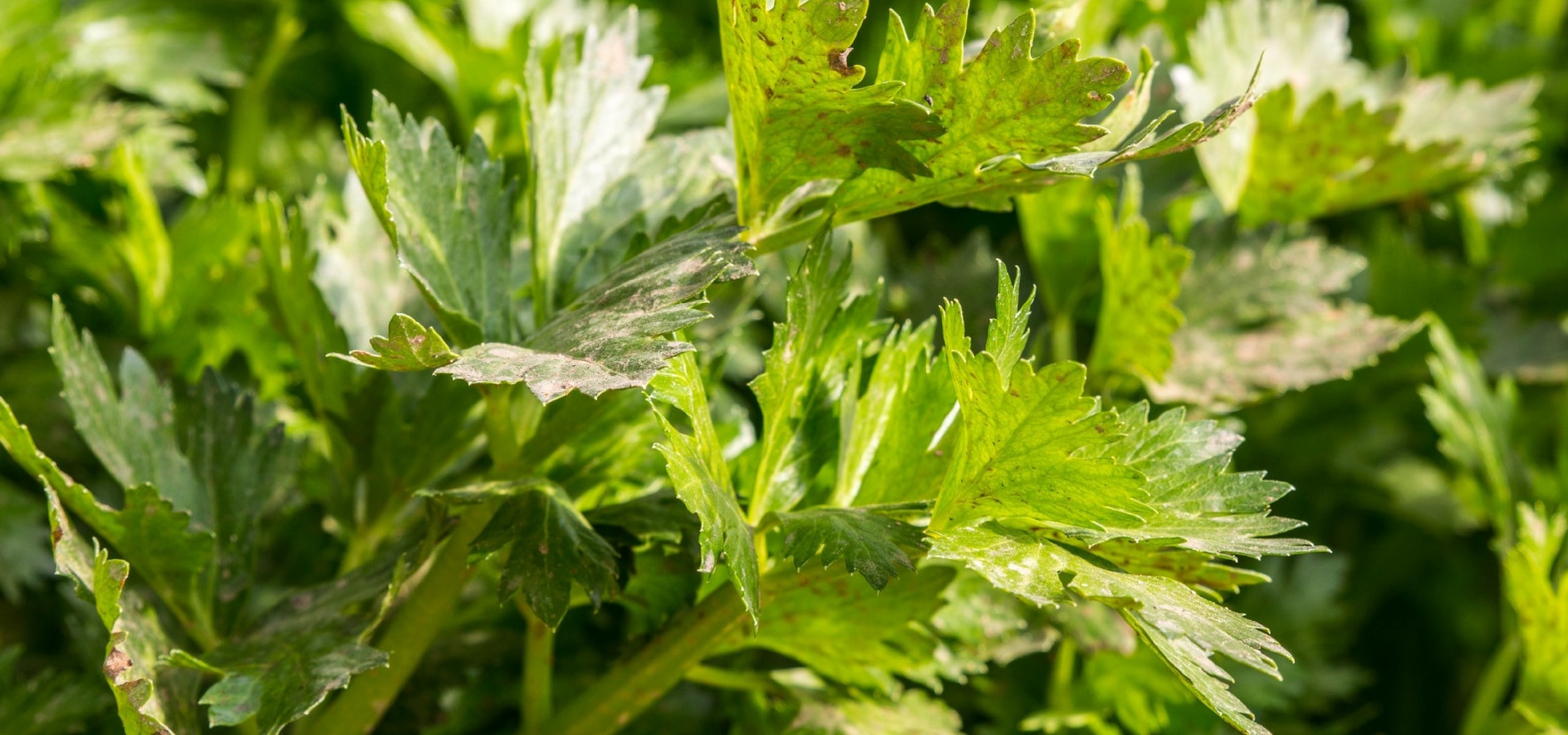
The plant forms a dense basal clump, with very divided, dark green foliage, and hollow, aromatic petioles. The root is round to slightly trapezoidal, covered in a beige-grey skin, with a strong beard of rootlets whose insertion reaches almost halfway up the height of the bulb. The roots remain almost entirely buried, with the top barely protruding from the soil. The average diameter of the "bulbs" reaches 8 to 10 cm. Their white to cream flesh is firm, very aromatic, with a tendency to discolour slightly when exposed to air if not treated with lemon juice.
This 'Roem van Zwijndrecht' variety shows low sensitivity to bolting and hollow hearts, but remains quite susceptible to "internal blackening" (blackening of the flesh) and to celery mosaic virus if crop rotation and feeding (particularly with boron) are not carefully managed. The foliage is destroyed by the first frosts, and the roots, although they can tolerate a little cold under mulch, should be harvested before the true winter frosts to be stored in a cellar or clamp.
In the kitchen, celeriac is cultivated for its large root. It can be eaten raw (grated, in rémoulade…) or cooked (in purée, gratin, or sautéed). Celery is rich in vitamins and mineral salts and low in calories.
In the kitchen garden, plant celeriac in a sunny or partially shaded spot. It appreciates moist, light, and rich soil. Add well-rotted compost in the preceding autumn after thoroughly loosening the soil. During cultivation, plan for the application of vegetable garden fertiliser as celery has high nutritional demands.
The harvest: harvest celeriac in autumn, before the first frosts. Lift the bulbs, let them dry out on the soil for a day, and cut the leaves above the collar as well as the rootlets.
Storage: Celeriac should be stored in a cool, humid place, protected from light, and will keep for several months.
The gardener's little tip: To limit watering, we advise you to mulch the soil with successive thin layers of grass clippings, if possible mixed with dead leaves from the end of May. This protection, which helps the soil retain moisture, also reduces weeding.
Harvest
Plant habit
Foliage
Botanical data
Apium
graveolens var. rapaceum
Roem van Zwijndrecht
Apiaceae
Celery
Apium graveolens Zwijndrechtsche
Cultivar or hybrid
Biennial
Planting and care
Sowing of Roem van Zwijndrecht Organic Celeriac
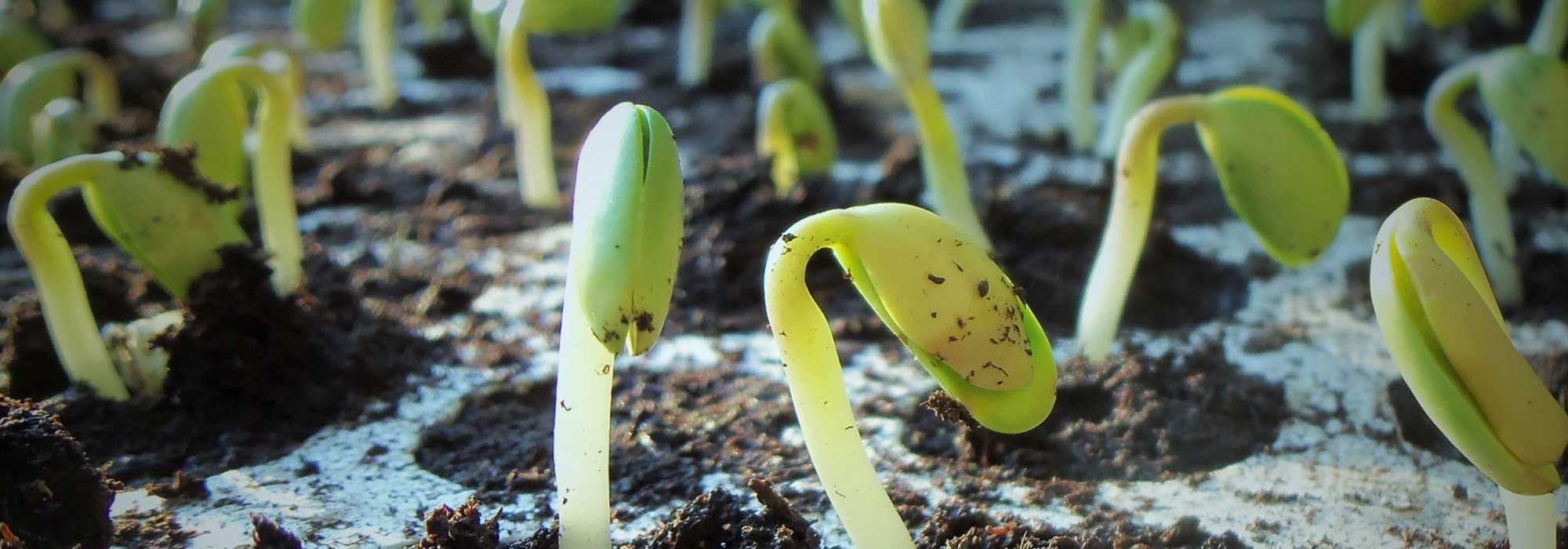
From February to April: you can sow on a hotbed or in trays, in a greenhouse or in a bright, heated room.
From mid-April to the end of May: you can sow directly in a well-exposed garden.
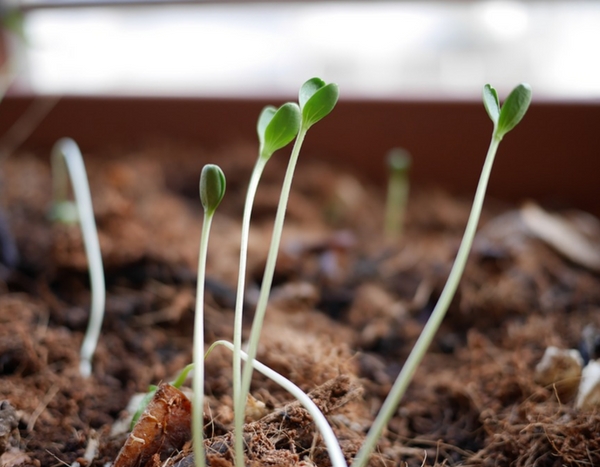
The soil or compost must be kept permanently moist; you can cover the sowings until germination with several layers of wet newspaper. Growth is very slow at the beginning. The temperature must be above 15°C. Germination occurs in 12 to 15 days.
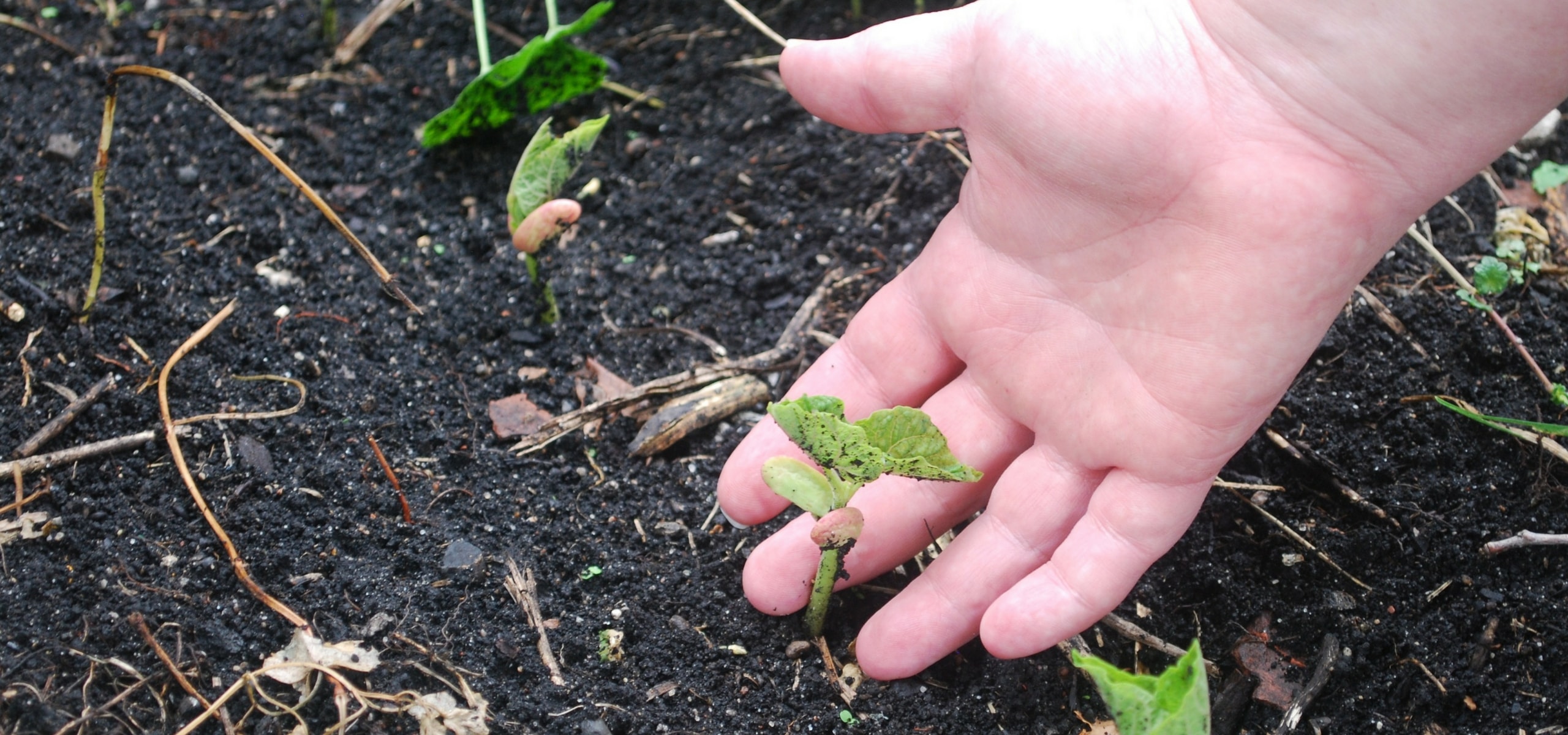
Before planting out, usually in May-June, prick out the young plants once in a nursery bed when they have 3 leaves. Space them 5 to 10 cm apart in all directions. Take care to remove the tip of the rootlets and the main root. At the time of final planting, plant spacing 40 cm apart in all directions.
Care:
It is important to hoe and weed regularly to avoid diseases that attack celeriac, such as blight or rust. A preventive treatment with Bordeaux mixture is effective against fungal diseases.
Watering should be plentiful and frequent. Mulching is beneficial.
Seedlings
Care
Intended location
Planting & care advice
-

-

-
-
-
-

-

-

This item has not been reviewed yet - be the first to leave a review about it.
Recently viewed products
Haven't found what you were looking for?
Hardiness is the lowest winter temperature a plant can endure without suffering serious damage or even dying. However, hardiness is affected by location (a sheltered area, such as a patio), protection (winter cover) and soil type (hardiness is improved by well-drained soil).

The flowering period indicated on our website applies to countries and regions located in USDA zone 8 (France, the United Kingdom, Ireland, the Netherlands, etc.)
It will vary according to where you live:- In zones 9 to 10 (Italy, Spain, Greece, etc.), flowering will occur about 2 to 4 weeks earlier.
- In zones 6 to 7 (Germany, Poland, Slovenia, and lower mountainous regions), flowering will be delayed by 2 to 3 weeks.
- In zone 5 (Central Europe, Scandinavia), blooming will be delayed by 3 to 5 weeks.
In temperate climates, pruning of spring-flowering shrubs (forsythia, spireas, etc.) should be done just after flowering.
Pruning of summer-flowering shrubs (Indian Lilac, Perovskia, etc.) can be done in winter or spring.
In cold regions as well as with frost-sensitive plants, avoid pruning too early when severe frosts may still occur.
The planting period indicated on our website applies to countries and regions located in USDA zone 8 (France, United Kingdom, Ireland, Netherlands).
It will vary according to where you live:
- In Mediterranean zones (Marseille, Madrid, Milan, etc.), autumn and winter are the best planting periods.
- In continental zones (Strasbourg, Munich, Vienna, etc.), delay planting by 2 to 3 weeks in spring and bring it forward by 2 to 4 weeks in autumn.
- In mountainous regions (the Alps, Pyrenees, Carpathians, etc.), it is best to plant in late spring (May-June) or late summer (August-September).
The harvesting period indicated on our website applies to countries and regions in USDA zone 8 (France, England, Ireland, the Netherlands).
In colder areas (Scandinavia, Poland, Austria...) fruit and vegetable harvests are likely to be delayed by 3-4 weeks.
In warmer areas (Italy, Spain, Greece, etc.), harvesting will probably take place earlier, depending on weather conditions.
The sowing periods indicated on our website apply to countries and regions within USDA Zone 8 (France, UK, Ireland, Netherlands).
In colder areas (Scandinavia, Poland, Austria...), delay any outdoor sowing by 3-4 weeks, or sow under glass.
In warmer climes (Italy, Spain, Greece, etc.), bring outdoor sowing forward by a few weeks.
Shipping country and language
Your country of residence may be:
Your country of residence is:
For a better user experience on our website, you can select:
Your shipping country:
-
 Austria
-
 Belgium
-
 Bosnia & Herzegovina
-
 Bulgaria
-
 Croatia
-
 Cyprus
-
 Czechia
-
 Denmark
-
 Estonia
-
 Finland
-
 France
-
 Germany
-
 Greece
-
 Hungary
-
 Iceland
-
 Ireland
-
 Italy
Italy
-
 Latvia
-
 Liechtenstein
-
 Lithuania
-
 Luxembourg
-
 Malta
Malta
-
 Netherlands
-
 Poland
-
 Portugal
-
 Romania
-
 Serbia
-
 Slovakia
-
 Slovenia
-
 Spain
Spain
-
 Sweden
-
 Switzerland
Language:
-
French
-
 English
-
Spanish
-
Italian
-
German
-
Portuguese
-
Dutch
-
Finnish
My Account
Hello
My wish lists
My cart
Log in / Register
Existing customer?
This form is protected by reCAPTCHA - the Google Privacy Policy and Terms of Service apply.
New customer?
Create an account to track your orders, access our customer service and, if you wish, make the most of our upcoming offers.