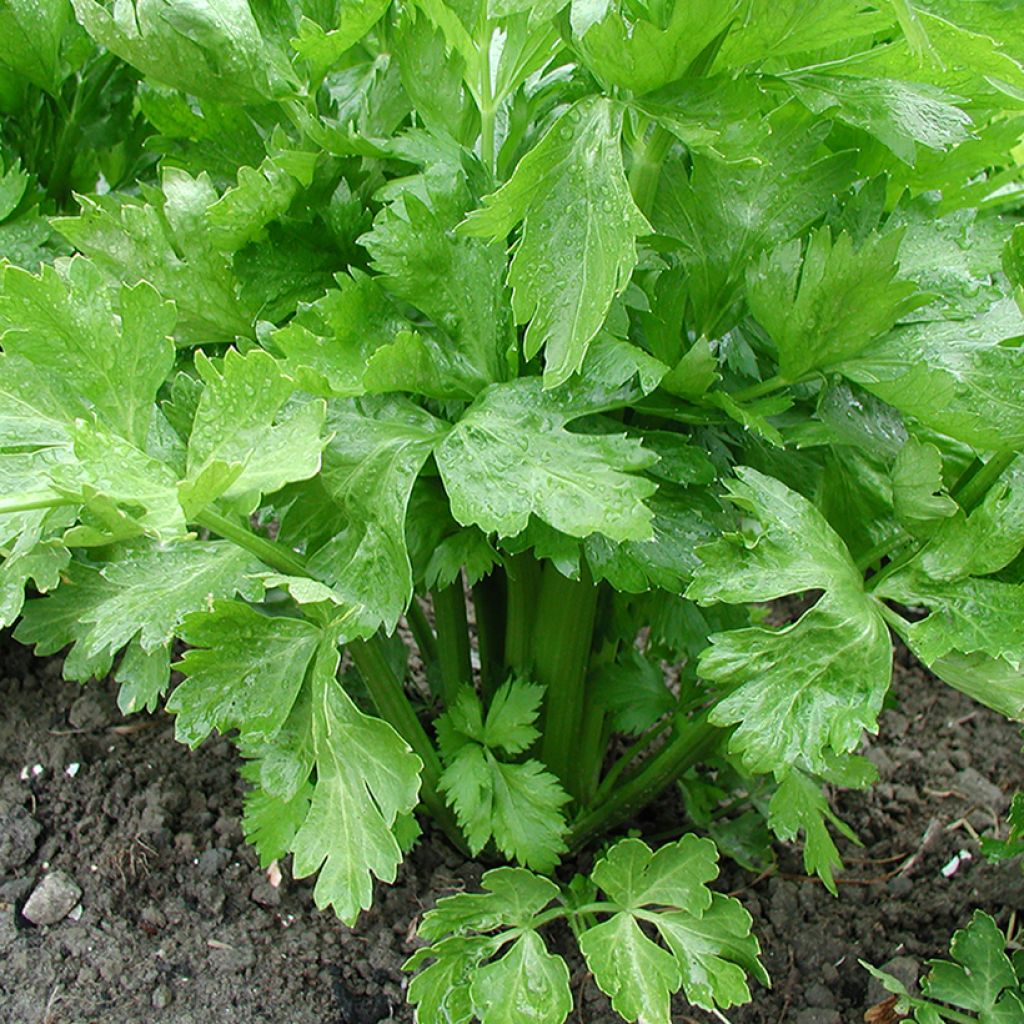
Celery Tall Utah 52/70 organic seeds - Apium graveolens
Celery Tall Utah 52/70 organic seeds - Apium graveolens
Apium graveolens var. dulce Tall Utah 52/70
Celery
Back-to-school special offer!
Get €10 off for every €50 you spend! And get up to €40 off on a single order.
How does it work?
1. Shop your favourites
Add your favourite plants to your basket. For every €50 you spend (excluding delivery charges, store credit and the plastic-free option), you’ll receive a €10 voucher.
€50 spent = €10 voucher
€100 spent = €20 voucher
€150 spent = €30 voucher
€200 spent = €40 voucher
2. Place your order
Once your basket reaches one of the spending thresholds, place your order. You can even choose your delivery date!
3. Receive your voucher
As soon as your order has been shipped, you’ll receive an email containing your personal voucher code and its value.
4. Use it on your next order
Your voucher is valid for 90 days from the date you receive it. It can be used once only, on a new order worth at least the value of the voucher, excluding delivery charges.
Please note: Vouchers can be combined with other offers, but cannot be split or refunded.
Home or relay delivery (depending on size and destination)
Important: You may be charged customs duties by your country’s customs authorities upon delivery.
Schedule delivery date
and select date in basket
This plant carries a 6 months recovery warranty
More information
We guarantee the quality of our plants for a full growing cycle, and will replace at our expense any plant that fails to recover under normal climatic and planting conditions.

Description
Tall Utah 52/70 celery is a vigorous variety of stalk celery, with an upright and compact habit, highly prized for its long, light green, full, crunchy and low-fibre ribs. They bear very aromatic dark green foliage and ribs 25 to 30 cm long, fleshy and juicy. This variety is early and slow to bolt and should be cultivated in deep, humus-rich, moist but well-drained soil, in full sun or partial shade. Sow from February to April under heated cover, then transplant outdoors after the frosts for a staggered harvest from late summer to autumn.
Tall Utah 52/70 celery belongs to the Apiaceae family. The species Apium graveolens is a biennial herb of damp areas, native to the marshes and salt meadows of the Mediterranean basin, the Atlantic coasts of Europe and North Africa, and extending to temperate Europe and Western Asia.
The Tall Utah 52/70 cultivar (sometimes noted as Utah 52-70 in some catalogues) is a non-hybrid selection of stalk celery from the Dulce group, resulting from a breeding programme conducted in the 1950s by the Ferry-Morse Seed Company in California. Introduced to the market around 1953, this line was designed to offer longer, greener and sweeter ribs than the original 'Utah' celery, with better tolerance to common diseases and good field holding. It has been widely distributed worldwide and has received the Royal Horticultural Society's Award of Garden Merit, a guarantee of reliability in cultivation.
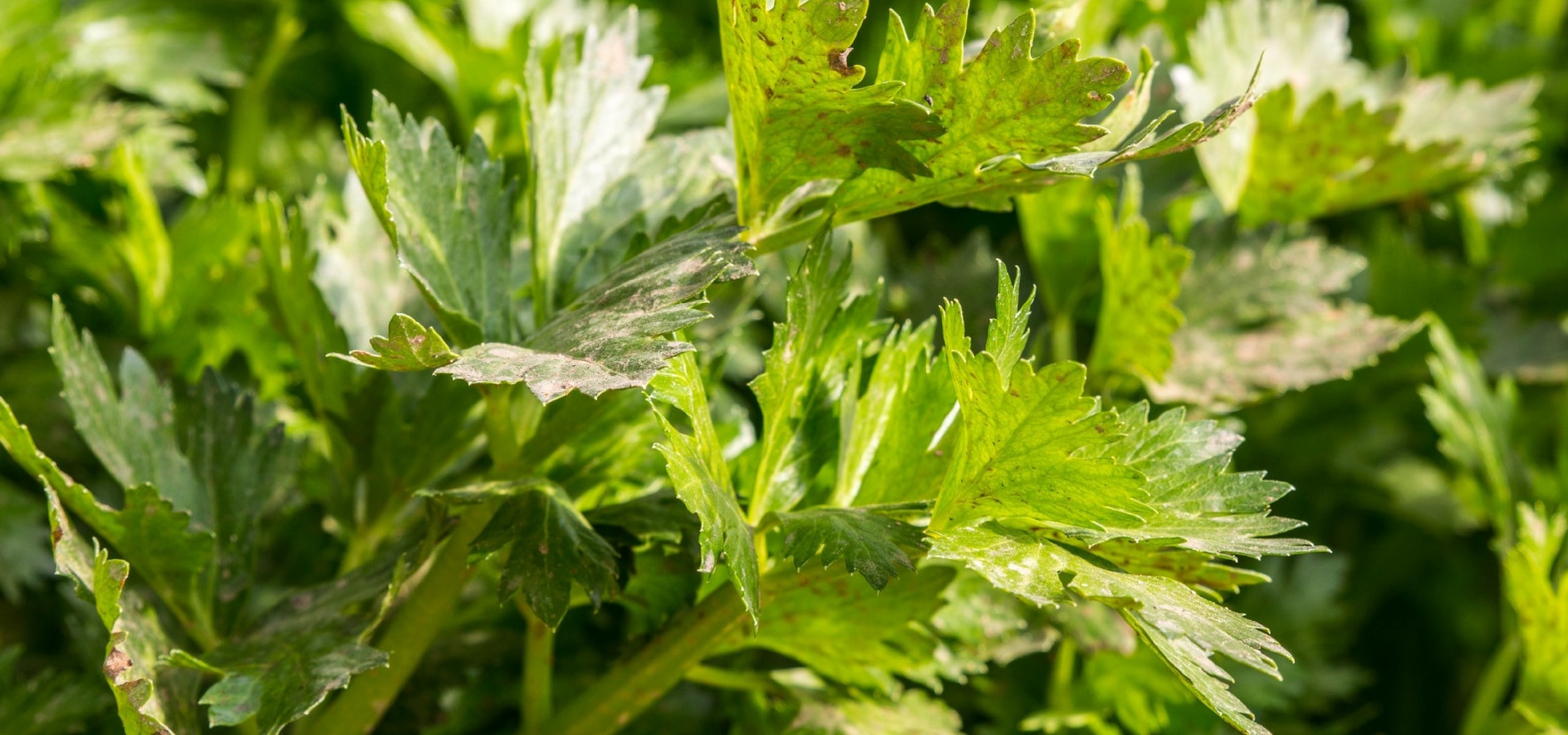
The plant has an upright and compact habit, with tightly packed petioles (ribs) forming a well-closed heart, with divided leaves at the top. In open ground, it reaches a height of 50 to 70 cm and a width of 25 to 30 cm. The ribs measure 23 to 30 cm long, and they are thick, smooth, gutter-shaped, and light to medium green. The very aromatic, dark green foliage is composed of pinnate leaves with lobed leaflets. The ribs and foliage are harvested in the first year, before winter or severe frosts, which destroy the above ground parts. If the plant is left in place to produce seeds, it regrows the following spring by sending up a taller flower stalk, which can exceed 1 m, topped by compound umbels of small greenish-white flowers. These flowers are grouped in umbels visited by insects (bees, hoverflies, small flies). The fruits are small aromatic ovoid achenes, known as "celery seeds" when used as a spice.
Tall Utah 52/70 has a rather slow growth: germination often takes two to three weeks, the plant first develops a dense rosette, then gradually elongates its ribs. The harvest begins on average 100 to 110 days after planting well-developed young plants, i.e., 4 to 5 months after sowing.
In the kitchen, Tall Utah 52/70 celery is suitable for both raw and cooked dishes: its long, crunchy ribs, with a frank but balanced flavour, are perfect as sticks for appetisers, thinly sliced in mixed salads or grated rémoulade-style to add freshness and texture. Diced with carrot and onion, it forms the ideal aromatic base for soups, stews, tomato sauces and homemade broths. Its ribs can also be braised, used in a gratin with a light béchamel sauce or sautéed in butter with a little garlic and parsley. The fragrant leaves can be chopped like a culinary herb to enhance an omelette, a pasta dish, a velouté or vegetable juices.
In the vegetable garden, plant celery in a sunny or partially shaded spot. It likes moist, light and rich soils. The previous autumn, add well-rotted compost after thoroughly loosening the soil. During cultivation, apply vegetable garden fertiliser, as celery is a hungry crop.
It pairs very well with colourful leafy vegetables like Rhubarb Chard with red stalks or with a 'Redbor F1' kale, with its deeply cut purple foliage. It can also be associated with a vigorous flat-leaf parsley like 'Giant of Italy' to create a square of herbs and broth vegetables.
The harvest: For stalk celery, pick the stems from 5 to 6 months after sowing. Before the winter frosts, you can remove the entire rootball to store it in a cellar for several weeks.
Storage: The leaves of stalk celery and cutting celery are best consumed fresh to fully enjoy their aroma. However, they can be frozen.
The gardener's little tip: To limit watering, we advise you to mulch the soil with successive thin layers of grass clippings, if possible mixed with dead leaves, from the end of May. This protection helps the soil retain moisture and reduces weeding.
Harvest
Plant habit
Foliage
Botanical data
Apium
graveolens var. dulce
Tall Utah 52/70
Apiaceae
Celery
Cultivar or hybrid
Biennial
Planting and care
Sowing Tall Utah 52/70 Celery
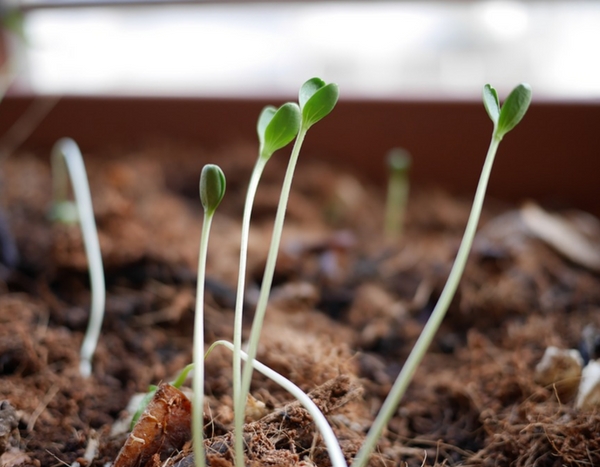
This is a rather delicate stage. Celery requires well-warmed soil to germinate. Germination is slow and requires high humidity. Emergence takes around fifteen days.
Celery: Sow from April to June in a row or broadcast, under cover. Barely cover the seeds with fine soil. Water to keep the soil moist. Thin out and transplant the young plants when they have 3 leaves into pots filled with compost. Plant them out in the open ground at 6-8 leaves, approximately 2 months after sowing. Space the young plants 30 cm apart in the row with 40 cm between the rows.
Tall Utah 52/70 Celery is not a 'self-blanching' variety: it naturally produces light green, well-flavoured midribs. You can very well eat it as it is. However, if you want more tender stems with a milder taste, you can blanch them 2 to 3 weeks before harvest by wrapping them in cardboard or an opaque sleeve, or by lightly earthing up the base to deprive them of light.
Wait 4 years before growing celery in the same spot. Hoe and weed regularly. Mulch around the base to maintain soil moisture. Water regularly, especially during hot spells. Avoid watering late in the day to limit the risk of disease.
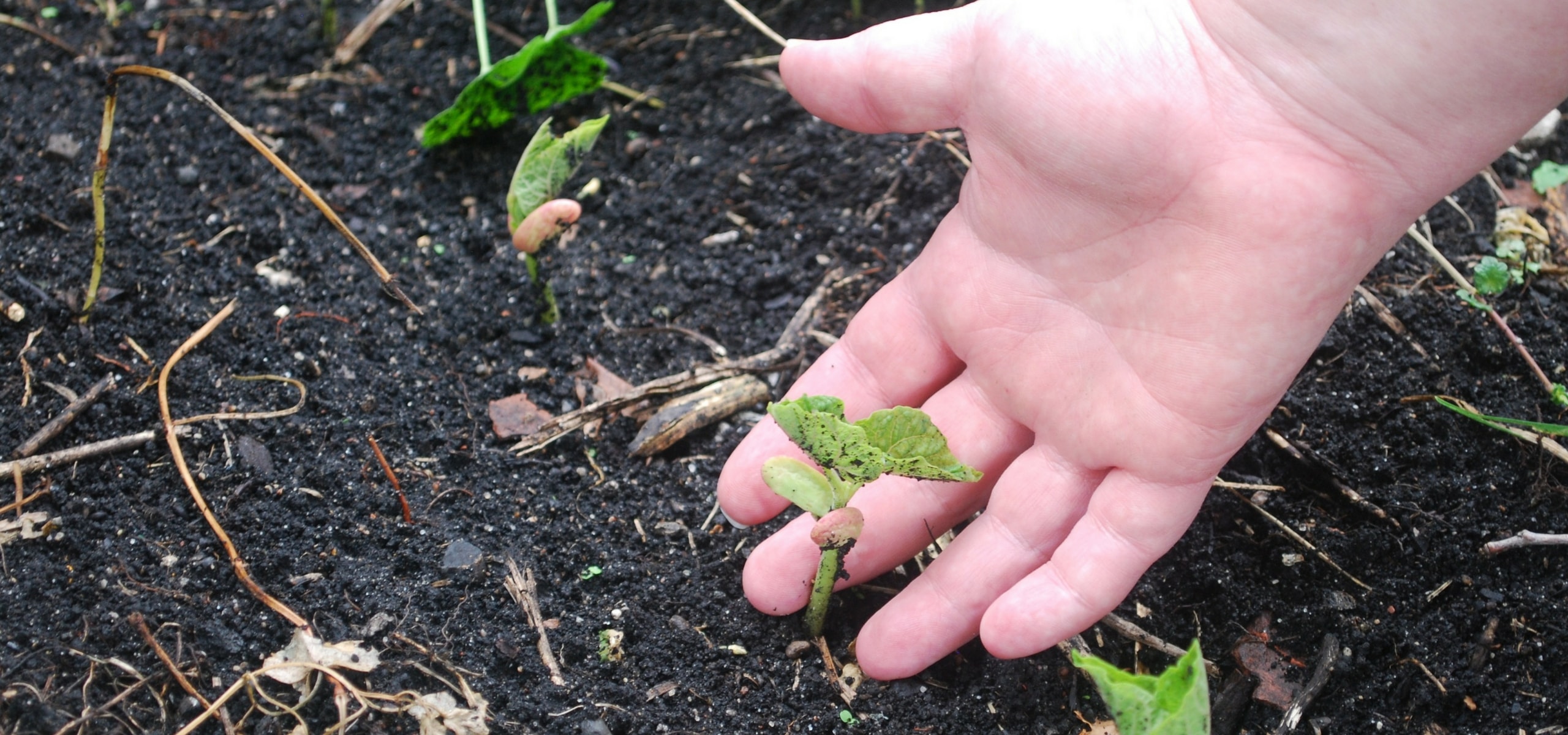
Seedlings
Care
Intended location
Planting & care advice
-

-

-
-
-

-

-

-

This item has not been reviewed yet - be the first to leave a review about it.
Recently viewed products
Haven't found what you were looking for?
Hardiness is the lowest winter temperature a plant can endure without suffering serious damage or even dying. However, hardiness is affected by location (a sheltered area, such as a patio), protection (winter cover) and soil type (hardiness is improved by well-drained soil).

The flowering period indicated on our website applies to countries and regions located in USDA zone 8 (France, the United Kingdom, Ireland, the Netherlands, etc.)
It will vary according to where you live:- In zones 9 to 10 (Italy, Spain, Greece, etc.), flowering will occur about 2 to 4 weeks earlier.
- In zones 6 to 7 (Germany, Poland, Slovenia, and lower mountainous regions), flowering will be delayed by 2 to 3 weeks.
- In zone 5 (Central Europe, Scandinavia), blooming will be delayed by 3 to 5 weeks.
In temperate climates, pruning of spring-flowering shrubs (forsythia, spireas, etc.) should be done just after flowering.
Pruning of summer-flowering shrubs (Indian Lilac, Perovskia, etc.) can be done in winter or spring.
In cold regions as well as with frost-sensitive plants, avoid pruning too early when severe frosts may still occur.
The planting period indicated on our website applies to countries and regions located in USDA zone 8 (France, United Kingdom, Ireland, Netherlands).
It will vary according to where you live:
- In Mediterranean zones (Marseille, Madrid, Milan, etc.), autumn and winter are the best planting periods.
- In continental zones (Strasbourg, Munich, Vienna, etc.), delay planting by 2 to 3 weeks in spring and bring it forward by 2 to 4 weeks in autumn.
- In mountainous regions (the Alps, Pyrenees, Carpathians, etc.), it is best to plant in late spring (May-June) or late summer (August-September).
The harvesting period indicated on our website applies to countries and regions in USDA zone 8 (France, England, Ireland, the Netherlands).
In colder areas (Scandinavia, Poland, Austria...) fruit and vegetable harvests are likely to be delayed by 3-4 weeks.
In warmer areas (Italy, Spain, Greece, etc.), harvesting will probably take place earlier, depending on weather conditions.
The sowing periods indicated on our website apply to countries and regions within USDA Zone 8 (France, UK, Ireland, Netherlands).
In colder areas (Scandinavia, Poland, Austria...), delay any outdoor sowing by 3-4 weeks, or sow under glass.
In warmer climes (Italy, Spain, Greece, etc.), bring outdoor sowing forward by a few weeks.
Shipping country and language
Your country of residence may be:
Your country of residence is:
For a better user experience on our website, you can select:
Your shipping country:
-
 Austria
-
 Belgium
-
 Bosnia & Herzegovina
-
 Bulgaria
-
 Croatia
-
 Cyprus
-
 Czechia
-
 Denmark
-
 Estonia
-
 Finland
-
 France
-
 Germany
-
 Greece
-
 Hungary
-
 Iceland
-
 Ireland
-
 Italy
Italy
-
 Latvia
-
 Liechtenstein
-
 Lithuania
-
 Luxembourg
-
 Malta
Malta
-
 Netherlands
-
 Poland
-
 Portugal
-
 Romania
-
 Serbia
-
 Slovakia
-
 Slovenia
-
 Spain
Spain
-
 Sweden
-
 Switzerland
Language:
-
French
-
 English
-
Spanish
-
Italian
-
German
-
Portuguese
-
Dutch
-
Finnish
My Account
Hello
My wish lists
My cart
Log in / Register
Existing customer?
This form is protected by reCAPTCHA - the Google Privacy Policy and Terms of Service apply.
New customer?
Create an account to track your orders, access our customer service and, if you wish, make the most of our upcoming offers.