






























11 hardy fruit trees for winter cold
Selection of fruit trees or bushes renowned for their high hardiness
Contents
As you live in an area where the thermometer shows temperatures well below 0°C in winter, you might think that planting and growing fruit trees is an unattainable dream. Think again! Of course, we’re not talking about planting an apricot tree (although!) or an almond tree, but you can certainly enjoy beautiful harvests of juicy fruits, just like the lucky gardeners who live in the south of the territory or along the coast… You just need to select fruit trees, trees and bushes that are very hardy against winter cold. These fruit trees, often originating from regions of the world with extreme temperatures or that naturally grow at high altitudes, will offer you their fruits or berries in summer or autumn. Enough to delight you and impress your friends with lesser-known flavours.
Discover our selection of 11 fruit trees or bushes, characterised by great hardiness, capable of tolerating very low winter temperatures.

The blue honeysuckle, an edible honeysuckle with delicious berries in May.
The honeyberry, also known as blue honeysuckle, (Lonicera cærulea var. kamtschatka or Lonicera cærulea var. edulis) is a deciduous fruit bush native to Siberia. This means it can withstand extreme cold down to -40 °C! However, it struggles more with heat and drought, which is why it is not recommended to plant it in regions with hot summers.
This bush, growing to a height of 1.20 to 1.50 m, produces small oblong fruits in May, a lovely blue covered in bloom. Very rich in vitamins C and B, and antioxidants, this fruit has a honeyed and sweet flavour, with a slight tartness. These berries can be eaten fresh, cooked, or dried, and freeze easily. Its flowering occurs between late March and early April and can withstand temperatures of around -5 to -7 °C.
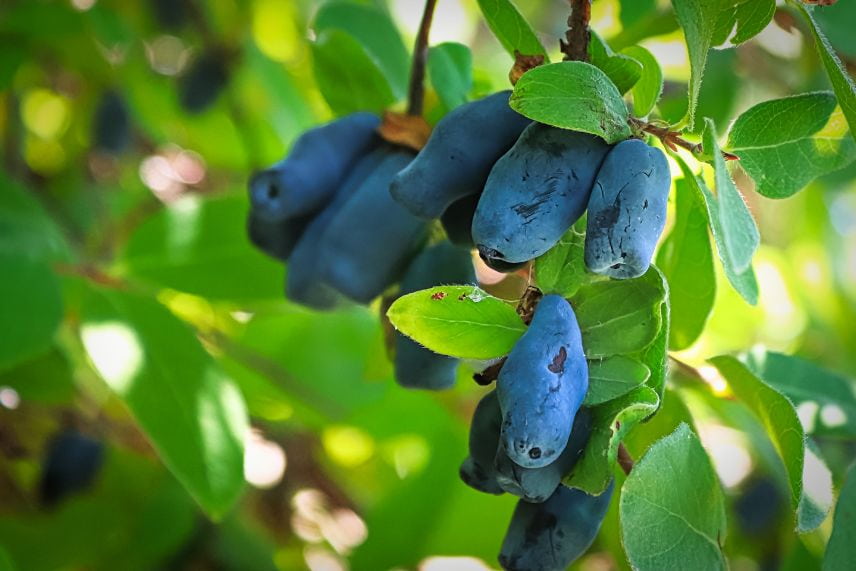
The fruits of the honeyberry
How to plant it? It requires well-drained, humus-bearing soil, rich in leaf mould, and fresh, with a sunny or partially shaded location. This bush fruits through cross-pollination, which means at least two plants of different varieties should be planted close to each other.
Further reading: Blue honeysuckle, May berry: planting, cultivation, care
Blueberry and cranberry, two small bush fruit plants
The blueberry bush (Vaccinium corymbosum) and the cranberry (Vaccinium macrocarpon), derived from the wild blueberry (Vaccinium myrtillus) that grows in the average mountains, are small hardy bushes that can withstand temperatures ranging from -20 °C to -25 °C. Growing to a height of 1 m to 1.5 m for the blueberry and 30 to 50 cm for the cranberry, the blueberry bush is very ornamental due to its flowering and its foliage, which is vibrant in autumn, but especially attractive for its berries. Blueberries reach ripeness from late June to September on bushes that are at least 2 years old, while cranberries are ready from October to November after 4 years. These fruits are rich in vitamins A, B, and C, iron, and calcium, as well as antioxidants. Blueberries and cranberries can be consumed fresh, cooked into jams, dried, or incorporated into desserts.
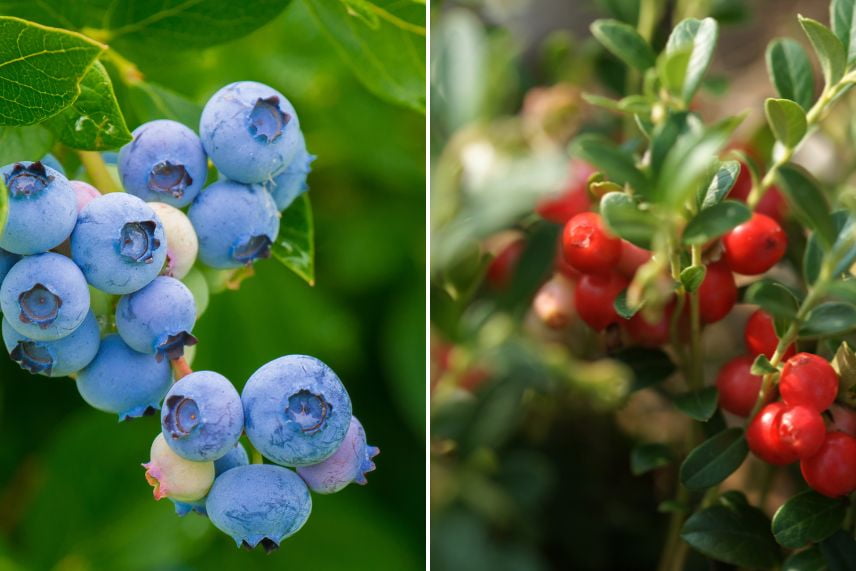
How to plant it? The blueberry and cranberry require acidic, light, humus-rich, and well-drained soil. They do not tolerate heavy or calcareous soils. They prefer partial shade but can grow in full sun as long as it is not too scorching. Several blueberry plants are needed for proper fruiting, but cranberries are self-fertile.
Further reading:
Kiwai, a cousin of the kiwi
The kiwifruit (Actinidia arguta) does not originate from China like its close cousin the kiwi (Actinidia deliciosa), but from Siberia. This origin gives it exceptional hardiness (down to -25 °C). The kiwifruit can therefore be grown throughout France, but in regions where the cold arrives early, it is advisable to plant early-producing varieties, between late August and mid-September, such as the self-fertile variety ‘Issaï’.
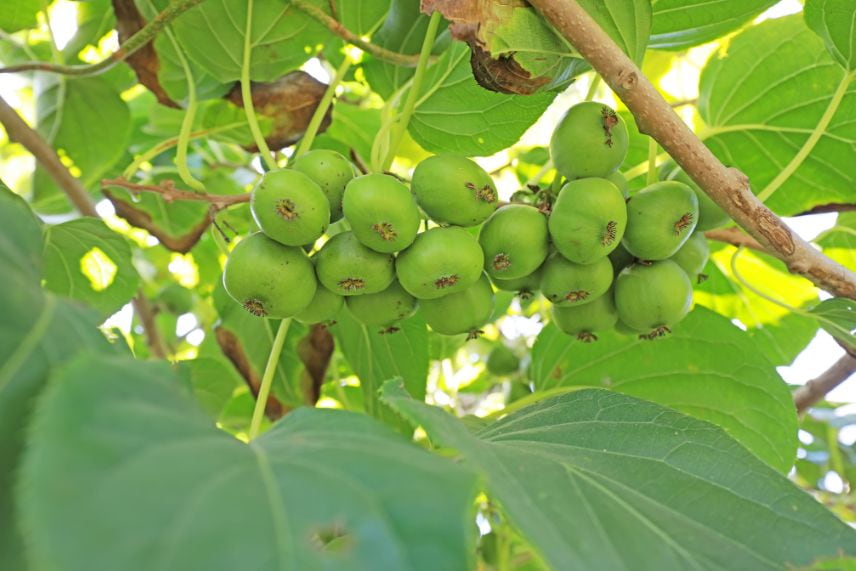
The fruits of the kiwifruit
Kiwifruits produce smaller fruits than traditional kiwis, which can be eaten with their skin. They are also sweeter and richer in vitamins. They reach ripeness between late August for very early varieties and October.
How to plant it? Kiwifruits prefer fertile, humus-bearing, cool, well-drained soils, and sunny locations. They will also need a good support, as it is a vigorous liana growing 6 to 8 m long. Generally, it is necessary to plant a male and a female plant nearby (although some varieties like ‘Witikiwi’ are self-fertile).
Further reading:
- The kiwifruit: a cute mini kiwi to munch on
- How to differentiate between kiwi and kiwifruit?
The ragouminier or Nanking cherry, with its small edible cherries
The Nanking cherry (Prunus tomentosa), also known as the ragouminier, is a self-fertile fruit bush with a bushy habit. It is decorative due to its spring flowering and its rough foliage that takes on beautiful golden yellow autumn colours. As its name suggests, it bears dark branches covered in hairs, which are very effective at keeping greedy birds away. In summer, it produces small red fruits (sometimes white) that are perfectly edible, with a slightly sweet and somewhat tart flavour. These small, stemless, fleshy cherries can be eaten fresh, or better yet, made into jams or jellies. The ragouminier is hardy down to -25 °C.
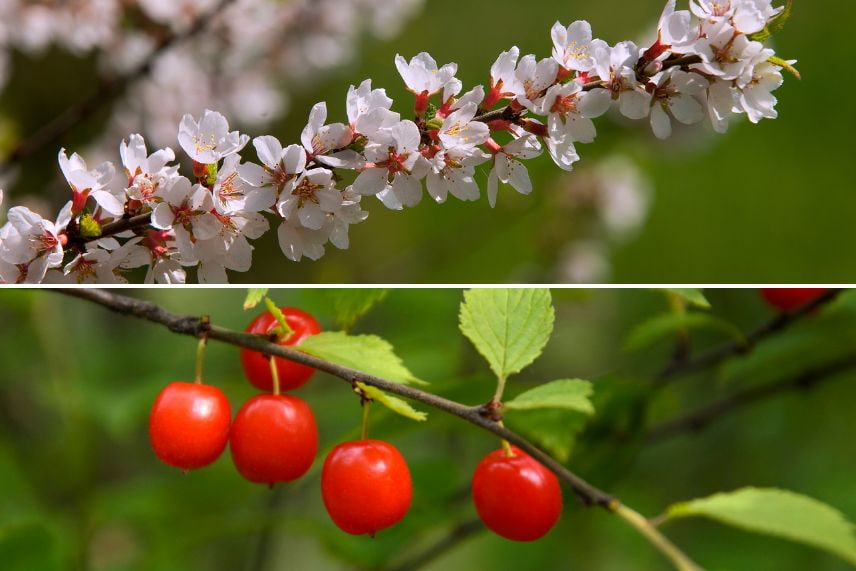
Flowers and fruits of the Nanking cherry
How to plant it? The ragouminier requires ordinary, sandy, loamy soil, neutral to slightly acidic, but perfectly drained. It thrives in full sun or partial shade in regions with hot summers.
Amelanchier, the ultimate decorative fruit tree
Native to North America, particularly Canada, the serviceberry (Amelanchier) boasts exemplary hardiness down to -25 °C. This large bush (3 to 8 m depending on the variety) is decorative in all seasons: its abundant white flowering is one of the first in spring, and its green foliage takes on vibrant autumn colours. In addition to these aesthetic qualities, the serviceberry produces small blue-purple berries, known as serviceberries, which are highly appreciated by Canadians. Eaten raw or cooked, serviceberries can also be enjoyed in jams or as a complement to meats. The serviceberry thrives in various locations, except in the southern regions of France, as it poorly tolerates drought.
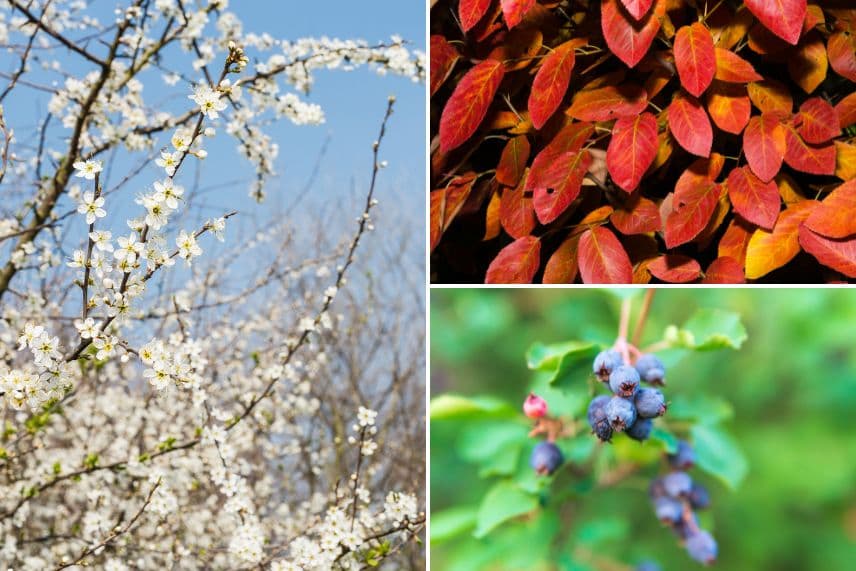
The serviceberry
How to plant it? It should be planted in good garden soil, provided it is fresh and well-drained. It also requires a sunny or partially shaded location, sheltered from drying winds.
Further reading:
The Barbary wolfberry, for a harvest of goji berries
The Barbary wolfberry (Lycium barbarium) is a bush from the Solanaceae family, best known for producing the famous goji berries. Both hardy (down to -20 °C) and drought-resistant, it forms a small, highly ramified bush that can reach a height of 3 m. It is equally attractive for its flowering and fruiting. Indeed, from June to September (sometimes as early as April), small pale violet tubular flowers bloom, gradually giving way to oblong, reddish-orange berries that develop from July until the first frosts. These berries, rich in antioxidants, vitamins, proteins, amino acids, and trace elements, can be consumed raw, cooked in desserts, or dried.
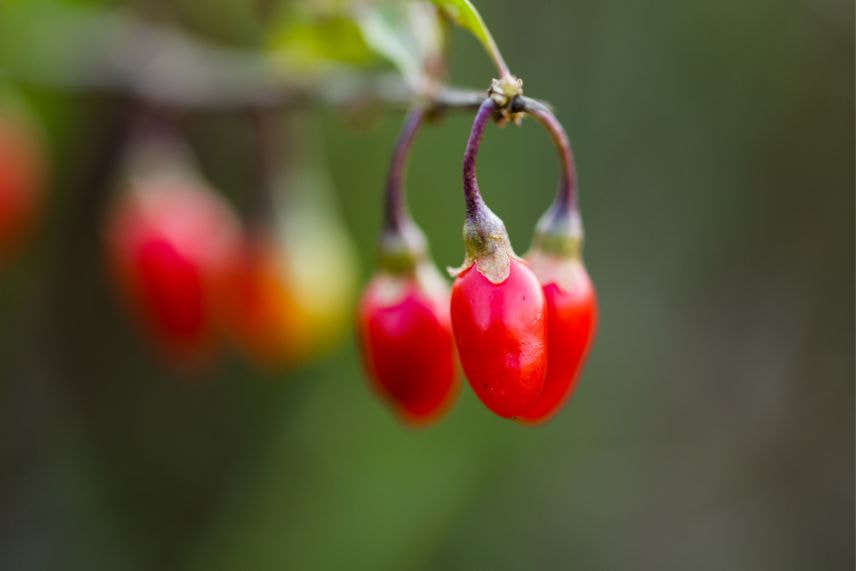
The goji berries of the Lycium barbarium
How to plant it? The Barbary wolfberry has a preference for dry, ordinary, moderately rich, and well-drained soils. It dislikes heavy, clayey soils. It can be planted in full sun or partial shade, but fruiting will be better if it receives some warmth.
Further reading:
Aronia, a cousin of the rowan, with black fruit.
The aronia (Aronia) is a North American bush, hardy down to -30 °C. Growing to about 2 m tall and 2.50 m wide, it is attractive throughout the year. In spring, it boasts a generous flowering of white, slightly pink flowers that are fragrant and melliferous. Later, its green foliage displays stunning autumn hues ranging from orange to copper, red, and violet. Meanwhile, almost black purple fruits, clustered together, appear on red peduncles. Slightly tart and very rich in antioxidants, these fruits are mainly consumed as juice or dried, but can also be enjoyed fresh or used in desserts.
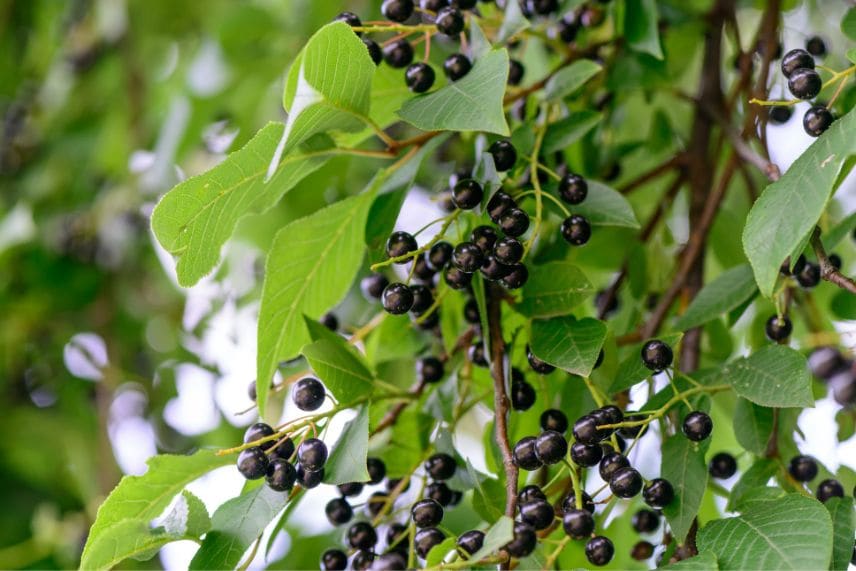
The aronia
How to plant it? The aronia thrives in good deep, fresh, light, and slightly acidic garden soil. It enjoys both sunny spots that are not too hot and partial shade.
Further reading: Aronia: planting, pruning, and maintenance
Medlar, a fruit tree to (re)discover
As we discuss hardy fruit trees, we are indeed referring to the common medlar (Mespilus germanica), which should not be confused with the Japanese medlar (Eriobotrya japonica), which is significantly less cold-resistant. The common medlar is a fruit tree, reaching heights of 3 to 6 m with a spread of 6 m, that produces medlar fruits, which are consumed when over-ripe, after the first frosts. With a sweet-sour flavour, these oval fruits resemble small truncated pears and can be eaten raw or cooked, for example, in jam. They have the consistency of a puree that is both sweet and acidic. If not picked, the medlar fruits remain on the tree in November and December. In spring, it showcases a creamy white to pale pink flowering.
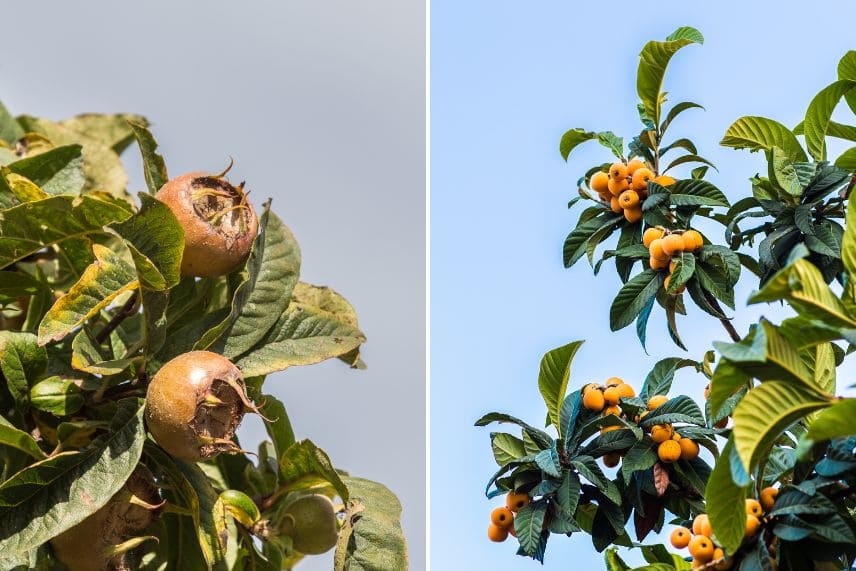
The fruits of the common medlar are different from those of the Japanese medlar
How to plant it? The common medlar should be planted in any good garden soil, provided it is perfectly drained, in a sunny or partially shaded location. It should especially be sheltered from strong winds due to its delicate flowering.
Further reading: Common medlar: planting, caring for, and harvesting the fruits
The gooseberry bush, with its small translucent berries
Hardy down to -20 °C, the gooseberry bush (Ribes uva-crispa) is a medium-sized bush with a bushy and dense habit. Sits fruits, the gooseberries, are round, ranging from pale green to pink or red depending on the variety, and are translucent. They have a flavour that is both sweet and tangy, and are harvested in July and August. The fruits can be used in jams or jellies, cooked in desserts, made into syrups or sorbets, or served alongside fish or game. The flowering is very discreet but melliferous.
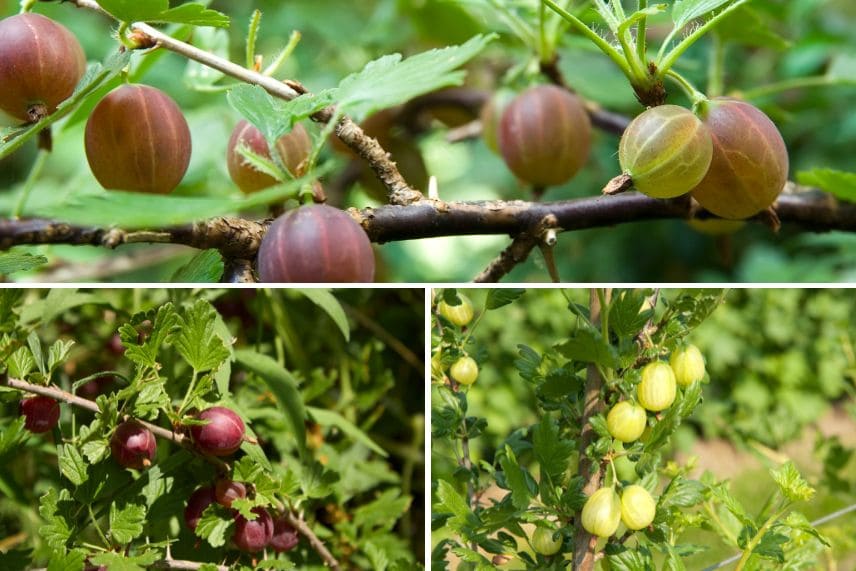
Gooseberries
How to plant it? The gooseberry bush should be planted in ordinary, well-drained, moist soil. As it is sensitive to heat, it is best to plant it in partial shade. It is ideal in a fruit hedge alongside raspberries, blackcurrants, and more…
Further reading: How to choose your gooseberry bush
Plum tree, for all desires
Among the fruit trees in the Rosaceae family, the plum tree (Prunus domestica) certainly boasts the best hardiness (down to -20 to -25 °C). There are many families and varieties of plums (Reine-Claude, Quetsches, mirabelles…) that allow for a delightful variety in the orchard and on the plate. The plum tree forms a beautiful, upright tree with abundant white flowering. Moreover, it is a low-maintenance tree that can be planted throughout France.
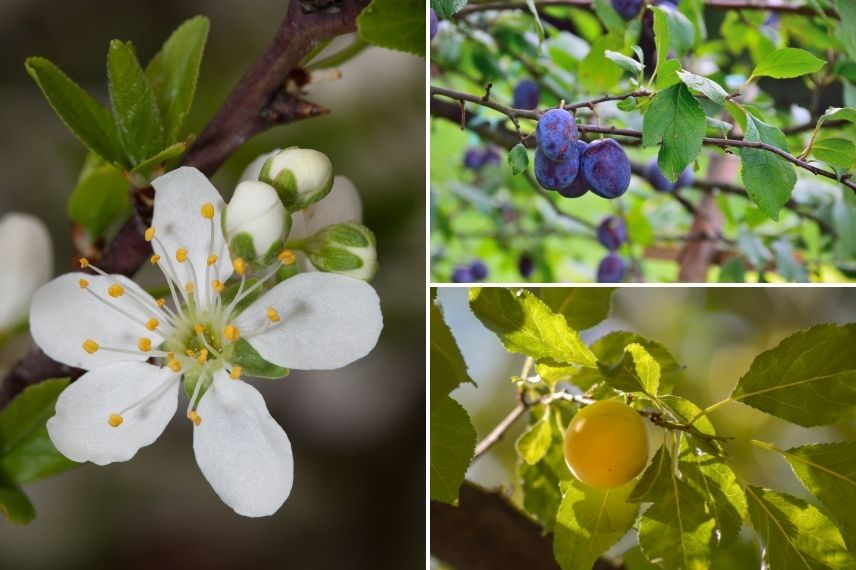
The plum tree
How to plant it? The plum tree should be planted in a sunny location, sheltered from strong winds, in rich, cool, deep, and well-drained soil.
Further reading:
- Subscribe!
- Contents
Comments