





























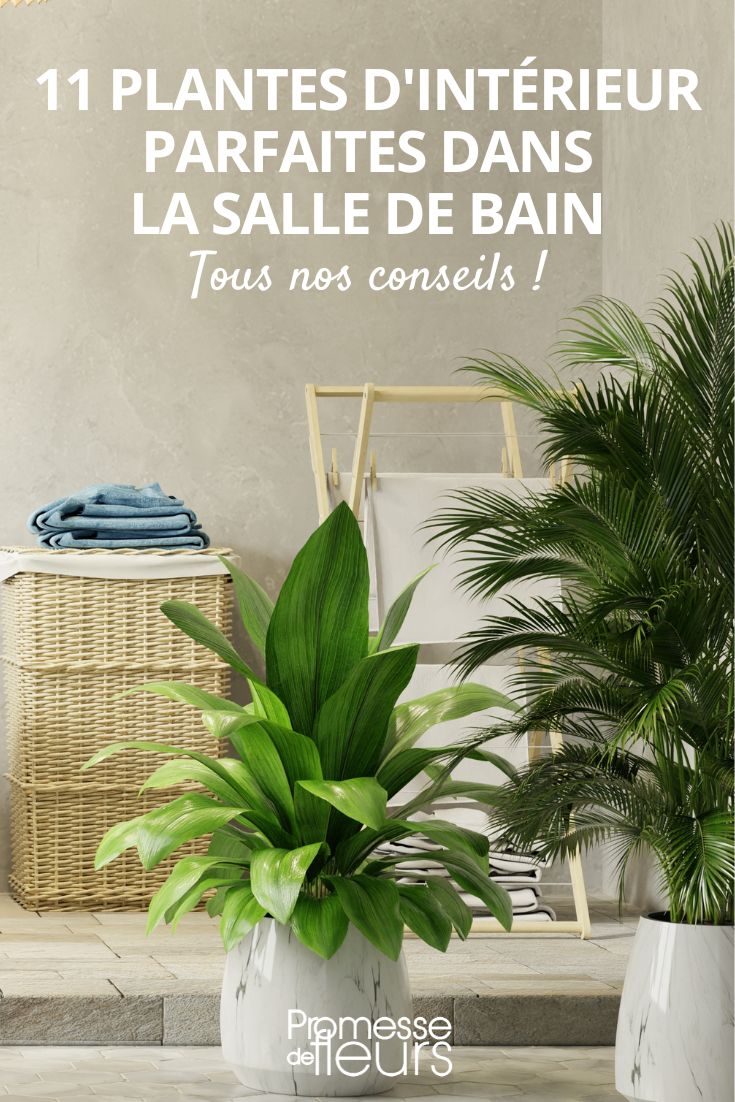
11 perfect indoor plants for the bathroom
between humid atmosphere and lack of light
Contents
Indoor plants have become an essential element of our home décor, including bathrooms. They add a touch of greenery and colour while providing a sense of well-being. However, not all plants are suitable for the humid and often dim atmosphere of a bathroom. Indoor plants that can thrive in bathrooms are those that prefer humid environments and are not too demanding regarding the amount of light they require. Each plant has its own preferences for substrate, light, and humidity, so it is important to understand the needs of each species before incorporating them into your bathroom. If you have no natural light at all in your bathroom, with no windows, it is advisable not to place a plant there. You might consider trying to grow a Pothos under a grow light.
Discover a selection of indoor plants ideal for the bathroom and why they are suited to this environment.

Ferns
Not all ferns are equal in terms of requirements or ease of maintenance. While some, like the Capillary or Boston fern, can be quite sensitive, others are simpler to grow and more resilient. This second category is well-suited to the humid atmosphere of a bathroom. For example, the Asplenium, well-known to walkers, can also be grown as an indoor plant with the species Asplenium nidus. It does not have high light requirements and is content in a shaded or low-light area. The Phlebodium aureum, which is also quite accommodating, needs more light. It is best suited for bathrooms with a reasonably large window. A humid atmosphere does not necessarily mean that these plants require significant watering, and while both ferns appreciate the steam from showers, they do not need to be watered excessively.
Also consider the Humata or Davallia tyermanii, commonly known as rabbit’s foot fern, which is also a low-maintenance fern, provided it receives medium light and regular watering. It enjoys misting of the foliage and your showers!
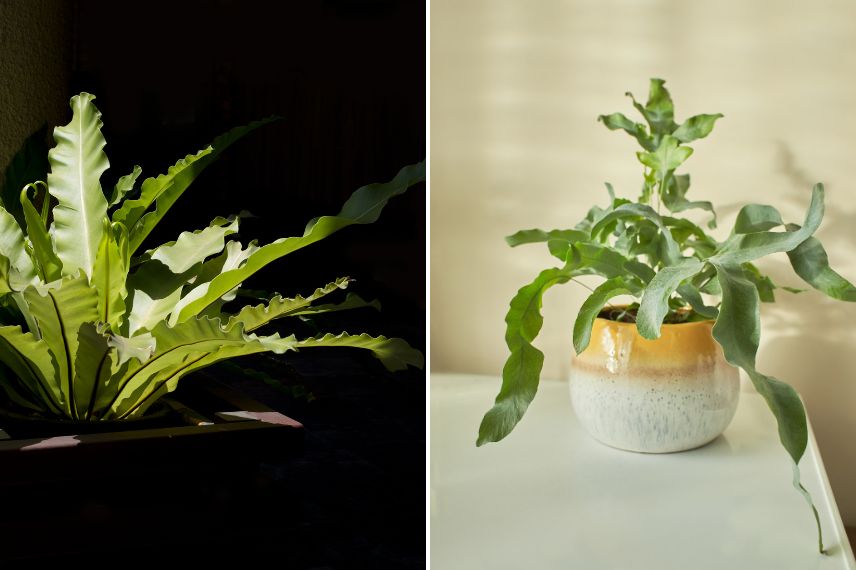
Asplenium nidus and Phlebodium aureum
Read also
How to repot a houseplant?Asparagus
Indoor plants from the Asparagus family are cousins of the asparagus, although they resemble ferns. They require little maintenance, enjoy moderate to fairly frequent watering, and prefer bright light conditions. Above all, they are accommodating. They also appreciate a humid atmosphere, which makes them more lush. They feature lovely feathery foliage that varies in shape depending on the varieties. The Asparagus densiflorus meyeri forms narrow, conical clumps in plumes, earning it the nickname Cat Tail or Fox Tail Asparagus.
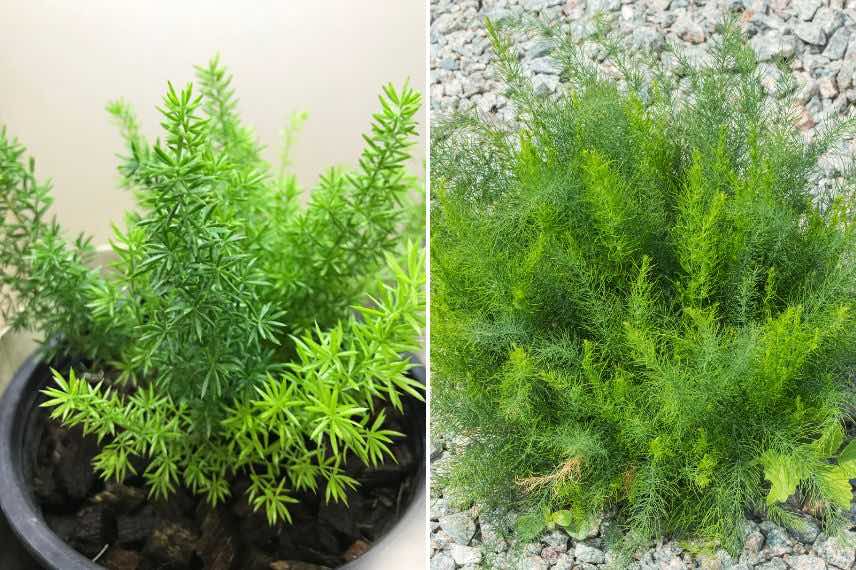
Asparagus densiflorus and Asparagus sprengeri
Tillandsia
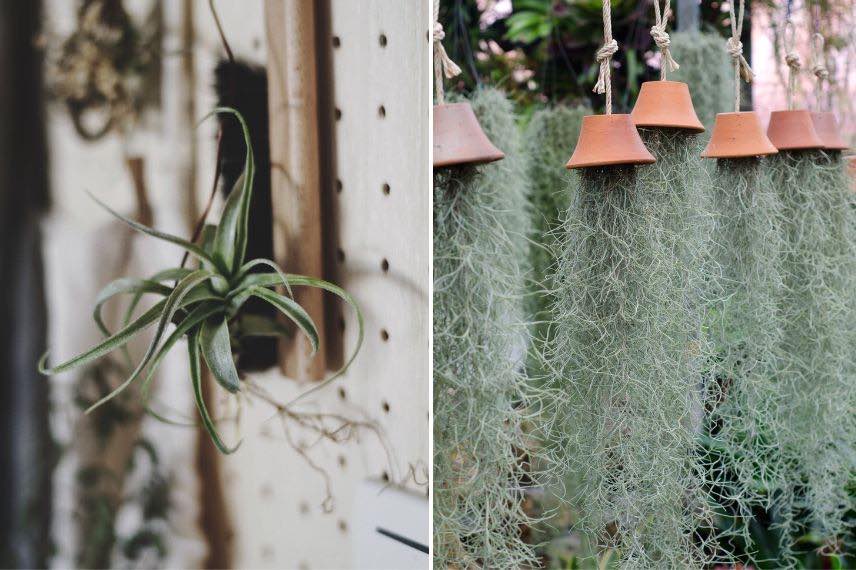
Tillandsia is an epiphytic plant that does not require substrate to thrive. It absorbs water and nutrients through its leaves. This makes it ideal for the bathroom, as it does not need soil and can be placed in a hanging container or fixed to a wall, allowing for all kinds of decorative ideas, without the need for a windowsill or shelf to rest on. Tillandsia is also well-suited to the humidity of the bathroom and can even thrive in the humid environments it particularly enjoys. There are many shapes, with a variety of colours and sizes, ranging from compact balls to undulating grey hair-like forms. Its care consists of regular water misting. It prefers medium to bright light; if you only have a small skylight, forget it or place it right in front, but not in direct sunlight.
Read also
The easiest indoor plants to growIvy
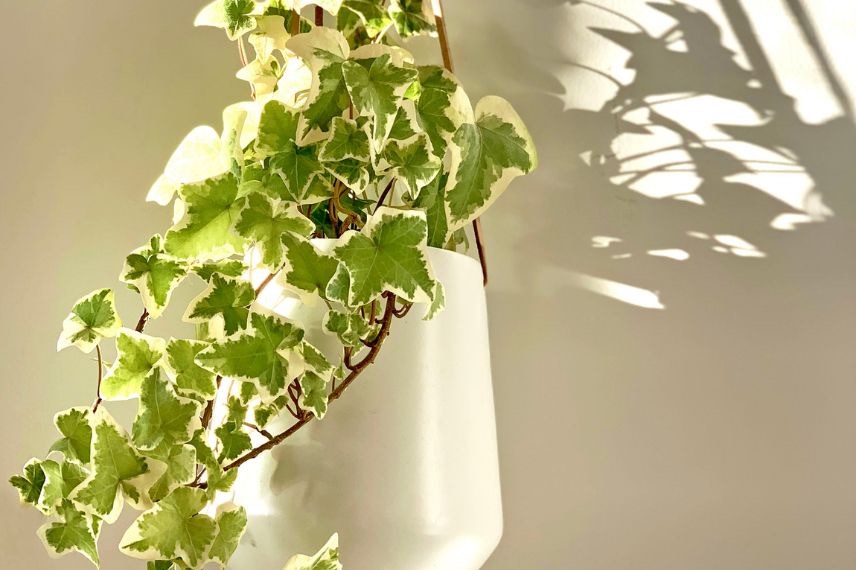
The Ivy or Hedera helix is a climbing or cascading plant, easy to maintain, that can thrive in shaded areas. Simple to cultivate, it is well-suited to the sometimes low light conditions of bathrooms as well as high ambient humidity, while it also flourishes in brighter or slightly drier conditions. Numerous varieties exist, with decorative leaves marbled or variegated with white or yellow.
Peperomias
Peperomias are plants native to South and Central America. They are cultivated for their fleshy leaves, often adorned with silver or red patterns, which are round, ovate, heart-shaped, or lanceolate. They are somewhat tropical succulents. Peperomia is a highly adaptable plant that can tolerate a wide range of growing conditions, including dark and humid spots. It is also easy to care for. Peperomia requires well-drained soil and indirect light to thrive. Bathrooms generally provide natural indirect light and high ambient humidity, making them an ideal location for this plant. It enjoys slight dryness of the substrate, meaning that while it appreciates humid atmospheres, it does not require frequent watering.
→ Learn more about this plant in our comprehensive guide: Peperomia, cultivation, care, choosing the right varieties.
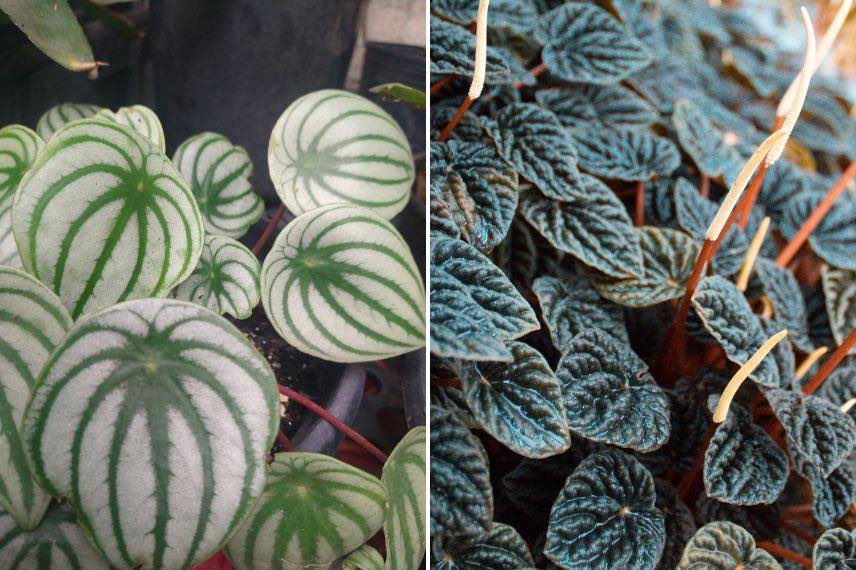
Peperomia argyreia and Peperomia caperata
Pothos
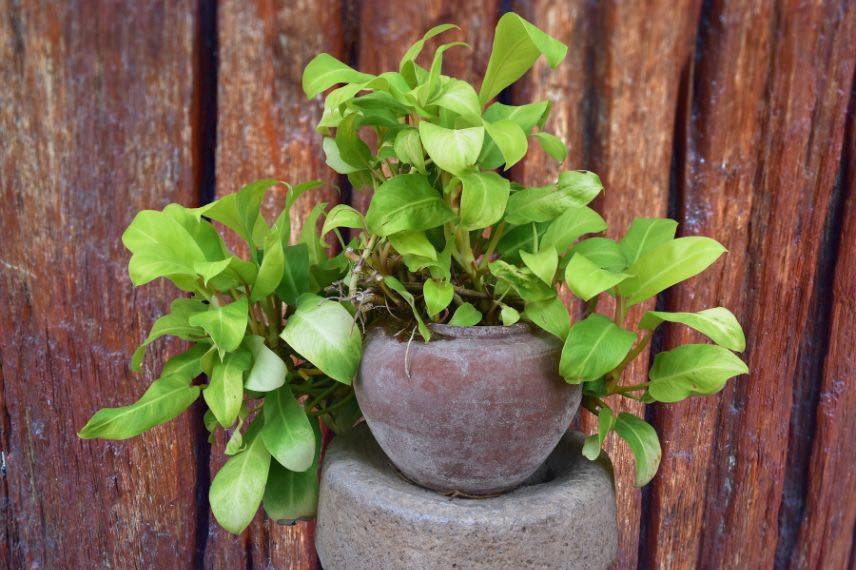
Pothos or Epipremnum aureum, also known as Scindapsus aureus, is a very resilient houseplant. It can thrive in low light and humidity conditions, making it an ideal plant for the bathroom. Pothos is easy to care for. It can be pruned to maintain the desired size and willingly climbs or cascades depending on whether it is placed high or with a support to climb. There are varieties with golden or variegated foliage in white or yellow. Often regarded as the perfect plant for beginners, it is also very resilient and won’t hold your mistakes against you. It appreciates and tolerates a wide range of conditions, so if your bathroom is dark, you can try placing a Pothos there.
Anthurium
The Anthurium is native to the tropical forests of Central and South America, and it is often grown for its large and beautiful red, pink, or white flowers. In addition to its stunning flowers, the anthurium also has shiny, evergreen leaves. This plant prefers warm, humid places and thrives in bright, indirect light.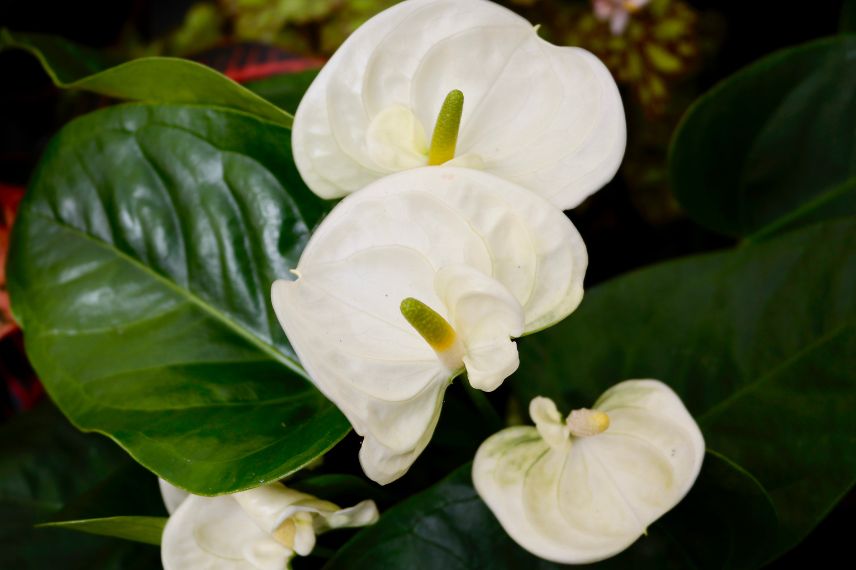
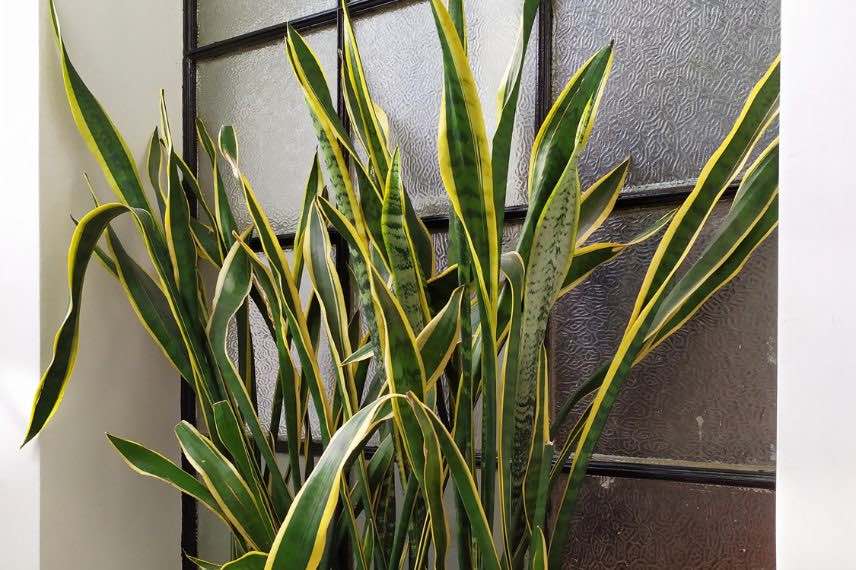
Sansevieria
Sansevieria, also known as “mother-in-law’s tongue,” is a succulent plant native to tropical Africa. It is often grown for its green, pointed leaves that can reach a height of 1 to 2 metres. Sansevieria is a very robust and easy-to-care-for plant, capable of tolerating a variety of growth conditions, including dark and dry spots to more humid environments. It is also highly resistant to diseases and pests. Sansevieria is ideal for the bathroom, as it can tolerate high humidity levels.
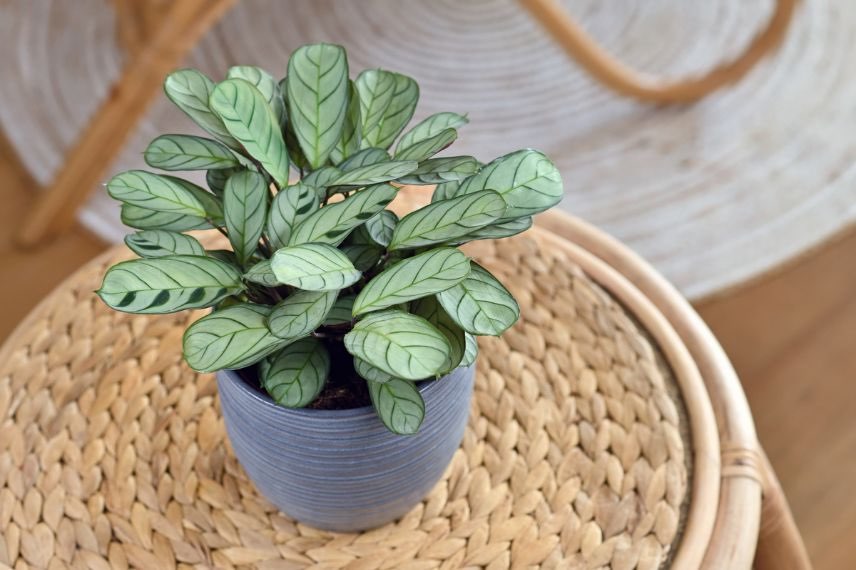
Ctenanthe burle-marxii 'Amagris'
This is a very specific choice, but when considering low light conditions and a humid atmosphere, plants from the Marantaceae family, particularly Calathea, come to mind. While I don’t recommend this family due to their challenging care requirements, there is, however, a specimen from the Marantaceae family that is much less demanding: Ctenanthe burle-marxii ‘Amagris’. This plant does not exhibit the tendency of Marantaceae to produce leaves with brown tips and edges, and it thrives in the growing conditions of a bathroom, even in low light.
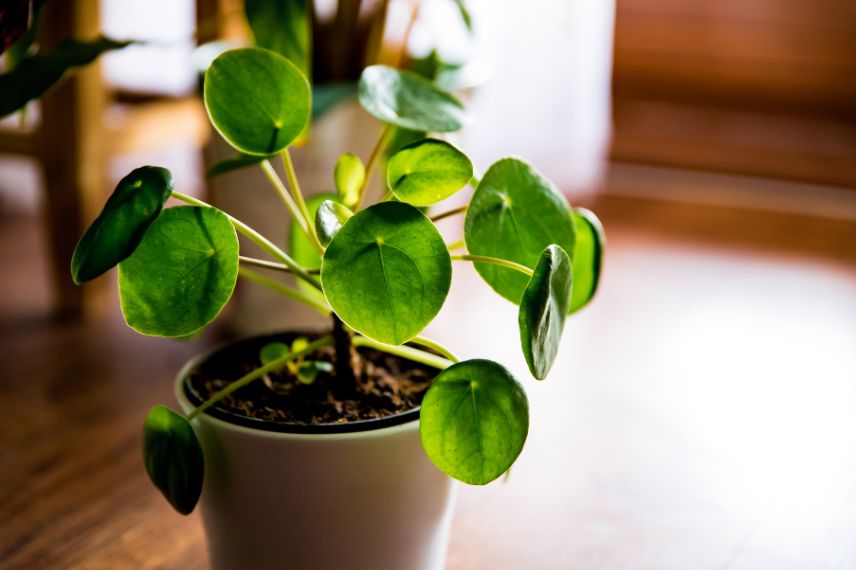
Pilea peperomioides
The Pilea peperomioides, also known as the “Chinese money plant,” originates from China but has become popular worldwide due to its round, glossy leaves that can be green, silver, or gold, with a unique shape, seeming to float on long, slender stems. This plant is easy to grow and can tolerate a variety of growth conditions, including medium light and humid environments. The Pilea does not require constant watering. It can withstand slight periods of substrate dryness and prefers well-drained soils. It enjoys indirect light, making it ideal for bathrooms that often provide natural indirect light.
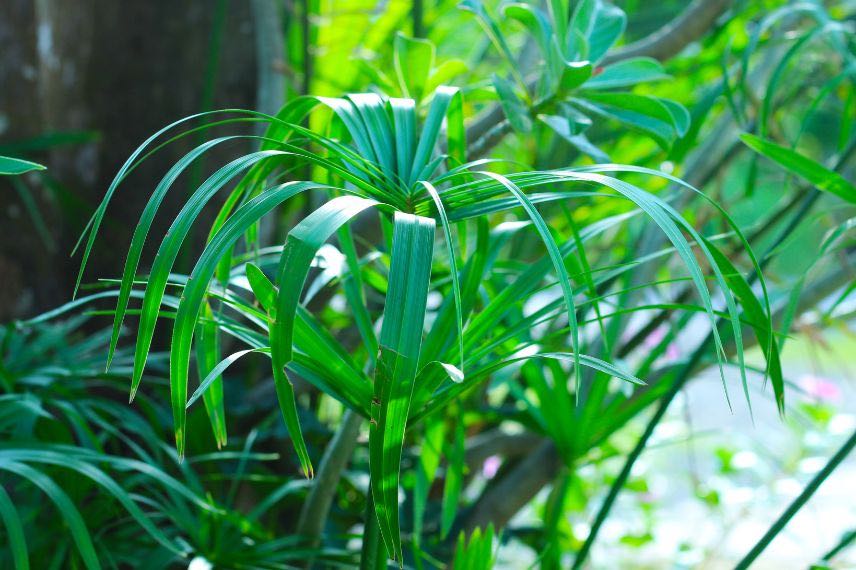
Papyrus
The Papyrus or Cyperus alternifolius, an outdoor plant in non-frost regions, can also be a very attractive indoor plant, with its upright stems and lovely umbels. It can only be grown when constantly submerged and will thrive in the often warm and humid conditions of bathrooms. Ensure it is placed in a well-lit position.
- Subscribe!
- Contents
Comments