


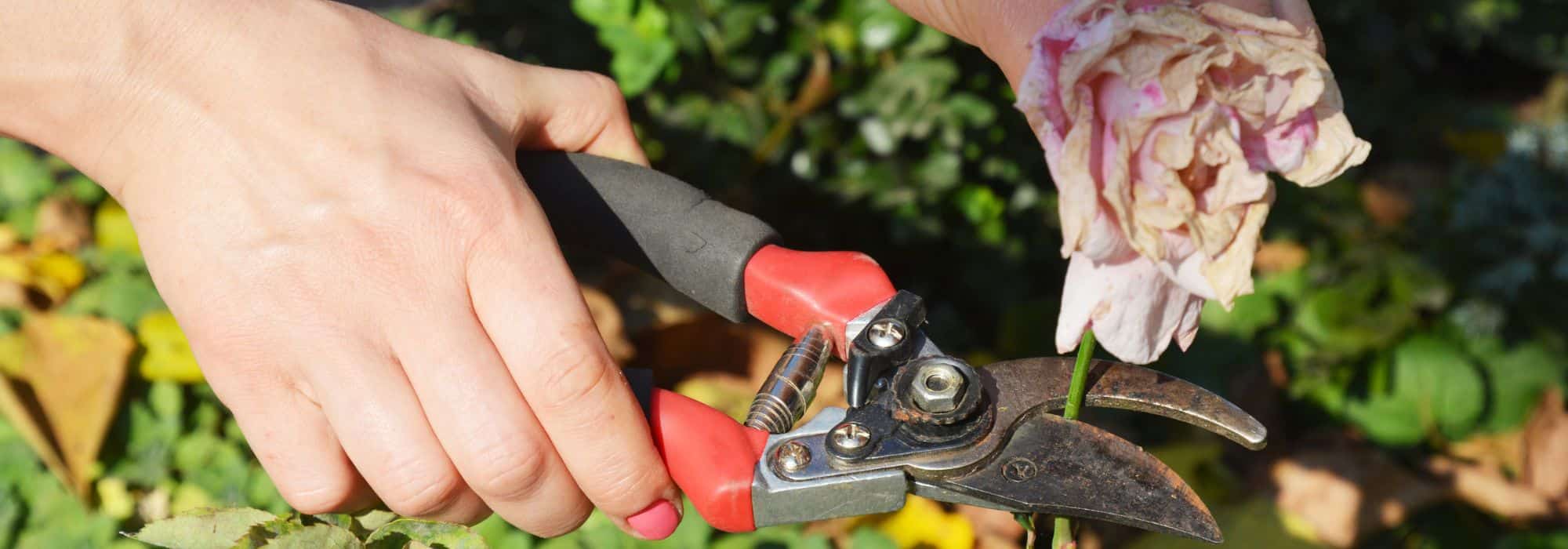
6 good reasons to prune faded flowers
for a blooming and well-maintained garden
Contents
For the gardener, flowers are primarily a source of beauty, adding lovely colour variations to borders and pots. They also attract butterflies and pollinators in a garden ballet. However, for plants, the goal is quite different, as flowers primarily allow them to reproduce and ensure the species’ survival. Nevertheless, when the flowers fade, the plant then dedicates all its energy to seed production. This process reduces the plant’s vigour and even marks the end of annuals and summer borders. Deadheading faded flowers is not complicated and takes more or less time depending on the size of the area and the number of plants. Yet, the efforts will be rewarded: discover 6 good reasons to deadhead faded flowers.
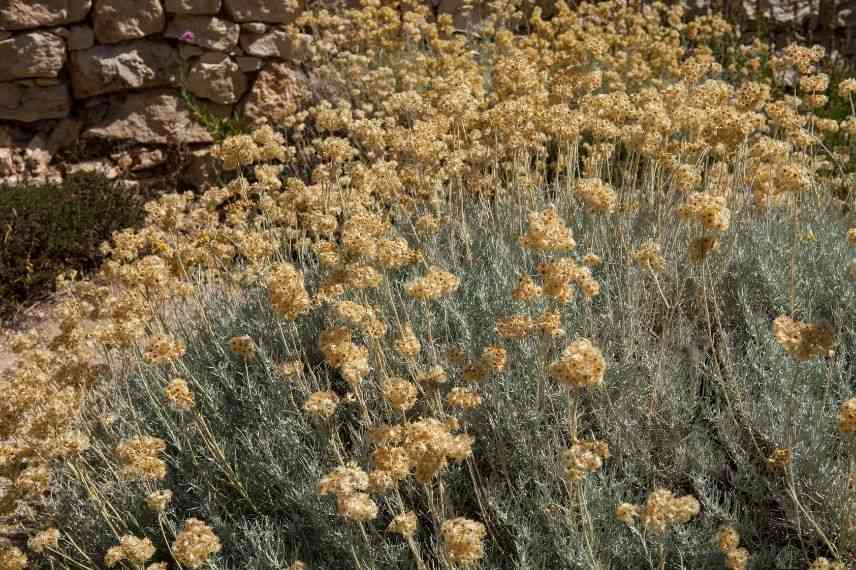
After flowering, Helichrysum requires pruning of faded stems.

To encourage new flower production
Nature is well designed! It often happens that a plant’s flowering is destroyed before the seeds reach ripeness, usually due to browsing by certain mammals. Deprived of their future seeds, most long-flowering or repeat flowering plants then start to produce new flowers to ensure their offspring. This is the case, for example, with hardy geraniums or annuals, petunias and surfinas.
Some perennials can even produce up to 3 consecutive flowerings if the previous two have not been successful. Moreover, the removal of a flower stem is frequently replaced by 2 or even 3 new shoots. Annuals will also ensure abundant continuous flowering until the first frosts if you regularly remove their faded flowers.
Therefore, by removing flowers that are starting to fade, you will encourage your plants to produce a new flowering, generally more abundant.
Tip: removing faded flowers before going on holiday allows you to return to find flower buds.
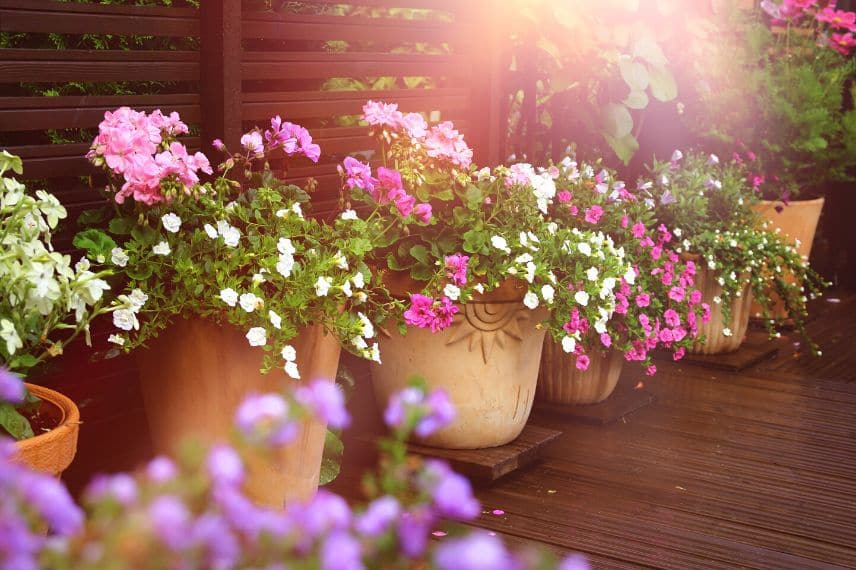 Removing faded flowers from annuals extends flowering until frosts.
Read also
Sowing a flower meadow: why, howTo achieve more beautiful foliage
The main ambition of plants is to ensure their offspring, including certain perennial plants with non-repeat flowering. It is solely for this purpose that the plant will mobilise all its energy and reserves to produce seeds. By removing faded flowers, you halt this momentum. These perennial plants, non-repeat flowering, will not be able to produce a second flowering, but they will then focus their energy on their leaves, which will encourage the appearance of new lush, dense, and robust foliage. Furthermore, the flowering of the following year will be much more abundant.
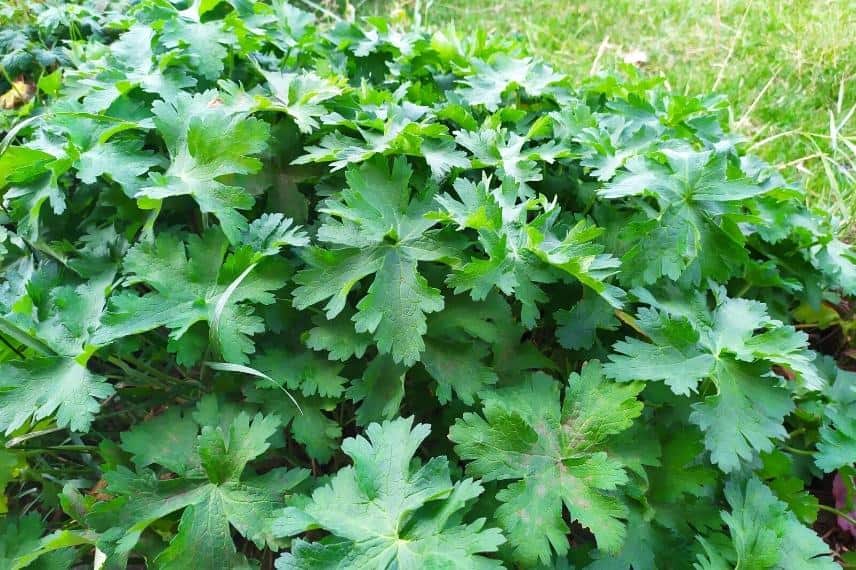
Removing faded flowers allows for a beautiful dense foliage
To maintain an aesthetic appearance
While some faded flowers retain a certain charm once they have wilted, others can sometimes create dull and greyish touches amidst flower beds or planters. Removing faded flowers as they appear helps maintain an aesthetic appearance in the garden as well as on the terrace. The colour harmony is then preserved, giving a sense of freshness, unless you prefer a slightly wild, rustic atmosphere. There can certainly be a few exceptions, such as the inflorescences of ornamental garlic, the translucent fruits of lunaria (money plant), or even Physalis (cape gooseberry).
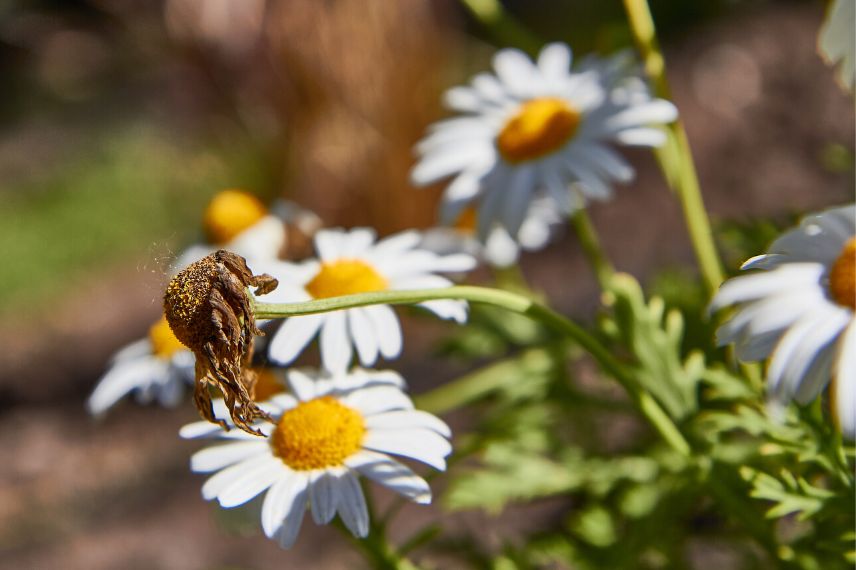
Removing faded flowers helps maintain an aesthetic appearance
To prevent bulb exhaustion
With most flowering bulbs, the plant stores its resources inside its bulb to first form its flower, and then to produce its seeds. Rarely used by gardeners, these seeds unnecessarily deplete the bulb, often resulting in a less spectacular flowering the following year, or even none at all in poor soil. To avoid this, the flower stem should be cut at its base when the flower begins to wither. Be sure to leave the foliage in place, as it will contribute to the regeneration of the bulb’s reserves. The leaves should only be removed when they turn yellow or dry out.
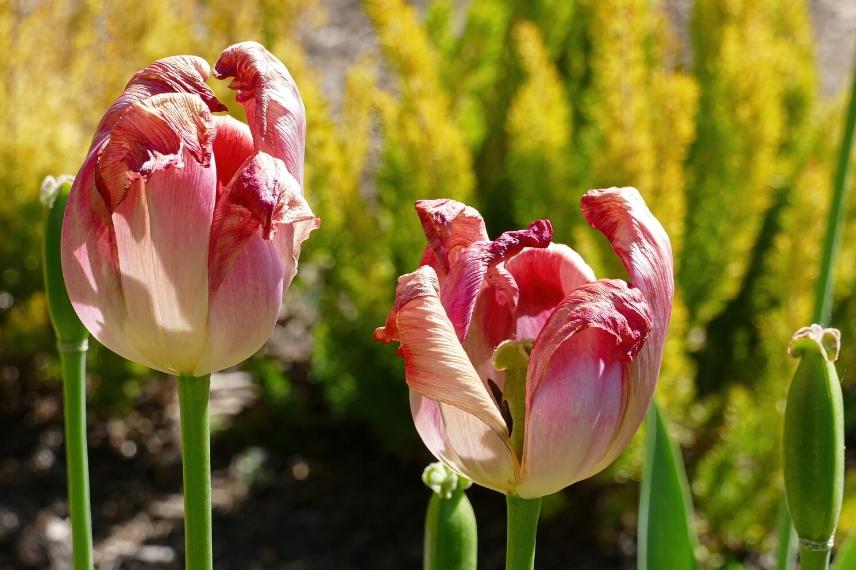 Withered tulip flowers</caption]
To prevent the formation of mould
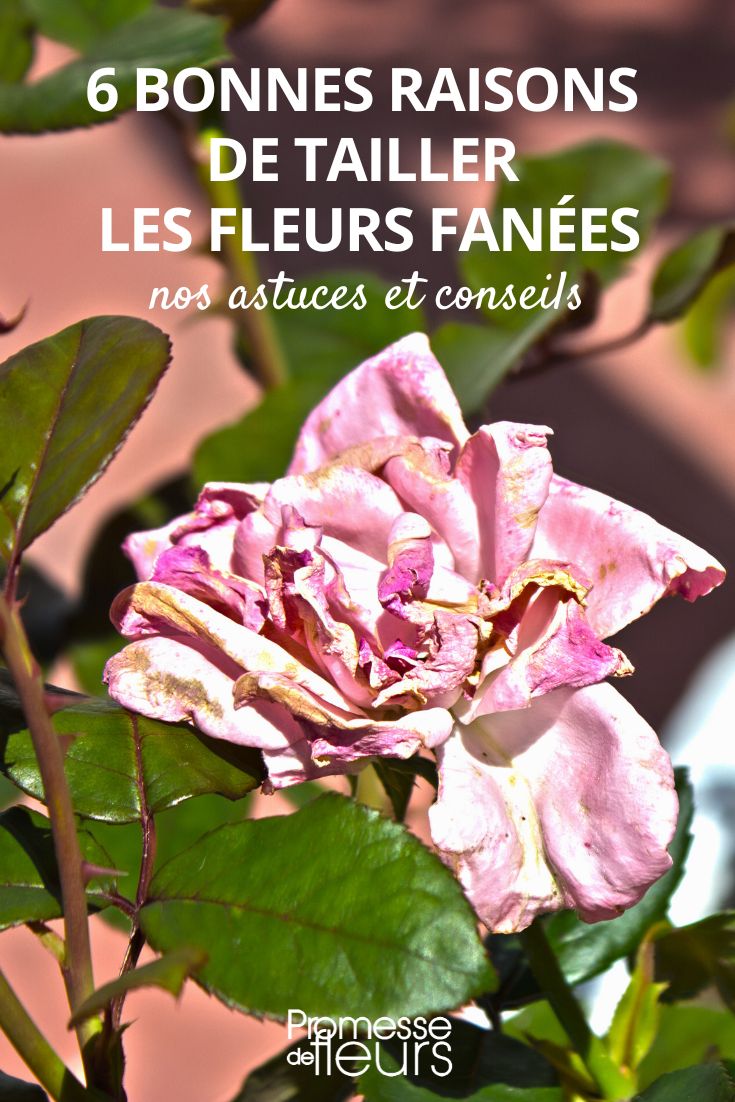
Sometimes, certain faded flowers do not detach spontaneously from the flower stems. Mold then forms on the damp petals, leading to stains when they fall and stick to the foliage or the terrace. This phenomenon is not uncommon in certain varieties of roses and in garden geraniums (zonal). To prevent the formation of mold and stains, regularly remove faded flowers by cutting the base of the stem, even if only a small part of the panicle seems affected.
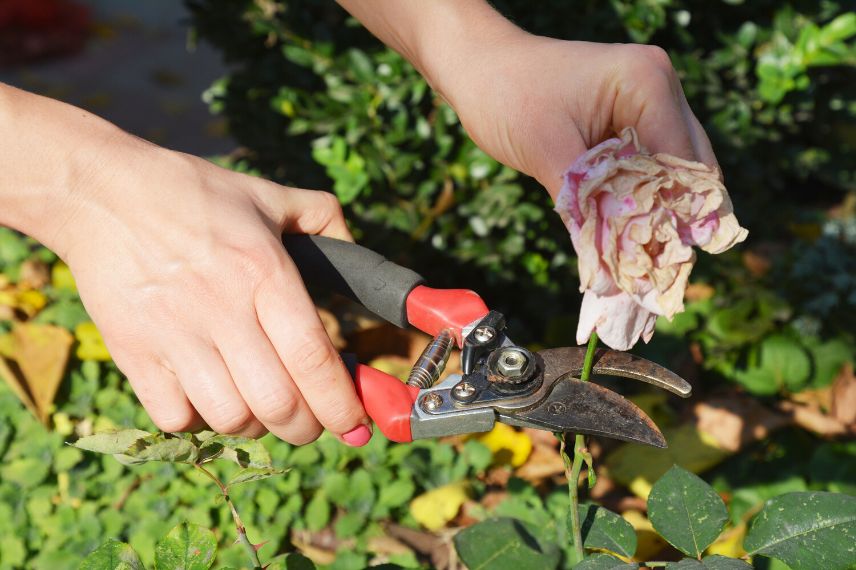
Cutting faded flowers helps avoid unsightly stains on the foliage
To control spontaneous sowing
Removing faded flowers also helps prevent seed setting, particularly in invasive species such as the well-known dandelion, but also for example in lemon balm, rocket, lychnis, or forget-me-nots. This helps avoid spontaneous sowing by regularly removing faded flowers in the garden, or it can simply be restricted by leaving only a few flowers. Additionally, it prevents certain overgrowth or colonisation of the lawn, paving joints, and gravel paths.
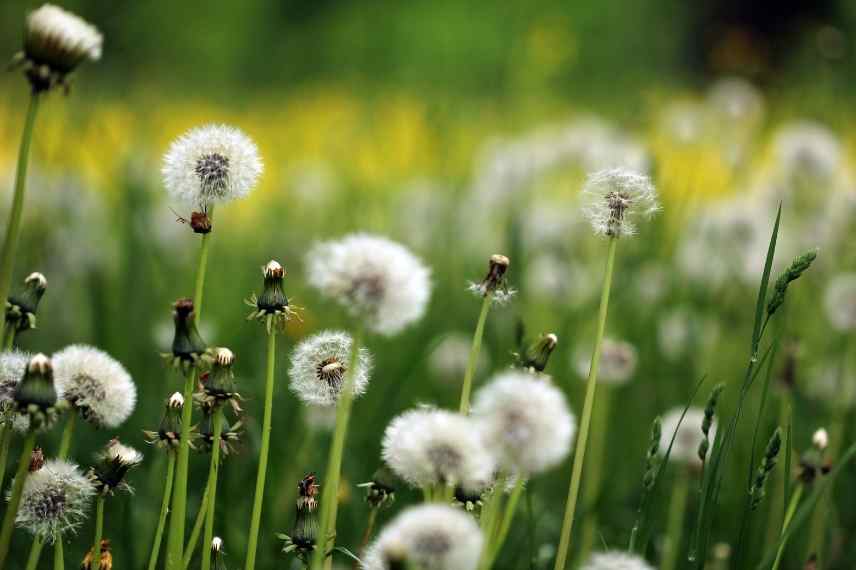 If the faded flowers of the dandelion are not removed, they will self-seed nearby</caption]
- Subscribe!
- Contents
Comments