





























7 dwarf palms for patios, balconies or small gardens
Compact varieties suited to small spaces and that can be grown in pots
Contents
There’s no need to have a large garden to enjoy the exotic charm and shade offered by the palms. Some varieties, in fact, have a compact habit, which will allow them to be grown in pots or in restricted spaces.
These dwarf palms do not exceed 3 metres in height, making them suitable for a small garden, on a terrace, on a balcony or even indoors.
Discover our selection of easy-to-grow small palms, perfect for restricted spaces.
And for more cultivation tips: Palms: plant, grow and care.

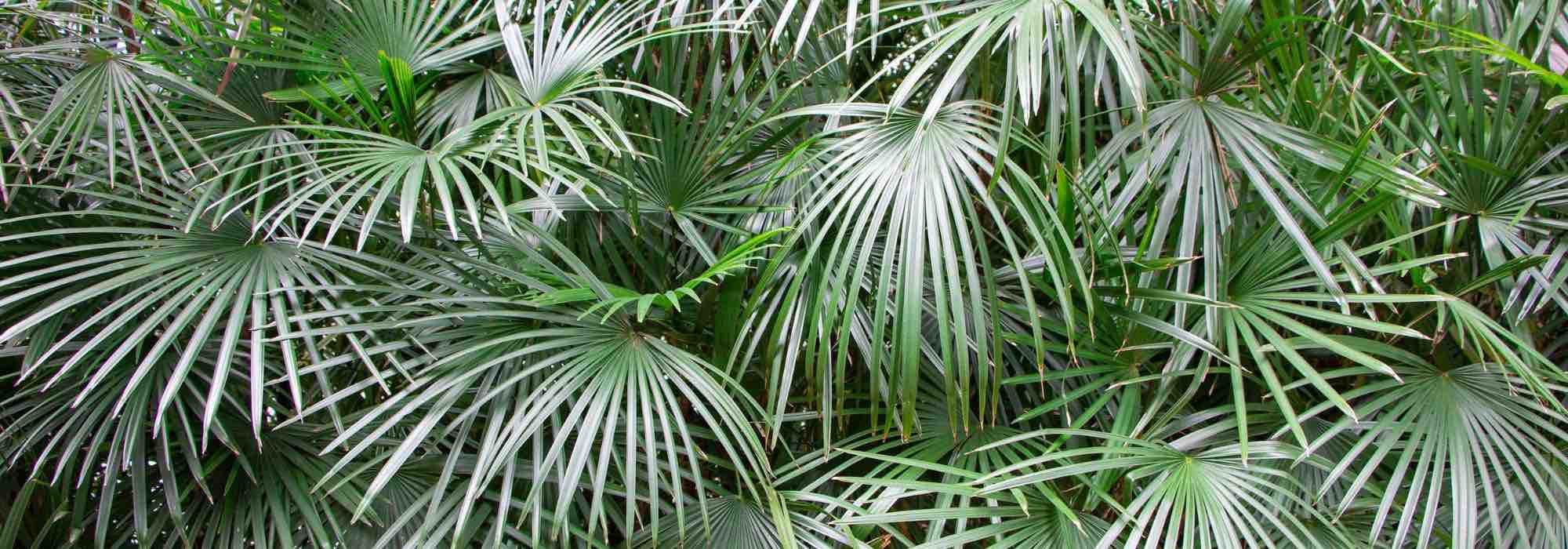
Rhapidophyllum hystrix: a very hardy dwarf palm
The needle palm (Rhapidophyllum hystrix) is a species native to the damp understory of North America. It has the advantage of withstanding very low temperatures, down to -20°C. This allows it to be grown outdoors in most of our regions. Unlike other species, it loves cool, moist soils, even waterlogged. It will therefore thrive even in cold, wet climates.
Enjoy its handsome, large fan-shaped leaves, with a glossy blue-green colour. They form a dense, bushy clump that will add volume and structure. On the petioles, you can distinguish long black thorns, which give this species its name as the “needle palm”.
It’s a perfect candidate for adding an exotic note to a garden bed, or around water features. Plant it also on a terrace, balcony or in a small urban courtyard.
This dwarf palm can be grown either in the ground or in a large pot or tub, thanks to its modest silhouette. It will reach a height of 3 metres with a 2.5 metre spread.
Grow it in shade or partial shade, always sheltered from direct sunlight. Plant this palm in soil rich in organic matter, for example alongside ornamental foliage of Hostas, as well as exotic Rodgersias.
Read also
Growing a palm tree in a potChamaerops humilis 'Vulcano': a compact silhouette
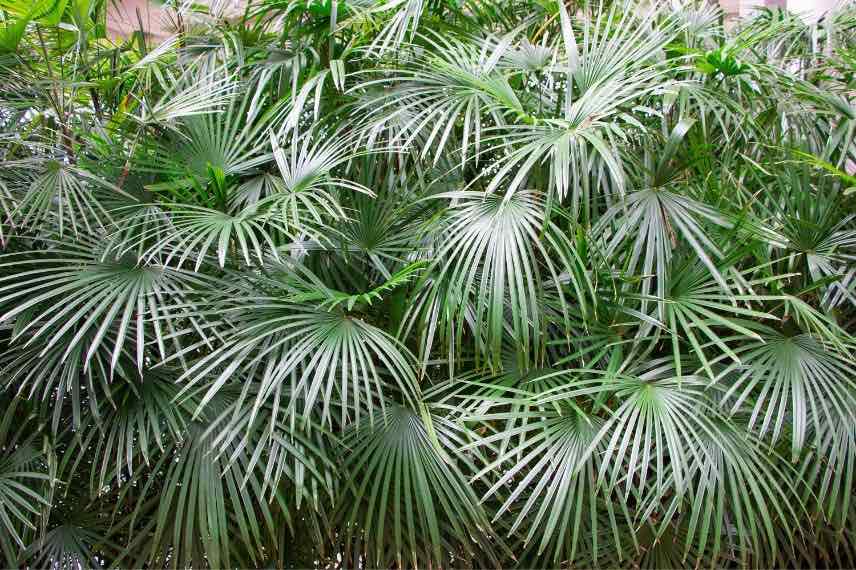
Chamaerops humilis are among the most popular dwarf palms. The variety ‘Vulcano’, native to the eponymous island off Sicily, has the advantage of being particularly compact and small. It measures just 2.50 m tall with a 1.70 m spread. It is therefore an ideal choice for small spaces or pots.
Its bushy silhouette consists of palmated, fan-shaped leaves in a pretty grey-green. They are thorn-free, which allows this palm to be placed even near walkways.
Hardy despite its Mediterranean origins, this variety will withstand frosts down to -12°C. However, provide it with well-drained soil that does not become waterlogged in winter, in a sunny location. Once established, it will readily withstand drought and tolerate sea spray. This easy-to-grow palm will tolerate even poor, stony or sandy soil. It will be perfect in a dry garden, alongside other undemanding plants, such as the lavender, the rosemary and the rockrose.
For more information: Chamaerops, Dwarf palm: plant, grow and care for
Phoenix roebelinii: a dwarf palm that can be grown indoors.
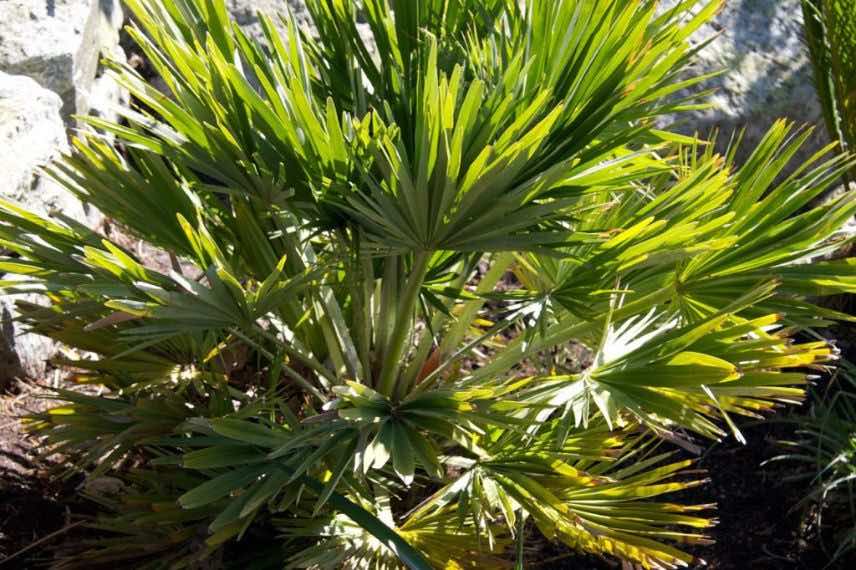
The dwarf date palm Phoenix roebelinii comes to us from the tropical regions of India. Frost-sensitive, not tolerating temperatures below -4°C, it will need to be protected from frost in winter in most of our regions. But it can easily spend the warmer months outdoors, provided that frosts are no longer a risk. It also benefits from tolerating the dry air of indoor environments: a greenhouse or conservatory is therefore not required to house it.
Its graceful habit makes it particularly ornamental. This palm bears gracefully arched fronds, which form a rounded crown, light in weight. They are a vivid green and are spiny.
Take advantage of its compact silhouette, not exceeding 2.5 metres in height with a 1.75-metre spread. It will be perfect in a pot or in a small garden on the French Riviera, where there is no frost.
Easy to grow, it will tolerate watering not always well managed (occasional under- or over-watering) and will enjoy sun or partial shade. To further enhance its exotism, place it alongside other indoor palms, such as the Areca.
For more information: Phoenix: planting, cultivation, maintenance
Read also
Palms by climateRhapis excelsa: bamboo-like appearance
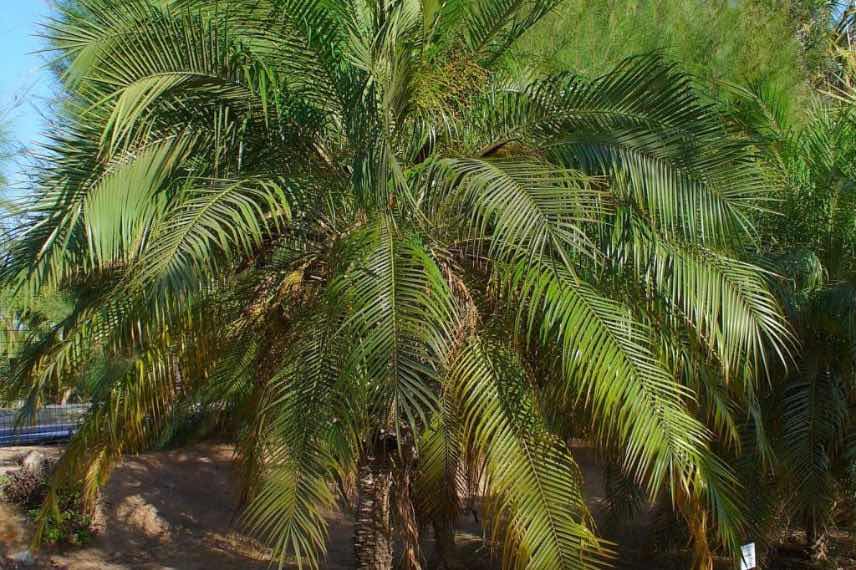
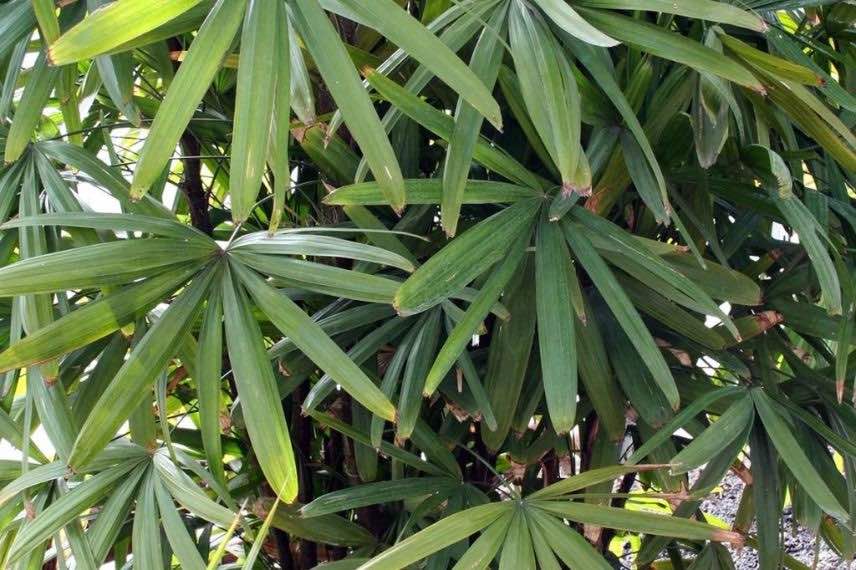
Rhapis excelsa stands out for its bamboo-like appearance. This species, native to China, indeed produces multiple false trunks (stipes), revealing a pattern of green rings. From its stems rise palmately divided leaves, cut into large leaflets, in a vivid green. A highly decorative and distinctive species, ideal for creating a tropical display.
Moderately hardy, it will tolerate frosts down to -7°C, allowing it to be grown in the ground in our milder regions. It will reach a height of 3 to 4 metres with a spread of 2 metres. If grown in a pot, it will not exceed 2 metres in height.
The bamboo palm will appreciate shaded or partially shaded positions, sheltered from wind and direct sunlight. It grows in moist soil that never fully dries out. In regions experiencing hard frosts, it should be brought under cover in a conservatory or greenhouse during winter, in a space that is lightly heated but bright. From its origins, it has retained a liking for warm and humid environments: so don’t hesitate to mist its foliage.
Of course, it pairs very well with Fargesia, non-running bamboos perfect for small spaces. Also consider pairing it with a Strelitzia reginae or Bird of Paradise, with its stunning colourful flowering.
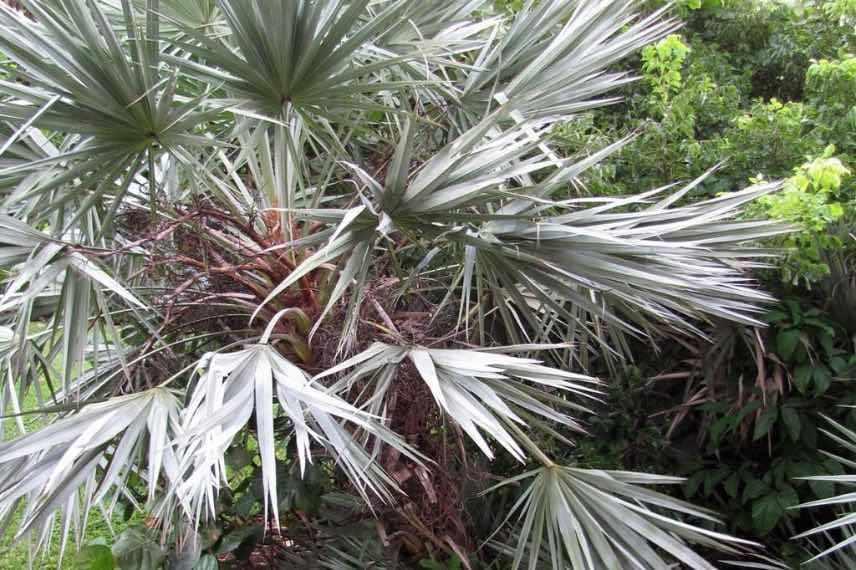
Serenoa repens ‘Silver’: blue-silvery foliage, highly ornamental.
Serenoa repens ‘Silver’ is an ideal candidate for landscaping a small garden. But it’s also a perfect palm for the balcony or terrace. Its growth is very slow and after several years it will reach about 2–3 m in width, which makes it easy to grow in a pot or in a restricted space.
Also known as the Florida palm, owing to its North American origins, this species graces us with palmately leaves in a beautiful blue-green colour, turning silvery. This foliage provides as much exotic appeal as brightness. The fronds can reach up to 60 cm in length and the petioles are adorned with small curved thorns. With a bushy habit, this palm forms short, prostrate trunks, allowing it to form a handsome ornamental clump as it spreads.
Hardy enough, ‘Silver’ is capable of tolerating frosts down to -8°C. Plant it in well-drained soil where water does not stagnate. It will tolerate substrates even poor, sandy and saline, but will appreciate moisture (never let the soil dry out completely). It will flourish in partly shaded or sunny positions, but not in overly hot and dry conditions.
For example, plant it beside a small Eucalyptus, with equally evergreen, colourful and decorative foliage.
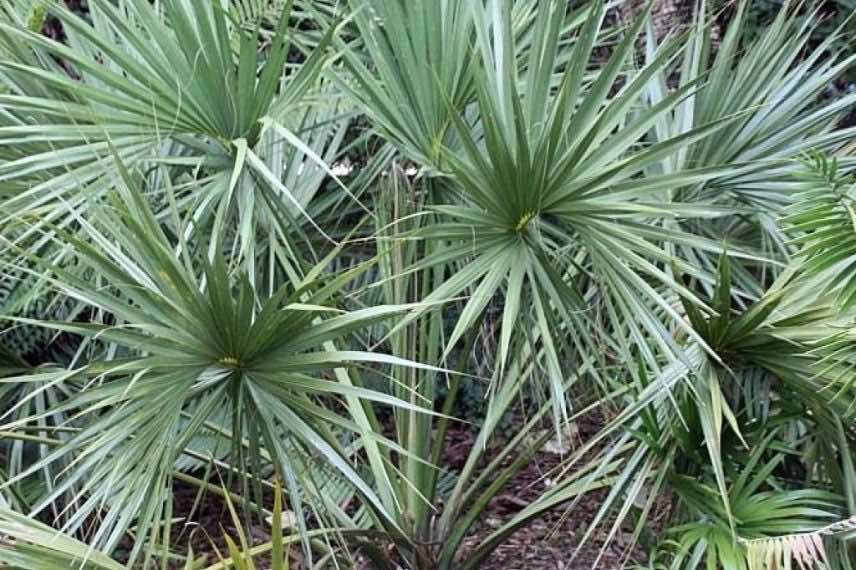
Sabal etonia: an easy-care mini palm
Sabal etonia is a dwarf palm that will slowly reach about 3 metres tall with a 2-metre spread. Its false trunks are generally subterranean (although they may emerge from the soil over time). This gives the impression that the leaf petioles emerge directly from the ground. The tough, fan-shaped foliage, in green, is typical of palms.
This species is native to the Florida scrublands, which explains its undemanding nature. It is easy to grow, with no particular requirements, tolerating even poor and dry soils. This palm also has good hardiness, down to around -10°C to -12°C, which allows it to be grown in small gardens across many regions. Elsewhere, container culture will of course be perfectly possible.
In a contemporary setting, it will sit alongside a Yucca.
For more information: Sabal: planting, growing and maintenance
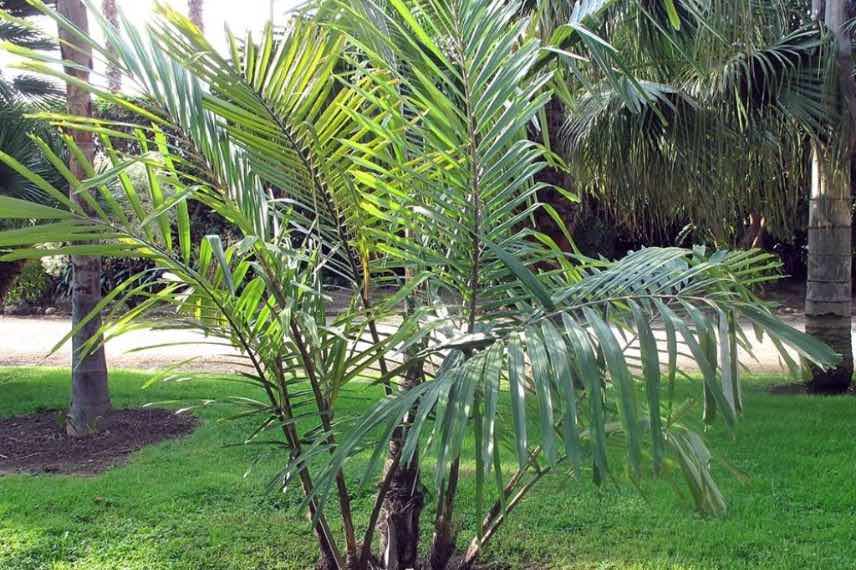
Arenga englerii: a beautiful slender silhouette
The Formosan palm Arenga englerii appeals to us first for its compact habit, which makes it a species suited to pot culture and small gardens. But we also like its slender silhouette, which adds volume and verticality.
At maturity, this dwarf palm will reach 3 metres in height and 2 metres in spread. It will produce one or more slender trunks, dark in colour. At the top of these false trunks, there are long, slender fronds. They are green, with silver-white undersides.
The summer flowering, in the form of colourful clusters, will take a few years to appear. It will mark the end of this palm’s life, but it will have first produced offsets, which will ensure its longevity.
Grown in the garden, this palm is hardy down to -7°C. In pots, however, plants are always less frost-tolerant. If you live in a region with harsh winters, you will need to bring your mini palm indoors to a sheltered room during the cold season.
Originating from Southeast Asia, this palm loves soils rich in organic matter, staying moist, but well-drained. It will thrive in mild, humid climates, protected from the hottest sun’s rays.
In an exotic setting, it will look wonderful beside banana plants and cannas.
- Subscribe!
- Contents
Comments