





























7 Easy-to-grow succulent plants
Discover these cacti
Contents
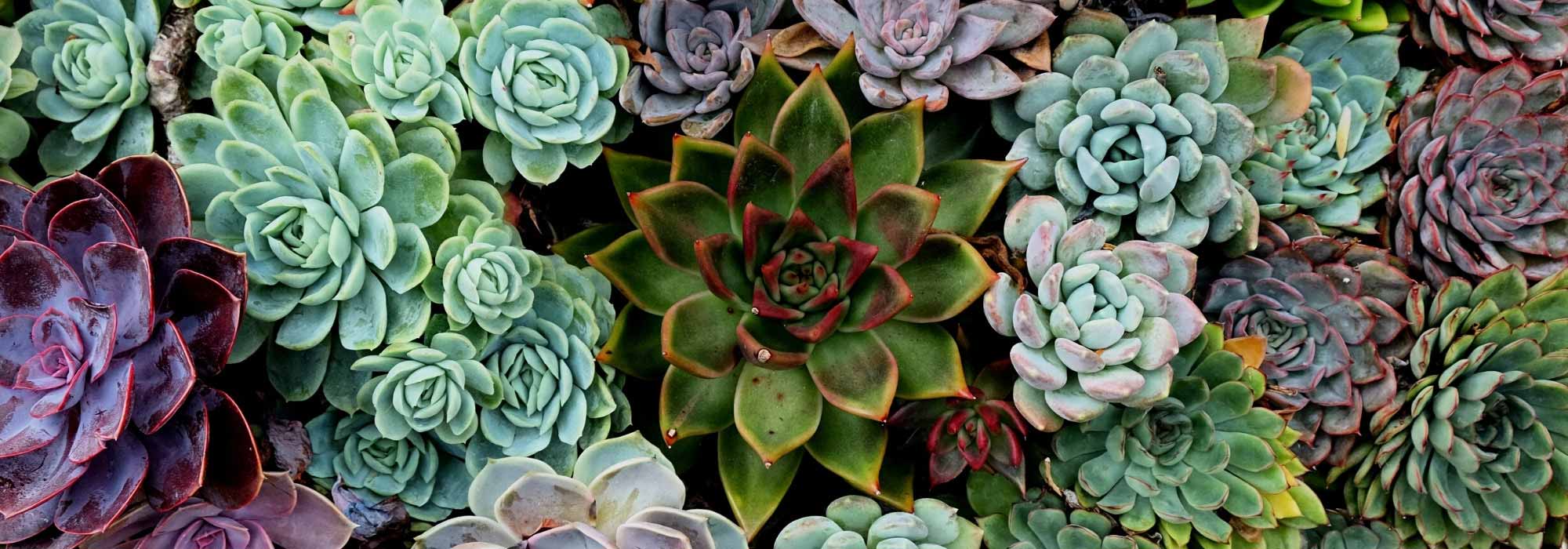
Succulent plants, also called succulents, have the ability to store water and minerals in their swollen stems or leaves, which makes them highly drought-tolerant. They are very water-efficient and require little maintenance. A large number of them grow in rosettes, with the leaves arranged all around the collar, evoking a rosette or a water lily flower. Some are not very hardy and can only be planted in the ground in regions with very mild climates, such as the Mediterranean basin. Most of them, however, adapt very well to container growing, allowing attractive displays, which means you can take them out onto the terrace in summer and bring them back under shelter for the winter. Discover our selection of the easiest succulent plants to grow!

Houseleeks (Sempervivum)
Houseleeks, or Sempervivum form dense rosettes that sit on the soil and are notably hardy. The rosettes are usually numerous and tightly packed, consisting of a large number of leaves arranged in a dense, imbricate pattern. Houseleeks come in a wide range of colours: they can be green, purple, red, grey, and may sometimes display multiple colours. Houseleeks also form pretty star-shaped flowers, very delicate, mostly in pink tones. Some species grow wild in France, such as Sempervivum tectorum, also known as the roof houseleek, or Sempervivum arachnoideum, whose rosettes are covered with white bristles, evoking a spider’s web. There are also numerous horticultural varieties, some distinguished by their striking colours, for example orange-yellow in the houseleek ‘Chick Charms Gold Nugget’ or dark purple, almost black in the variety ‘Dark Beauty’. Don’t hesitate to pair different houseleek species together, mixing colours, for example to create a lovely pot display. Houseleeks are ideal for accompanying sedums or stonecrops.
To learn all about their cultivation, see our complete guide: “Sempervivum, houseleek: planting, growing and care”
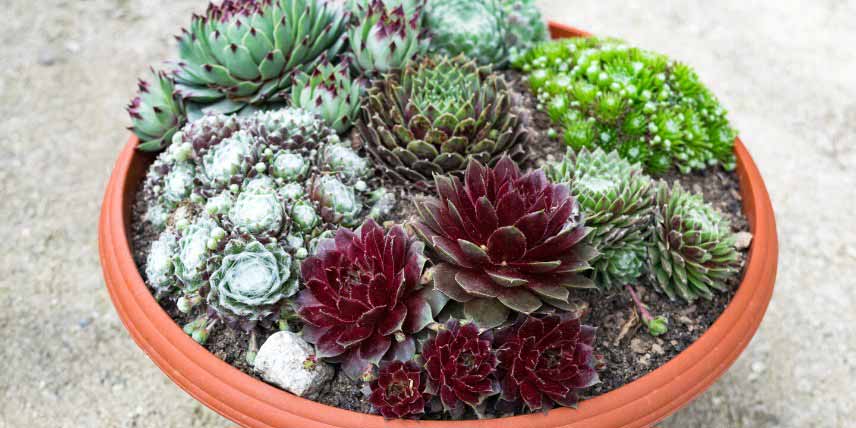
By combining different varieties of houseleeks, you can create very beautiful pot arrangements!
Read also
How to create a dry exotic garden?Echeverias
Echeverias form elegant rosettes, particularly architectural, much larger and thicker than those of houseleeks. They often have several hues and come in silvery-grey, pink, purple and blue-green tones, etc. They can reach up to 20 cm in diameter and typically form a pretty geometric rosette. The leaves are relatively broad, spatulate. We invite you to discover the Echeveria lilacina, silvery grey, with pink and bluish hues, as well as the variety ‘Perle Von Nürnberg’, whose fleshy, ovate and triangular leaves vary in different shades, from green to grey, including purple, pink and red tones. Echeverias enjoy direct sun, but will also tolerate partial shade. They are perfect for creating container plantings, pairing different varieties together, as well as other succulent plants such as Aeoniums, kalanchoes, sedums, Crassula ovata, and also alongside the Portulacaria afra ‘Variegata’. If you live in a frost-free region, you can also incorporate it into a rock garden within a Mediterranean-style garden, alongside agaves and opuntias.
Discover our complete guide: “Echeveria: planting, growing and care”
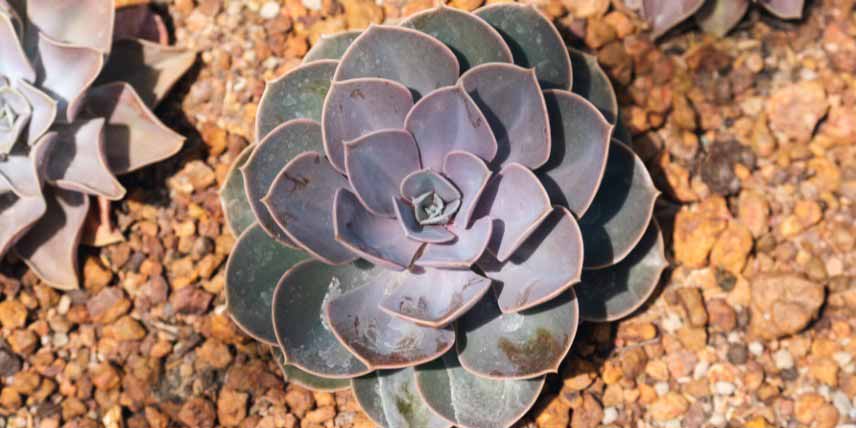 Echeveria ‘Perle Von Nürnberg’
Aloes
Aloes form rosettes of fleshy, elongated leaves. The best known is obviously the Aloe vera, renowned for its medicinal properties, but there are many other species. We particularly recommend the Aloe polyphylla, which forms lovely spirals, or theAloe aristata, which resembles a Haworthia and has pointed leaves marked with white spots. They are both hardy down to -8 to -10 °C. When they flower, Aloes bear handsome spikes of tubular flowers in yellow, orange or red, reminiscent of Kniphofia blooms. Aloes are perfect for creating an exotic rock garden, alongside Agaves, Opuntias and Yuccas. They will also fit into a Mediterranean garden, alongside Euphorbias, Cistus, Helianthemum, Tulbaghias, grasses and lavenders.
Discover our full sheet: “Aloes: Planting, growing and care”
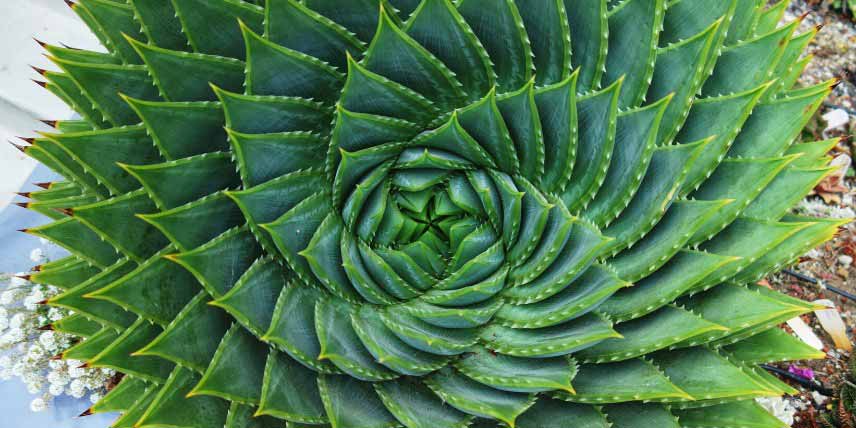
Aloe polyphylla forms splendid rosettes
Read also
10 hardy plants for an exotic dry gardenAgaves
Agaves are imposing plants with ample, highly architectural foliage. They generally form long, thick leaves that are somewhat spiny and pointed at the tips, and easily form the focal point of an exotic border or a large rock garden. There are nearly 200 agave species and varieties. Agave americana is one of the most cultivated, particularly in its variegated form (Agave americana ‘Variegata’). Depending on the species, it can be hardy down to about -10°C. We also invite you to discover the Agave victoriae-reginae, as well as the Agave havardiana, which tolerates temperatures around -20°C. In the garden, the agave will naturally find its place in a large exotic rock garden, alongside aloes, opuntias and yuccas. You can also pair it with Madeira viper’s-bugloss, Echium fastuosum.
Our complete guide: “Agave: planting, growing and care”.
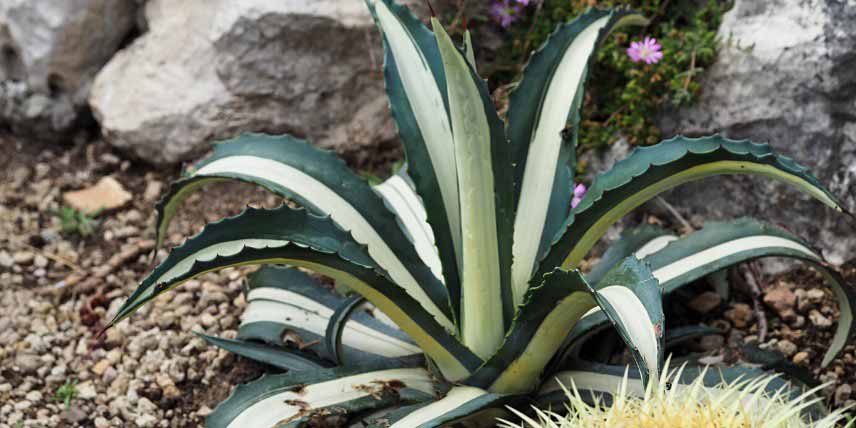
Agave americana ‘Mediopicta’
Aeoniums
Aeoniums are superb succulent plants native mainly to the Canary Islands, but also to Madeira, Cape Verde and North Africa. They can only be grown in the ground in frost-free regions, such as the French Riviera, but they adapt very well to pot culture. Aeoniums form rosettes carried at the ends of upright, ramified stems, giving them the habit of a small bush. The rosettes are elegant, with a pretty rosette or spiralled form, in tones generally green, purple or red. Some varieties even offer variegated foliage! Aeoniums fit beautifully into displays of succulent plants in pots, alongside Kalanchoes, Echeverias and Sedums, to vary the shapes and colours.
Discover our full guide: “Aeonium: planting, growing and care”
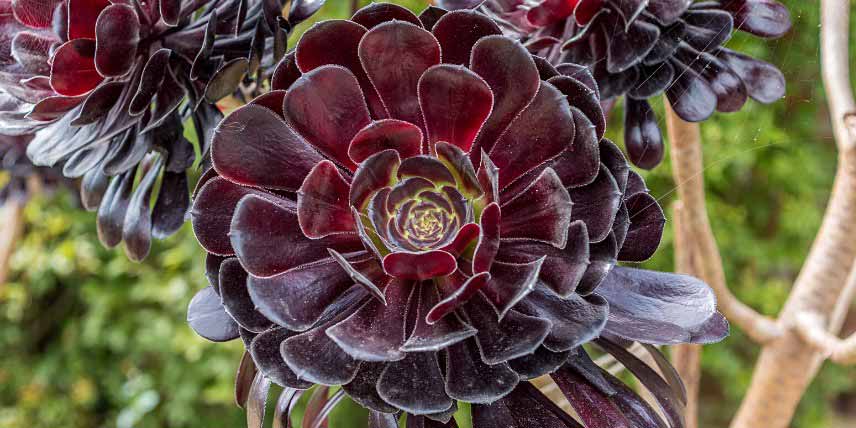 Aeonium arboreum ‘Schwarzkopf'</caption]
Mangaves
Mangaves are the result of a hybridization between Manfredas and Agaves. They have kept the best of their two parents: the growth rate and the decorative patterns and colours of the Manfredas, as well as the imposing and graphic appearance of the agaves. There are now many Mangave varieties, available in a beautiful palette of colours. They can have blue-grey, green, purplish-red, brown tones… They often display several colours, with leaves spotted, for example. In the garden or on a terrace, pair them with Yuccas, Cordylines, Dasylirions, Aloes, Euphorbias and Agaves. You can also pair them with the pretty flowering of kniphofias, crocosmias and eucomis.
Discover our complete guide: “Mangave: planting, growing and care”
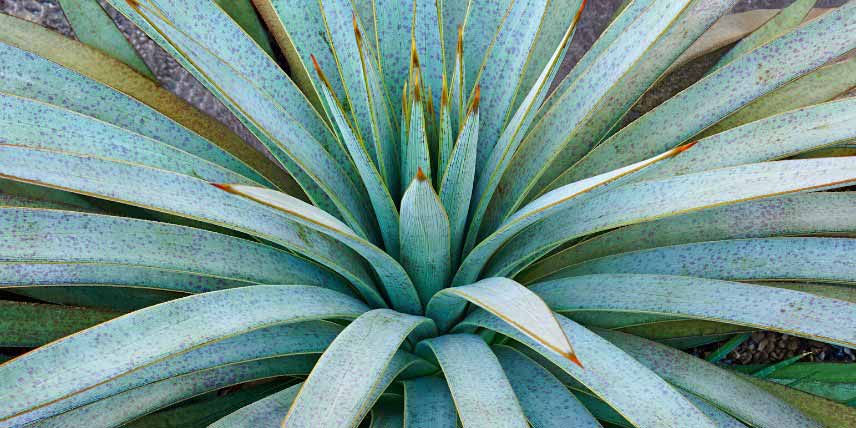
Mangave ‘Man of Steel’
Haworthias
Haworthias are charming little succulent plants native mainly to South Africa. The best known is probably the Haworthia fasciata, which forms small rosettes of dark green, narrow, pointed leaves marked with transverse white stripes. This gives it a pretty zebra-like effect, very distinctive. Haworthias rarely exceed 10 cm in height, but they readily produce offsets, which allow them to spread a little in width. They are not hardy and are therefore usually grown in pots, indoors or in a greenhouse or conservatory. They require a well-draining substrate and enjoy good bright light, but they dislike direct, scorching sun.
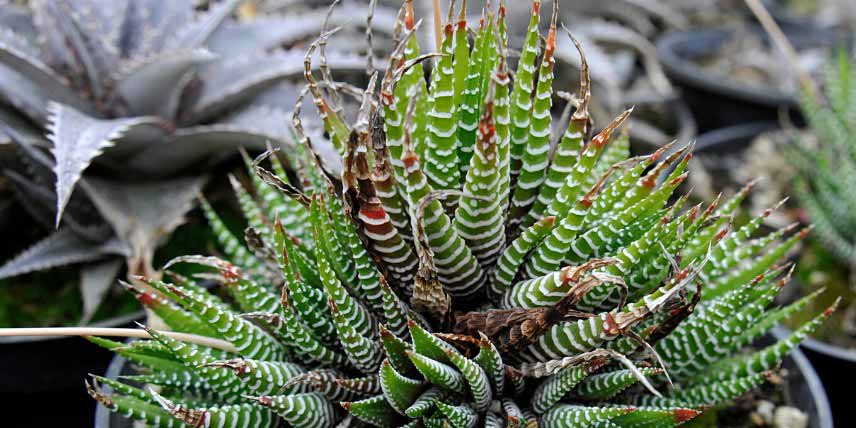
Haworthia zebrina (photo: Megan Hansen)
- Subscribe!
- Contents

Comments