





























7 essential shade trees to protect you from the sun this summer
Different species suited to small or large gardens, to cope with the summer heat
Contents
In summer, what could be better than basking in the benevolent shade of a tree in the garden or on the terrace.
In addition to their aesthetics, these plants naturally provide cooling and shade, allowing us to enjoy the outdoors with less heat.
They also generate a microclimate favourable to the growth of other plants, which will appreciate protection from the sun’s fierce rays.
To ensure this function, the trees selected should have rapid growth, relatively dense foliage and good sun tolerance. Evergreen foliage will provide protection year round, while deciduous foliage will let light through in winter.
As always, we invite you to choose based on your growing conditions (climate, soil, exposure…).
To help you with that, here is our selection of perfect shade trees for small or large spaces.

Albizia julibrissin ‘Rouge de Tuilière’
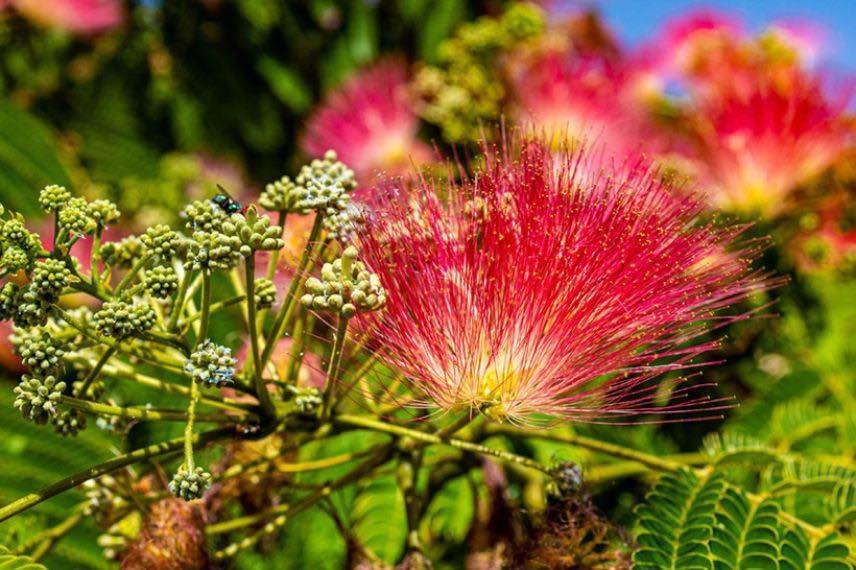
Albizia is one of the standout choices for providing both aesthetic appeal and sheltering shade in the garden.‘Rouge de Tuilière’ is a large shrub or small tree, reaching about 8 metres across.
Its umbrella-spreading silhouette and rapid growth are among its assets for providing shade, protecting both plants and people from the blazing sun.
The silk tree is also renowned for its beautiful summer flowering, in the form of silky plume-like inflorescences. This variety stands out with a colour so intense that it is almost red. It will inevitably bring a vibrant, even exotic touch. The flowers are lightly scented (powdery-sweet notes) and melliferous. The foliage of this small shade tree is equally attractive : it consists of fine, highly divided leaves, which impart a great sense of lightness.
Albizia ‘Rouge de Tuilière’ is an ideal shade tree for small gardens. Plant it in full sun, in a warm position. It tolerates drought as well as poor, calcareous or saline soils. Hardiness-wise, it will tolerate frosts down to -15°C and will only dislike heavy, waterlogged soils. Plant it as a standalone feature in the garden, or on the terrace to enjoy its light shade.
For more information: Albizia: plant, prune and maintain
Read also
7 trees to shade a terraceThe Morus alba 'Fruitless'
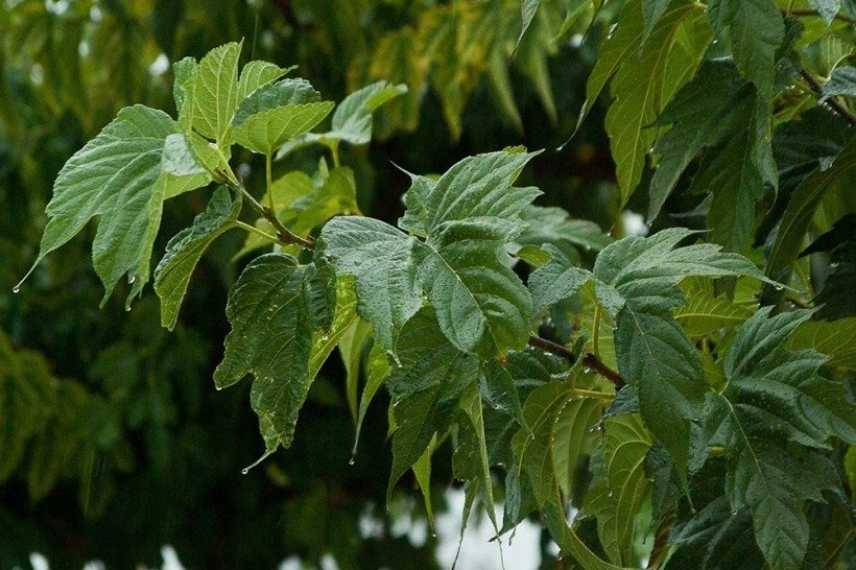
This fruitless white mulberry does not produce fruit, but will allow you to enjoy its ornamental qualities. It provides dense, refreshing shade to the garden, thanks to its thick foliage, whose appearance can vary depending on its position along the shoots. The green leaves take on luminous golden-yellow hues in autumn. They were once used as food for silkworms, in sericulture.
At maturity, expect around 10 metres in height and spread for this fast-growing shade tree. It develops a short, stout trunk, at the top of which a crown spreads, allowing easy shelter from the sun’s scorching rays.
If you wish to combine the shade and aesthetic qualities of the mulberry with its culinary appeal, you can of course opt for the species Morus alba or for the variety Morus alba or for the variety ‘Giant Fruit’.
Hardy, tolerant of heat, drought and pollution, it’s a genuinely easy tree to live with. Provide it with deep soil and space, so that its root system can develop unimpeded. Plant it in a sunny location.
For more information: Mulberry, Morus: planting, pruning and care
Eucalyptus rubida
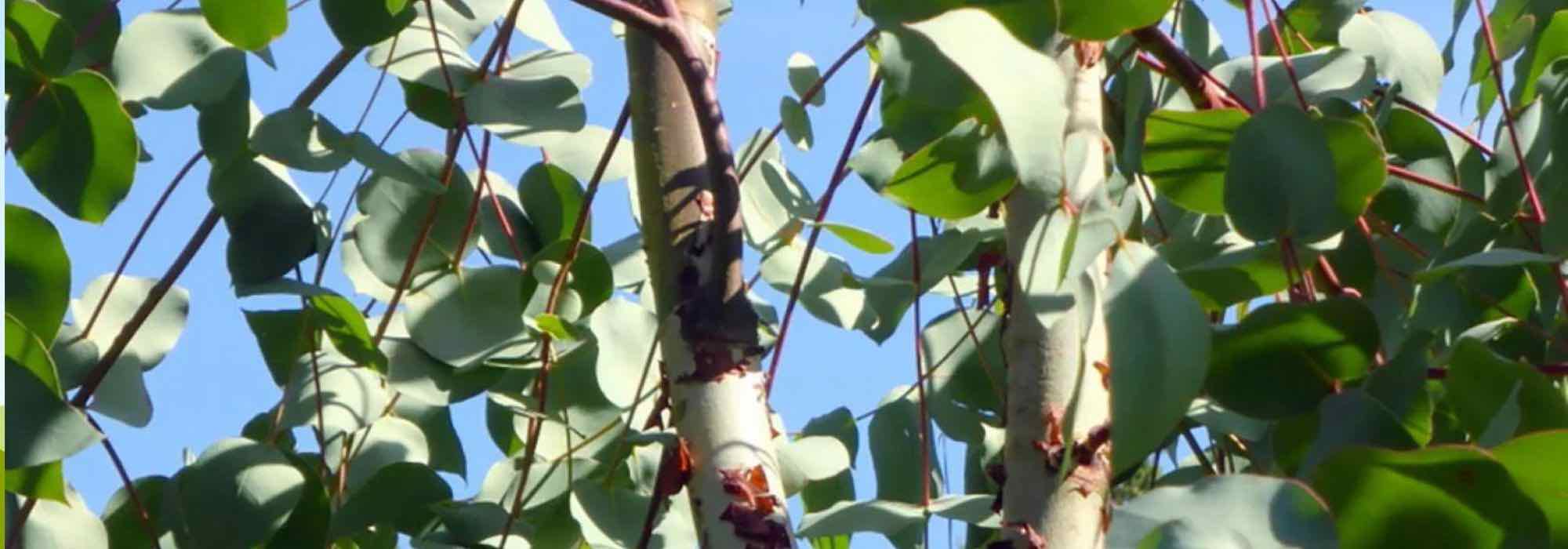
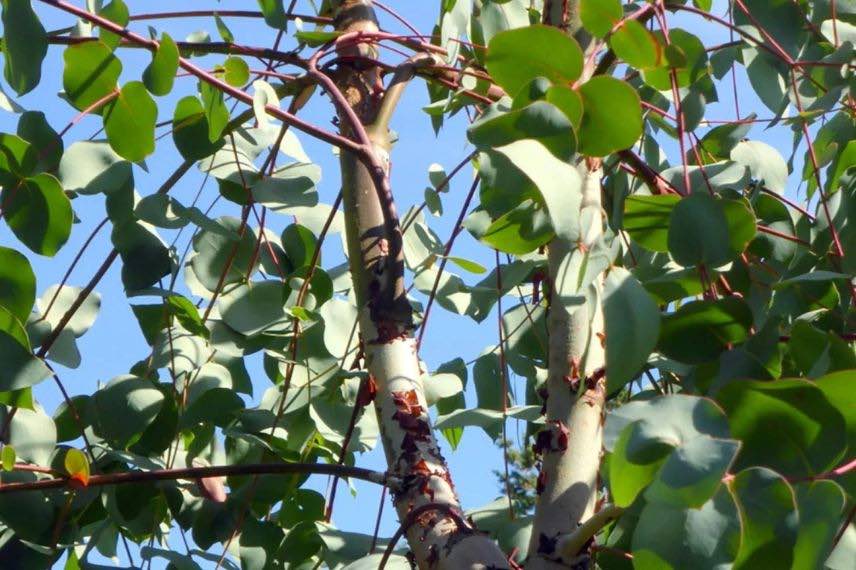
Eucalyptus rubida is a tree intended for large gardens or parks, which will provide light shade during the summer. We like its spreading or rounded habit, ideal for enjoying soft light. But its decorative bark and evergreen foliage, which remains attractive all year round, are also among its qualities. The pale bark reveals in fact flakes that can take on different hues and contrast beautifully with the young reddish shoots. The young foliage displays bluish tints, before turning silvery-green. Aromatic, the leaves release a pleasant scent when crushed. Flowering is fairly discreet, appearing as small white umbels, but is attractive to foraging insects.
Very fast-growing, it will reach a height of 20 metres and a 15-metre spread at maturity.
Plant this evergreen shade tree in full sun, even in poor soil. It will withstand occasional drought once well established, but prefers cool, moist soils. Hardy down to -15°C, it can be grown in many regions of our country. Thanks to its underground storage organ (lignotuber), this tree will tolerate pruning well, including rejuvenating coppicing.
For more information: Eucalyptus: planting, pruning and care
Read also
10 trees to shade a small gardenPaulownia tomentosa
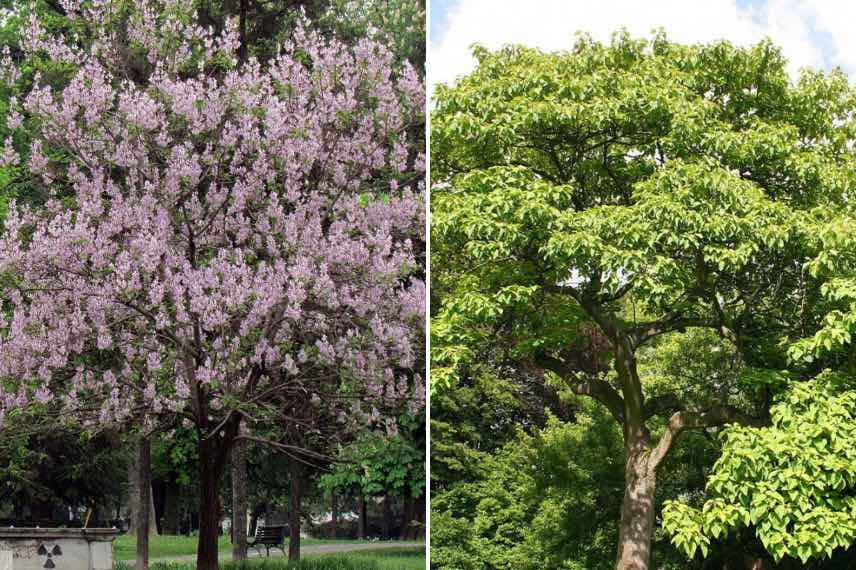
The Paulownia tomentosa is a handsome tree with fragrant spring flowering. Between April and May, it reveals, on bare twigs, a multitude of purple bells forming lush clusters. This flowering will give rise to fruits that will remain dry on the tree during autumn, even after the leaves have fallen.
The foliage will display a bright apple-green colour, which shines in the sun’s rays. Each leaf reaches up to 25 cm in length, more so if the tree is pruned. This “empress tree” will not go unnoticed and will bring colour to the garden.
Its rapid growth, spreading habit and foliage will also allow it to shade the garden densely and easily. Plant it in a space of ample size, to accommodate its 12 m in height and 10 m of spread. Pruning the lowest branches in the early years will help to promote air circulation under its canopy.
The Paulownia tomentosa appreciates rich, but well-drained and moist soils (that never dry out completely). Plant it in a sunny or slightly shaded position, sheltered from prevailing winds. Hardy, it tolerates pollution as well as severe frosts (down to -20°C).
For more information: Paulownia, Empress Tree: planting, cultivation and care
The Quercus palustris 'Betty Jean'
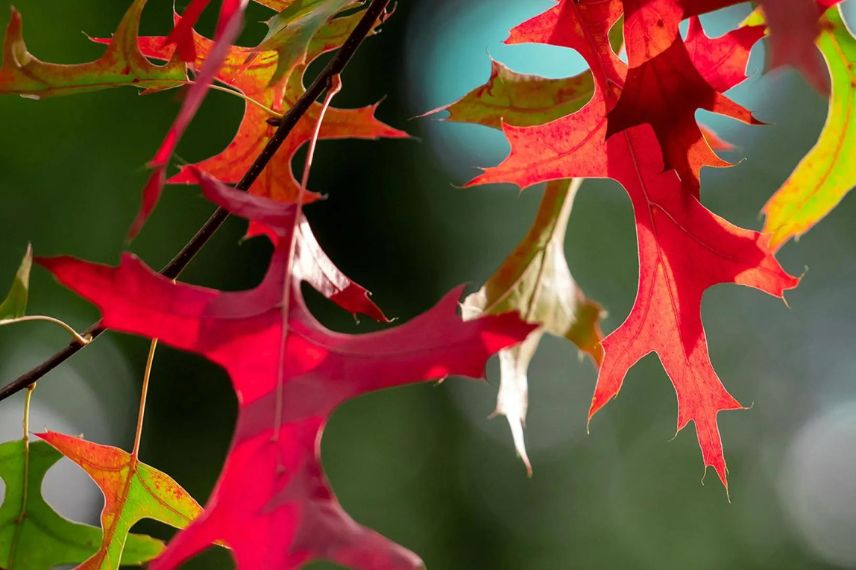
The marsh oak ‘Betty Jean’ is fairly well-behaved all year round, with its finely cut foliage in bright green. But in autumn, it puts on a flamboyant display. It then reveals green and vivid red hues, which can blend into a true gradient across the tree for several weeks. This foliage will brown as it dries and stay on the branches through the early winter.
Flowering occurs in mid-spring. While discreet, it will give way to small decorative acorns.
The elegant silhouette of this tree quickly takes on a pyramidal form, ideal for shading the garden. It will reach up to 25 metres in height with a 15-metre spread at maturity. This oak is therefore best suited to large spaces.
Plant it in full sun, in a well-drained soil that remains cool to damp, and with a rather acidic pH. Its hardiness to temperatures below -25°C allows it to be grown in most of our regions.
For more information: Oaks: planting, pruning and care
The Catalpa bignonioides
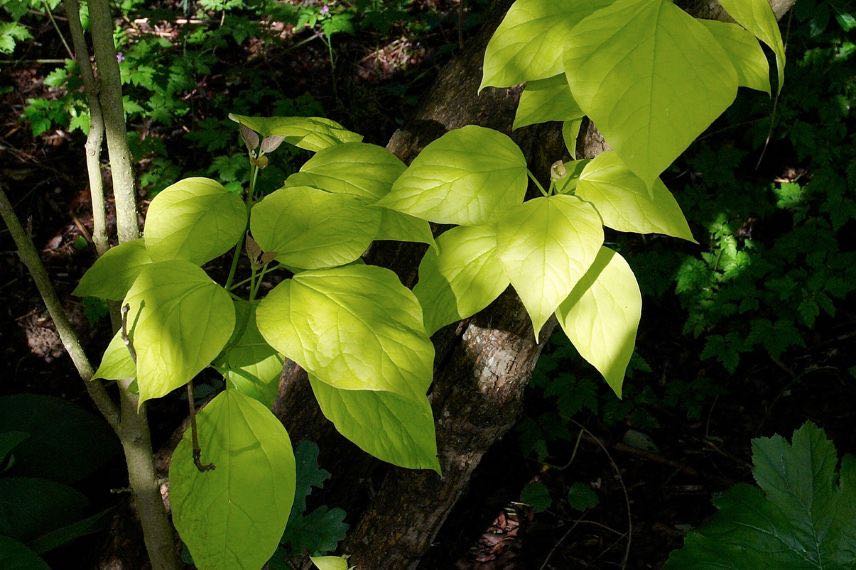
Common Catalpa has a broad crown of heart-shaped foliage (heart-shaped), which makes it an ideal tree to shade from the sun in summer. Its dense light-green foliage will lend it luxuriance and even give it a touch of the exotic. It will turn yellow in autumn before shedding, letting light through during the coldest months of the year.
Its summer flowering consists of beautiful white bell-shaped flowers, accented by a yellow and mauve throat. They are highly melliferous. Its fruiting in pods is also part of its ornamental qualities and it earns it the nickname ‘bean-tree’.
Medium-sized, this small tree will reach about 10 metres in height with a 15-metre spread, making it suitable for moderate-sized spaces, for example in a town garden or to shade a terrace.
Easy to grow and hardy, it will tolerate frosts down to -20°C. Plant it in full sun, sheltered from strong winds, in soil that stays cool but well-drained.
For more information: Catalpa: planting, pruning, maintenance. Also read: Shade tree: choose Catalpa for a cool and elegant garden.
The Phoenix canariensis
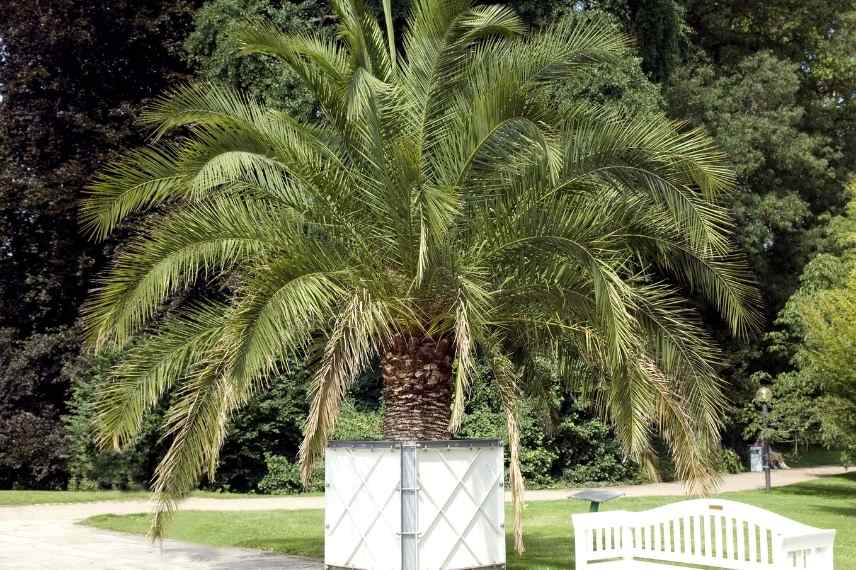
The Canary Island date palm is a majestic species, which will certainly bring an exotic touch to gardens in our mild-climate regions. It is fairly common to encounter it on the Côte d’Azur, used as a Mediterranean shade tree.
Its foliage comprises large, gracefully arching fronds, carried by a robust, stocky, scaly stipe (false trunk). They form an imposing crown, giving it a particularly graceful silhouette. Evergreen, this foliage remains in place all year round. It is an ideal candidate for providing shade in sun-drenched gardens in summer.
The summer flowering may give way to small decorative orange berries.
This palm will eventually reach 15 metres in height and a 10-metre spread.
Quite frost-tender, it will not tolerate frosts above -7°C on average, but can be grown in a large tub on castors to be easily overwintered indoors during the cold season.
This Phoenix will thrive in full sun, in well-drained soil where water does not stagnate.
It tolerates drought as well as salt spray, which makes it a perfect shade tree for seaside gardens.
For more information: Phoenix: planting, cultivation and maintenance
- Subscribe!
- Contents

Comments