





























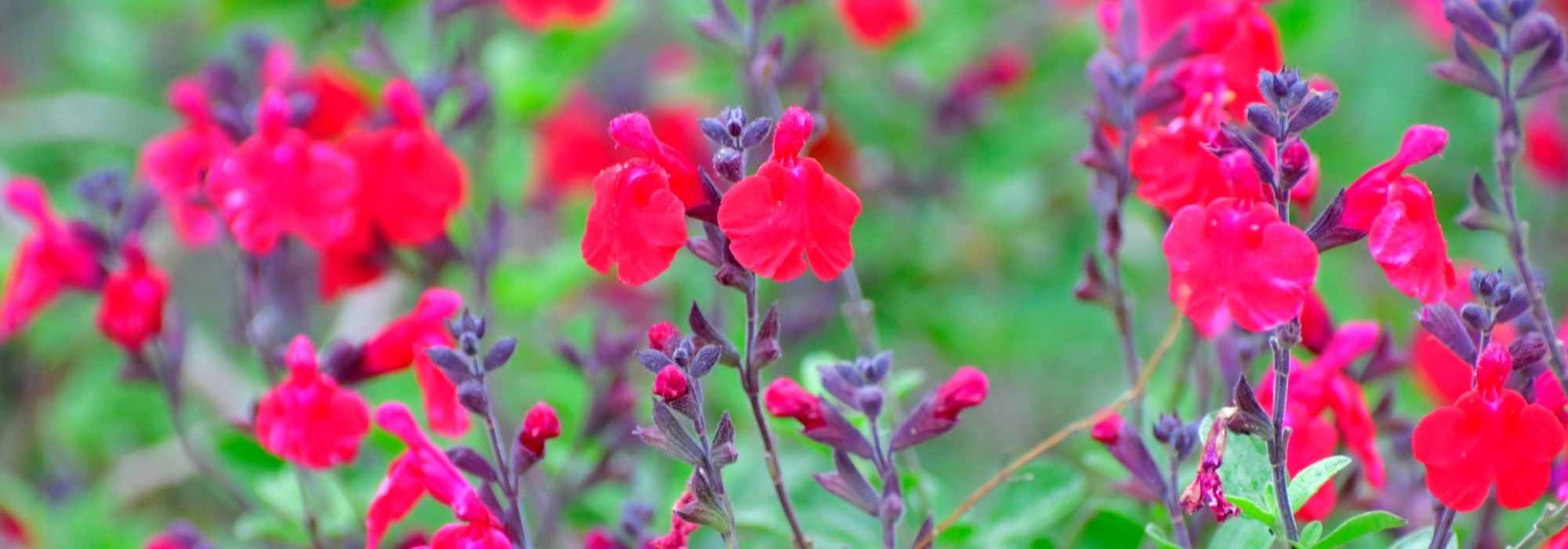
7 good reasons to plant a shrub sage
A perennial with multiple qualities!
Contents
Sages are numerous, with over 700 species, ranging from the culinary-friendly common sage to annual and biennial sages. However, bushy sages are undoubtedly among the most appealing in ornamental gardens, thanks to their unparalleled floribundity, exquisite colours, and ease of cultivation. They have a semi-woody form and are considered undershrubs. While some may be a bit tender, many bushy sages exhibit excellent hardiness.
In this advice sheet, we present 7 good reasons to adopt a bushy sage!

They are economical
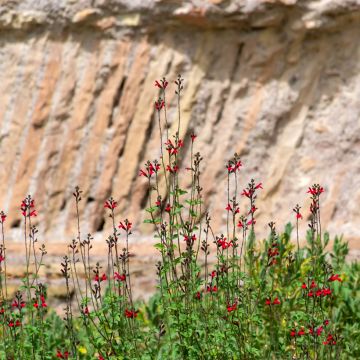
Let’s start with one of its qualities that is of great interest to us, given the climatic conditions we are already experiencing: the shrubby sage is a low-maintenance plant, particularly in terms of water. Shrubby sages include numerous species, such as the popular Salvia macrophylla, also known as small-leaved sages, which help reduce evapotranspiration. A myriad of small leaves with a reduced surface area is indeed one of the strategies that sun-loving plants have developed to cope without suffering too much. These leaves are generally evergreen to semi-evergreen. The aromatic quality, typical of the Lamiaceae family, when touched, also contributes to their ability to withstand high temperatures without distress.
Once established, shrubby sages are drought-resistant, true camel plants, useful for our gardens of tomorrow!
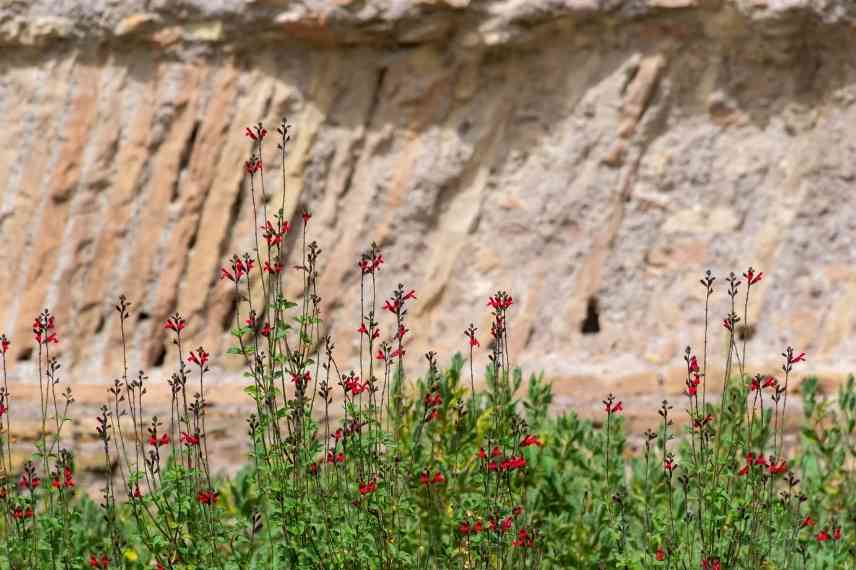
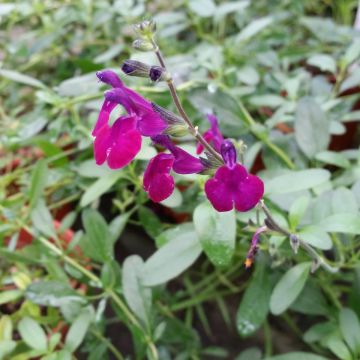
Salvia jamensis ‘Rêve Rouge’
Read also
Shrubby sages: planting and care tipsThey bloom for a long time
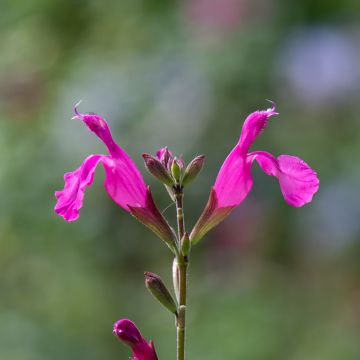
Shrubby salvias are among the most floriferous perennials with the longest flowering period. A must for those seeking this quality (who isn’t?) for their garden. The flowers are indeed small, labiate in shape, but they produce a multitude of flower buds along the stems, continuously, from May to October, sometimes even until the end of November in mild climates. They perform best in full sun, flowering significantly less in partial shade. It is worth noting that shrubby salvias flower abundantly from mid-summer.
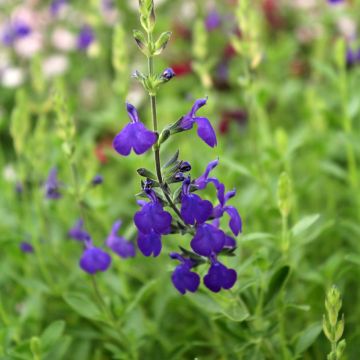
Salvia microphylla and Salvia greigii exhibit remarkable floral endurance, while Salvia jamensis primarily flowers in late spring and early summer, often providing a second bloom when care is taken to prune the faded stems. Some, like Pineapple sage (Salvia elegans), have a later flowering period, from late summer until frost.
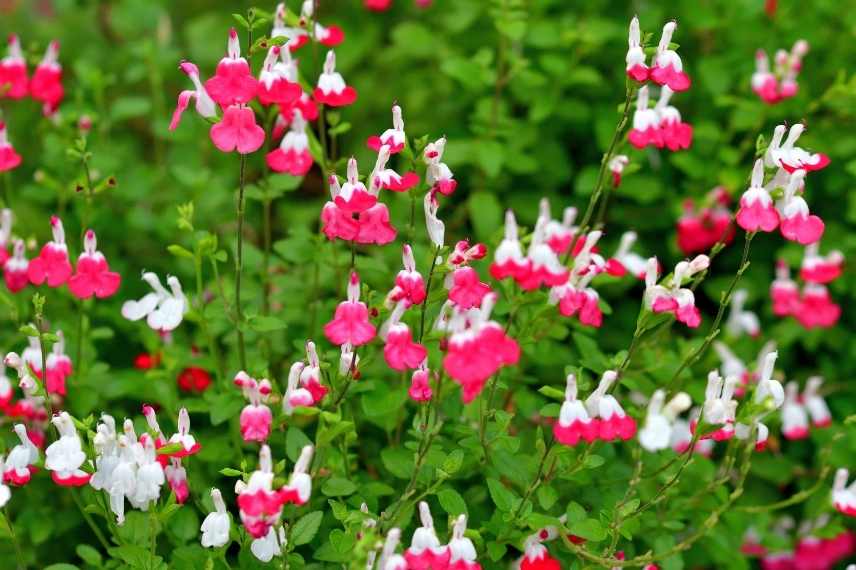
A long, light, and elegant flowering period
Discover other Salvia - Bushy Sage
View all →
Available in 3 sizes
Available in 2 sizes
Available in 0 sizes
Available in 3 sizes
Available in 2 sizes
Available in 3 sizes
Available in 2 sizes
Available in 3 sizes
Available in 2 sizes
Available in 3 sizes
For the beauty and variety of their colours
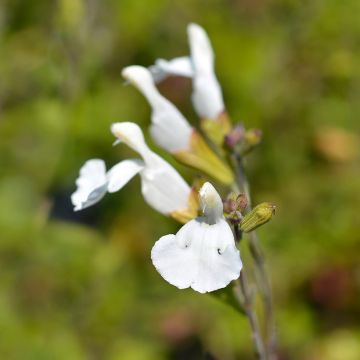
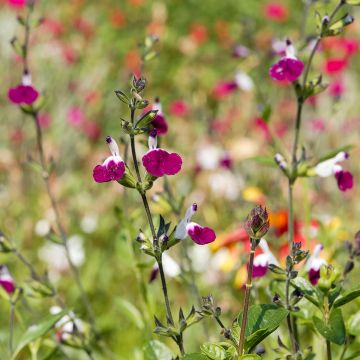
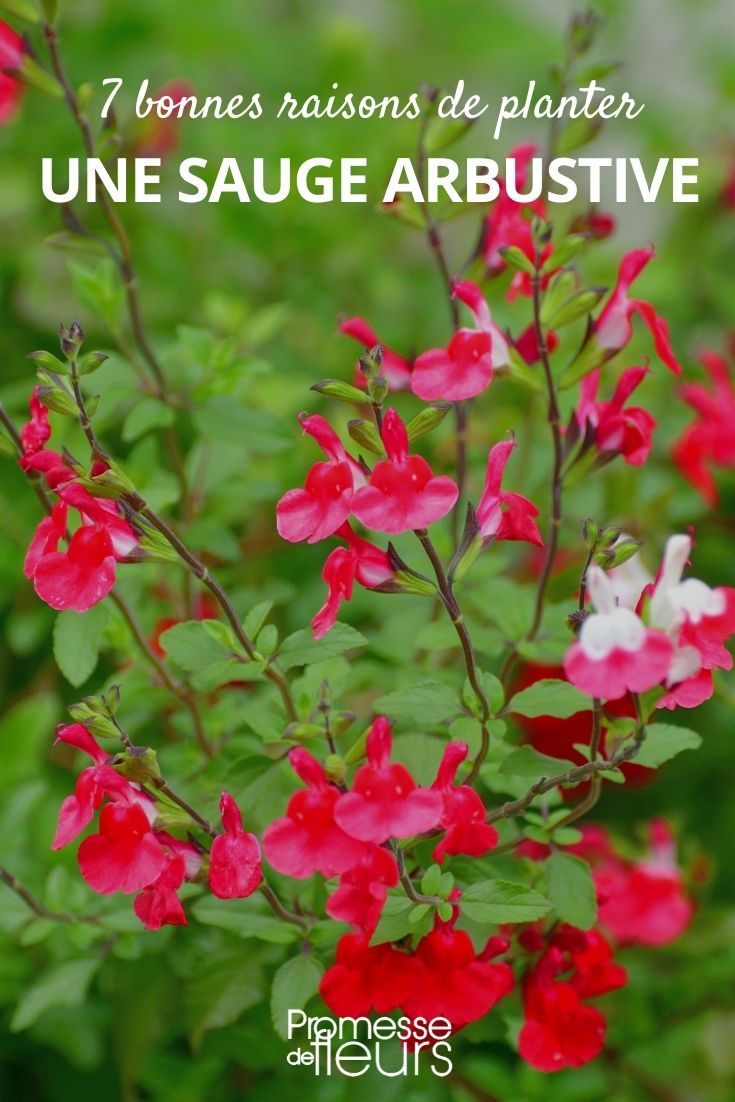
Shrubby salvias come in an infinite variety of colours, both vibrant and pastel: red, pink, mauve, blue, pale yellow, and soft salmon pink. They allow for the creation of rustic or more sophisticated scenes depending on the plants they are paired with. The bicoloured shades speckled with white, such as the famous white and red ‘Hot Lips’, are also highly appreciated; they are available in a purple version with ‘Purple Lips’, violet with ‘Amethyst Lips’, and pink with ‘Pink Lips’.
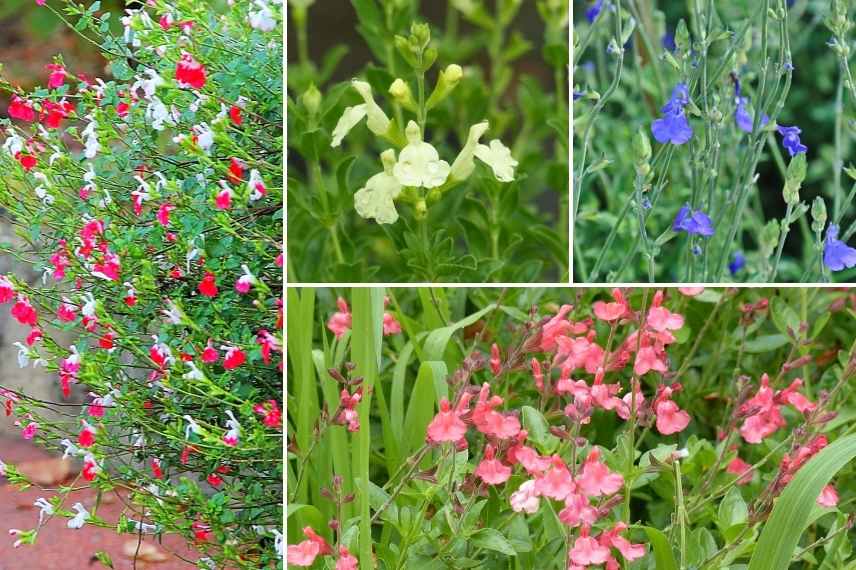
Salvia microphylla ‘Hot Lips’, Salvia jamensis ‘Lemon Light’, Salvia microphylla ‘Blue Monrovia’ (© Stefano), and Salvia microphylla ‘Ribambelle’
They require little maintenance
Another appreciated feature of shrubby sages is that they require virtually no maintenance. A good hard pruning at the end of winter (up to two-thirds, without cutting into old wood), depending on the region from mid-February to mid-April, helps maintain a bushy and dense habit and regenerates the clump by producing new, floriferous, and vigorous shoots. This makes them perfect and robust plants for holiday gardens or for time-conscious gardeners. A minimal amount of time spent for a beautiful flowering is the key advantage!
For the less hardy shrubby sages (Salvia involucrata and Salvia leucantha), it is advisable to protect the soil with mulch in the coldest regions.
They are low-maintenance
Provided they are planted in the right conditions (well-drained soil, even dry or stony, a sunny and sheltered position for the less hardy), shrubby salvias manage very well on their own after the first two years of establishment. A calcareous soil is sufficient for their happiness, and they prove to be, as mentioned earlier, very undemanding.
They blend easily in the garden
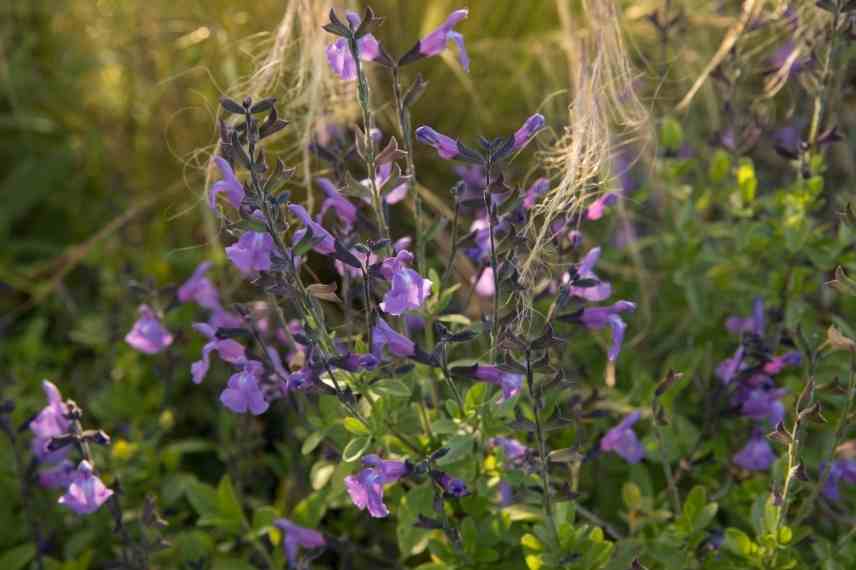
Shrubby salvias are companions for many types of gardens. Versatile with their varied colours and their bushy yet light and adaptable habit, they thrive in dry gardens where they can live in a gravel environment alongside undemanding plants, as well as in country gardens, English gardens, or romantic gardens with their beautiful palette of soft tones. In a natural garden, they are also at ease in selected shades of yellow, pale or more vibrant, alongside grasses and airy perennials. The intense blue colour of certain shrubby salvias, such as ‘Victoria Blue’, pairs beautifully in a blue garden, while pink salvias will provide a long flowering period in a monochrome pink garden. Finally, you can take advantage of the aromatic qualities of certain foliage to incorporate them into aromatic gardens where they play both a tactile and fragrant role!
→ Read also: Pairing shrubby salvias.
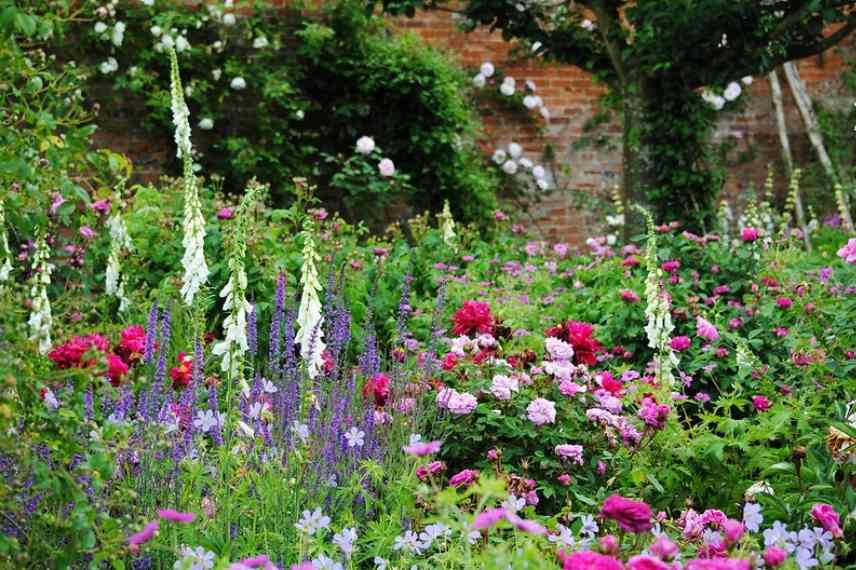
In a cottage garden spirit, blue salvias shine alongside roses and foxgloves
For their easy cultivation in pots
A sunny balcony or terrace can easily accommodate a sage shrub: when planted in a pot, the sage shrub thrives if given a sufficiently large container (with a diameter of about 40 to 50 cm). It will flourish under good conditions, but for this use, the bottom of the pot must be drained with a layer of at least 5 cm of gravel or clay balls.
For this more demanding cultivation, it is also essential to provide fertiliser to support the long flowering period. Watering will be more important than in open ground, but should not be excessive: the key is to always check the moisture level of the substrate, which should remain slightly pliable, neither too dry nor too wet. Finally, for the less hardy sages, some protection will be welcome in winter, especially around the pot.
→ Learn more about Growing sage shrubs in pots in our article!
- Subscribe!
- Contents
Comments