




























FLASH SALES: discover new special offers every week!
7 Magnolias for Small Gardens

7 Magnolias for Small Gardens

The best varieties with a compact habit.

Contents

Modified the 12 January 2026  by Leïla 6 min.

In the world of gardening, Magnolia is often perceived as a majestic giant, requiring vast expanses to flourish. However, this traditional view overlooks a diverse range of magnolias that lend themselves admirably to small gardens. Compact varieties of magnolias offer the splendour and elegance characteristic of magnolias, while adapting to the constraints of restricted spaces, especially urban gardens. In this article, we present to you seven dwarf magnolias specially selected for their ability to transform small gardens into bursts of colourful flowers, sometimes fragrant.

→ Read our Magnolia family sheet.

Difficulty

Magnolia grandiflora 'Nana'

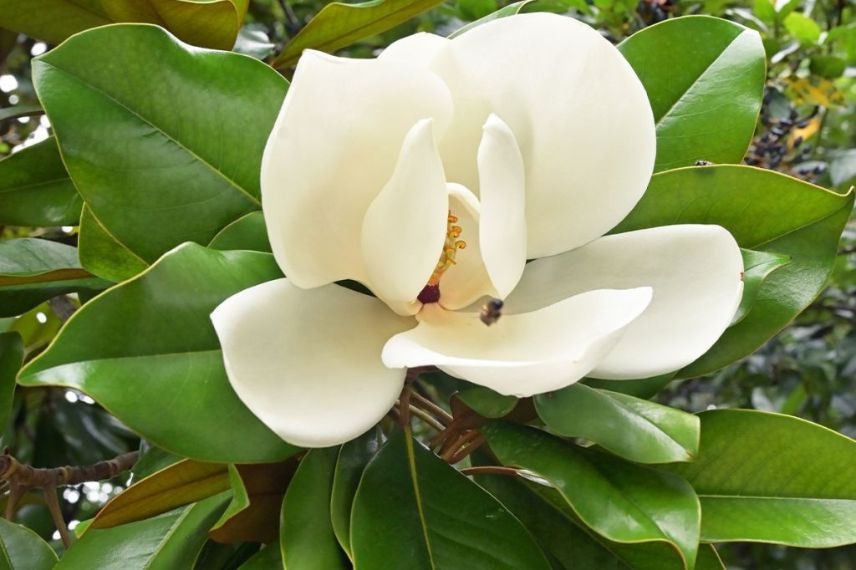
The only evergreen magnolia with summer flowering in this selection, Magnolia grandiflora ‘Nana’ is a compact tulip magnolia variety that is perfectly suited for small gardens and container cultivation. It is distinguished by its early and long-lasting summer flowering, with large white flowers and a lemon-scented fragrance. Its evergreen leaves, rather small and undulate, bear a rusty underside. It reaches a maximum height of 3 m after many years.

This magnolia, native to the southeastern United States, thrives in bright, warm and humid conditions, on rich soil. In France, it tolerates cold down to ÃŽle-de-France, though severe winters can affect it. The cultivar ‘Nana’ is characterised by slow growth, dense foliage, a compact size and rapid flowering. At 15 years, it does not exceed 2.5 m in height with a 1.5 m spread, forming a ramified pyramid. Its summer flowering is followed by large reddish cones.

Ideal as a solitary specimen in a small garden or in a container on a terrace, the Magnolia grandiflora ‘Nana’ enhances any space with its lemon-scented flowering. It can be paired with another small, deciduous magnolia with spring flowering.

Evergreen magnolia

Magnolia 'Honey Tulip'®

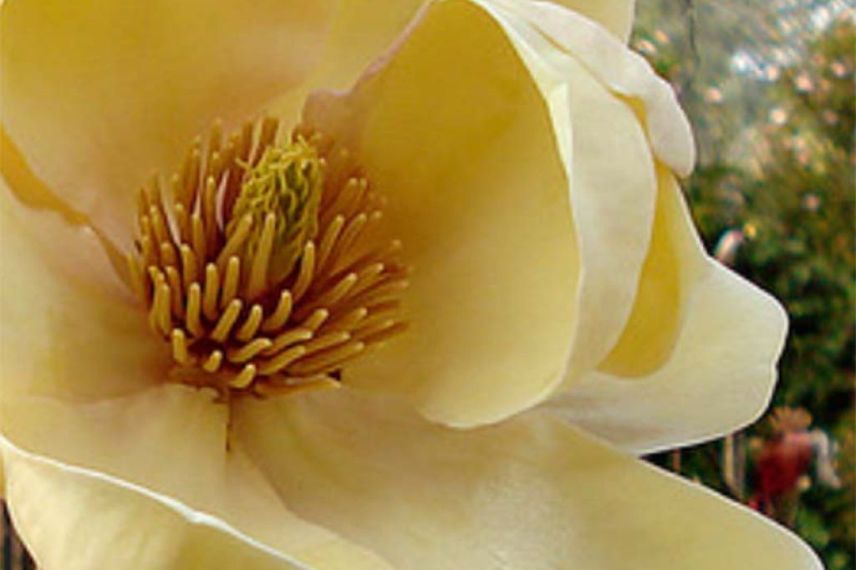
The Magnolia ‘Honey Tulip’® distinguishes itself with cup-shaped flowers, evoking both the tulip and the peony, in honey and sun tones. Similar to Magnolia ‘Black Tulip’, but with yellow flowers, it is characterised by early flowering and a compact habit, ideal for small spaces. It tolerates a wide range of cool soils and is also suitable for growing in a large container on the terrace.

Introduced in 2013, this small tree or large bush reaches about 3 metres in height and 1.7 metres in width at maturity, potentially rising to 4–5 metres in favourable climates. Its solitary, lightly scented flowers appear in spring before the leaves, rising in rounded cups of medium size. The deciduous foliage, composed of large obovate leaves in medium green, turns yellow-brown in autumn. ‘Honey Tulip’® is hardy to -15°C.

This magnolia adds a unique touch to gardens with its abundant yellow cup-shaped flowers in spring. It is often planted as a solitary specimen for its spectacular flowering, but can be paired with other shrubs that flower later, as it loses interest once its spectacular flowering has peaked. Think Lilac, Camellias, and Witch Hazel. Position it to enjoy its flowering from inside the house.

Compact magnolia with yellow flowers

Magnolia loebneri 'Mag's Pirouette'

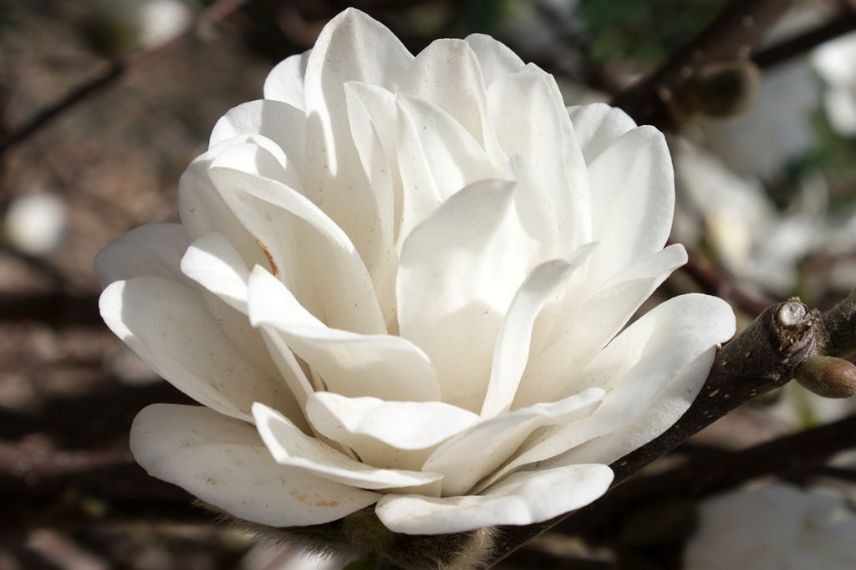
The Magnolia loebneri Magnolia loebneri ‘Mag’s Pirouette’ is another deciduous magnolia, descended from the Magnolia stellata, but it offers flowers that are denser and firmer. Double, white and lightly scented, they are distinguished by dense and regular petals, with outer petals shorter, creating a distinctive look. This hardy, easy-to-grow variety flowers as soon as it reaches 1 metre in height, making it easier to grow in many regions.

‘Mag’s Pirouette’ develops an upright habit. It is a small tree that broadens with age, reaching 2.5 metres in height and width. Its early flowering in March–April produces flowers 10 cm in diameter, tolerant of late frosts. The deciduous foliage, dark green, turns golden in autumn.

Very hardy, Magnolia loebneri integrates well as a specimen or when paired with evergreen shrubs such as Rhododendrons on acidic soil, or Viburnums and Japanese quince on neutral to slightly calcareous soil. It is best displayed against a dark backdrop.

Magnolia with white flowers

Magnolia brooklynensis 'Eva Maria'

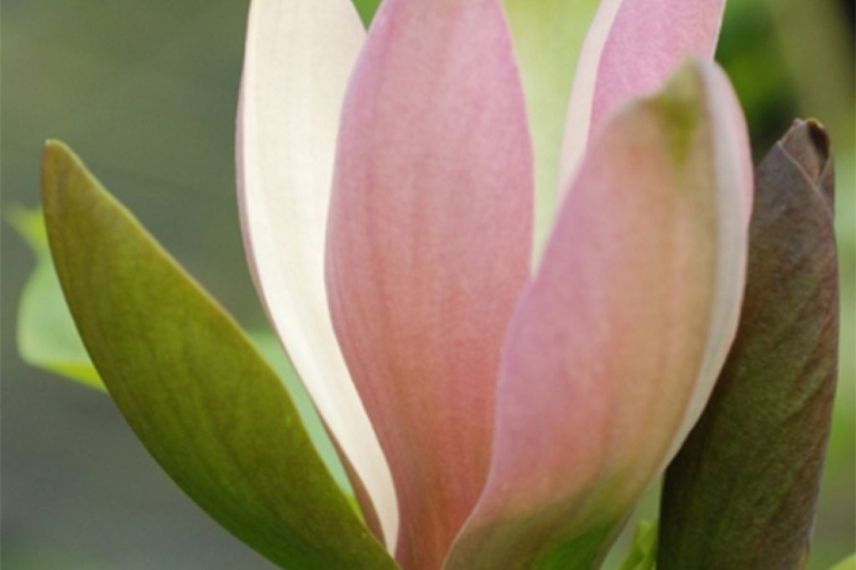
The Magnolia brooklynensis ‘Eva Maria’, developed in 1968 at the Brooklyn Botanic Garden, is a variety renowned for its unique qualities. Its flowering progression, with large green buds shaded with yellow and purple, gives rise to tulip-shaped flowers, transitioning from magenta-pink to honey-coloured, then to soft orange with hints of pale green. These flowers appear in late spring, contrasting with foliage with silvery undersides. Suitable for moist, neutral or acidic soils, and for sunny to partial shade exposure, it is perfect for small spaces.

‘Eva Maria’ is a rounded and ramified bush, reaching 3 metres in height and 2 metres in width in 10 years, with growth slowing thereafter. From May to June, it produces solitary flowers measuring 6 to 10 cm, with waxy and thick tepals, opening in a cup around a heart of orange stamens.

This magnolia is often planted in front of a house for its spectacular flowering; its non-invasive root system allows planting close to the house, against a wall. It pairs well with shrubs on heather soil such as the Japanese Maples or the Cornus kousa.

Magnolia deciduous

Michelia yunnanensis 'Gail’s Favorite'
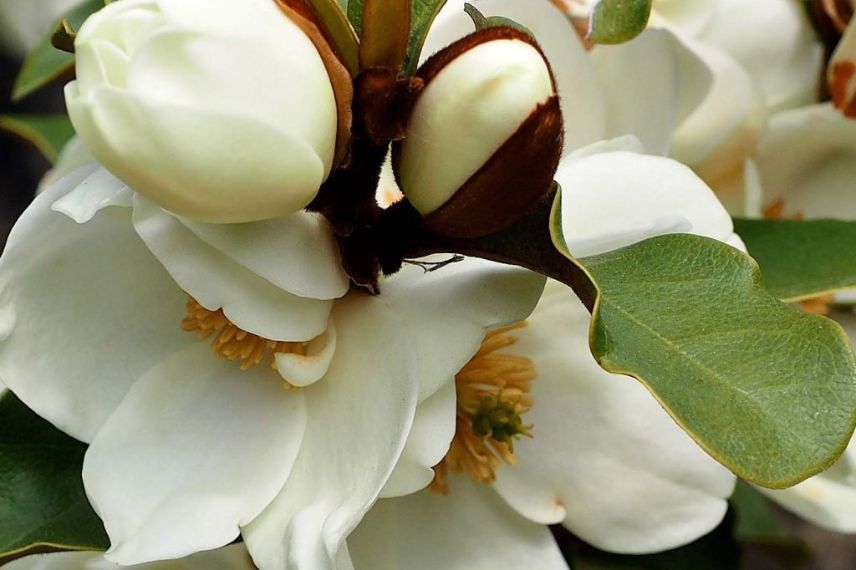
The Michelia yunnanensis ‘Gail’s Favorite’ is a relatively little-known bush related to magnolias, of modest size and slow growth. It features an upright, compact and dense habit, with glossy dark green evergreen foliage. In spring, it stands out with golden velvety buds that open into large, cream-coloured fragrant flowers, adorned with yellow stamens. It is hardy only down to -12°C in a sheltered position and in well-drained soil.

Native to China, Michelia yunnanensis ‘Gail’s Favorite’ is a small, bushy tree with a pyramidal silhouette. Its oval, rounded, glossy and leathery leaves are dark green with velvety brown undersides. It reaches 2 to 2.50 metres tall and 1 to 2 metres wide. From April to May, it bears camel-coloured velvety buds that open into cream-coloured corollas with pale-yellow stamens, releasing a lemony fragrance. Flowering is followed by pink pods revealing purple seeds.

Perfect for small gardens, Michelia yunnanensis can also be grown in a container on a terrace or balcony. It fits well in a group of bushes or at the back of a border, and is suitable for a flowering hedge. It pairs nicely with white- and yellow-flowering plants, such as Azaleas, Fuchsias, Japanese Anemones.

Michelia Magnolia

Michelia 'Fairy Lime'

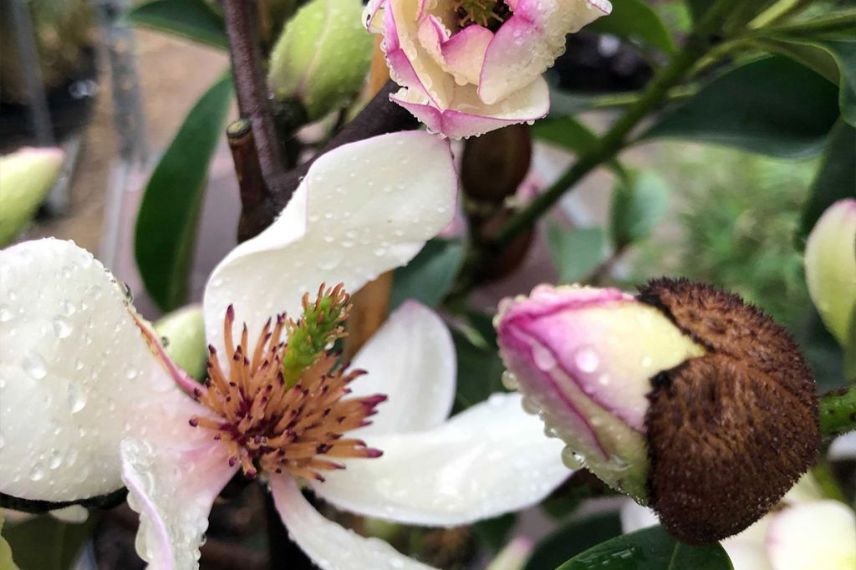
Another Michelia, ‘Fairy Lime’ is an exotic bush with glossy, evergreen leaves that bursts into cream-yellow flowers in spring, with pink-tipped petals, and a fruity fragrance reminiscent of banana. Vigorous, but cold-sensitive (hardy to -8°C), it is suited to mild climates and prefers sheltered, partially shaded spots in cool, acidic soil. It is also well suited for container culture on a terrace.

Between April and May, it produces brown-fawn flower buds that open into cream-yellow flowers of 4–6 cm in diameter, with reddish stamens and petals with pink tips. These fragrant flowers resemble those of Magnolia grandiflora. In 10 years, the bush can reach around 2.5 m tall by 1.5–2 m wide. Plant it in an exotic setting, accompanied by plants such as the Fatsia japonica, the Hostas, and the ferns.

Michelia evergreen

Magnolia stellata 'Waterlily'

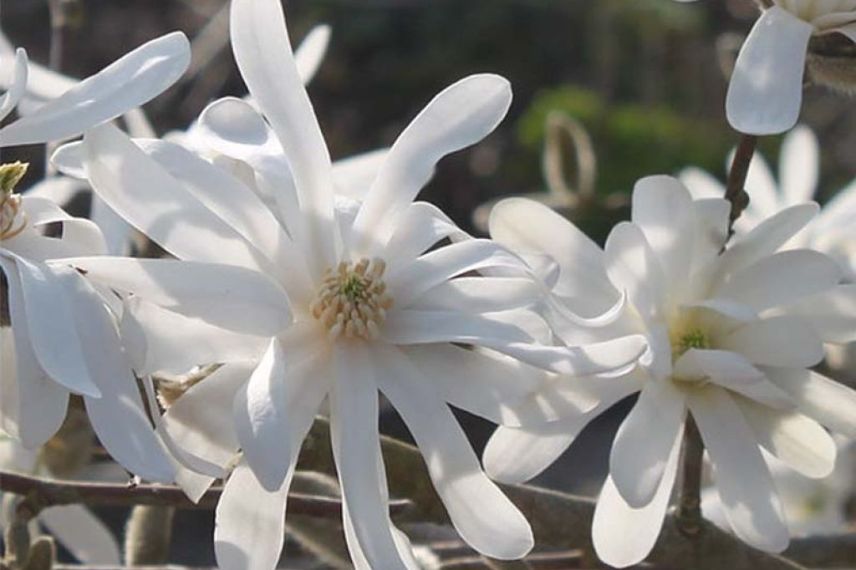
Magnolia stellata ‘Waterlily’, named for its white flowers evocative of water lilies, is a star magnolia variety that enchants in early spring with its abundant and fragrant flowering, before the appearance of leaves.

Originating from Japan, Magnolia stellata is known for its early and abundant flowering. The ‘Waterlily’ variety is distinguished by its very double flowers, a denser flowering and a compact habit. From March, its 10–12 cm diameter flowers, composed of 15–18 white petals lightly tinged with pink, cover the bush. Their fragrance, light and subtle, with vanilla and citrus notes, attracts attention.

With a bushy, then spreading habit, it reaches 2–3 metres in all directions. Its leaves are ovate, dark green, appearing after flowering and turning yellow in winter before falling. Its flowering even appears on 18-month-old young plants.

This star magnolia is perfect as a specimen plant in a modest garden, where it becomes the star of spring. It can be paired with shrubs with staggered flowering in a Japanese-style garden, with Pieris, Hydrangea or in a white garden. Its compact size and slow growth make it ideal for pot culture, allowing you to enjoy its vanilla-scented fragrance on a terrace.

Star magnolia

Comments

Magnolia grandiflora 'Nana'