Cornus kousa - Flowering Dogwood
Cornus kousa - Flowering Dogwood
Cornus kousa - Flowering Dogwood
Cornus kousa - Flowering Dogwood
Cornus kousa - Flowering Dogwood
Cornus kousa - Flowering Dogwood
Cornus kousa - Flowering Dogwood
Cornus kousa - Flowering Dogwood
Cornus kousa - Flowering Dogwood
Cornus kousa
Kousa Dogwood, Japanese Dogwood, Chinese Dogwood
Since January, the shrub I received still hasn't shown any buds by mid-April. While the other plants delivered on the same day are developing normally. I believe it has died despite my care.
Monique , 12/04/2026
Back-to-school special offer!
Get €10 off for every €50 you spend! And get up to €40 off on a single order.
How does it work?
1. Shop your favourites
Add your favourite plants to your basket. For every €50 you spend (excluding delivery charges, store credit and the plastic-free option), you’ll receive a €10 voucher.
€50 spent = €10 voucher
€100 spent = €20 voucher
€150 spent = €30 voucher
€200 spent = €40 voucher
2. Place your order
Once your basket reaches one of the spending thresholds, place your order. You can even choose your delivery date!
3. Receive your voucher
As soon as your order has been shipped, you’ll receive an email containing your personal voucher code and its value.
4. Use it on your next order
Your voucher is valid for 90 days from the date you receive it. It can be used once only, on a new order worth at least the value of the voucher, excluding delivery charges.
Please note: Vouchers can be combined with other offers, but cannot be split or refunded.
Home or relay delivery (depending on size and destination)
Important: You may be charged customs duties by your country’s customs authorities upon delivery.
Schedule delivery date,
and select date in basket
This plant carries a 24 months recovery warranty
More information
We guarantee the quality of our plants for a full growing cycle, and will replace at our expense any plant that fails to recover under normal climatic and planting conditions.
Would this plant suit my garden?
Set up your Plantfit profile →
Description
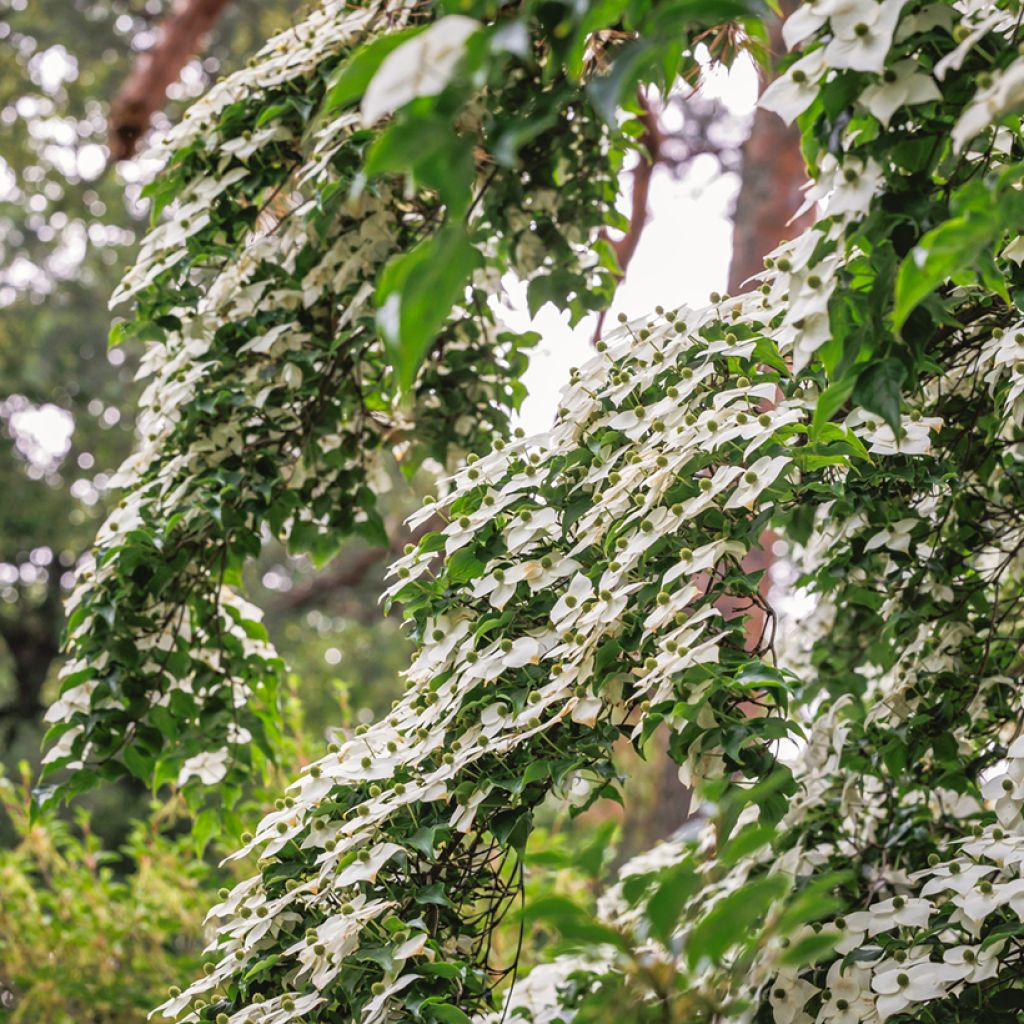
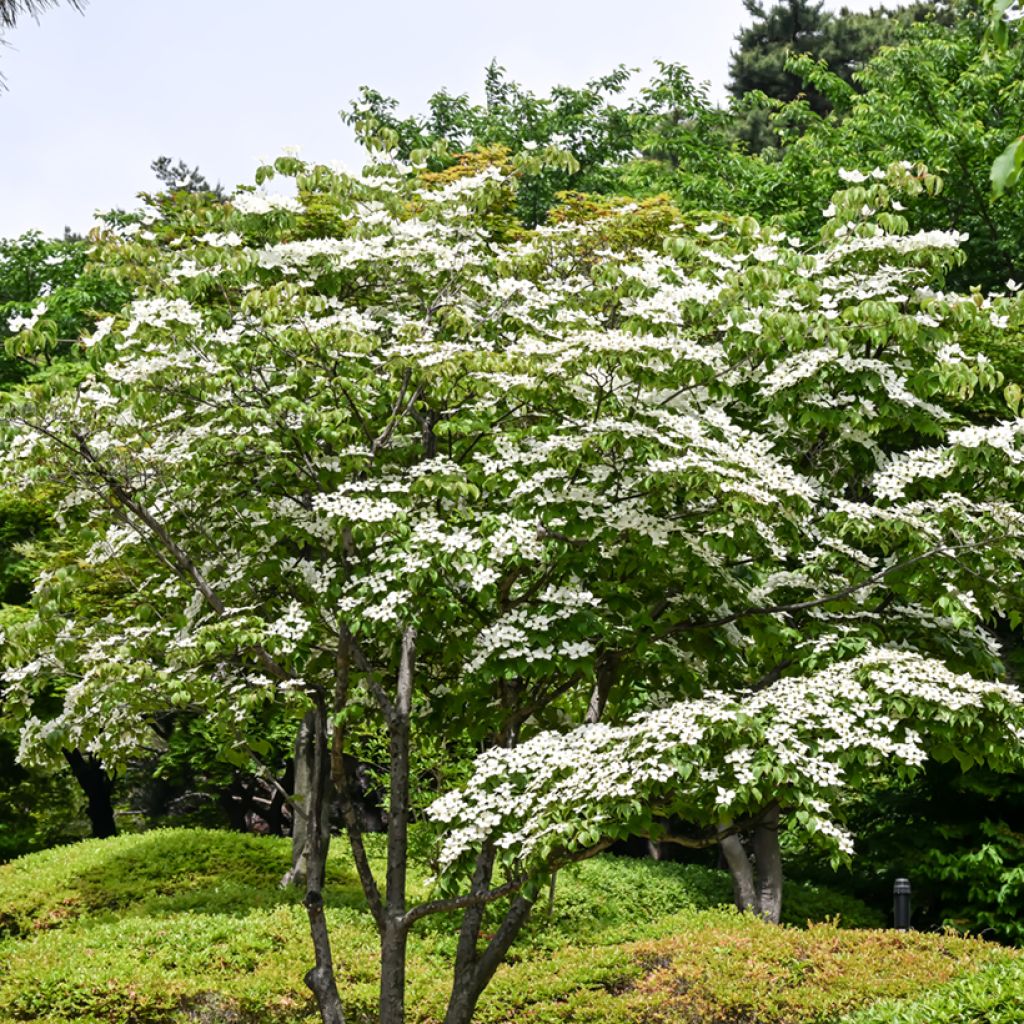
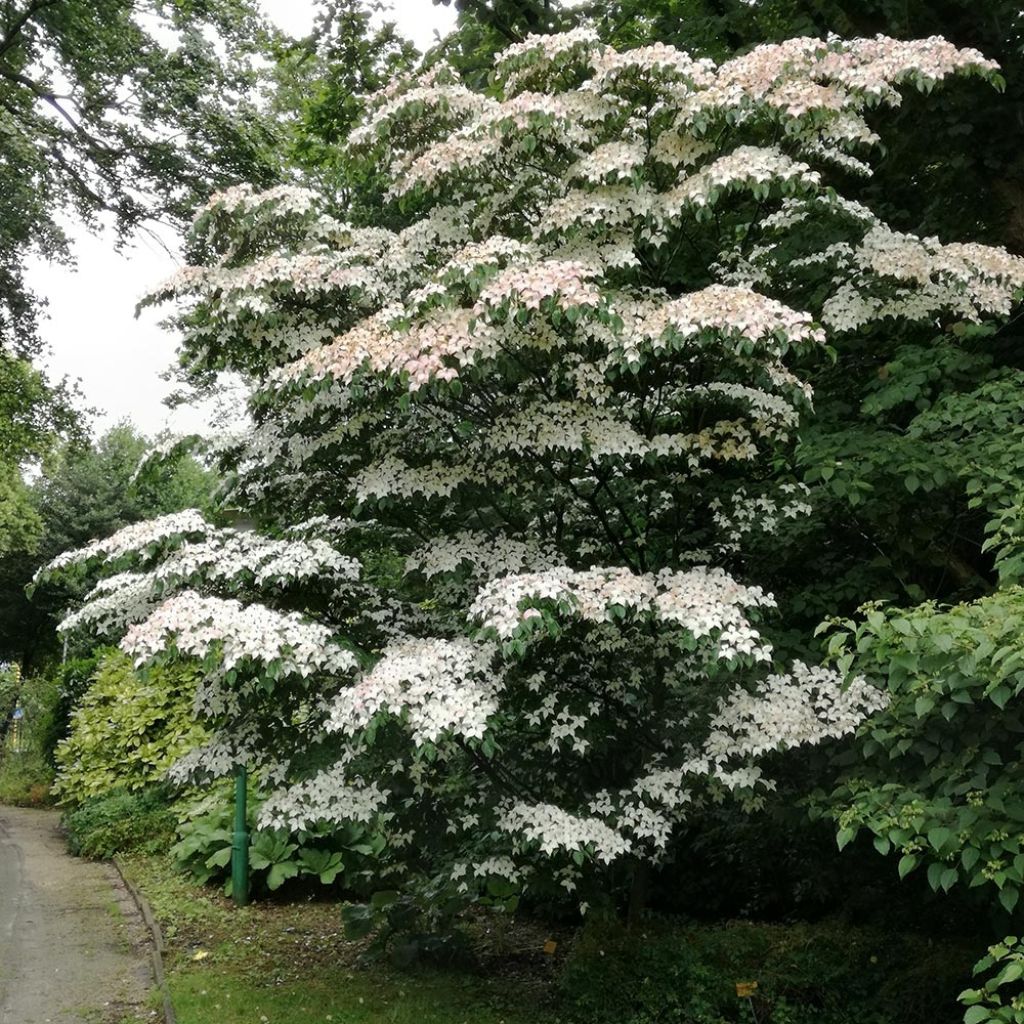
Cornus kousa, or Japanese dogwood, is a small tree or large bush that is highly ornamental with its abundant and generous pure white flowering in spring and the vibrant colours of its autumn foliage. It has a spread-out habit with beautiful branches that develop horizontally in distinct layers, giving it an oriental style that would be especially highlighted by planting it in isolation or in a mass planting alongside other acid-loving shrubs in a Japanese garden.
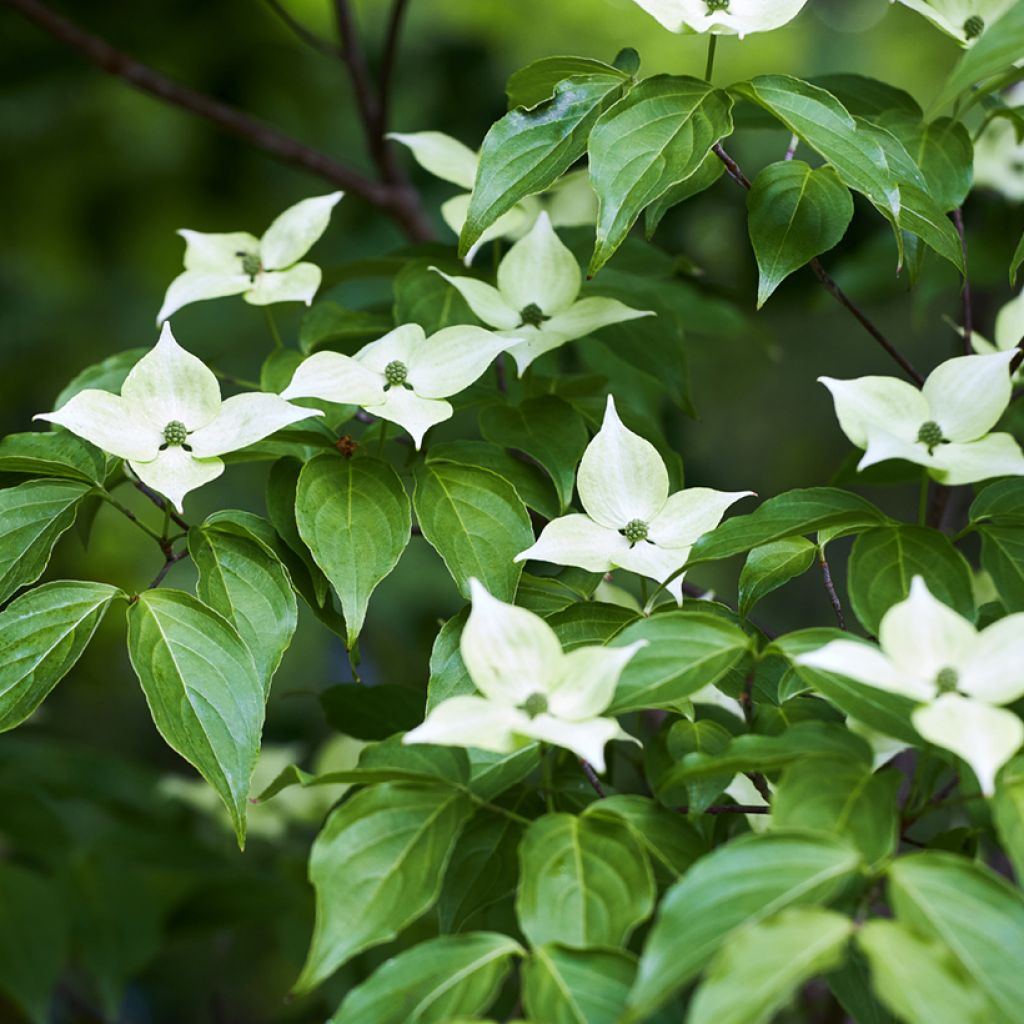
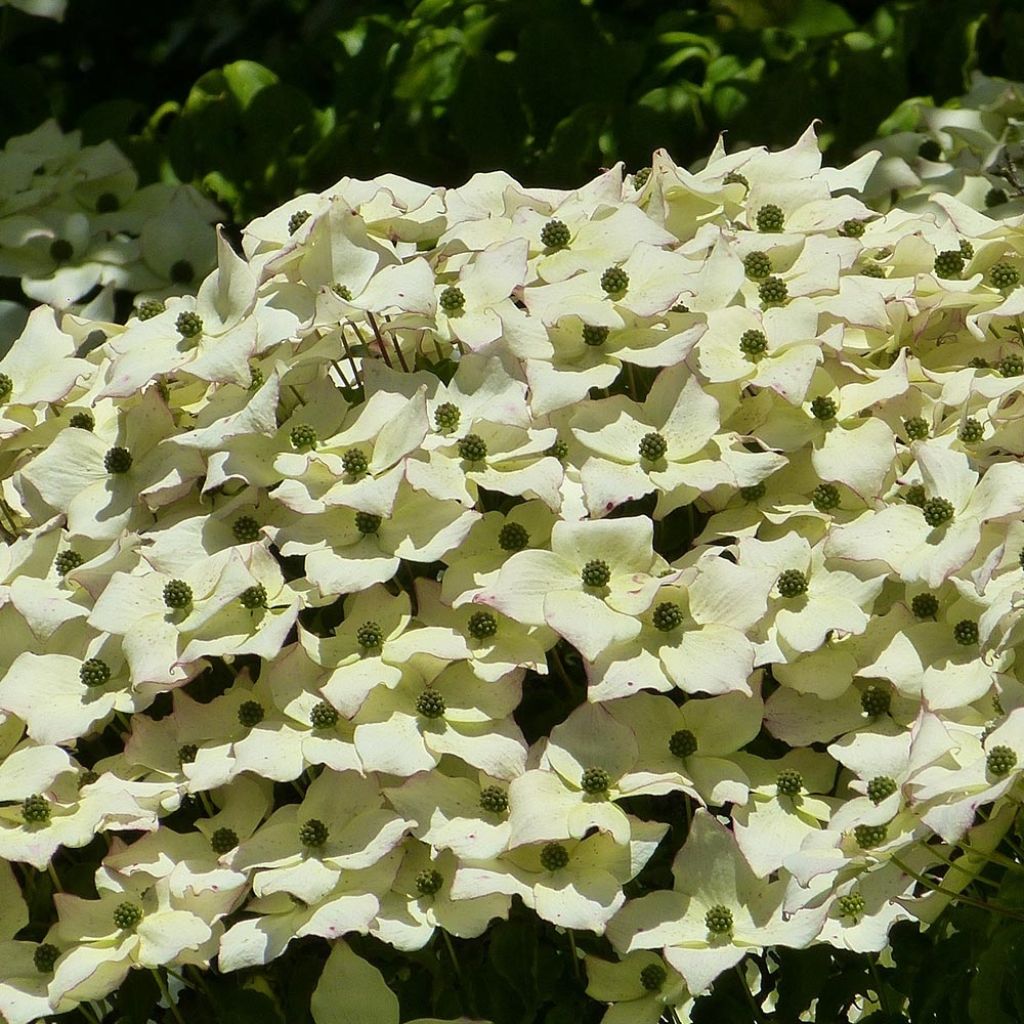
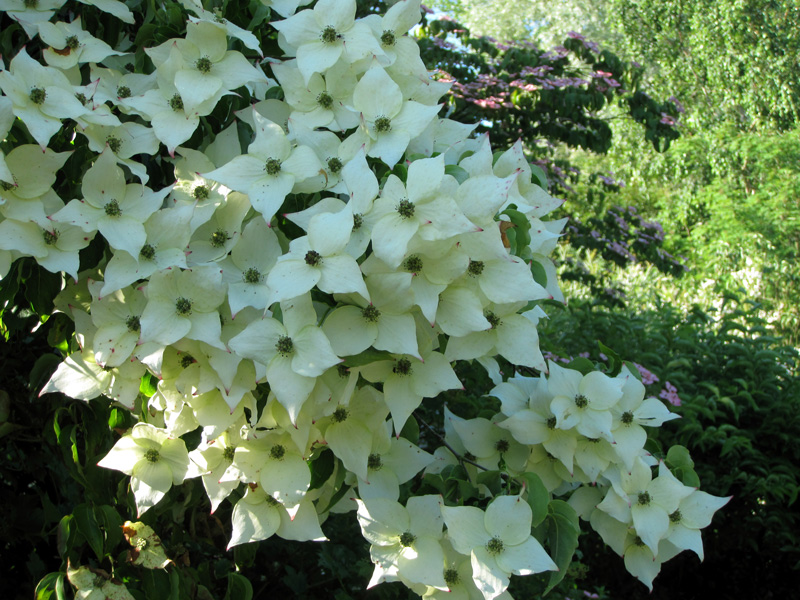
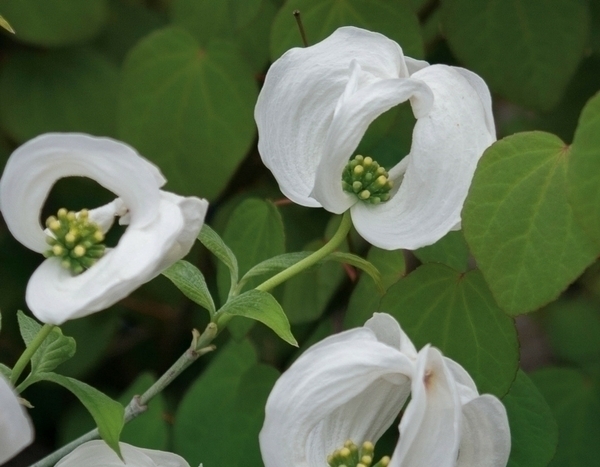
In April-May, the solitary flowers bear four large, thick, snow-white bracts arranged in flat stars, creating luminous carpets on sumptuous, shiny, dark green foliage that turns orange and then scarlet-red before falling in winter. Sturdy and easy to grow, it is a perfect choice for a partially shaded corner in cool, rich, deep, well-drained, and lime-free soil.
Cornus kousa is native to Japan, China, and Korea. Its striking silhouette, supported by layered and horizontal branches, gives it a very Japanese look. This species has a spreading habit, reaching about 6 m (19.7 ft) in height and 4 m (13.1 ft) in width after many years. Despite its slow growth, it is a sturdy and easy-to-grow shrub as long as it enjoys morning or evening sun that is not too scorching, and a well-drained, preferably fertile soil without lime.
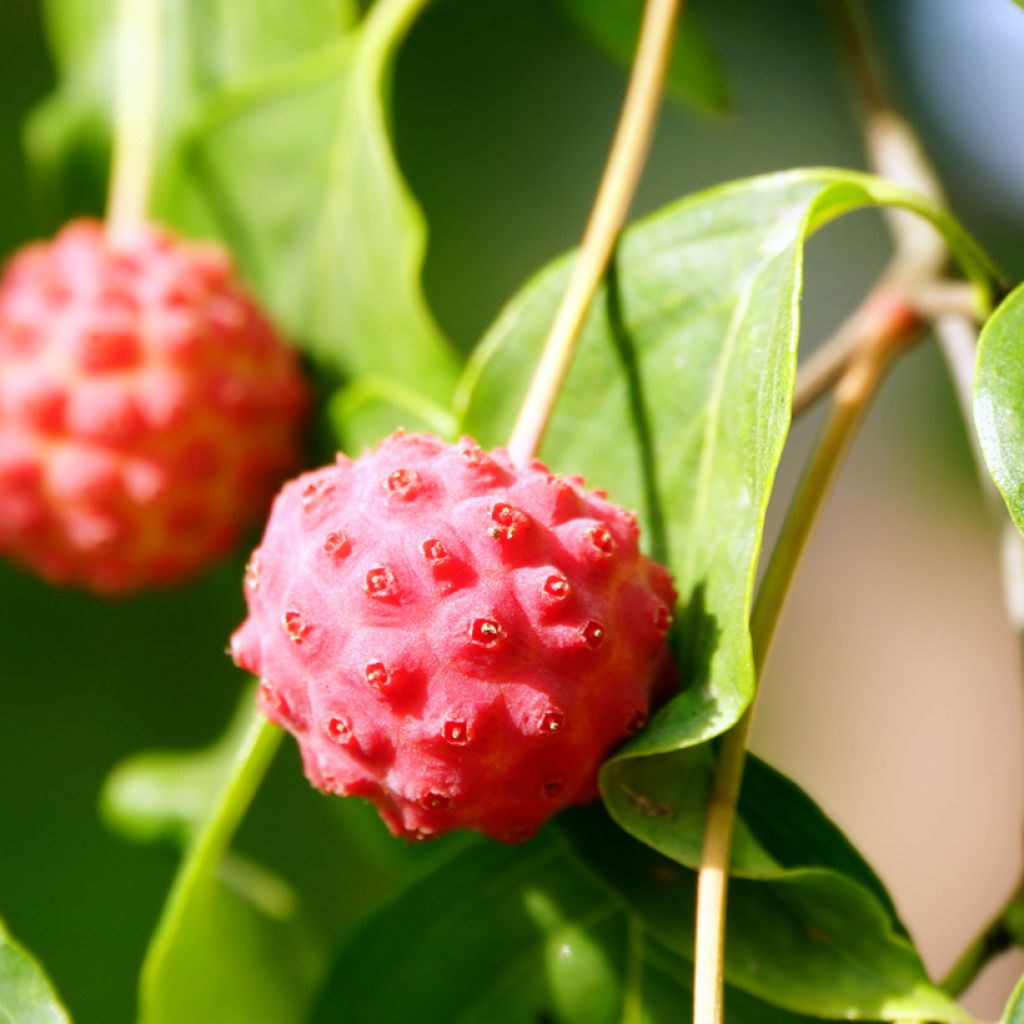
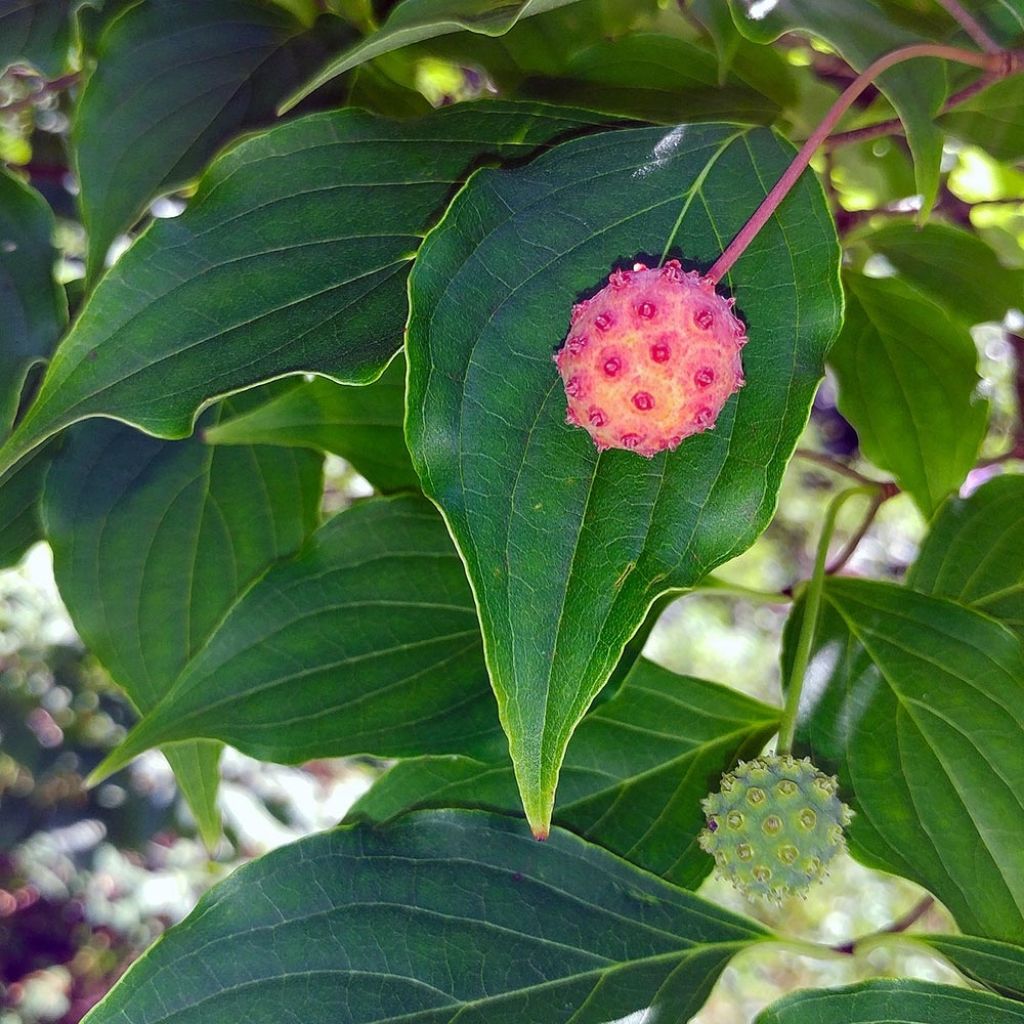
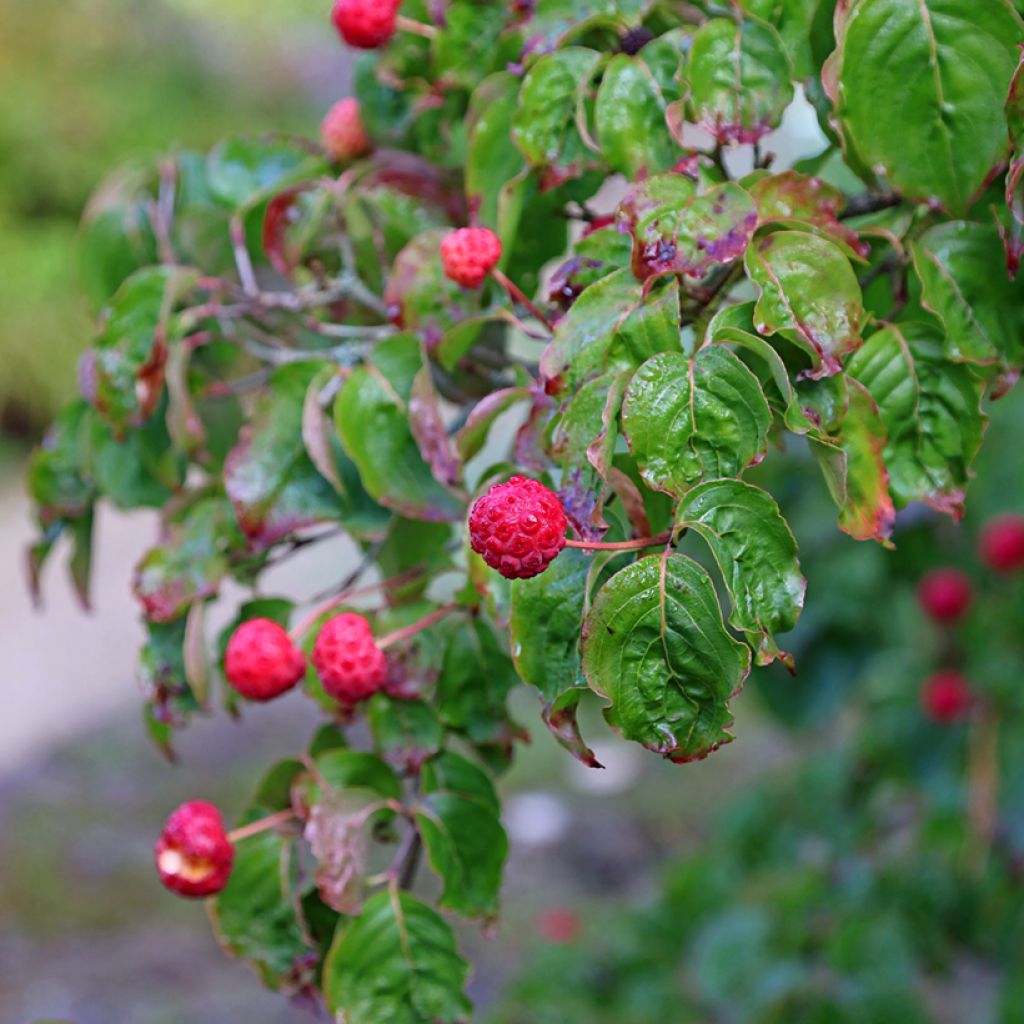
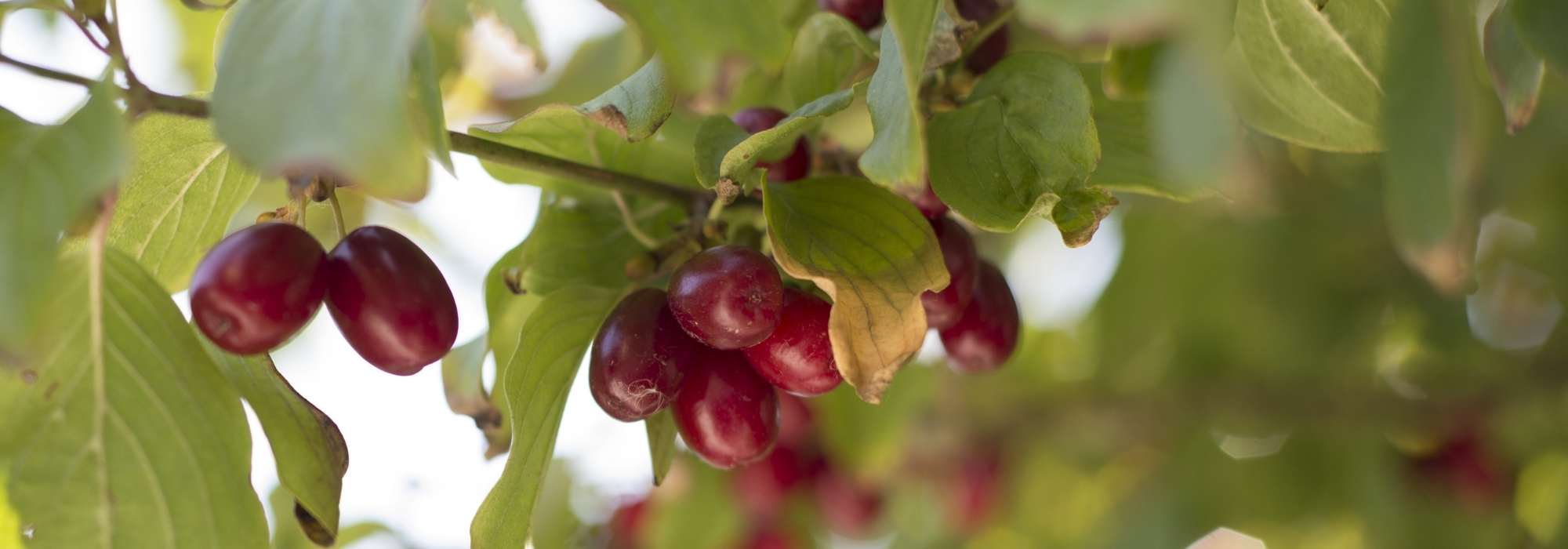
Flowering takes place in May-June, even on plants aged 3 to 4 years. The bush is adorned with a multitude of large 'flowers', which are actually inflorescences. These are clusters of small true flowers, surrounded by 4 oval bracts with particularly pointed tips, arranged in star shapes, and pure white in colour. The flowers are arranged on the tree as if they were resting on the foliage. The flowers are followed by numerous, good-sized fruits, ranging in colour from pink to carmine-red. The fruits resemble strawberries. The higher the summer temperatures, the more abundant the fruiting. The fruits are edible, fleshy, with a sweet flavour, and add charm to this large shrub at the end of the season. The shrub has shiny dark green deciduous foliage that turns orange and then scarlet-red in autumn. The leaves are ovate, strongly veined, slightly closed, somewhat undulate along the edges, and they hang down. They measure between 5 cm and 8 cm (2 in to 3.1 in) long and are arranged opposite each other along the branches.
Cornus kousa thrives in continental climates, with marked summers and winters, but it also performs well in milder areas. In hot regions, it should be planted in a spot protected from the scorching sun, in consistently moist soil. It is still rare in gardens but very easy to grow once it has been carefully planted. It alone is a beautiful attraction and deserves to be planted in isolation, standing out in the middle of a lawn, for example. It will also be advantageous at the back of a bed composed of acid-loving plants or shrubs with staggered flowering or evergreen foliage. Plant it with, for example, oakleaf or paniculate hydrangeas, Japanese maples with purple foliage, snowberries, a Cercis, a Fothergilla, or a Tetradium daniellii, the bee tree.
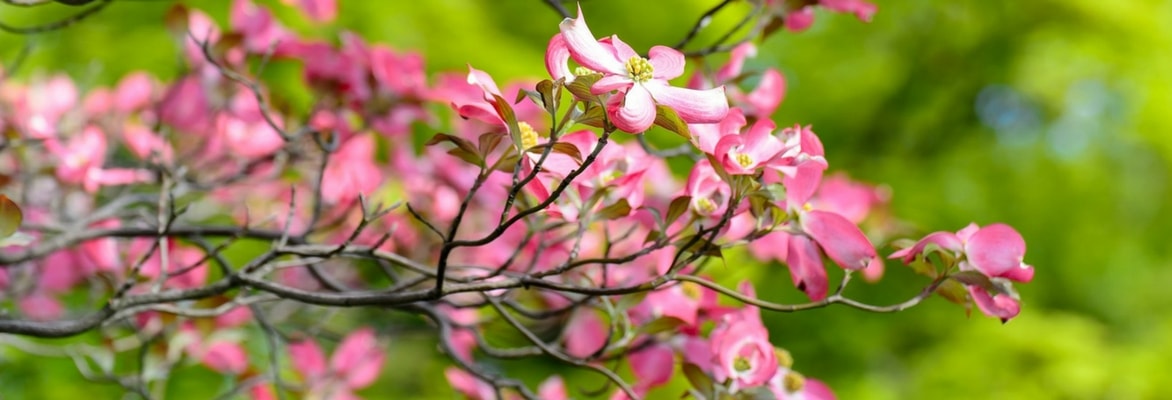
Cornus kousa - Flowering Dogwood in pictures
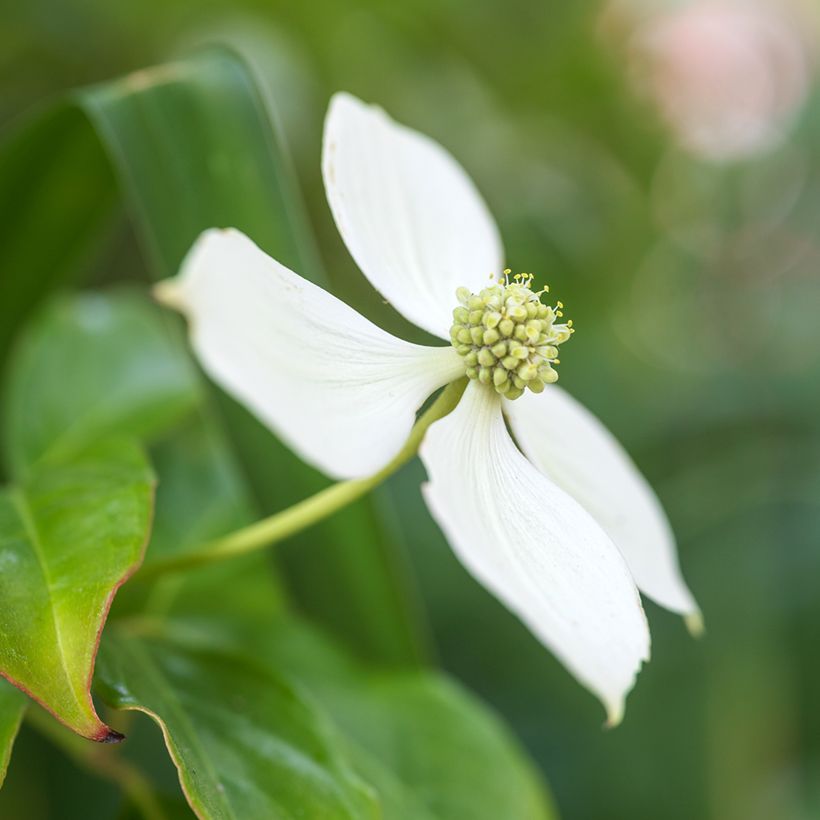
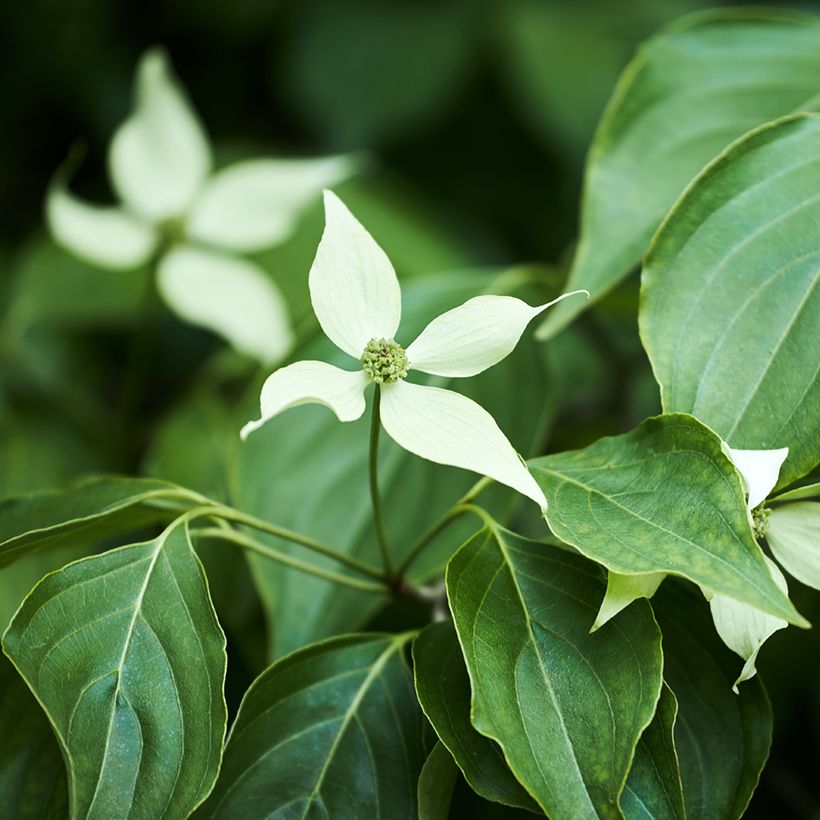
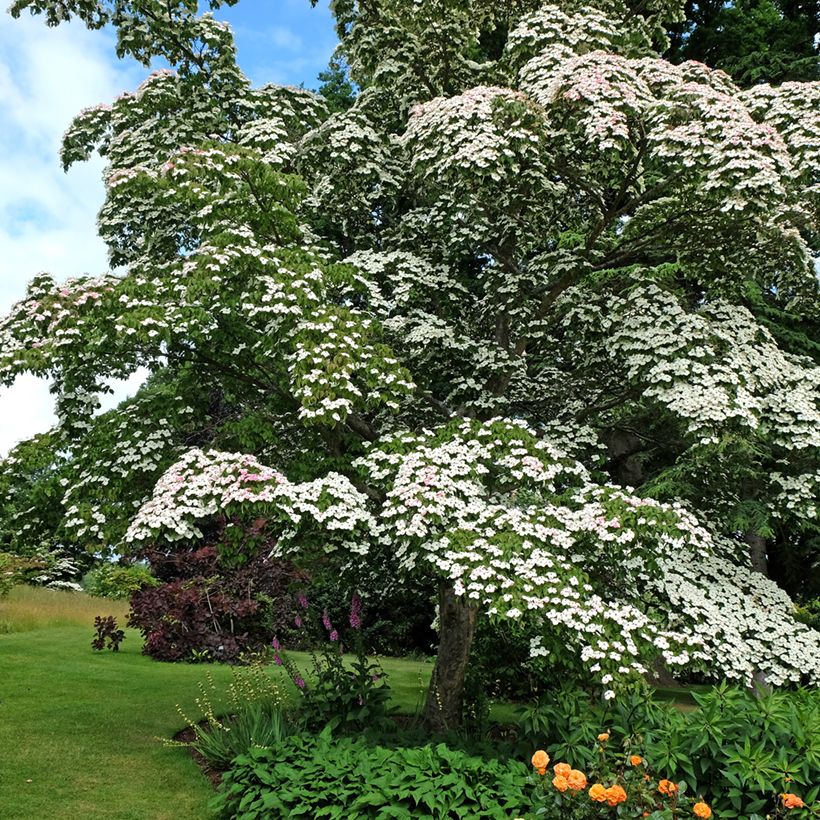
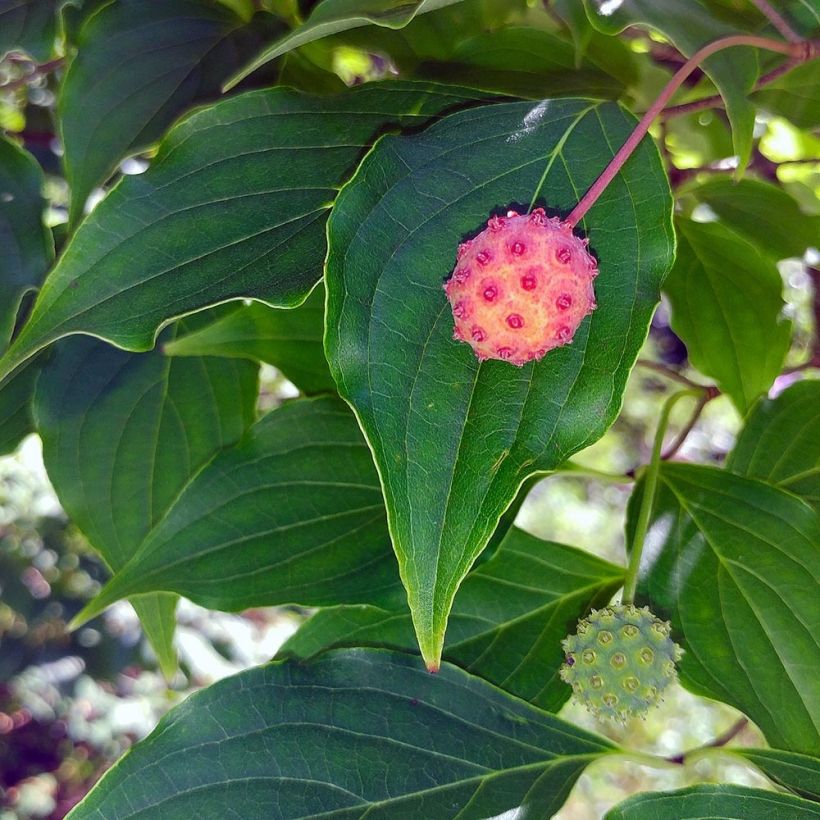
Plant habit
Flowering
Foliage
Botanical data
Cornus
kousa
Cornaceae
Kousa Dogwood, Japanese Dogwood, Chinese Dogwood
Cultivar or hybrid
Planting and care
Originally from Japan, Korea, and China, Cornus kousa thrives in continental climates and temperate zones. Extremely cold temperatures during winter can result in absent or reduced flowering. However, this bush is very hardy and can withstand frost of at least -15° C (5° F). It tolerates sunny exposures in areas with moderately warm summers. In hot regions, it should be planted in a sheltered spot away from scorching sun.
It prefers deep, fertile, well-drained soils that are slightly acidic or neutral, but it can tolerate some limestone in the soil. It can endure clay soils as long as it is protected from excessive moisture, especially in winter. Plant it in a deep hole lined with clay balls, coarse sand, or gravel to ensure good drainage if necessary, in a very compact soil. Any good, balanced, and soft garden soil is suitable. At planting, add compost and leaf soil. Mulching with pine bark will help maintain freshness and promote soil acidity.
Pruning is not obligatory but can be done at the end of winter to remove diseased or dead wood and crossing branches to maintain an attractive habit. During the first two years after planting, regular watering is necessary in summer, but afterwards, it can manage on its own.
Planting period
Intended location
Care
Planting & care advice
-
-
-
-
-

-

-

-
-
, onOrder confirmed
Reply from on Promesse de fleurs
Recently viewed products
Haven't found what you were looking for?
Hardiness is the lowest winter temperature a plant can endure without suffering serious damage or even dying. However, hardiness is affected by location (a sheltered area, such as a patio), protection (winter cover) and soil type (hardiness is improved by well-drained soil).

The flowering period indicated on our website applies to countries and regions located in USDA zone 8 (France, the United Kingdom, Ireland, the Netherlands, etc.)
It will vary according to where you live:- In zones 9 to 10 (Italy, Spain, Greece, etc.), flowering will occur about 2 to 4 weeks earlier.
- In zones 6 to 7 (Germany, Poland, Slovenia, and lower mountainous regions), flowering will be delayed by 2 to 3 weeks.
- In zone 5 (Central Europe, Scandinavia), blooming will be delayed by 3 to 5 weeks.
In temperate climates, pruning of spring-flowering shrubs (forsythia, spireas, etc.) should be done just after flowering.
Pruning of summer-flowering shrubs (Indian Lilac, Perovskia, etc.) can be done in winter or spring.
In cold regions as well as with frost-sensitive plants, avoid pruning too early when severe frosts may still occur.
The planting period indicated on our website applies to countries and regions located in USDA zone 8 (France, United Kingdom, Ireland, Netherlands).
It will vary according to where you live:
- In Mediterranean zones (Marseille, Madrid, Milan, etc.), autumn and winter are the best planting periods.
- In continental zones (Strasbourg, Munich, Vienna, etc.), delay planting by 2 to 3 weeks in spring and bring it forward by 2 to 4 weeks in autumn.
- In mountainous regions (the Alps, Pyrenees, Carpathians, etc.), it is best to plant in late spring (May-June) or late summer (August-September).
The harvesting period indicated on our website applies to countries and regions in USDA zone 8 (France, England, Ireland, the Netherlands).
In colder areas (Scandinavia, Poland, Austria...) fruit and vegetable harvests are likely to be delayed by 3-4 weeks.
In warmer areas (Italy, Spain, Greece, etc.), harvesting will probably take place earlier, depending on weather conditions.
The sowing periods indicated on our website apply to countries and regions within USDA Zone 8 (France, UK, Ireland, Netherlands).
In colder areas (Scandinavia, Poland, Austria...), delay any outdoor sowing by 3-4 weeks, or sow under glass.
In warmer climes (Italy, Spain, Greece, etc.), bring outdoor sowing forward by a few weeks.
Shipping country and language
Your country of residence may be:
Your country of residence is:
For a better user experience on our website, you can select:
Your shipping country:
-
 Austria
-
 Belgium
-
 Bosnia & Herzegovina
-
 Bulgaria
-
 Croatia
-
 Cyprus
-
 Czechia
-
 Denmark
-
 Estonia
-
 Finland
-
 France
-
 Germany
-
 Greece
-
 Hungary
-
 Iceland
-
 Ireland
-
 Italy
Italy
-
 Latvia
-
 Liechtenstein
-
 Lithuania
-
 Luxembourg
-
 Malta
Malta
-
 Netherlands
-
 Poland
-
 Portugal
-
 Romania
-
 Serbia
-
 Slovakia
-
 Slovenia
-
 Spain
Spain
-
 Sweden
-
 Switzerland
Language:
-
French
-
 English
-
Spanish
-
Italian
-
German
-
Portuguese
-
Dutch
-
Finnish
My Account
Hello
My wish lists
My cart
Log in / Register
Existing customer?
This form is protected by reCAPTCHA - the Google Privacy Policy and Terms of Service apply.
New customer?
Create an account to track your orders, access our customer service and, if you wish, make the most of our upcoming offers.