





























7 trailing indoor plants
Bring nature into your home, even without outdoor space
Contents
Indoor plants don’t just occupy a corner of your indoor space; they can also be beautifully hung for a decorative, elegant effect and an interesting presence. They help to bring greenery and life to any room, even if you don’t have floor space or space on a piece of furniture. In this article, let’s explore a carefully chosen selection of trailing indoor plants, highlighting their botanical characteristics, their charming aesthetics, installation ideas and cultivation tips.

Philodendron micans
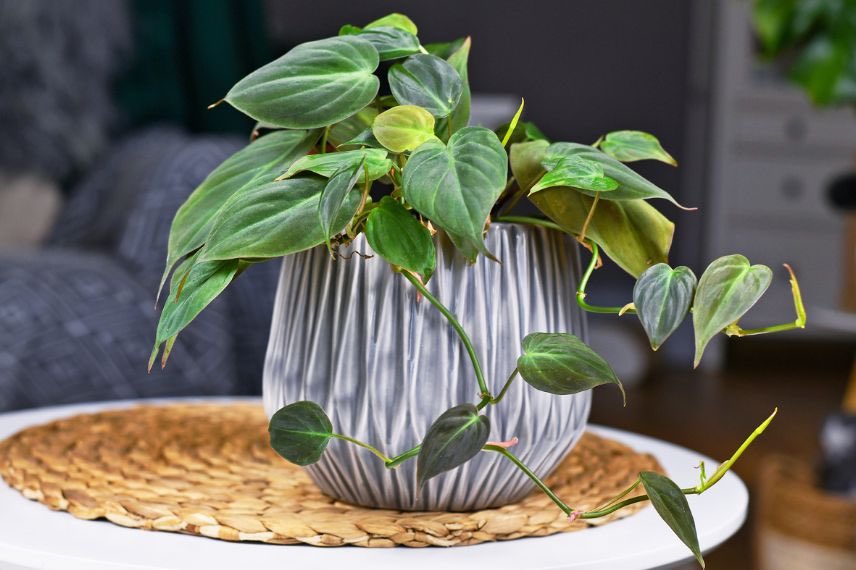
Among the numerous Philodendrons on the market, the Philodendron hederaceum var hederaceum, better known as Philodendron micans or Philodendron scandens f.micans, is one of the easiest to grow, easy to find and reasonably priced. This does not prevent it from being a desirable plant, with velvety leaves and purple undersides. It has a pleasing habit, with vigorous stems that allow it to form a full specimen, with a trailing but rounded habit. To keep it looking its best, feel free to regularly prune its somewhat long stems to take water cuttings, to fill out the main plant or to produce new plants.
The Philodendron micans enjoys moderately bright light, without direct sun. Turn the plant regularly so that it is evenly lit from all sides. Provide it with a fairly rich, well-drained substrate, and regular watering, letting the top centimetres of the substrate dry out between two waterings.
Hoyas
Hoyas form very beautiful specimens of trailing plants. There are many species, with foliage and flowering in a range of colours. Indeed, they are among the exotic plants that provide flowering indoors. Splendid, it features flowers like waxy pearls, fascinating and fragrant. Many are difficult to find on the market, expensive, and fairly demanding to grow, especially to achieve flowering.
One of them stands out for easy cultivation, vigour and one to several annual flowering periods: Hoya bella. If its foliage isn’t the most ornamental among Hoyas, its growth habit is very vigorous and its fragrant flowering is striking. It is an epiphytic plant, growing on bark in the wild, without a deep substrate. The ideal indoor is to provide a substrate close to its natural habitat, such as orchid substrate, particularly well-drained, made from pine bark and coconut fibre, for example. It enjoys bright light, even a little sunshine, and very light watering. Let the entire substrate dry out between two waterings. It quickly forms a handsome trailing plant, quite substantial in all directions. As it grows in all directions, it isn’t suited to sit on a shelf, but benefits from being suspended, for example in a macramé.
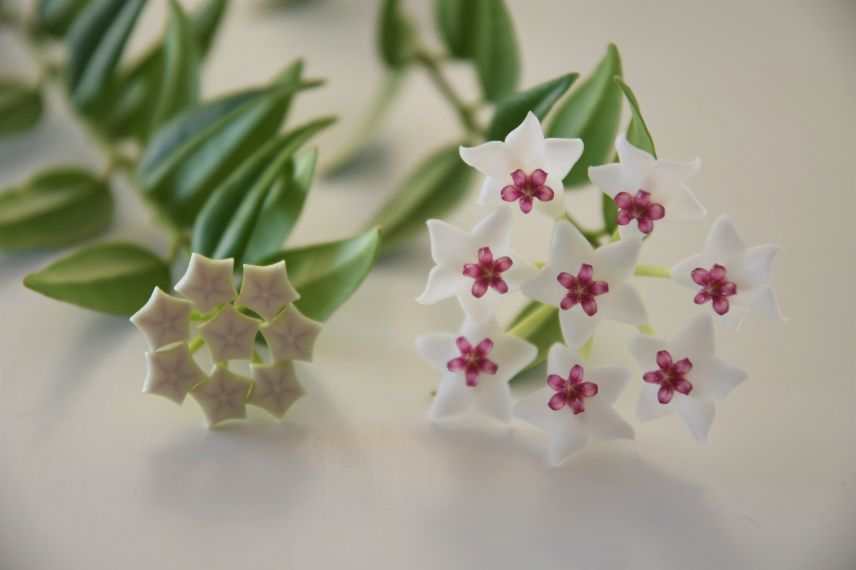
The Hoya bella in bud and in bloom
Peperomia
Peperomias encompass many species. They are regularly available in commerce, not always well identified. They are very interesting plants, whose main cultural characteristics are that they tolerate or prefer moderate light and moderate watering. Peperomias display diverse foliage, of varying sizes, and not all have trailing habits. They do not all have exactly the same needs; some have succulent leaves, others semi-succulent leaves, and others have finer leaves, but all appreciate a well-drained substrate. The ideal is to grow them in terracotta.
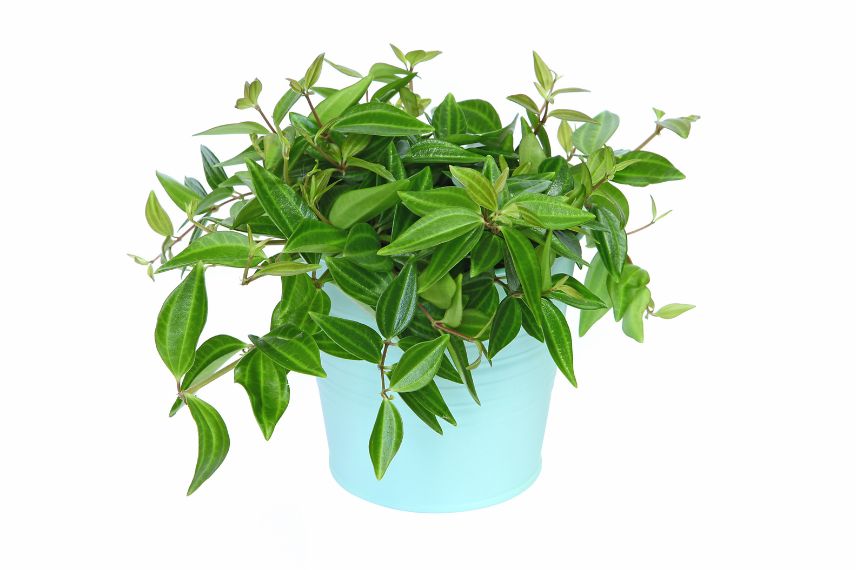
The Peperomia angulata, very resilient, is easy to grow. It forms a beautiful trailing plant, modest in size, with medium-length vines bearing dark-green lanceolate leaves, streaked with graphic markings. Hang it in a hanging basket or on a shelf, even a little away from a window; it is very tolerant of moderate light. It dislikes waterlogged substrates and the best way to lose it is to overwater it. Give it a light potting mix enriched with perlite for drainage and let the substrate dry out completely between two waterings. Then water it generously.
Ceropegia woodii
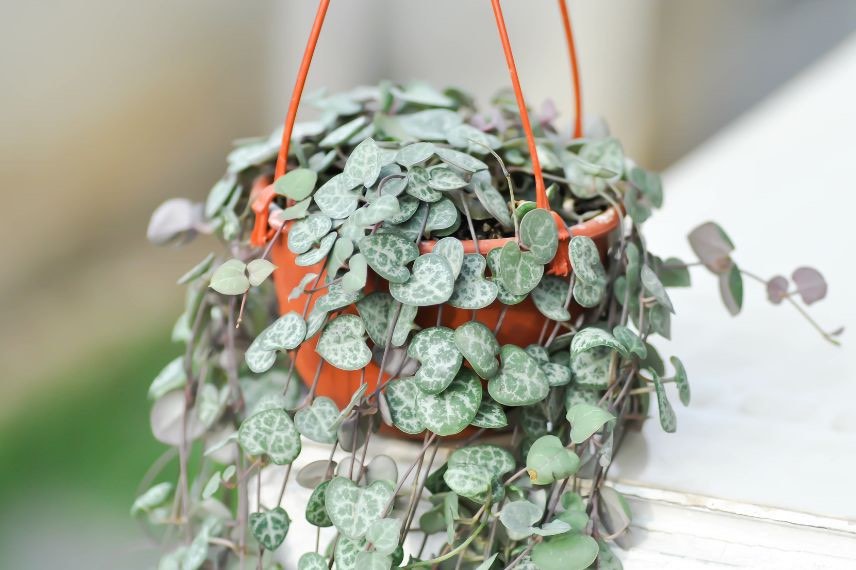
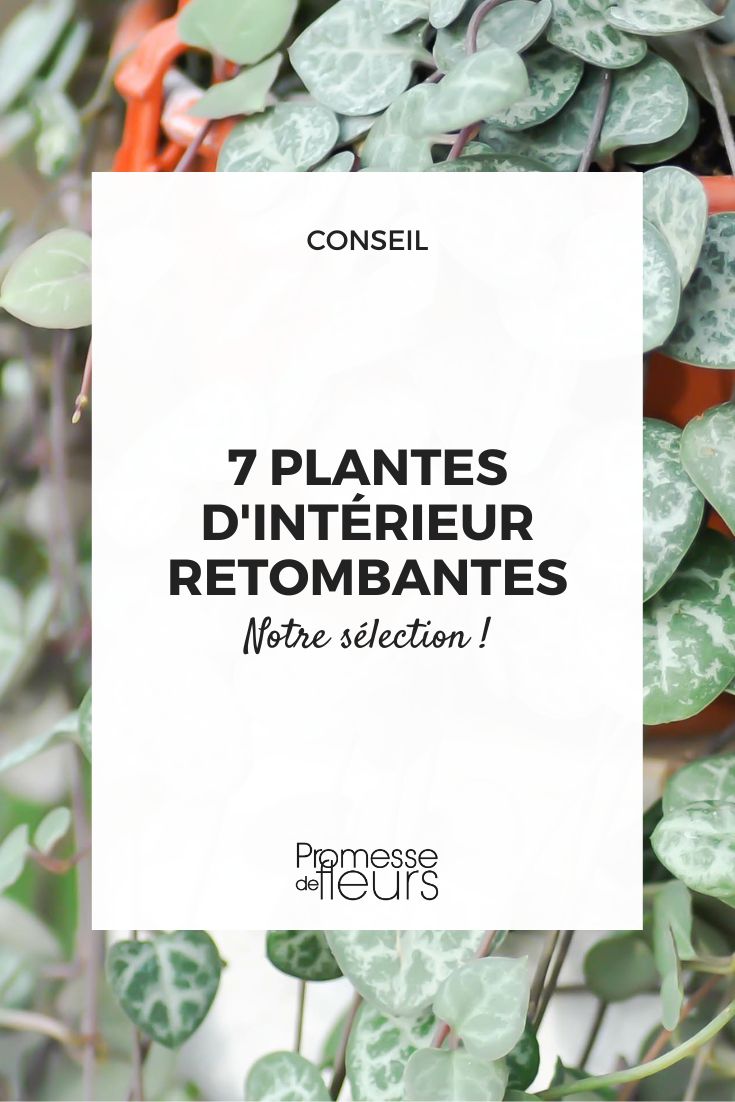
The Ceropegia woodii is a very appealing plant, with long, slender lianas and pretty heart-shaped leaves. They are coloured with small dark-grey spots on a pink-tinged grey-green background. There is also a variegated-leaf form, Ceropegia woodii ‘Variegata’.
This plant may flower occasionally, with tiny pink tubular flowers along the lianas.
Known for forming very long stems, it is ideally grown in a hanging position, but can also be trained along a support. As a trailing plant, position it fairly high so it has room to cascade gracefully over a considerable height. Relatively easy to grow, it enjoys a bright, well-lit position, a very well-drained substrate and moderate watering. The main risk is root rot caused by overwatering. The variegated form is a little more delicate to grow; finding the right balance of watering and substrate is more difficult.
Ceropegia woodii is an essential trailing plant, robust, from which you can quickly and easily take cuttings to propagate.
The Cissus
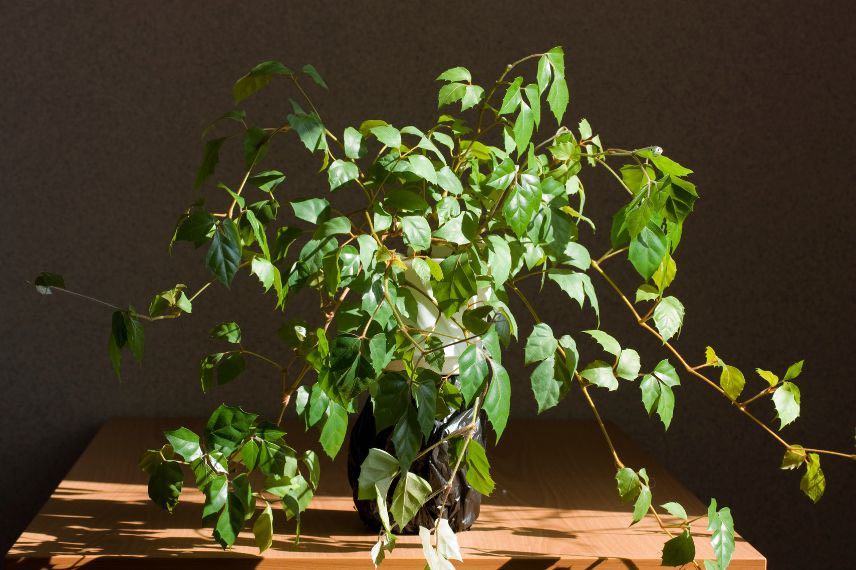
Cissus, also known as the indoor vine, is a tropical liana related to the grapevine that grows well indoors. There are many species, the easiest to find on the market are Cissus rhombifolia and Cissus striata. This trailing plant features dark-green, glossy, lobed foliage with a graceful habit, evocative of the foliage of outdoor plants, giving it a natural appearance. This vine requires a potting mix for houseplants and regular watering, as soon as the top few centimetres of the mix are dry; it also appreciates a fertiliser feed.
Install it in a hanging basket where it will trail in all directions, in bright indirect light. It grows quite vigorously. There are several species and varieties with varied, colourful foliage, very ornamental.
Cissus rhombifolia
The Tradescantia zebrina
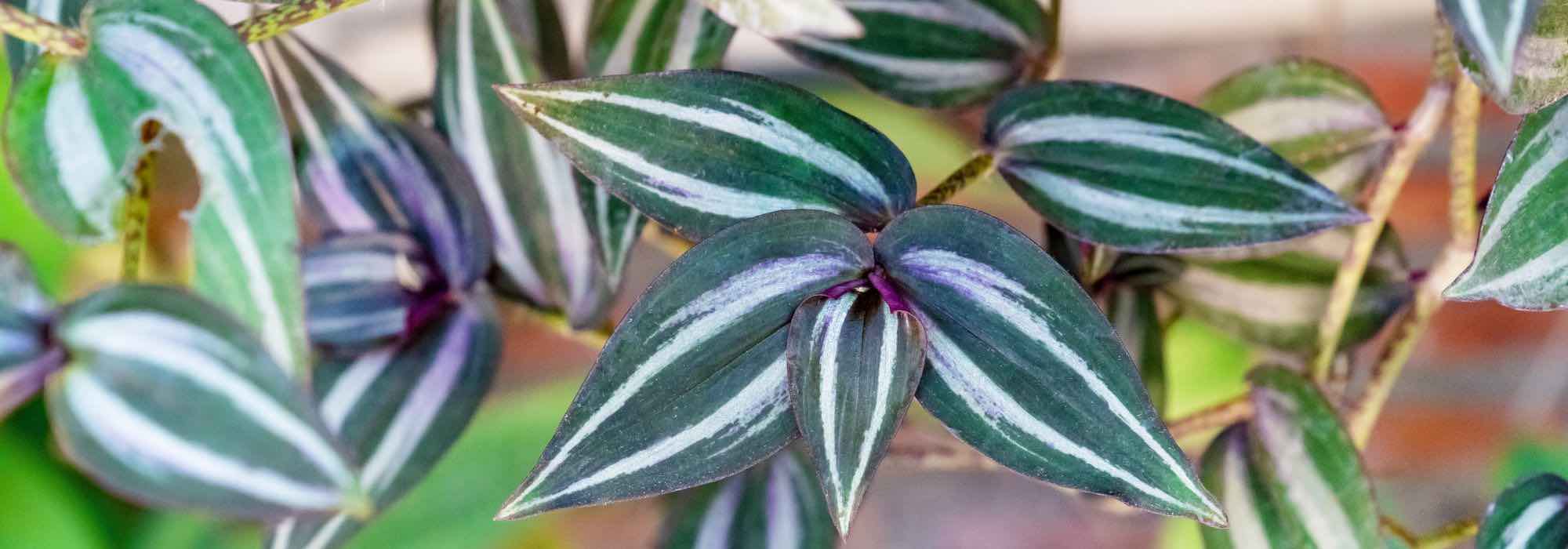
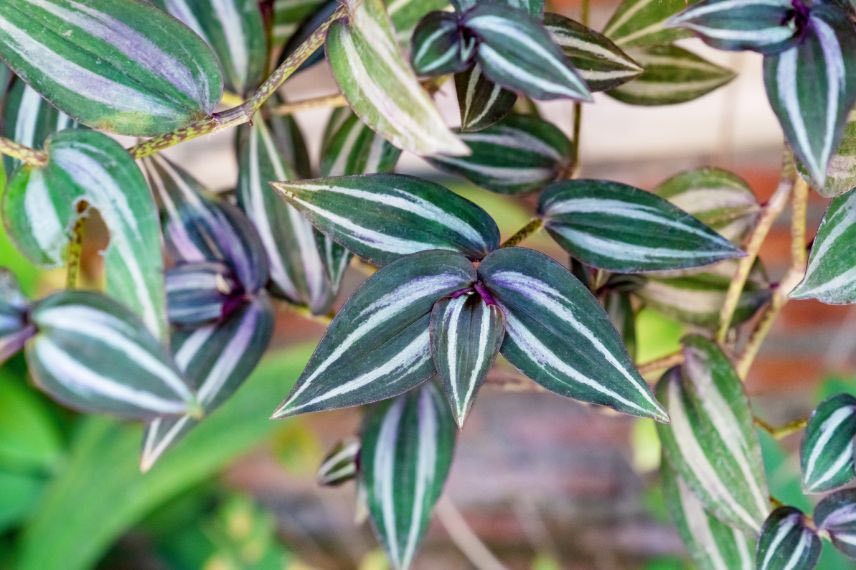
Tradescantia, also known as ‘wandering Jew’, is known for its lanceolate leaves in vibrant colours. It comes in a range of colours, including green, purple and variegated, all very attractive, but not all easy to grow reliably.
The Tradescantia zebrina is an easy-care form, with long, generous vines, adorned with leaves in vivid colours, purple and silvery, which look almost fluorescent. Its colourful leaves add a touch of contrast and boldness. The silver stripes on the leaves make it a real eye-catcher. Its pliant stems add a touch of grace to any space. Water regularly and keep the growing medium fairly moist. This plant loves bright indirect light, but will tolerate a medium light exposure. Tradescantia propagates easily, making it a perfect choice for propagation enthusiasts. Hang a Tradescantia near a workspace or along a curtain rail for a beautiful display. It can also be placed on shelves to create a cascading effect.
The Senecio rowleyanus
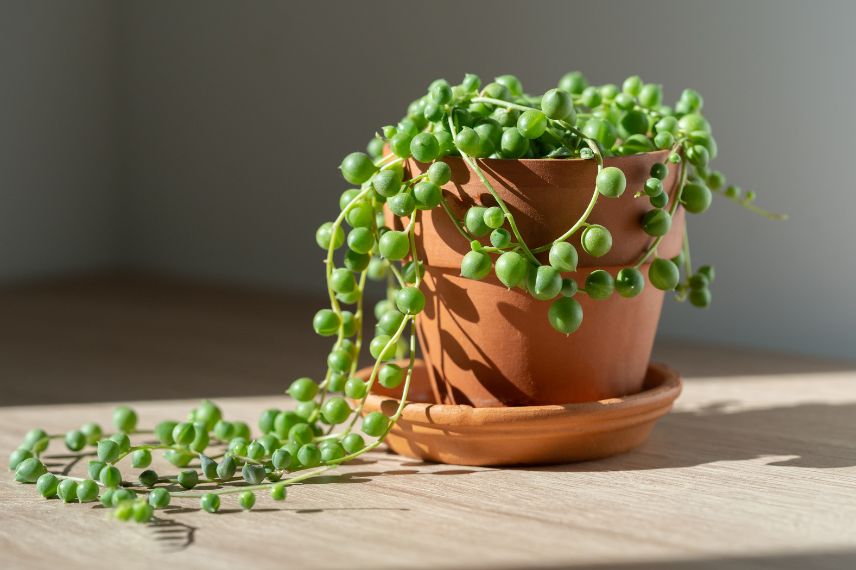
Senecio rowleyanus, also known as the string of pearls plant, has very fine and delicate stems bearing small round fleshy leaves that resemble pearls. Their leaves are a soft green and form a graceful cascade, imparting a soft visual touch and a unique texture, perfect for creating a delicate and romantic look. This plant is a succulent, and its fleshy leaves are water reservoirs. It therefore requires a very well-drained substrate, such as cactus potting compost and moderate watering. It is, however, somewhat more challenging to care for than the most common succulents in our homes, as you need to strike the right balance of watering and drainage. Its leaves may wrinkle and dry out if they lack water, or rot if they have too much, as can the fine stems if they receive too much water. Grow it in a terracotta, porous pot to avoid waterlogging and to prevent the substrate from staying damp for too long.
It enjoys bright light, even a little direct sun. Plant the string of pearls in a hanging pot and let it trail naturally. Ideally the pot should still receive plenty of light from above to prevent it from becoming bare and etiolated in that spot.
Further reading
- Many other plants form beautiful hanging specimens, even though they do not always form long lianas. Think of ferns whose arching fronds look particularly striking in hanging displays.
- Many succulents form architectural plants that hanging displays showcase to great effect. Think of Rhipsalis or Sedum burrito, for example.
- The plant, not mentioned here, which is the most popular and the first to come to mind for a hanging display is Pothos, also known as Scindapsus, with the Latin name Epipremnum aureum. Vigorous, it quickly fills several pots if you propagate it by cuttings.
- Subscribe!
- Contents
Comments