





























9 hedging shrubs with colourful foliage
Selection of shrubs for distinctive hedges
Contents
Many shrubs help create pretty garden hedges. Even more striking, hedging shrubs with coloured foliage offer a display of tones and contrasts that you never tire of admiring. From variegated holly to Photinia, from Berberis to Cornus alba, the foliage comes in a wide palette of elegant colours: variegated white and green or yellow and green, red, purple, gold, black and orange. Discover our selection of nine shrubs with coloured foliage, more decorative and unusual than any other, and craft a creative hedge full of surprises for the eye.

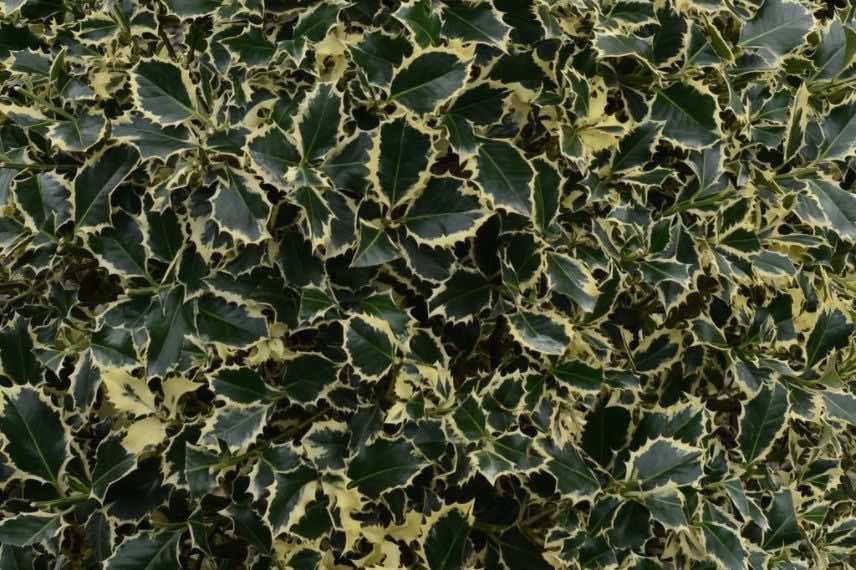
Variegated holly - Ilex aquifolium 'Argenteomarginata', an elegant green and cream foliage
Ilex aquifolium ‘Argenteomarginata’ offers an elegant, glossy evergreen foliage variegated with cream-white. Coriaceous and architectural, its dentate leaves are edged with 7 to 9 spines. This dense green mantle grows slowly and tolerates pruning very well, making it a good choice for creating a decorative hedge. In May, it bears small white melliferous flowers, and in autumn, the female plants produce small bright red berries, which are a delight for birds. Hardy to -20°C, variegated holly adapts to all regions across France. It can be planted in any soil, but prefers acidic, light soils. Avoid planting it in heavy soil and in draughts, and provide a sunny to semi-shaded exposure.
In a hedge, you can pair its bright foliage with that of shrubs offering a darker colour, such as Taxus baccata ‘Fastigiata Robusta’ – common fastigiate. The variegated and spiny holly foliage will create a nice contrast with the darker, flattened-needle foliage of the yew.
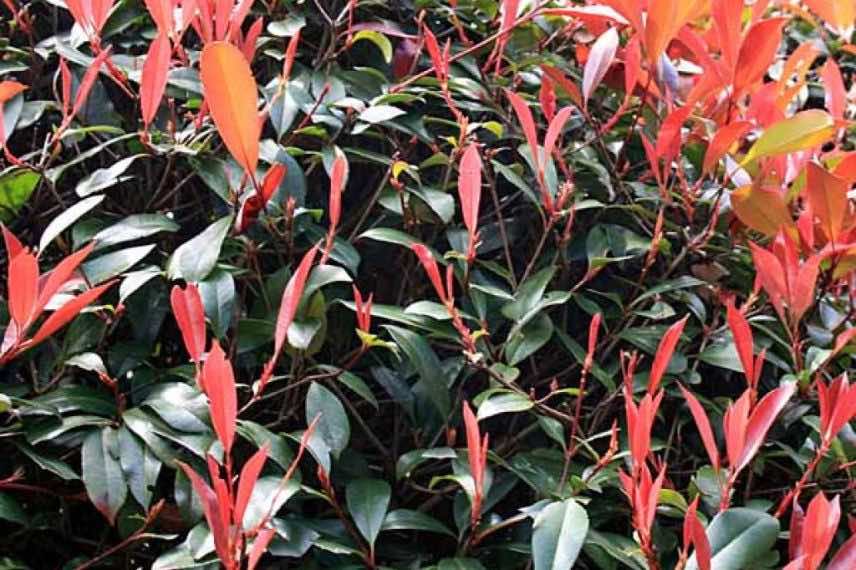
Photinia fraseri 'Red Robin', the striking red and green contrast
Another evergreen hedge shrub, the Photinia fraseri ‘Red Robin’ catches the eye thanks to the contrast between the red of its new shoots and the dark, glossy green of its older foliage. Highly popular, vigorous and easy to grow, it tolerates repeated pruning well. From March to May, it bears creamy-white umbels with a light honey fragrance, which attract insects. With its dense, two-tone foliage, it’s a top choice for creating a decorative hedge. It will grow in any well-drained soil—deep, cool to dry in summer. It thrives in full sun or partial shade and even tolerates slightly calcareous soils. It is hardy to -18°C.
In a hedge, it pairs well with other evergreen and easy-to-grow shrubs, such as Eleagnus ebbingei, laurustinus, or Berberis.
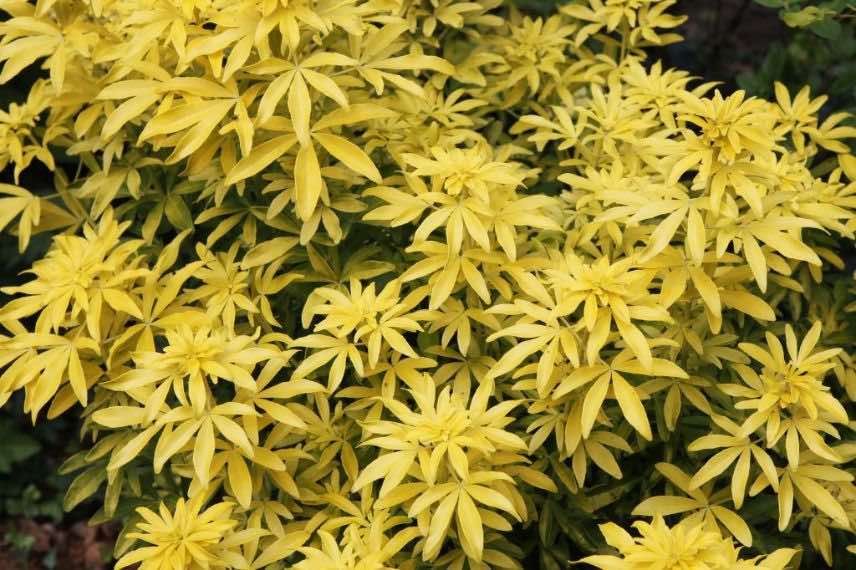
Choisya 'Goldfinger' – Mexican orange blossom, with stunning golden-yellow foliage.
Choisya ‘Goldfinger’ offers evergreen foliage in an astonishing golden-yellow colour. Perfect for brightening a hedge in a garden. This compact shrub with an exotic appearance bears palmately divided leaves, 3 to 5 leaflets. From May to June, it is cloaked in white, fragrant flowers which exhale the scents of orange blossoms. This Mexican orange is hardy down to -15°C and thrives in regions north of the Loire. Plant it in light soil, not too calcareous, well-drained and sunny, sheltered from cold winds.
In a hedge, play on contrasts and pair the golden foliage of this Mexican orange with shrubs with green foliage finely cut, such as the black elder – Sambucus nigra ‘Laciniata’.
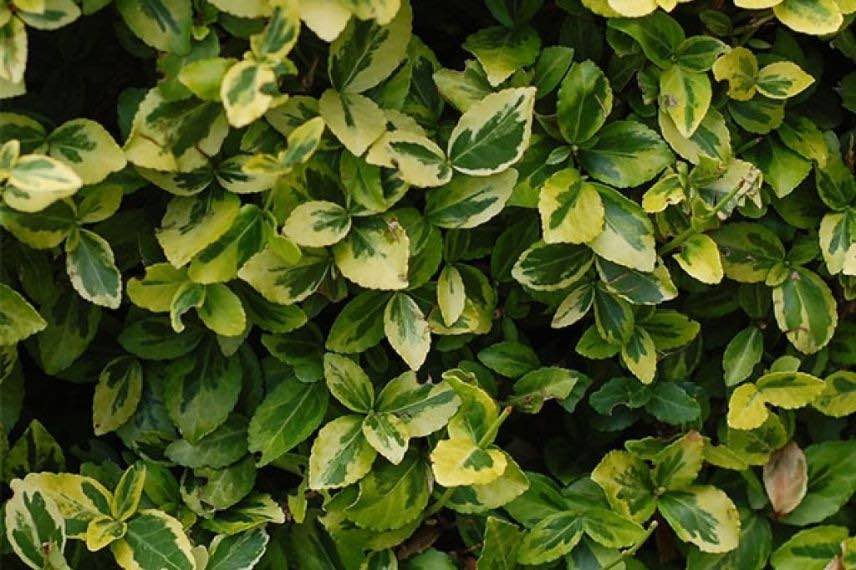
Euonymus japonicus Aureus - Japanese spindle, dense and bright foliage
Euonymus japonicus ‘Aureus’ – Japanese spindle bears evergreen variegated yellow and green leaves. Its leaves are oval and glossy, with finely dentate margins. They bear a discreet white flowering from May to July, enjoyed by pollinating insects. In autumn, small green fruits appear and turn pink, then orange. The dense foliage of this Japanese spindle allows you to create a bright, low hedge. It thrives in any soil that stays moist and prefers a site in partial shade. It is hardy to -12°C.
In a hedge, enjoy pairing this Japanese spindle with dark-leaved Physocarpus or red-leaved Berberis.
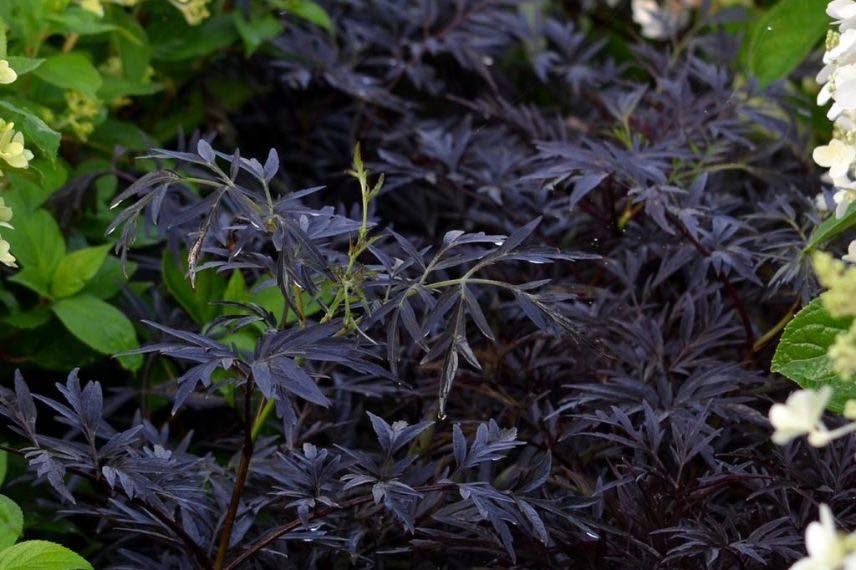
Black Lace elder – Sambucus nigra 'Black Lace (Eva)', lace-like black foliage
The black elder – Sambucus nigra ‘Black Lace (Eva)‘ is cloaked in deep purple, almost black foliage. Surprisingly, its finely cut leaves resemble those of Japanese maples, with the only drawback being that they are deciduous. In late spring and early summer, it is adorned with pale pink, flat-topped flower clusters that fade to creamy white. These striking color contrasts are further enhanced by the appearance of red berries, which turn black and are much loved by birds.
Hardy down to –34°C, this easy-to-grow shrub adapts to all soil types and thrives in both full sun and partial shade.
With its unusual colouring and delicate flowering, it makes a wonderful feature in an informal hedge, where birds can shelter. You can pair it with botanical roses or, mock oranges.
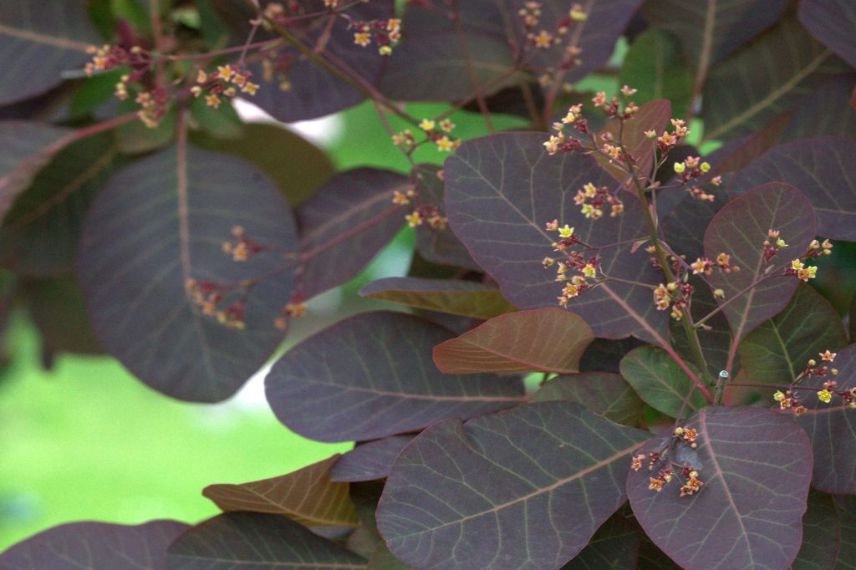
Cotinus 'Grace' – a smoke tree with unusual foliage and flowering
Cotinus ‘Grace’ – smoke bush offers foliage that is also remarkably deep red, which darkens to purple. Its rounded leaves, veined with red, change tones through the seasons and are deciduous. In winter, only the stems remain in a deep purple, while in July and August the shrub is adorned with delicate, wispy floral panicles that are curious and poetic. It responds very well to pruning, which makes it easy to fit into a hedge. Resistant to diseases, it is hardy to -20°C and it thrives in light, well-drained and cool soil, in sun or shade.
In a hedge, it can be planted beside Osmanthus or Photinia, which will highlight their foliage.
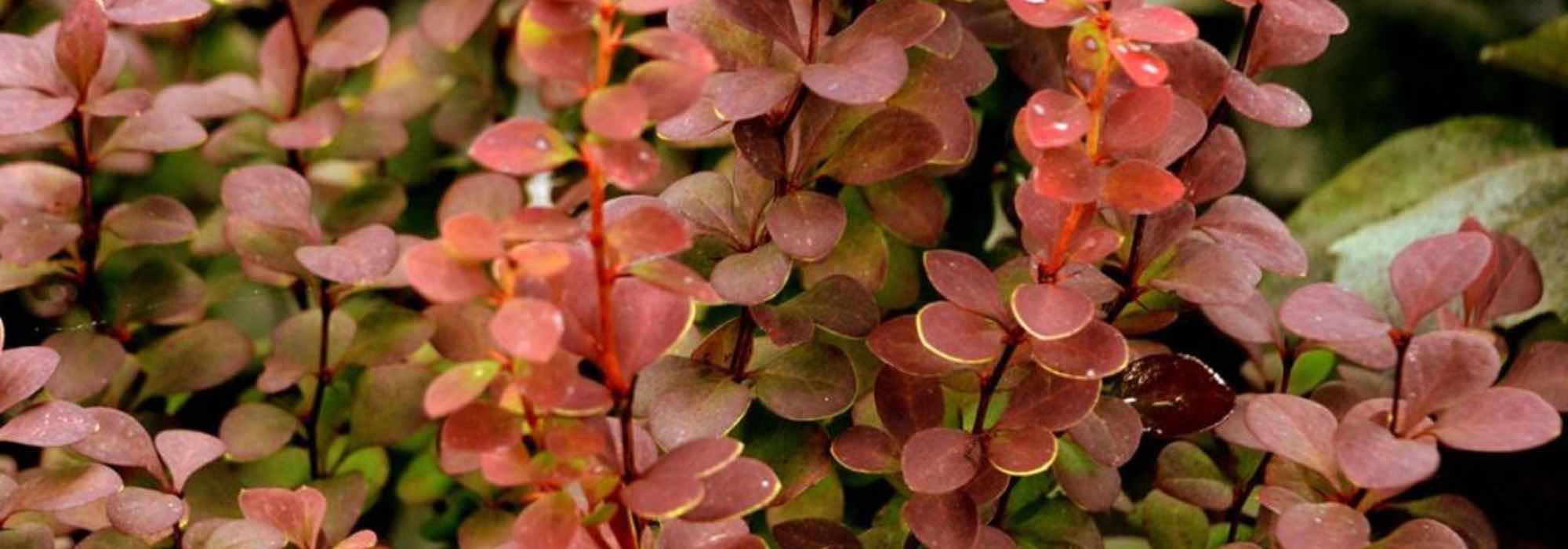
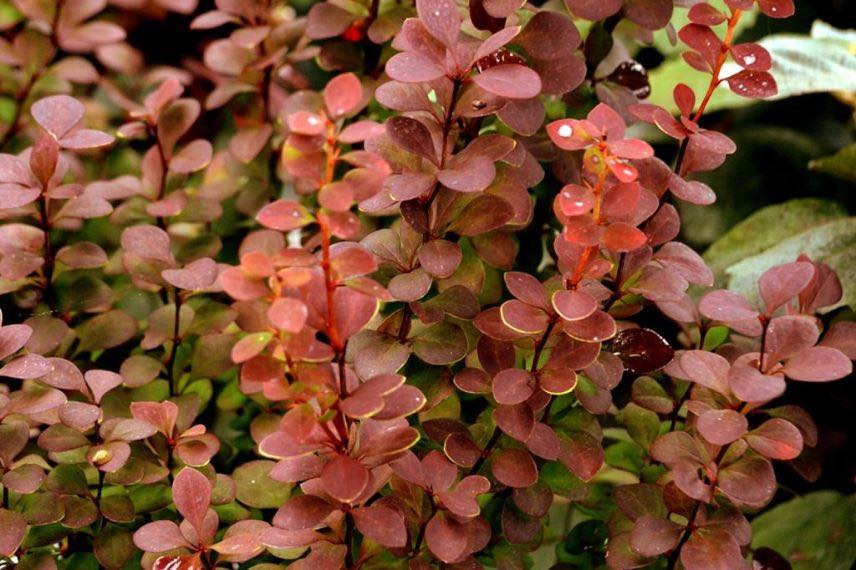
Berberis thunbergii 'Orange Rocket' – thorned barberry, with showy foliage.
The Berberis thunbergii ‘Orange Rocket’ – barberry captivates with its rounded foliage in fiery, changing colours. Bright orange when young, the leaves become soft green, then bright red in autumn. This spiny, compact shrub bears shoots that are also red. It produces a discreet yellow flowering in May, then small bright red berries. Due to its size, reaching 1.5 m at maturity, it is used to create a low hedge. Hardy down to -15°C, it will tolerate any cool, well-drained soil, even chalky or stony soils, with a preference for a sunny exposure, except in the southern and western regions of France, where it should be planted in partial shade.
In a small hedge, it pairs well with shrubs with golden or silvery foliage, or with peonies.
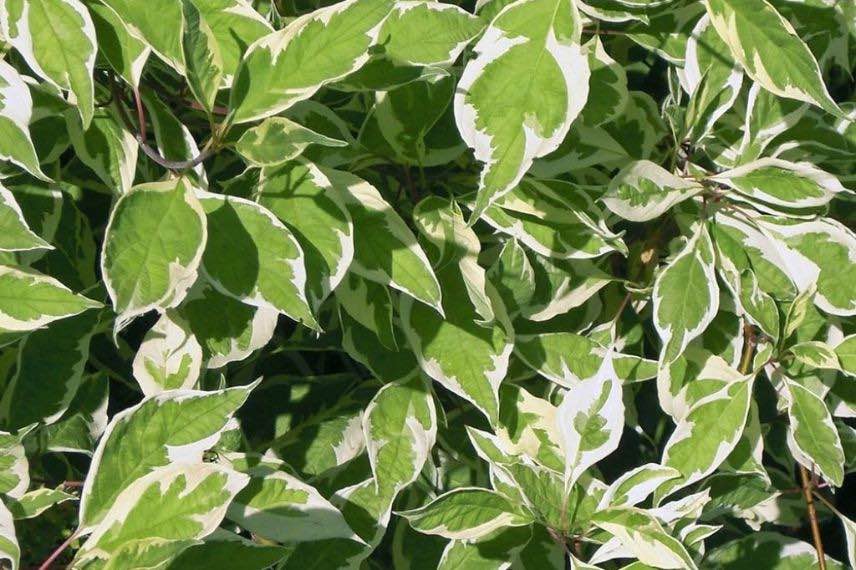
Cornus alba 'Elegantissima' – Dogwood, with elegant white-variegated foliage
The Cornus alba ‘Elegantissima’ stands out for its green-grey foliage margined with white, borne on shoots of a vivid red. In May and June, small cream-white flowers bloom, then give way to white berries. As its foliage is deciduous, its red shoots provide a striking display in winter. Hardy to -34°C and vigorous, it grows in ordinary, cool soil in full sun. Very popular, it makes for an elegant informal hedge.
In an informal hedge, it can be paired with another Yellow-wood dogwood – Cornus stolonifera ‘Flaviramea’.
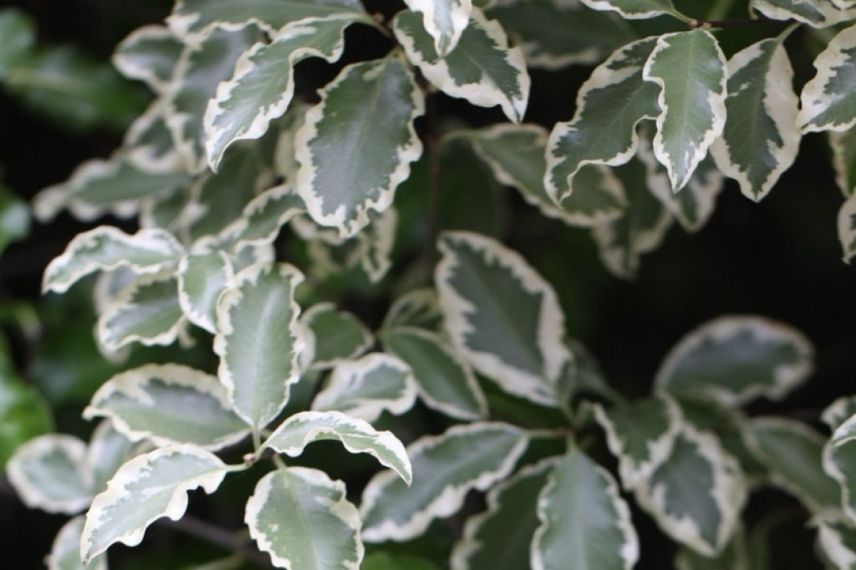
Pittosporum tenuifolium 'Elisabeth', refined foliage.
The Pittosporum tenuifolium ‘Elisabeth’ is prized for its evergreen, dense and variegated foliage that changes through the seasons. Its small undulate leaves are grey-green edged with cream, which becomes pink to red in winter. In May and June, small dark red flowers appear and give off a honey fragrance, before giving way to small round green fruits that turn black. This shrub tolerates pruning well and is a good candidate for forming a hedge. Hardy down to -9°C, it adapts particularly to maritime climates and thrives in full sun, in well-drained soil that is not too calcareous.
This shrub , which is a safe bet, pairs harmoniously with lavenders or rosemaries.
- Subscribe!
- Contents
Comments