





























Autumn garden: everything you need to know to grow hardy chrysanthemums.
To enjoy their beautiful autumn flowering for a long time.
Contents
Garden chrysanthemums are hardy perennials, especially prized for their autumn flowering. They bring rich, vibrant colours in autumn. Their ability to flower late extends the garden’s appearance right up to the first frosts.
Hardy chrysanthemums are robust and tolerate temperatures down to at least -15°C. They do not require heavy protection against the cold and can flower for many years with minimal care. Hardy, disease-resistant and easy to care for, they are perfectly suited to both beginner and experienced gardeners. Discover in this article all our tips for growing them successfully.

General overview of hardy chrysanthemums
Garden chrysanthemums, hardy, are perennials widely cherished for their colourful flowering and sometimes very late bloom in autumn, at a time when many other flowers begin to fade. Originating from Asia, particularly from China and Japan, these plants have been cultivated and hybridised over the centuries to offer a wide diversity of shapes and colours, ranging from bright yellows to deep reds, including pinks, whites and apricot tones.
Chrysanthemums are popular in France, notably due to their traditional link with All Saints’ Day. Each year they adorn graves to celebrate the memory of the deceased. However, beyond this symbolic use, hardy chrysanthemums are also an excellent option for beautifying gardens in late season.
Hardy garden chrysanthemums withstand quite low temperatures, unlike florist chrysanthemums, which are frost-tender and grown as annuals. They can withstand the first autumn frosts without losing their brilliance.
These plants come in different forms: some have densely double pompon flowers, others feature simple daisy-like flowers. They can be compact, forming small shrubs, or, conversely, rise to more than a metre in height.
What does “hardy” mean in horticultural terms?
In horticulture, the term “hardy” denotes a plant capable of withstanding low temperatures. Unlike plants deemed “frost-tender” that do not tolerate frost, hardy plants can survive harsh winters without requiring special protection.
Hardiness is often classified by frost-hardiness zones, according to indices such as those used by the USDA (United States Department of Agriculture), where hardiness zones are determined according to average minimum temperatures. Hardy chrysanthemums are generally able to withstand temperatures of around -15 °C to -20 °C, depending on varieties and growing conditions.
Their advantages
The latest-flowering garden chrysanthemums are still in full bloom in November, without having started to decline. This helps maintain an attractive late-season garden, while most other plants have already finished their life cycle. Their adaptability and generous flowering make them ideal plants for this season.
Hardy chrysanthemums do not require excessive care and yet offer abundant and long-lasting flowering. They adapt to a wide range of soils, provided they are well-drained, and can thrive both in the ground and in pots.
Well suited to temperate climates, they withstand the first autumn frosts and naturally adapt to variations in temperature and light. This means they can cope with difficult conditions while continuing to flower, provided they are well established in the soil and well maintained. Once well established, they require little attention and are relatively resistant to diseases and pests.
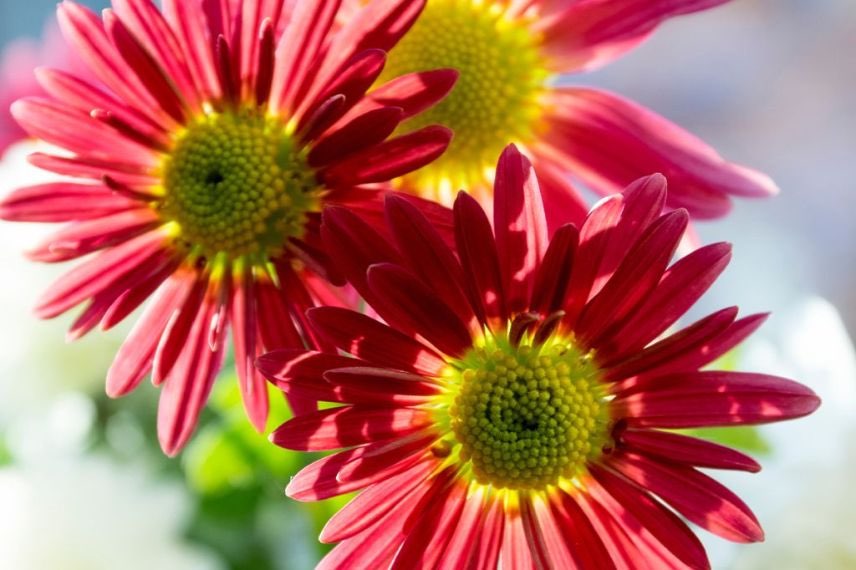
Variety ‘Oury’
A few iconic varieties
Chrysanthemum ‘Nebelrose’
Chrysanthemum ‘Nebelrose’ is a variety with delicate pink flowering. It produces large, well-formed double flowers in a soft pink with silvery, nacreous reflections, on a tall plant reaching 1.10 m. Its late flowering period, from October to November, makes it an excellent choice for extending the season.
Chrysanthemum ‘Clara Curtis’
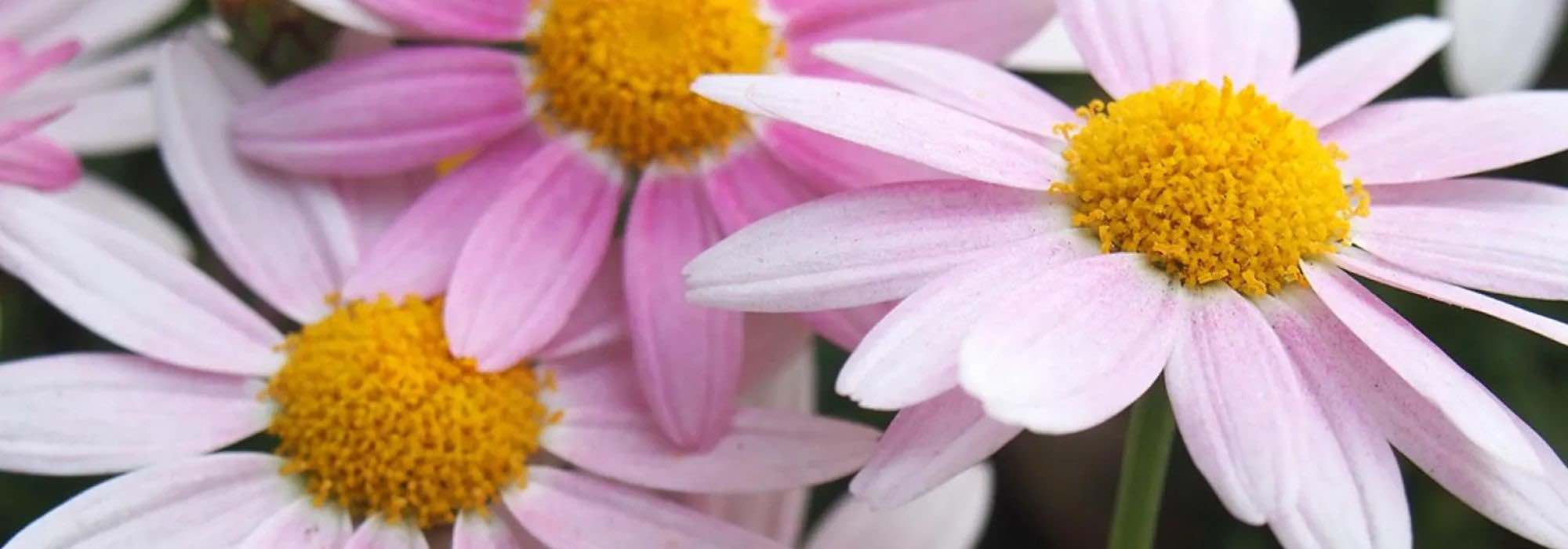
Chrysanthemum ‘Clara Curtis’ is a variety with large single daisy-like flowers, abundant and broad at about 7 cm, displaying soft pink tones. It can reach 60 cm in height. Flowering begins from mid-July, but peaks only in September–October.
Chrysanthemum ‘Bienchen’
Chrysanthemum ‘Bienchen’ is covered with flowers in the shape of small pom-poms in yellow and orange tones, old gold and coppery orange. It forms a compact, rounded tuft about 50 cm across. This chrysanthemum is an excellent choice for creating dense, colourful flower beds towards the end of the season.
Chrysanthemum ‘Duchess of Edinburgh’
Chrysanthemum ‘Duchess of Edinburgh’ offers flowers in a red colour with a golden-yellow centre. It forms tall tufts about 1 m high, ideal for borders or beds, flowering from September to November.
Chrysanthemum ‘Mei-Kyo’
Chrysanthemum ‘Mei-Kyo’ is a variety particularly prized for its small pink pompon-like flowers. Its flowering is extremely abundant, with numerous small floral buds that cover the plant and open in a delightful range of pink shades. This chrysanthemum is ideal for borders, flower beds or pots, and can reach about 50 cm in height.
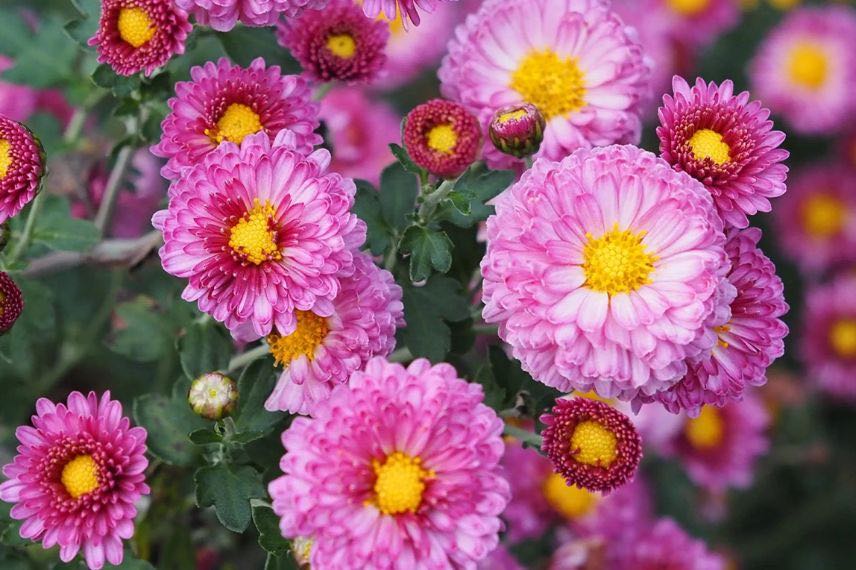
‘Mei-Kyo’
Chrysanthemum ‘Oury’
Chrysanthemum ‘Oury’ offers single flowers of a deep red, magenta, with a small dark yellow centre. This compact chrysanthemum, 50 cm tall, is ideal for borders or beds with warm tones.
Chrysanthemum ‘Dernier Soleil’
Chrysanthemum ‘Dernier Soleil’, as its name suggests, is covered with a multitude of large yellow flowers edged with coppery-salmon orange tones, the colours changing as the flower opens. Flowering runs from late August to late October–early November.
Where and how to plant hardy chrysanthemums?
Where to plant them?
Hardy chrysanthemums love light and need plenty of sunshine to thrive. A full-sun position is therefore ideal, as it helps ensure dense and long-lasting flowering. However, in very hot regions where the summer sun is intense, a light shade during the hottest part of the day can be beneficial to prevent the leaves from wilting.
These plants prefer well-drained soil. Soil that is too compact or poorly drained can lead to stagnant moisture, which can cause root rot. It is therefore recommended to plant hardy chrysanthemums in a soil light, rich in organic matter, and well-tilled. If the soil is too heavy or clayey, it can be improved by incorporating compost to promote drainage and enrich the soil with nutrients.
When to plant them?
The best time to plant hardy chrysanthemums is in spring, as this allows them to establish well before the first frosts. However, it is also possible to plant them in autumn, provided they are well protected from early frosts with appropriate mulch.
How to plant them?
When planting hardy chrysanthemums in the ground, maintain a spacing of about 40–50 cm between each plant to allow them to grow well without crowding each other. Dig a hole roughly twice the size of the plant’s root ball, and place in it a little compost to help the plant re-establish. Ensure the root ball is planted at soil level, not buried too deeply, to avoid smothering the collar of the plant. Once planting is complete, water generously to settle the soil around the roots.
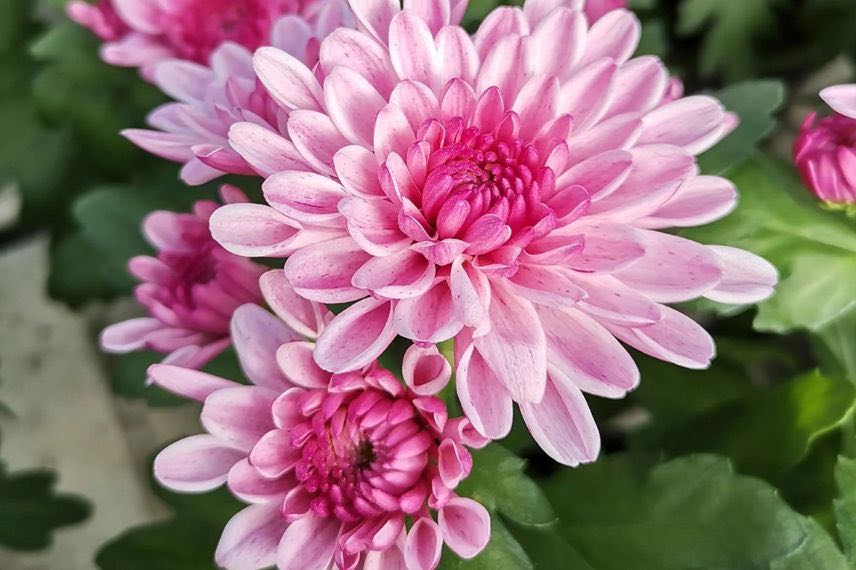
Variety ‘Nebelrose’
Read also
5 pairing ideas with ChrysanthemumsHow to care for hardy chrysanthemums?
Watering
In spring and summer, regular watering is important, especially in dry weather. As autumn approaches, watering can be reduced, unless in drought conditions, as cooler temperatures and ambient humidity are usually sufficient to keep the plant healthy.
Fertilisation
To achieve abundant flowering, it is recommended to fertilise hardy chrysanthemums at the start of their growth period, usually in spring. Use a balanced fertiliser, rich in potassium, which promotes the formation of flower buds. You can also enrich the soil with compost or an organic amendment (well-decomposed manure), to provide essential nutrients while improving soil structure. Avoid fertilising too late in the season, as this could encourage a new growth that is susceptible to frost.
Taille
Pinching is an effective technique for stimulating branching in chrysanthemums and achieving a fuller flowering. Early in the season, once the young shoots have reached fifteen centimetres, pinch off the ends of the stems to encourage the growth of new branches. This helps the plant become denser and produce more flowers. Repeat the operation two or three times in spring and early summer. Remove faded flowers as they appear. In late autumn, cut the clumps back to 15 cm above the soil.
Maladies et parasites
Hardy chrysanthemums are generally resistant, but they can nevertheless be affected by certain diseases and pests. Aphids and slugs are the main pests that can attack them. For deterrence, favour biological methods such as introducing ladybirds to feed on aphids or the use of ashes or crushed eggshells to deter slugs.
Powdery mildew and rust can appear if humidity is excessive. To prevent them, ensure good air circulation around the plants by spacing them well when planting. If a disease occurs, remove affected leaves to limit spread.
Privilégiez des solutions naturelles pour protéger vos chrysanthèmes et favoriser leur santé. Par exemple, nettle liquid fertiliser est un excellent fortifiant naturel qui renforce les défenses de la plante contre les maladies. To enrich the soil and stimulate flowering, homemade compost or well-decomposed manure are good alternatives to chemical fertilisers.
Protection hivernale
If you fear severe frosts, apply organic mulch (straw, fallen leaves) around the plants to protect the roots from frosts. Leave space around the stems to avoid excessive moisture which could cause diseases.
If your chrysanthemums are potted and have lower hardiness than your region, it may be useful to move them to a sheltered location, such as a conservatory or an unheated garage, to avoid extreme temperatures.
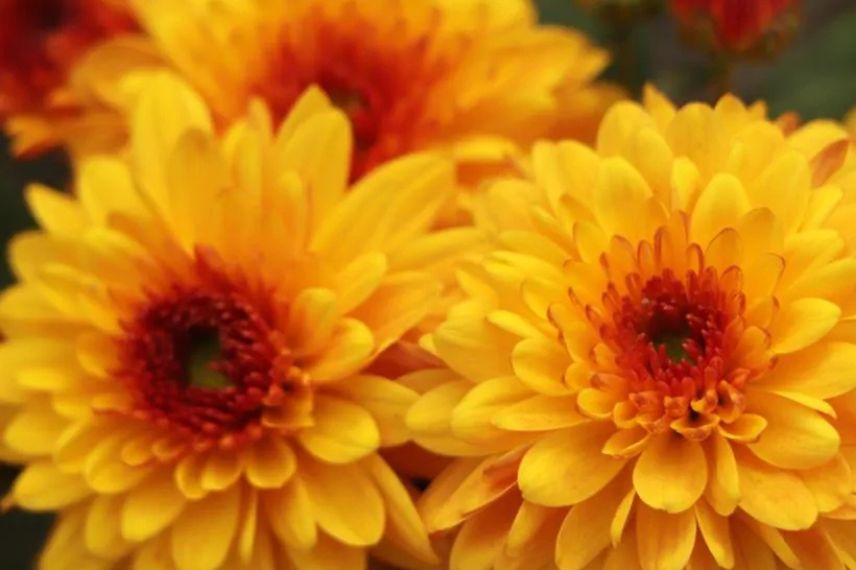
Variety ‘Bienchen’
- Subscribe!
- Contents
Comments