





























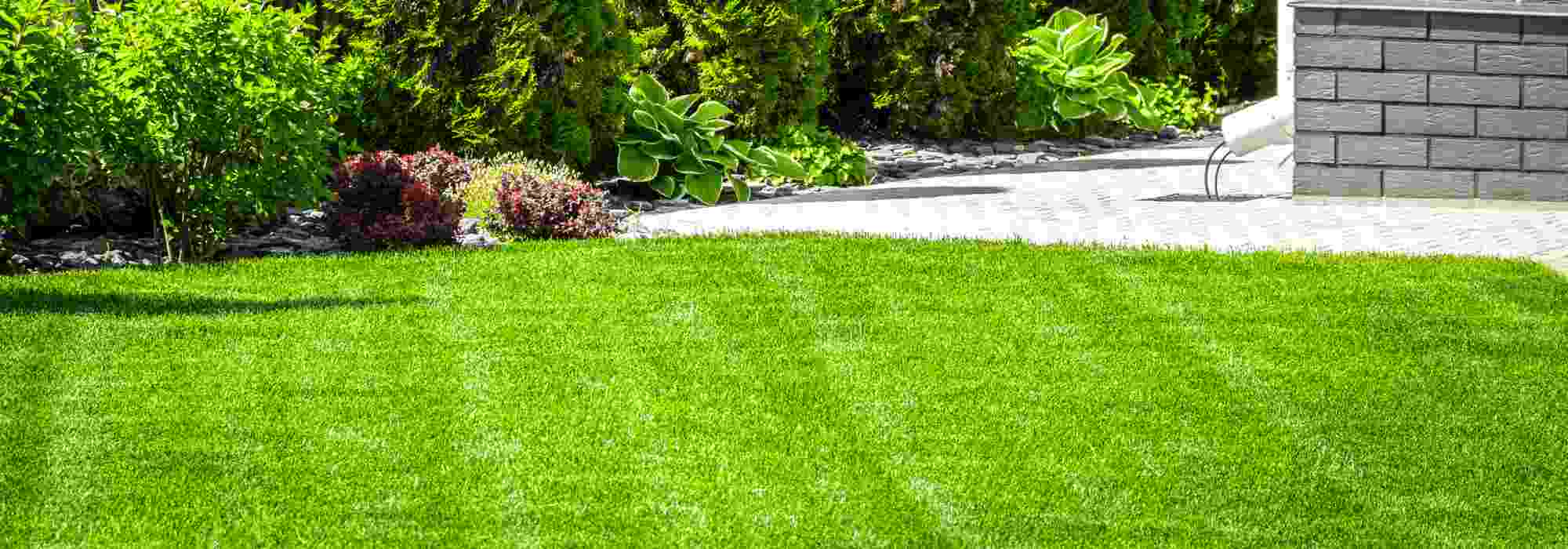
Best lawn varieties for dry soil
Tips, choices and maintenance for a lush lawn even in arid conditions
Contents
Dry, nutrient-poor soils that are poor at retaining water create particularly challenging conditions for lawn growth. Drought, combined with high summer temperatures, exacerbates water stress, resulting in premature yellowing, slowed growth, or even the complete disappearance of the lawn.
But some grass species are naturally better adapted to dry environments, possessing deeper root systems, greater resistance to water stress and an ability to survive in challenging conditions. By opting for an adapted lawn, you maximise the chances of obtaining a robust lawn, while reducing the need for frequent watering and other costly interventions.
Discover our tips for choosing the best lawn varieties for dry-soil conditions.

Dry soil problems for lawns
Dry soils are characterised by their low water-holding capacity, often due to a sandy texture or a granular structure that allows water to infiltrate quickly, without remaining at the surface to feed plants. These soils are also frequently nutrient-poor, because fertilisers are washed away with water, leaving plants in a state of deficiency. In summer, under the influence of heat, these soils dry out even more quickly, intensifying the water stress of the plants grown there.
When water is scarce, the lawn roots struggle to absorb the moisture necessary for their survival. This results in the yellowing of the blades, wilting, and, in due course, a significant reduction in the density of the carpet of vegetation. The lawn then becomes sparse, loses its aesthetic appeal and its effectiveness in protecting the soil from erosion. Furthermore, a drought-weakened lawn is more vulnerable to diseases and pest attacks, which further exacerbates its condition.
Classic lawn varieties, such as English ryegrass not bred for drought tolerance or certain bentgrass varieties, are particularly sensitive to dry soil conditions. These lawns have shallow roots that struggle to reach water deep in the soil. During drought, they quickly go dormant, or even die if conditions are too severe. Moreover, these varieties typically require regular supplies of water and nutrients to stay healthy, which makes them ill-suited for arid environments or areas where watering is limited.
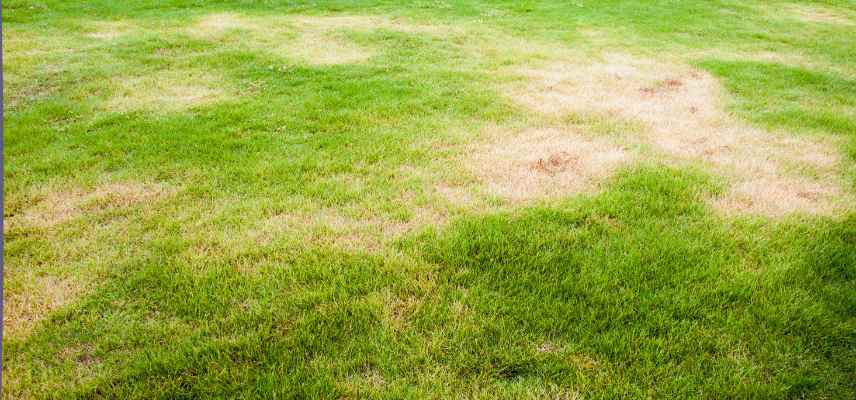
On dry soils, lawns suffer more than anywhere else…
Read also
Burnt lawn: what to do?The best lawn varieties for dry soil
It is difficult to generalise, but some varieties and species stand out for their ability to adapt to arid conditions, thanks to deep root systems. Here are the main lawn varieties suited to dry soils and their characteristics.
Tall fescue (Festuca arundinacea)
Tall fescue is one of the most recommended lawn varieties for dry soils. It has a deep root system that allows it to draw water from deep in the soil, and it tolerates high temperatures well. However, its foliage is broader than that of other lawns, which can give it a slightly coarser, less refined appearance. Establishment is relatively slow, but once well established, tall fescue forms a dense and hardy carpet.
Advantages:
- Excellent drought tolerance
- Good tolerance to high temperatures
- Deep root system
Disadvantages:
- Broader foliage, less refined appearance
- Slow establishment
Meadow grass (Poa pratensis)
Meadow grass is another interesting option for dry soils. It is characterised by a good ability to adapt to challenging conditions, thanks to its relatively deep root system. This lawn is appreciated for its aesthetic appearance, with fine blades and an intense green colour. It also has good wear tolerance, making it suitable for play areas or paths. However, meadow grass requires a fairly long establishment period, and it can be more susceptible to diseases under drought conditions, sometimes requiring additional maintenance.
Advantages:
- Good adaptation to dry soils
- Attractive appearance, fine blades and green colour
- Wear tolerance
Disadvantages:
- Long establishment
- Sensitive to diseases under drought stress
Perennial ryegrass (Lolium perenne) drought-tolerant
Perennial ryegrass is generally known for its fast establishment and density. While classic varieties are not ideal for dry soils, cultivars selected for drought tolerance now exist, such as 4N Fabian. These improved varieties retain the advantages of ryegrass, notably rapid establishment and good density, while being more drought-tolerant. However, even these drought-tolerant varieties require more watering than the other drought-tolerant grasses mentioned, especially during early growth.
Advantages:
- Rapid establishment
- Good density
- Cultivars selected for better drought tolerance
Disadvantages:
- Higher water requirements than the other drought-tolerant grasses
- Requires regular maintenance to keep vigor
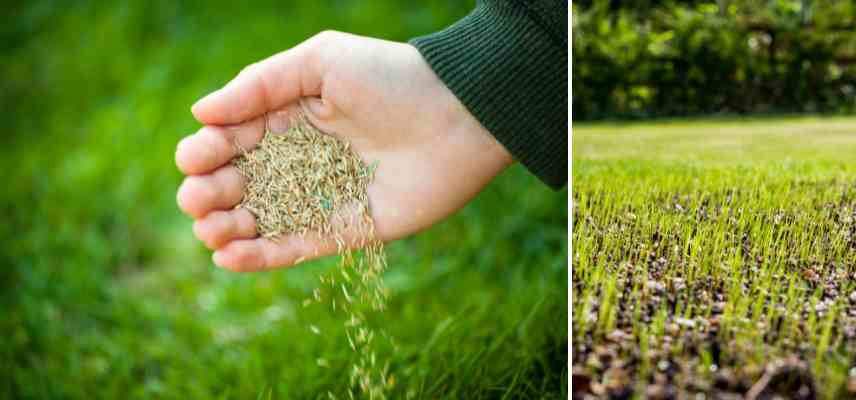
The choice of lawn is often made by combining tall fescue with drought-tolerant ryegrass.
Our choice of lawn for dry soils
Individually, the grasses cited above have undeniable qualities, but the best is a carefully balanced blend of them all. This is the case with the two blends proposed below:
- ‘Dry Ground’ lawn mix is specially designed for tough conditions, especially dry soils and hot environments.
This mix contains 20% English ryegrass 4N FABIAN, a variety renowned for its resilience and rapid establishment, and 80% tall fescue, split between the varieties ESSENTIAL and GREENFRONT, which provide excellent heat tolerance and great durability. English ryegrass provides quick and dense cover, while tall fescue, with its deep roots, ensures better drought resistance and tough conditions.
- ‘Smart Lawn’ mix for the south and seaside is also a recommended choice. This mix contains 10% English ryegrass 4N FABIAN and 60% tall fescue ESSENTIAL. To this, add 10% creeping red fescue HEIDRUN, which contributes to horizontal spread, ensuring better density and rapid regrowth after trampling. In addition, Cynodon LAPRIMA, also known as selected couch grass, accounts for 10% of the mix and is known for its high tolerance to heat and drought, ideal for hot climates. Finally, meadow bluegrass YVETTE, also present at 10%, adds to winter hardiness, ensuring a green lawn all year round.
Please note: one of the major advantages of these two products lies in the use of Mycosem, an innovative seed pelleting containing mycorrhizal propagules. These beneficial microorganisms promote growth and optimise root function, thereby improving the uptake of nutrients and water. This results in a more resilient lawn and less reliance on frequent watering, ideal for areas where water is a precious resource.
Maintenance of lawns on dry soil
Irrigation of the lawn: frequency and specific techniques
If you wish to water, it is recommended to water early in the morning or late in the evening to minimise evaporation caused by heat. A watering frequency of one to two times per week is generally sufficient, ensuring that water penetrates the soil to a depth of at least 15 to 20 cm. The use of drip irrigation systems or porous hoses can also be beneficial to optimise watering efficiency while reducing water waste.
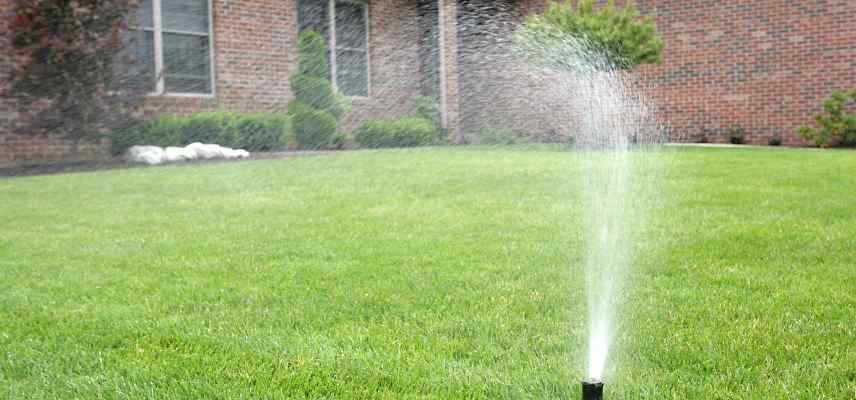
Irrigation will be essential, at least during lawn establishment.
Fertilisation adapted to poor soils
Dry soils are often poor in nutrients, which can limit lawn growth. A lawn-specific fertiliser will help the grass to better withstand water stress and strengthen the root system. This fertilisation should be carried out in early spring and in autumn, when the lawn is in active growth, and preferably after rainfall or watering to facilitate the absorption of nutrients.
Mowing: recommended height and frequency
Maintain a higher mowing height, around 6 to 8 cm, to reduce water evaporation. The mowing frequency should be adapted to the lawn’s growth: during periods of severe drought, mowing can be spaced to once every two to three weeks. This limits stress on the plants and promotes better recovery after mowing.
Soil aeration to improve water infiltration
Soil aeration involves perforating the soil to allow water, air and nutrients to penetrate more deeply into the root zone. Aeration is particularly useful for compacted or clay soils, which tend to reduce water infiltration. It should be carried out at least once a year, ideally in spring or autumn. The use of a mechanical aerator or a simple aerator roller (or, if unavailable, a garden fork) can significantly improve watering efficiency and the overall health of the lawn by allowing roots to develop more deeply.
Alternatives to lawn in dry soil
On dry ground, where conditions are often challenging for maintaining a traditional lawn, exploring alternatives can not only provide more suitable solutions but also help create a garden that is both aesthetically pleasing and eco-friendly. Here are some options to consider for replacing or supplementing the lawn on dry soil.
Ground-cover plants suited to dry conditions
Some ground-cover plants prove to be an excellent alternative to lawn in dry areas. Among these dry-soil lawn alternatives, one can cite: the wooly thyme, the hairy thyme, the Achillea crithmifolia, the nodular verbena and the Mascarene lawn (Zoysia tenuifolia). These plants require very little maintenance once established.
Gravel or pebble areas: for an aesthetically pleasing dry garden
Using gravel or pebbles in the garden is another interesting option for dry sites. Gravel and pebbles can be used to create paths, borders or even complete dry gardens, also known as a rock garden or gravel garden. They offer a durable, drought-tolerant solution and can be combined with plants suited to dry conditions to create an interesting contrast.
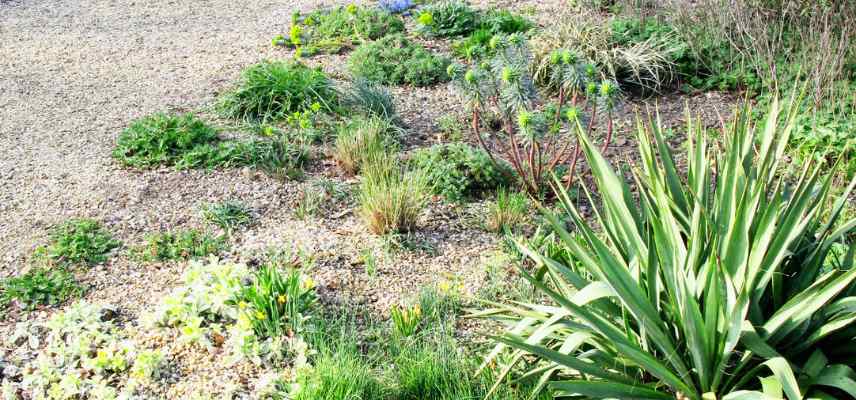
Opt for a radically different layout in drought-affected areas, such as in the south.
Letting nature take over: flowering meadows and other ecological options
You can adopt a more natural and ecological approach by letting part of the garden evolve into a flowering meadow. Flower meadows, composed of grasses and wildflowers suited to local conditions, require little maintenance and are drought-tolerant. They provide a valuable habitat for biodiversity, supporting pollinating insects, birds and other beneficial species. Within this meadow, all you need to do is create paths by mowing some parts: this is commonly referred to as differential mowing.
- Subscribe!
- Contents

Comments