





























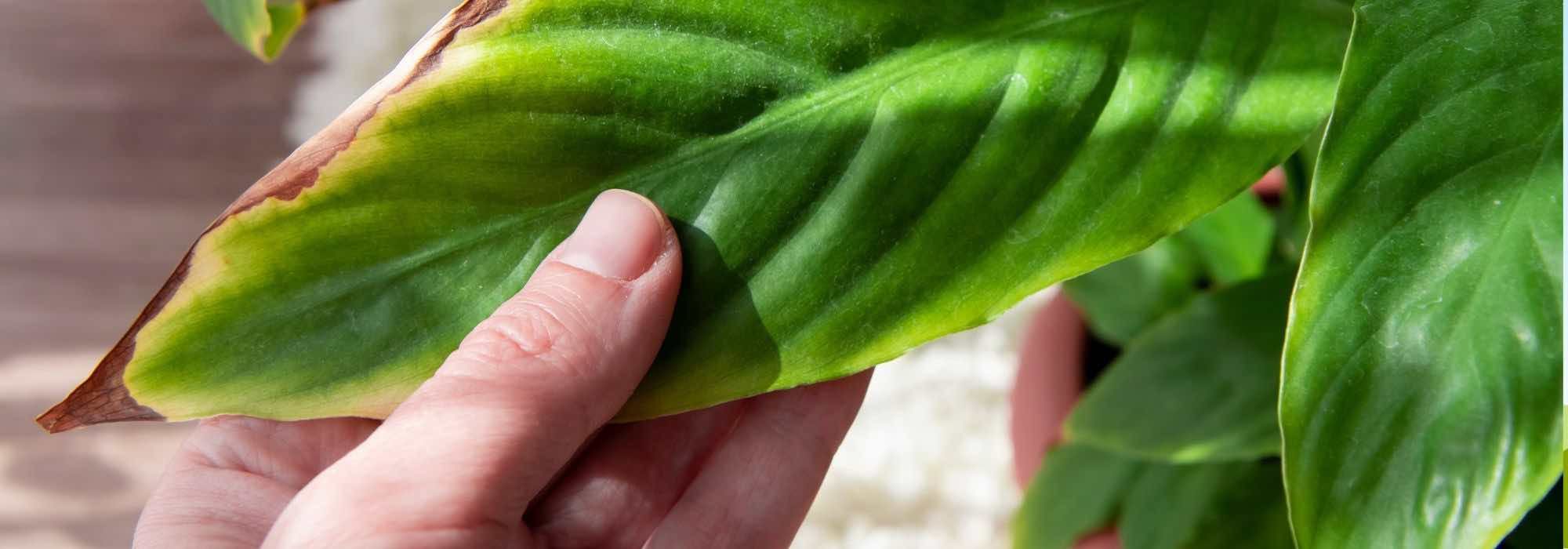
Brown and dry leaves: brown tips on your indoor plants, what to do?
Possible causes and solutions
Contents
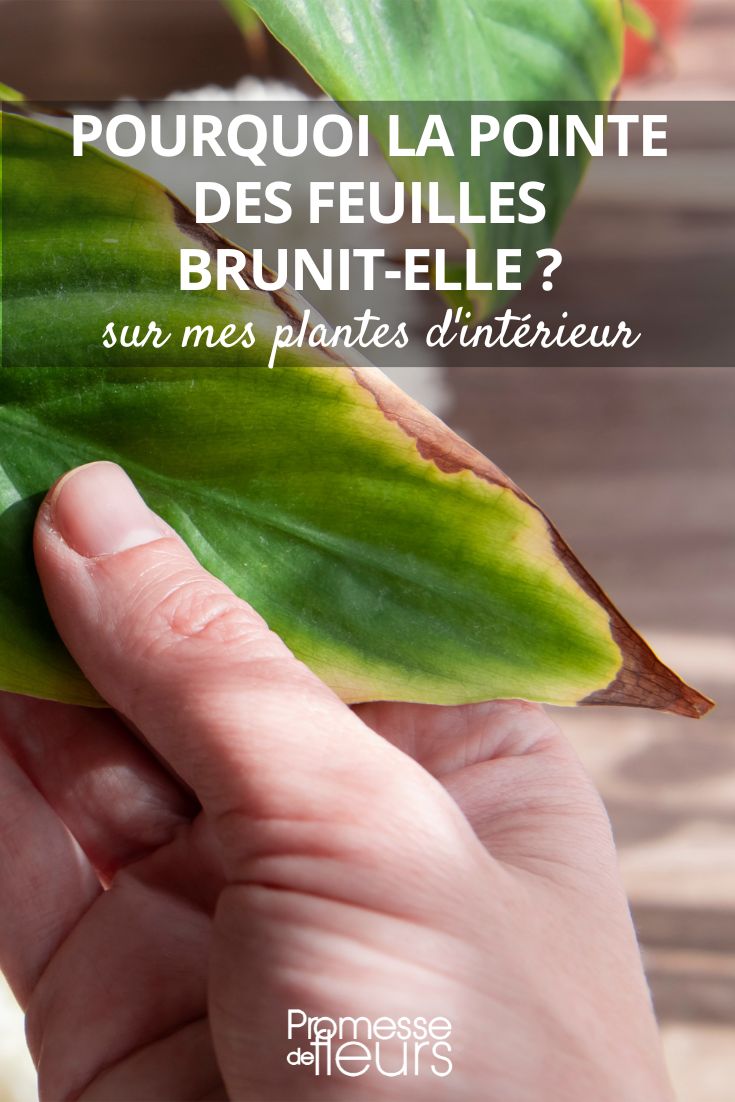
The ideal houseplants are those decorative plants seen in magazines, with lush and flawless foliage. In reality, a few months after purchase, they sometimes lose that polished and impeccable look: the leaves of the plants become marked, change colour, the tips of the leaves turn brown or dry out, and sometimes, the leaves blacken at the tips. These signs, such as a brown-leaved plant or a blackened leaf, are not uncommon, especially in more sensitive species like Calathea (frequent brown leaves) or hydrangea (possible brown leaves). These symptoms are clues to decipher in order to understand what the plant is trying to tell us. Improper watering, excess fertiliser, or hard water can be the cause.
However, some plants are more sensitive to this phenomenon than others. In this article, let’s explore which plants are susceptible and the various factors to consider.

Brown leaves: causes and symptoms
When a plant has leaves that are browning and drying, it often indicates an imbalance in the growing conditions. Whether it’s excess water or a lack of light, the causes can be numerous. Here’s a summary table to help you identify the source of the problem based on the observed symptoms.
| Observed Symptoms | Possible Cause |
|---|---|
| Brown or dry leaf tips | Lack of water |
| Blackened, soft, or drooping leaves | Excess water |
| Leaf tips drying or browning quickly | Air too dry |
| Burnt, brown, or crisped leaves | Too much light or direct sun exposure |
| Blackened leaves or browning edges | Excess fertiliser (over-fertilisation) |
| Brown or black leaves despite good watering | Tap water too hard or too high in chlorine |
Monstera, Calathea… these houseplants prone to brown leaf tips
Brown leaf tips in indoor plants is a fairly common phenomenon, particularly evident in certain types of plants. The plants most often exhibiting this “defect” belong to the family of Marantaceae, such as Calathea and Goeppertia. However, it can also be observed in many other species, notably within the Araceae family, which includes well-known plants like Monstera, also prone to this type of stress. Hydrangeas with brown leaves are also frequently seen indoors. This often indicates a problem with watering or exposure, which should be identified to maintain the health of the plant.
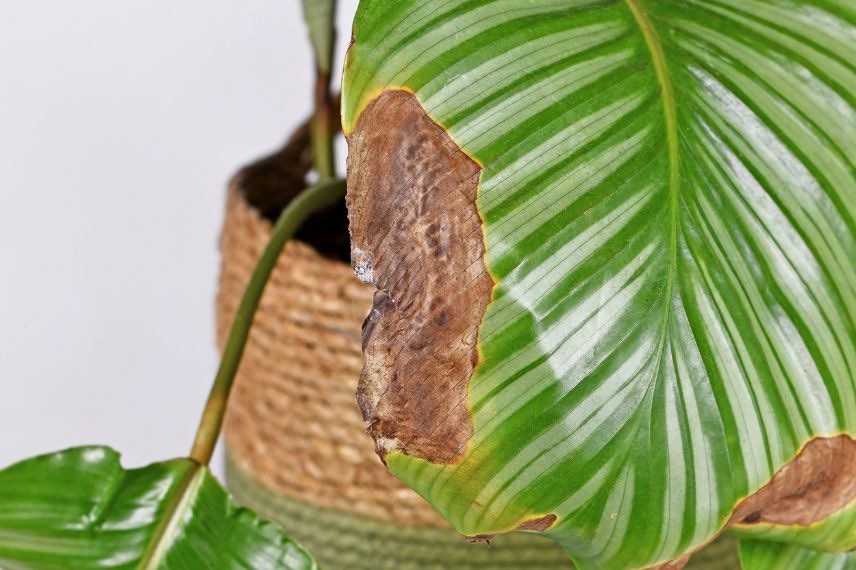
Here, the edge of a Calathea leaf is turning brown
Why do the leaves turn black at the tips?
A plant with black leaves is a more severe form of browning, and it often follows a similar pattern: a gradual discolouration that intensifies to black. Several factors can cause this type of stress, including improper watering, excess salt in the soil due to overly generous fertilisation, or excessively dry ambient air. It is essential to accurately identify the cause in order to remedy it effectively. However, be realistic: some plants are particularly sensitive to this issue, and it can be challenging to completely eliminate their tendency to blacken their leaves.
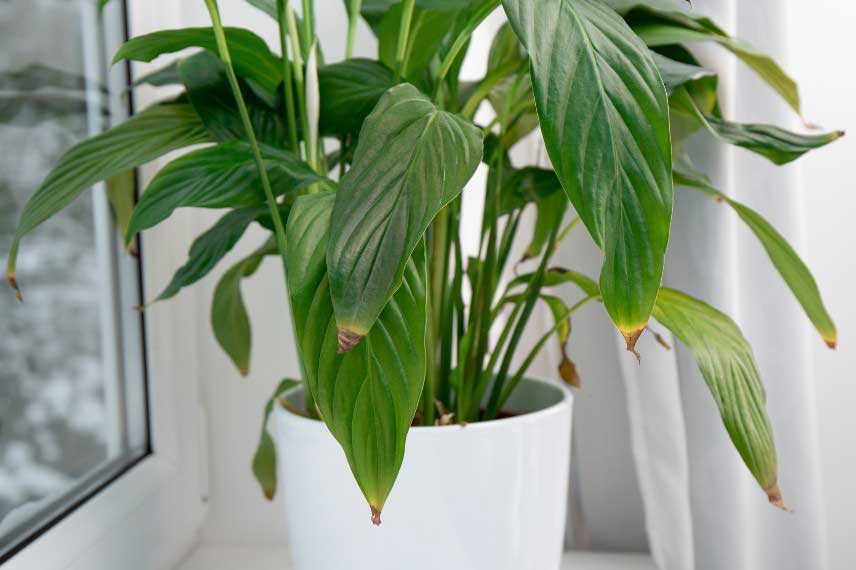
A Spathiphyllum with dry leaf tips
Lack of water: brown or dry leaves as a reaction
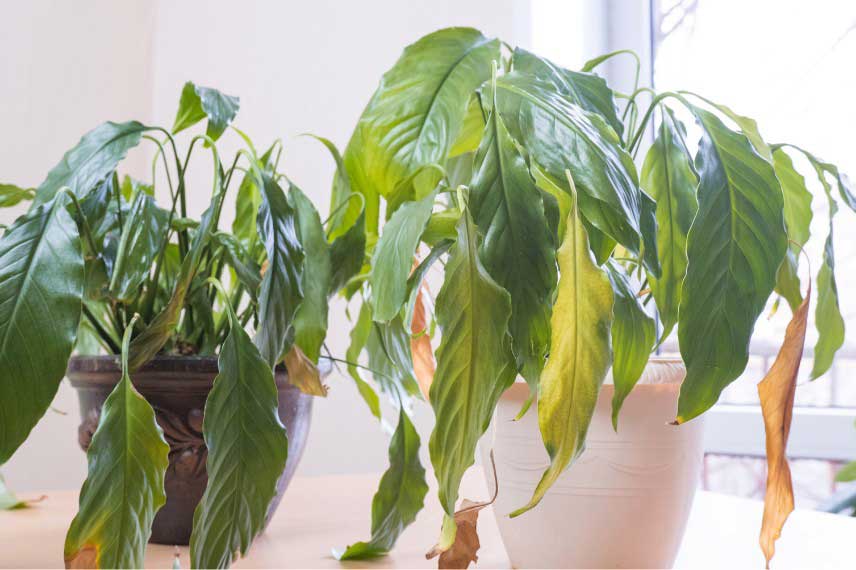
Watering is a crucial aspect of caring for green plants, but it can be easy to misjudge the amount of water needed. While excessive watering can lead to root rot, insufficient watering can cause leaf dryness and brown tips around the edges of the leaves. To avoid these issues, it is important not to water plants systematically, but rather according to their specific needs: depending on the type of plant and the atmosphere in your home.
It is advisable to regularly check the moisture level in the soil, for example by touching the surface and the first few centimetres below the surface. One of the most common problems that can cause browning leaf tips in houseplants is inadequate watering. It’s a learning process; you become familiar with your newly acquired plant.
Dry air: a common cause of dry or brown leaf tips
The surrounding atmosphere may be too dry, especially since we often cultivate tropical plants accustomed to high humidity forests in our rather dry interiors. As you may not want to live in a terrarium, which can, joking aside, be a good solution for your smaller tropical plants, you can invest in an air humidifier. However, it has a limited range to its immediate environment. It is sometimes recommended to place the pot on a bed of clay balls kept moist, but the improvement is limited. However, if you group your plants together, and there are many, this will help create a good atmosphere for them. Misting plants has its supporters and detractors. I advise against doing this with hard water.
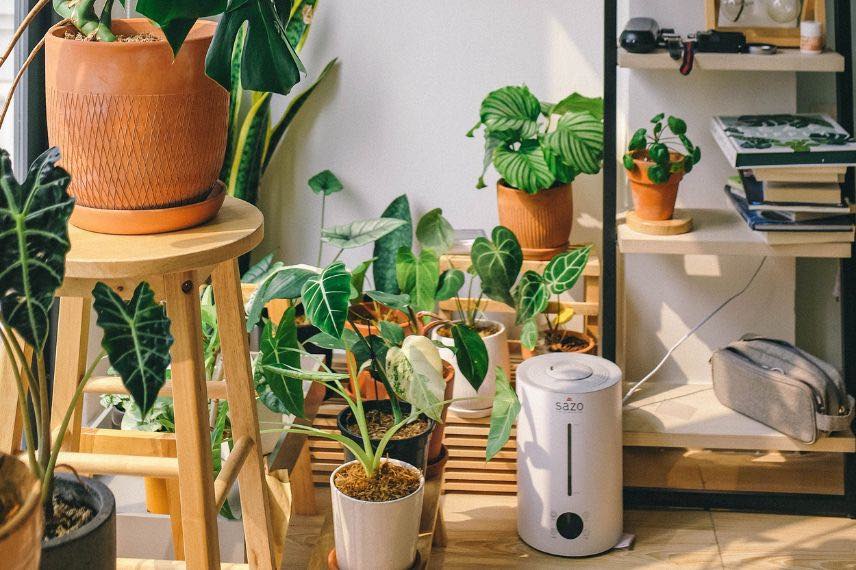
An air humidifier near a group of plants creates a less dry atmosphere
Too much light: brown or scorched leaves
Excessive exposure to light, particularly direct sunlight, can cause burns on the leaves, visible as brown, dry, or discoloured spots. These marks often appear in a localized manner, on the most exposed parts, and can give the leaf a “scorched” appearance. This type of light stress is common in indoor plants that prefer filtered light. Moving the plant to a brighter location, but away from direct sunlight, or filtering the light with sheer curtains, can help limit the damage.
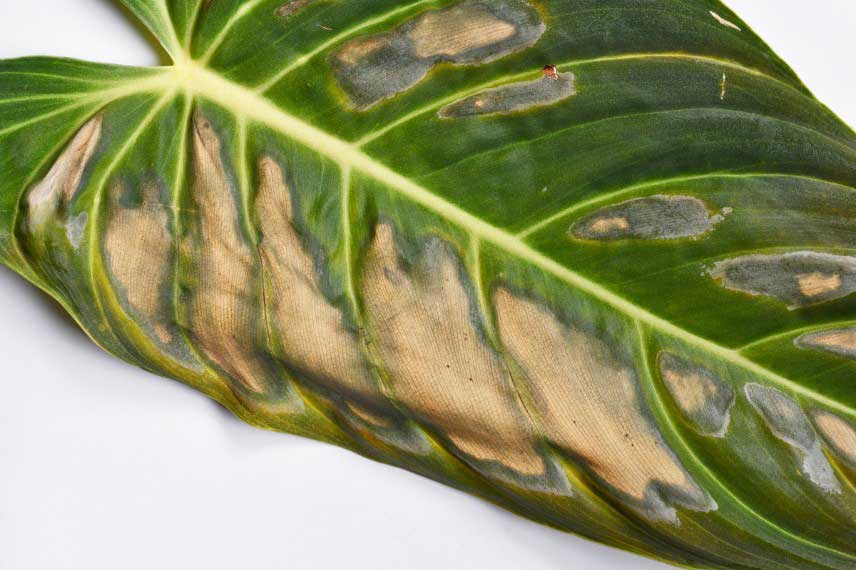
A sunburned leaf of Philodendron
Leaves turning black: beware of over-fertilisation
Regular fertilisation of indoor green plants is essential for their growth and health. However, excessive fertilisation can lead to a build-up of salt in the soil, preventing the plant from absorbing the water and nutrients it needs. This can damage the roots of the plants and cause leaf tip browning. To avoid this issue, it is important to follow the dosage instructions provided with fertilisation products and not to fertilise the plants too frequently. It is better to under-fertilise. A fertilisation rate of half or a quarter of the recommendation for a chemical fertiliser may be sufficient. A slow-release fertiliser can also be a good solution to avoid excesses.
If you think you have over-fertilised your houseplant, leach the substrate by thoroughly watering the plant under the shower.
Brown leaves, black leaves on your plants: the impact of tap water
The chemicals found in tap water, such as chlorine or fluoride, can be harmful to certain species of houseplants. If you notice that the tips of your indoor plant’s leaves are turning brown, it may be due to the plant’s sensitivity to the chemicals present in the water. You might consider using filtered water, osmosis water, demineralised water, or rainwater to water sensitive houseplants. This is typically the case for plants in the Marantaceae family mentioned earlier. Many owners of these beautiful plants find themselves tearing their hair out over this issue or give up growing them for this reason. Others choose to live with these somewhat unsightly brown tips.
However, this is a debatable aspect; it is not certain that water quality is problematic for watering houseplants. You may want to conduct some tests once other causes have been explored.
Should you trim the tips of brown leaves?
Yes, you can trim the tips of the brown leaves. This does not address the cause of browning, but it is an aesthetic gesture that can also limit progression if stress persists. Here are a few precautions to take:
- Use clean, disinfected scissors to avoid transmitting diseases.
- Cut following the natural shape of the leaf, leaving a small margin of healthy tissue to prevent the wound from spreading.
- Do not cut too much if the leaf is still mostly green: it continues to play its role for the plant, even if damaged.
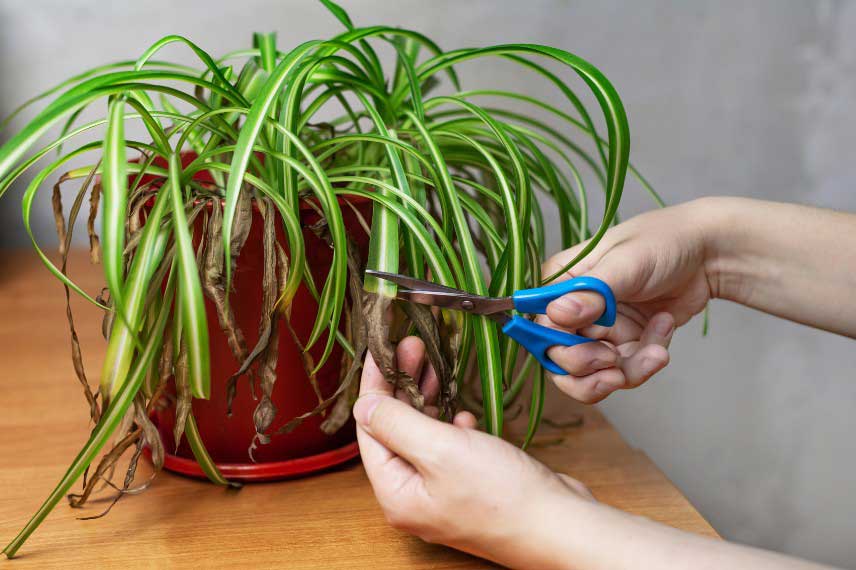 You can trim the tips of dry leaves
Brown leaves on indoor plants: the right actions to prevent them
Here are the right actions to take to prevent the appearance of brown leaves on indoor plants:
-
Adjust watering: neither too much nor too little. Wait for the substrate to dry on the surface before watering again, especially in winter.
-
Use suitable water: prefer rainwater or filtered water to avoid the accumulation of mineral salts or limescale, especially for sensitive plants.
-
Maintain good ambient humidity: some plants, like Calathea or ferns, appreciate high humidity. Mist regularly or place a humidifier nearby.
-
Protect them from direct sunlight: light is good, but filtered. Direct sunlight can scorch the leaves.
-
Avoid drafts and sudden temperature changes, which can stress the plant.
-
Fertilise in moderation: excess fertiliser can burn the roots and cause the tips to brown.
-
Monitor drainage: a pot with a good drainage hole and well-aerated substrate helps prevent stagnant water, the main cause of asphyxiated roots.
-
Repot if necessary: choose a quality potting mix.
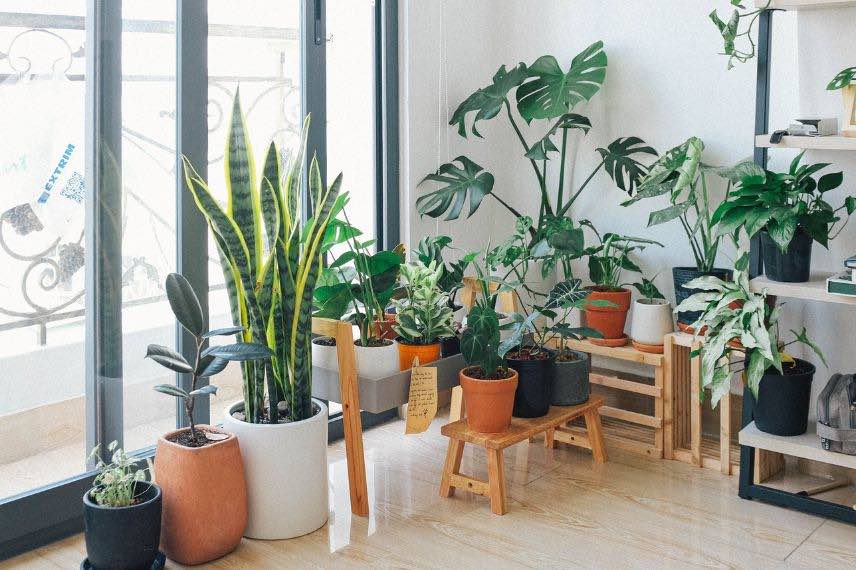
Grouping your plants is both an aesthetic idea and a good way to contribute to the atmosphere they enjoy. Ensure good air circulation between them.
- Subscribe!
- Contents
Comments