


Bulbs for a fragrant garden all summer long!
And to brighten up the garden, terrace or balcony
Contents
In summer, bulbs enchant us with their generous, colourful flowering. But some of them possess another asset: an intoxicating fragrance that will accompany you throughout the warm season, especially in the late afternoon.
Whether in beds, borders, rockeries or containers, we recommend growing them near walkways to fully enjoy their fragrances. Also take the opportunity to create beautiful fragrant cut flower arrangements.
Discover different species of summer-flowering bulbs as beautiful as they are fragrant.

Lilies
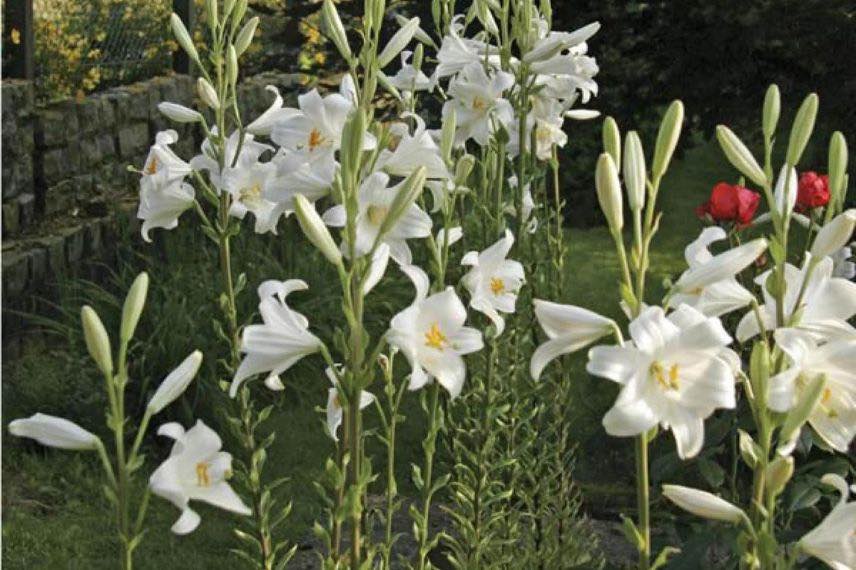
Lilies are bulbous plants that reward us with a wide variety of species. They always boast a majestic flowering, perfect for creating beautiful summer bouquets. The flowers are borne on upright stems and can have a trumpet-shaped, bell-shaped, or star-shaped form. Notably, and this is what interests us here, some varieties can be quite fragrant. Their floral fragrance is sweet and suave, sometimes even a little spicy. It is, moreover, used in perfumery.
This is notably the case with:
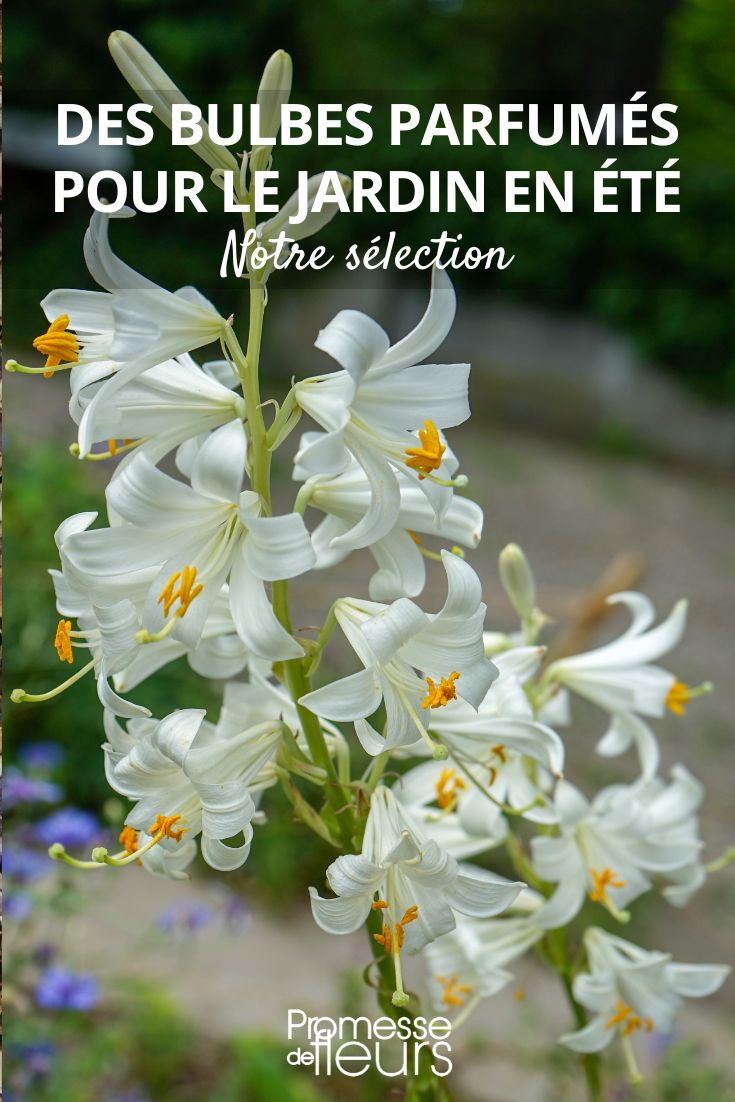
- Madonna lily or Virgin’s Lily (Lilium candidum), a botanical variety with white flowers, known for its scent so powerful it is almost heady;
- Ornamental Oriental lily ‘Double Polar Star’, with white flowers lightly tinged with green, which reveal multiple petals and exude heady notes;
- Stunning trumpet lily ‘Stargazer’, with its speckled flowers of exotic appearance, with intoxicating fragrance;
- Trumpet Lily ‘Muscadet’, with white flowers flecked with pink, releasing an intense fragrance;
- Giant lily ‘Honeymoon’, a tall variety reaching 2 metres in height, which flowers in yellow and emits a sweet fragrance;
- Oriental double lily ‘Apricot Fudge’, with a warm apricot-orange colour and a subtle fragrance;
- Giant lily ‘Lavon’, with impressive dimensions and a powerful floral fragrance.
These summer bulbs are easy to grow and will thrive just as well in the garden as in pots, to brighten and perfume terraces or balconies. Hardy and fairly undemanding, the lily enjoys sun, but with the crown in shade, in a spot sheltered from winds. Provide it with fertile, well-drained soil to prevent water from causing the bulb to rot. In summer, water as soon as the soil is dry on the surface. For its part, the Madonna lily tolerates occasional drought better, as do calcareous soils.
Lilies are garden classics that never disappoint. They can naturalise over time and return faithfully each year.
For everything you need to know about growing lilies, discover our comprehensive guide: The Lily: planting, cultivation and maintenance
Madonna Lily
Read also
6 summer bulbs with fragrant flowersGladioli
Gladioli are the kind of bulbous flowering plants that can suit every taste. Their flowering in spikes can be so colourful that it becomes extravagant, or sometimes so refined that it seems almost delicate. The colours can be very vivid and warm, but also very soft and delicate. Gladioli are also prized for their upright, vertical habit, which adds graphic interest and dynamism to borders as well as to bouquets. They do, in fact, have good vase life.
All summer, these flowers will brighten the garden. But they can also diffuse their floral fragrance, which you can enjoy easily if you plant them near living or busy areas, such as on the terrace.
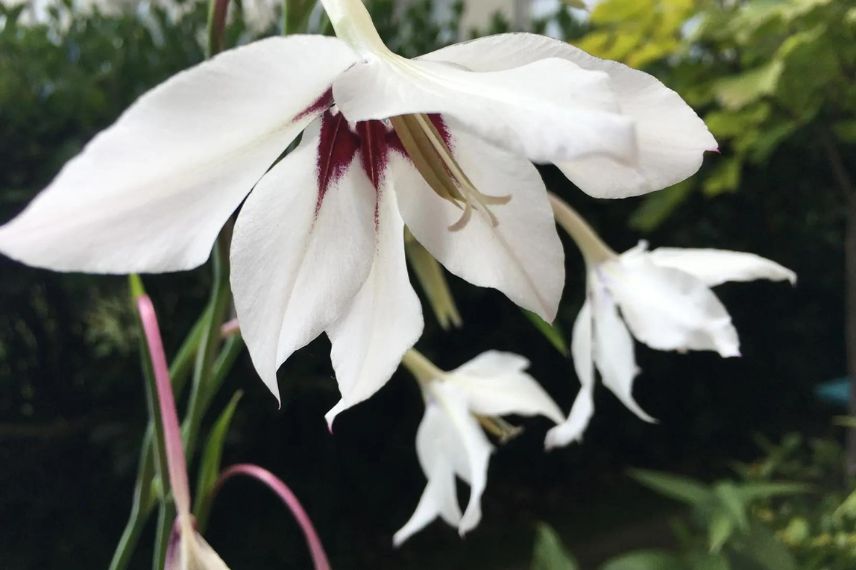
The Abyssinian gladiolus (Gladiolus callianthus) has an elegant late-summer flowering with white trumpets accented by a purple heart. It emits a pleasant fragrance, even more pronounced in the late afternoon.
The Gladiolus x callianthus ‘Lucky Star’ is a hybrid variety producing spikes of large white flowers with pink-starred throats. They unfold in late summer. Their sweet fragrance fills the air, especially on summer evenings.
The Gladiolus tristis releases its intense fragrance at nightfall. This botanical species flowers in late spring or early summer, unveiling creamy yellow trumpet-shaped flowers.
Gladioli enjoy sun and warmth, possibly partial shade in southern gardens. Plant them in well-drained soil, even sandy, that will not retain excess moisture. They prefer soils fairly rich in organic matter. The tallest varieties may require staking. To overwinter this relatively frost-tender plant, it will be necessary to lift the corms (types of bulbs) and keep them under shelter during the cold season (except in the milder regions where frosts below -5°C do not occur). Some varieties can be more hardy in dry soil, as with ‘Lucky Star’.
A little neglected in recent years, gladioli deserve to reclaim a place in our gardens. They can be incorporated into outdoor spaces of all styles, whether country, romantic or contemporary.
For all you need to know about gladiolus cultivation, explore our complete guide: Gladioli: plant, grow and maintain.
Gladiolus callianthus
Freesias
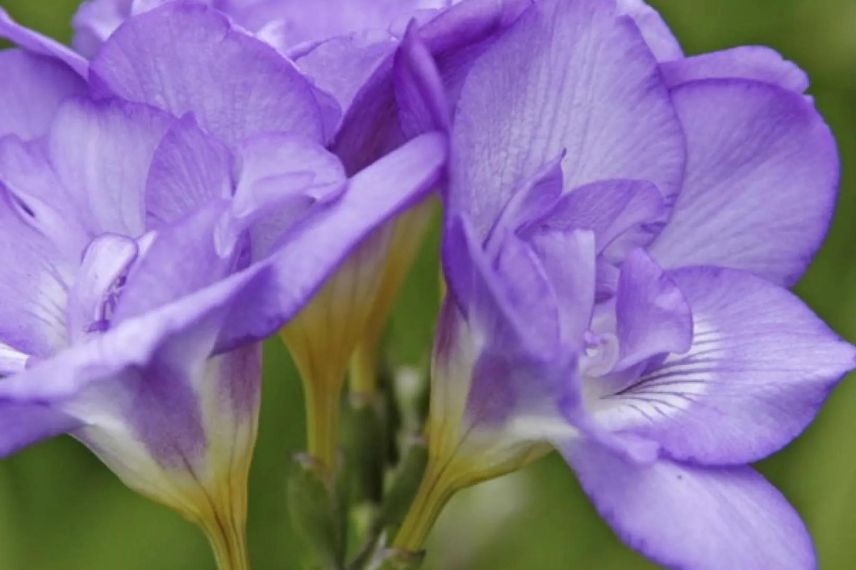
Freesias are essential when discussing scented summer bulbs. The fragrance they diffuse recalls the florally sweet scent of jasmine. They look wonderful in borders, rock gardens, flower beds, in pots, and, of course, in a cut flower arrangement. Freesia is also a plant loved by perfumers.
There are several hybrid freesias with intoxicating perfumes, such as:
- Freesia Double Blue, with its goblet-shaped lavender-coloured flowers;
- Freesia Single Yellow, a true little scented sun;
- Freesia Single Rose, with magenta flowers exhaling neroli notes, subtly spicy and sweet.
The flowers can be double or single, but always trumpet-shaped and well-coloured.
From their South African origins, these bulbous plants have retained a certain frostiness, which means they can stay in the ground only in the milder regions of our country (frosts below -4°C). Elsewhere, the bulbs must be lifted to overwinter in frost-free shelter.
Freesias prefer light, well-drained soil, even if poor, sandy and stony. Keep the soil cool and evenly moist (never let it dry out completely). They will thrive in warm and sunny conditions. If necessary, consider staking the flower stems and avoid overly windy sites.
For all you need to know about growing freesias, see our comprehensive guide: Freesia: planting, cultivation and care.
Freesia ‘Double Blue’
Read also
9 fragrant spring bulbsOrnithogalums
Also prettily nicknamed the ‘eleven o’clock ladies’ in reference to their blooming time, ornithogales are bulbous perennials that bloom in spring or summer. They feature pretty star-shaped flowers, usually white, particularly bright.
In some varieties, the flowering is very fragrant.
This is the case for Ornithogalum arabicum, or Bethlehem’s Star, with very refined flowering.
For its part, the pendulous Ornithogalum nutans produces flowers in a milky-white shade, delicately punctate with green, with a light, suave fragrance.
Robust and easy to grow, Ornithogums thrive in well-drained soil, in sun or partial shade. Their natural and refined flowering blends perfectly into naturalistic gardens, but of course also into a white garden. Plant them in groups along borders of beds, in rockeries, on slopes or in pots. Some species also have the advantage of naturalising easily, reappearing on their own each year.
A pot-grown planting will keep these frost-tender plants frost-free in winter. Otherwise, think about lifting the bulbs before the cold season if you live in a frost-prone region.
To learn all about growing Ornithogalums, explore our comprehensive dossier: Ornithogalums: Planting, Growing and Maintaining.
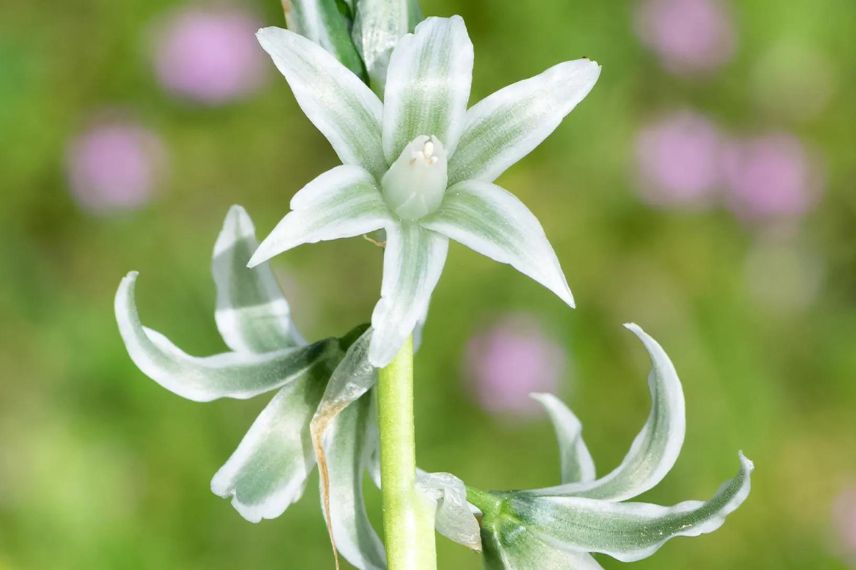
Ornithogalum nutans
Polianthes
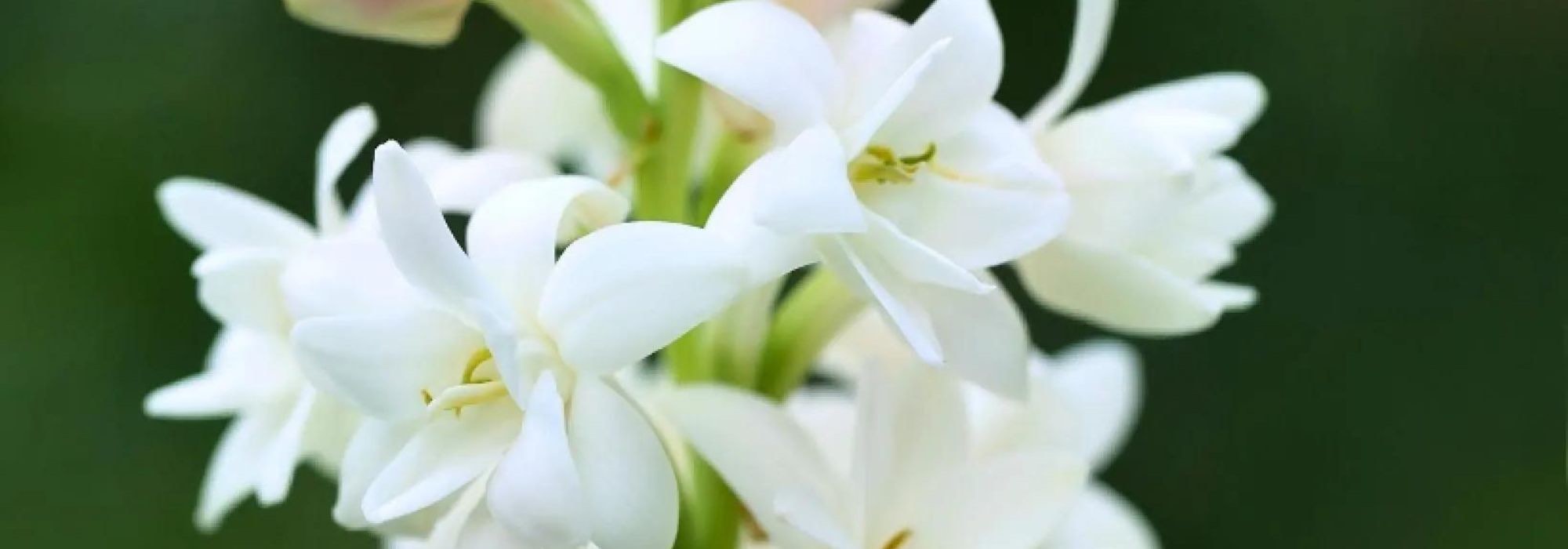
Tuberoses, or Polianthes, are among the most fragrant flowers. They are not really bulbous, but rhizomatous plants, valued for their intense fragrance, even more noticeable in the evening.
From July to October, they produce star-shaped flowers in spikes, double or semi-double. In terms of colour, white is the most widespread, but there are also pink, yellow or mauve varieties.
Polianthes tuberosa is the best-known species, prized by perfumers. It comes in numerous varieties, such as ‘The Pearl’, whose ivory-white flowers diffuse a heady, suave and spicy fragrance throughout the summer. The pink flowering of ‘Pink Sapphire’ offers a strong scent of white flowers, just as that of ‘Super Gold’ which blooms in yellow. For its part, ‘Sensation’ blooms in pale lavender pink, but also benefits from this powerful and complex fragrance, blending powdery notes of jasmine, orange and honey.
Originating from warm regions of South America, tuberoses are frost-tender: if your garden is subject to frosts, grow them in pots so you can move them to shelter during the cold season.
For their cultivation, plan a warm and bright location, sheltered from the wind, in light but fertile soil. Keep the soil cool throughout the flowering period. Do not hesitate to mulch around the base of the plants to retain moisture for longer.
To learn everything about growing tuberoses, discover our comprehensive guide: Tuberoses: planting, cultivation and care.
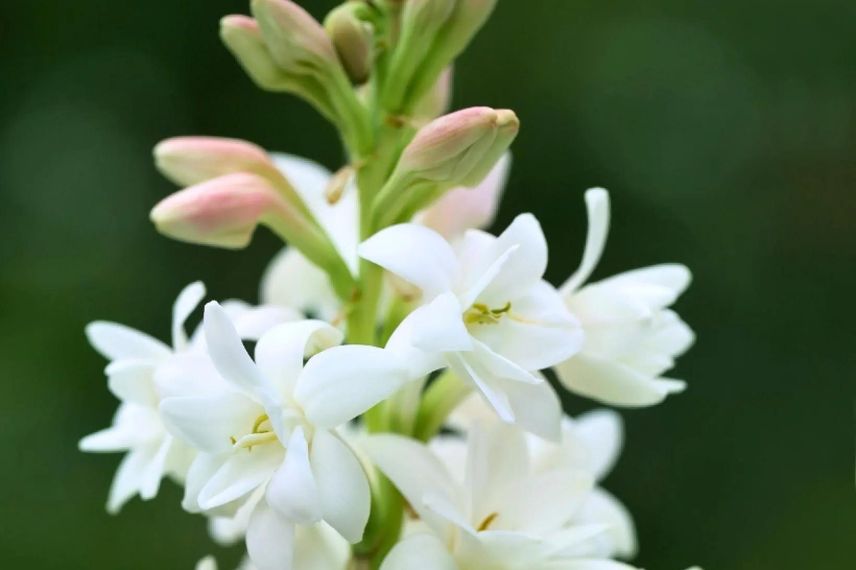
Polianthes tuberosa ‘The Pearl’
- Subscribe!
- Contents
Comments