





























Cordyline diseases and parasitic pests
Identifying, preventing, treating
Contents
Cordylines are ornamental plants, valued for their exotic, architectural look as well as their coloured foliage, ranging from green to red. With their slender silhouette, these evergreen shrubs resemble palm trees. Often sensitive to frost, they grow easily in regions with mild, dry climates. Not particularly prone to disease and pests, Cordylines can, however, occasionally be attacked and weakened, especially when grown in greenhouses. Discover how to identify, prevent and treat diseases and pests naturally, which can jeopardise the health of your Cordyline.

Root rot
Root rot can affect Cordyline. This disease is often caused by overwatering and poor soil drainage.
Symptoms
Leaves turn yellow and wither. There is also a slowdown in growth and an unpleasant odour coming from the soil.
Prevention
To prevent root rot, it is crucial to ensure the soil is well drained before planting your Cordylines. Avoid overwatering and always allow the soil to dry between waterings. During periods of high humidity, reduce the frequency of watering. Use pots with drainage holes if you grow Cordylines indoors or on a balcony.
Treatment
To treat root rot, it is essential to improve soil drainage. Remove the plant from the soil, remove the soil around the roots. Cut off the brown roots (those that are rotten) and leave the white roots. Replant the Cordyline in well-drained soil. To improve soil drainage, you can add sand or gravel to allow water to drain more easily. Also reduce watering and let the soil dry between waterings.
Read also
How to propagate cordyline?Foliar spots
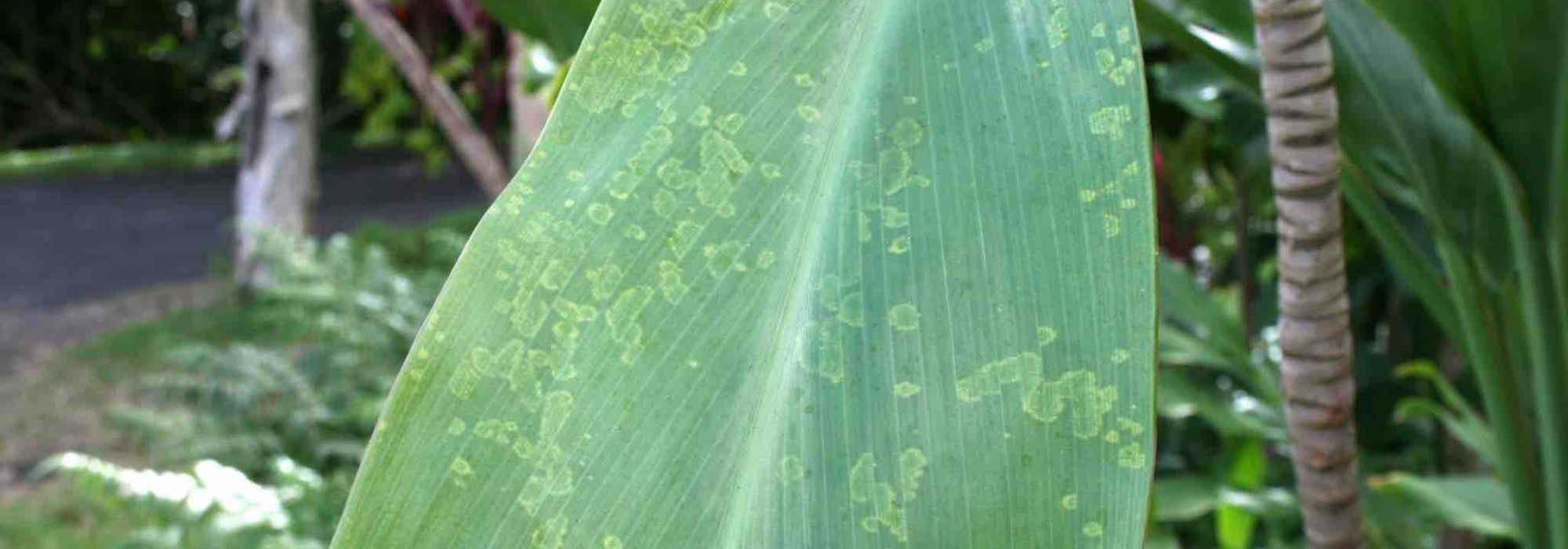
Cordylines can have foliar spots, which are caused by fungi.
Symptoms
Yellow, brown or grey spots appear on leaves, leading to leaf drop.
Prevention
To prevent foliar spots, ensure your plants have enough space for good air circulation. Avoid watering leaves directly and prefer watering at soil level. Use sterilised tools with 90% alcohol to prune your plants and remove plant debris around the base of the plant.
Treatment
To treat foliar spots, cut away and destroy infected parts of the plant. You can treat with Bordeaux mixture, a horsetail decoction or nettle manure.
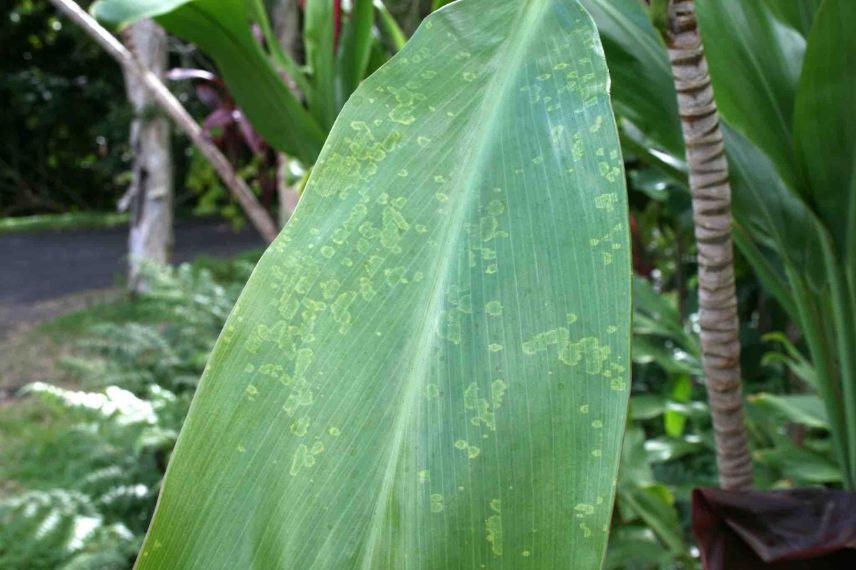
A Cordyline leaf with foliar spots (@Scot Nelson)
Scale insects
Mealybugs are tiny sap-sucking insects that attach themselves to the leaves and stems of Cordyline plants. They are difficult to see with the naked eye and weaken the plant.
Symptoms
Leaves turn yellow and become covered with small white or brown cottony masses. A sticky black honeydew may also appear.
Prevention
To prevent mealybug infestations, monitor your plants regularly and remove the insects as soon as they appear. Keep your plants healthy by providing optimal growing conditions. Avoid overcrowding plants to allow good air circulation.
Treatment
To treat mealybugs, remove them manually with a cotton bud moisturised with alcohol. Apply a solution of black soap diluted in water to the leaves to eliminate the mealybugs.
Pour en savoir plus, consultez notre fiche conseil : “Mealybug: identification and treatment”.
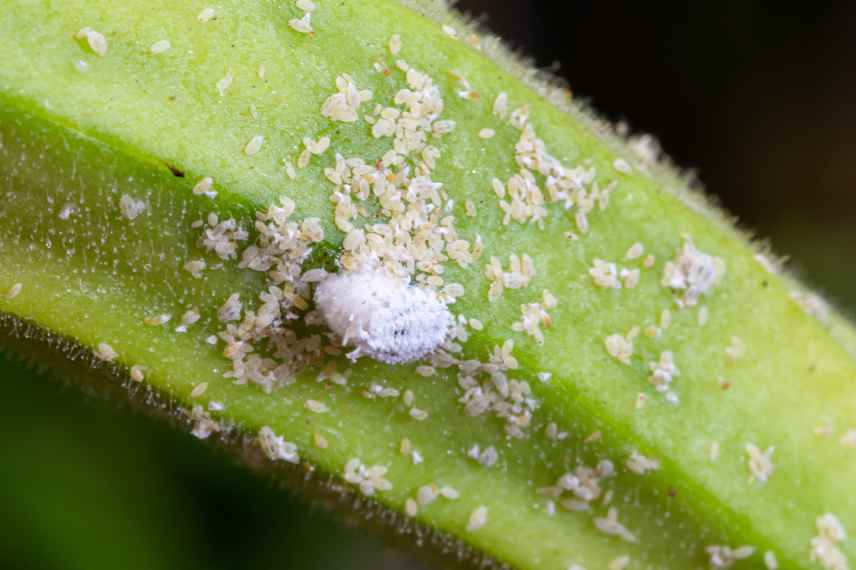
The mealybugs form white masses
Read also
How to propagate Cordyline?Aphids
It may happen that Cordyline plants are attacked by aphids. These small green, black or brown insects feed on plant sap, causing leaf distortion and the production of sticky honeydew.
Symptoms
Small insects, with or without wings, may be seen stuck to leaves and new shoots. Sticky honeydew produced by the aphids may also be present.
Prevention
To prevent aphid infestations, regularly monitor your plants and promptly treat any signs of infestation. Encourage the presence of natural predators such as ladybirds.
Treatment
To treat aphids, use a jet of water to dislodge them from the plants. Apply a solution based on black soap at a rate of 15 to 30 g per litre of water to eradicate the colonies. Encourage the presence of natural predators such as ladybirds to control the aphid population.
For more information, see our tip sheet: Aphid: Identification and Treatment.
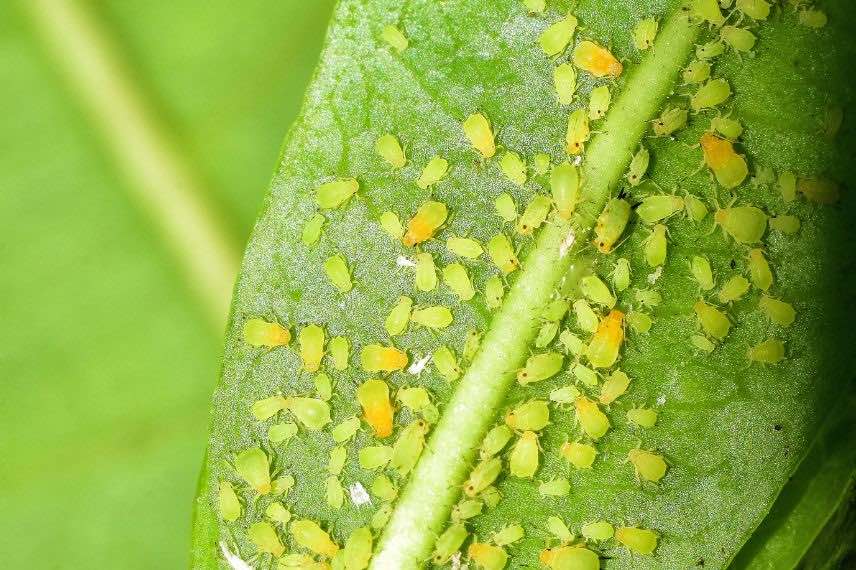
Green aphids on leaf
Thrips
Thrips are tiny piercing insects that suck sap from plants. They appear in hot, dry weather.
Symptoms
Adult thrips have wings, and their presence is detectable by the appearance of silver-grey spots on leaves. Leaves may become distorted, then dry up and drop.
Prevention
To prevent thrips infestations, monitor your plants regularly and act quickly on any signs of infestation. Increase humidity around your plants by regularly spraying them as thrips dislike humid conditions. Use natural predators of thrips such as Orius genus bugs, the predatory mites Amblyseius cucumeris and the nematode Steinernema feltiae.
Treatment
To treat thrips, cut away and destroy the infested parts. Increase humidity around the plant to reduce their reproduction and treat with neem oil, a garlic decoction added to a solution of insecticidal soap, or with pyrethrum.
For more, see our advice sheet: “Thrips: identification and treatment“.
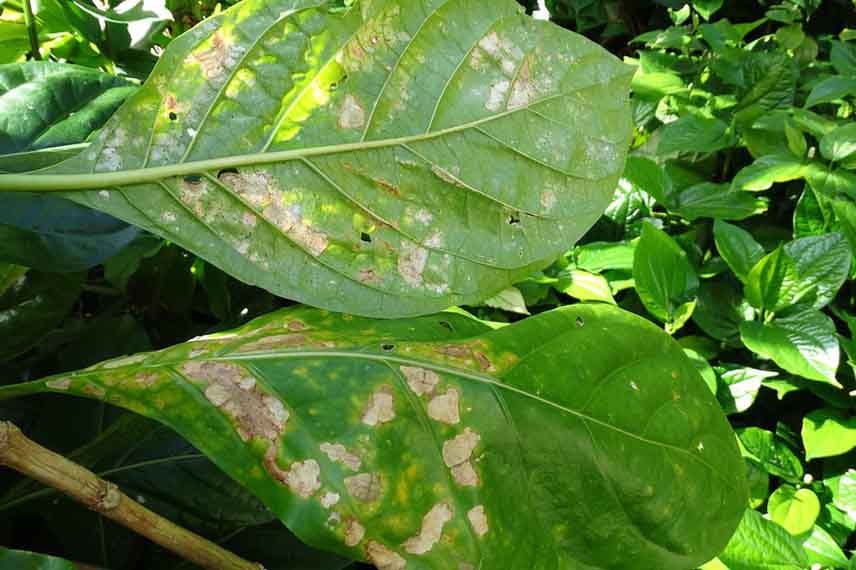
Damage caused by thrips on leaves ©Scot Nelson
Red spider mites
Red spider mites are tiny mites, about 1 mm long when mature, that develop in warm, dry conditions, especially in greenhouses.
Symptoms
Delicate webs appear on leaves, resembling fine white bristles. White, yellow or grey spots may also be seen on leaves, which eventually dry out and fall.
Prevention
To prevent red spider mite infestations, keep humidity high around your Cordyline plants by misting them regularly. Ensure your plants are well spaced to allow good air circulation. You can spray preventatively with nettle manure or a horsetail decoction. Also limit nitrogen-rich fertilisers.
Treatment
To treat red spider mites, spray with a garlic decoction diluted to 30% or with a solution of rapeseed oil, liquid black soap and rosemary essential oil. In 1 litre of water, mix 20–25 drops of rosemary essential oil with 3–4 drops of liquid black soap and 5 ml of rapeseed oil.
Use biological control by introducing natural predators such as lacewing larvae and Phytoseiulus persimilis.
For more information, see our advice sheet: Red spider mite: identification and treatment.
Additionally, explore our guide: Identify the main pests and diseases of plants, as well as our comprehensive guide on Cordyline planting and maintenance: Cordyline planting and maintenance.
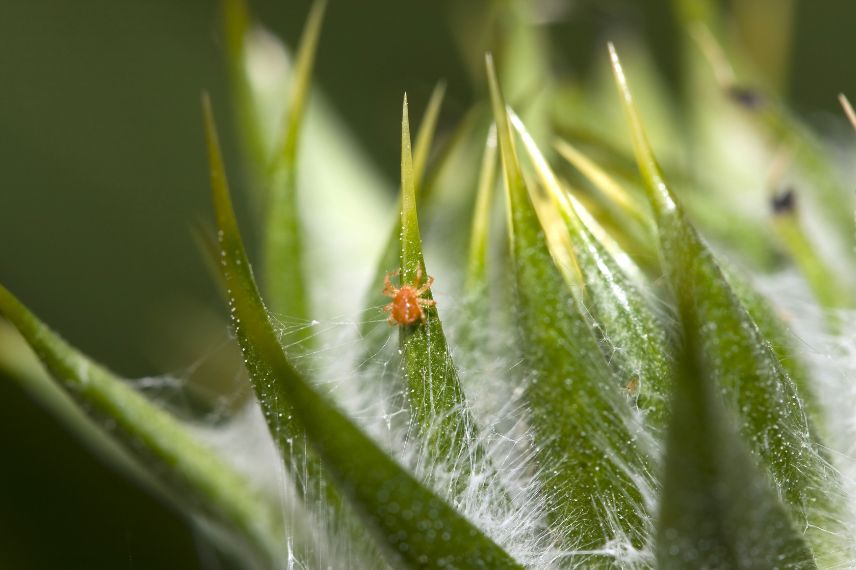
Red spider mite, close-up
- Subscribe!
- Contents
Comments